

Linda Flavell
Author of Dictionary of Idioms and Their Origins
About the Author
Disambiguation Notice:
Frequently co-authors with Roger/R.H. Flavell, hence the 'Linda and Roger' authors combined into Linda Flavell.
Works by Linda Flavell
Tagged
Common Knowledge
- Gender
- female
- Nationality
- UK
- Disambiguation notice
- Frequently co-authors with Roger/R.H. Flavell, hence the 'Linda and Roger' authors combined into Linda Flavell.
- Associated Place (for map)
- UK
Members
Reviews
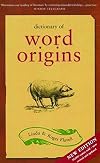
10. Dictionary of Word Origins by Linda Flavell & Roger Flavell
published: 1994, revised 2010
format: Trade Paperback
acquired: in 2012, used
read: roughly Sep 1, 2015 - Feb 23, 2016
Rating: 4 stars
This was just really well done. I mean, it's a quirky kind a thing. There aren't enough words for this to work as a really usable reference dictionary. So, it must be meant to read it through. But does one really read a dictionary through? Seems a bit odd.
"Odd is a strange word. Its sense 'not even' show more derives from Old Norse oddi, which means 'point, triangle'..."
The Flavell's selected about 1000(?) words with interesting etymologies, and then include full entries for maybe half of them. They give each headword a little summary of its history. The entries includes a simple definition, followed by a few quotations, then a prose etymology, and then brief notes on various related words.
"The Roman sailors coined the adjective opportunus, 'blowing in the direction of the harbour' (from ob-, 'to' and portus, 'harbour') to describe favorable winds with arose at the right time. Soon this particular application broadened to give the general sense of 'seasonable, timely, convenient'."
So, how does one read a dictionary? Well, first, to its credit, it's a nicely designed volume that is pretty to look at and pleasant to hold. It makes you want to read it. The way I did it was to read a handful of words at a sitting. So it took me a long time. But yet I always found the first word absolutely fascinating. The second word would drag in the quotations a bit. And that is one complaint. The quotations hinder the reading flow...and, as chosen, they don't really add much. But they are not the point.
"The word for a book roll (a scroll) was volumen, a derivative of volvere, 'to roll'. It was borrowed into Middle English by way of Old French volume in the fourteenth century..."
...
"It is thought that early inscriptions among German tribes were scratched upon beechwood tablets, or that the bark of beechwood was used, since the unattested proto-Germanic words for book and beech appear to be connected..." (boks=book, boka=beech)
But the overall affect was really terrific. I always looked forward to picking this up for a new word. I would even read this book out loud to my wife, who actually found it this stuff fascinating too. So, I really enjoyed this book in bits and pieces, and I'm sad to have finished it.
2016
https://www.librarything.com/topic/209547#5486553 show less
published: 1994, revised 2010
format: Trade Paperback
acquired: in 2012, used
read: roughly Sep 1, 2015 - Feb 23, 2016
Rating: 4 stars
This was just really well done. I mean, it's a quirky kind a thing. There aren't enough words for this to work as a really usable reference dictionary. So, it must be meant to read it through. But does one really read a dictionary through? Seems a bit odd.
"Odd is a strange word. Its sense 'not even' show more derives from Old Norse oddi, which means 'point, triangle'..."
The Flavell's selected about 1000(?) words with interesting etymologies, and then include full entries for maybe half of them. They give each headword a little summary of its history. The entries includes a simple definition, followed by a few quotations, then a prose etymology, and then brief notes on various related words.
"The Roman sailors coined the adjective opportunus, 'blowing in the direction of the harbour' (from ob-, 'to' and portus, 'harbour') to describe favorable winds with arose at the right time. Soon this particular application broadened to give the general sense of 'seasonable, timely, convenient'."
So, how does one read a dictionary? Well, first, to its credit, it's a nicely designed volume that is pretty to look at and pleasant to hold. It makes you want to read it. The way I did it was to read a handful of words at a sitting. So it took me a long time. But yet I always found the first word absolutely fascinating. The second word would drag in the quotations a bit. And that is one complaint. The quotations hinder the reading flow...and, as chosen, they don't really add much. But they are not the point.
"The word for a book roll (a scroll) was volumen, a derivative of volvere, 'to roll'. It was borrowed into Middle English by way of Old French volume in the fourteenth century..."
...
"It is thought that early inscriptions among German tribes were scratched upon beechwood tablets, or that the bark of beechwood was used, since the unattested proto-Germanic words for book and beech appear to be connected..." (boks=book, boka=beech)
But the overall affect was really terrific. I always looked forward to picking this up for a new word. I would even read this book out loud to my wife, who actually found it this stuff fascinating too. So, I really enjoyed this book in bits and pieces, and I'm sad to have finished it.
2016
https://www.librarything.com/topic/209547#5486553 show less

An honest square meal but it doesn't fill you up. This dictionary by Linda and Roger Flavell compiles a whole bunch of idioms commonly used in the English language and briefly explains the etymology behind them. It then provides real-world examples of their use. As a quick reference work, it should prove about adequate.
However, it is by no means comprehensive: at a little over 200 pages, there's plenty of idioms not covered. In fact, the very nature of the book encourages you to think about show more the stock phrases you use everyday and, off the top of my head, today alone I've used 'catch-22', 'knows his onions', 'rod for his own back' and 'sober as a judge'. None of these can be found in the Flavells' book. ('Off the top of my head' – there's another one.) This diminishes its value as a reference work, whilst in compiling only commonly-used idioms the book didn't fulfil my hope of unearthing some obscure gems.
One peculiarity of the book which deserves mention concerns the examples chosen by the Flavells to illustrate the idioms chosen. Rather than quoting extensively from literature or historical figures, most of the real-world examples come from then-contemporary newspapers and periodicals (in 1991-2). Consequently, through exposure to mundane passages from the Mid-Sussex Times, Woman's Own, Good Housekeeping, Which?, the TV guide (for Chrissake) and, peculiarly, some Princess Diana biographies, we learn as much about the authors' middle-class, late-middle-aged, English reading habits as we do about idioms. Not only does this give off the slight whiff that the book was at least partially compiled in a dentist's waiting room, but it diminishes the value of the book further by missing out on the opportunity to provide us with some choice literary quotes. Fittingly given the authors' choice of reading material, the best way to describe the Flavells' Dictionary of Idioms and Their Origins is as a Reader's Digest approach to the topic at hand. show less
However, it is by no means comprehensive: at a little over 200 pages, there's plenty of idioms not covered. In fact, the very nature of the book encourages you to think about show more the stock phrases you use everyday and, off the top of my head, today alone I've used 'catch-22', 'knows his onions', 'rod for his own back' and 'sober as a judge'. None of these can be found in the Flavells' book. ('Off the top of my head' – there's another one.) This diminishes its value as a reference work, whilst in compiling only commonly-used idioms the book didn't fulfil my hope of unearthing some obscure gems.
One peculiarity of the book which deserves mention concerns the examples chosen by the Flavells to illustrate the idioms chosen. Rather than quoting extensively from literature or historical figures, most of the real-world examples come from then-contemporary newspapers and periodicals (in 1991-2). Consequently, through exposure to mundane passages from the Mid-Sussex Times, Woman's Own, Good Housekeeping, Which?, the TV guide (for Chrissake) and, peculiarly, some Princess Diana biographies, we learn as much about the authors' middle-class, late-middle-aged, English reading habits as we do about idioms. Not only does this give off the slight whiff that the book was at least partially compiled in a dentist's waiting room, but it diminishes the value of the book further by missing out on the opportunity to provide us with some choice literary quotes. Fittingly given the authors' choice of reading material, the best way to describe the Flavells' Dictionary of Idioms and Their Origins is as a Reader's Digest approach to the topic at hand. show less
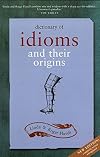
The English language contains a vast store of idioms that can be used in creative and forceful ways. This totally revised and greatly expanded edition of Dictionary of Idioms examines over 500 such phrases, tracing each one's source and history through a rich supply of examples. New entries include 'playing fast and loose' (from a 16th-century fairground game), 'head over heels' (a totally illogical variation on the more sensible 'heels over head') and 'knee-high to a grasshopper' (which won show more out over knee-high to a mosquito and knee-high to a toad). Mini-essays scattered through the book enable the authors to expand on such broader themes as: What is an Idiom?, National Rivalries, and the Old Curiosity Shop of Linguistics. While maintaining scholarly accuracy, Linda and Roger Flavell convey their great love of the curious in language in a way that will be irresistible to anyone who delights in words.
Segnalato da Alice Gerratana show less
Segnalato da Alice Gerratana show less
You May Also Like


Associated Authors
Statistics
- Works
- 10
- Members
- 827
- Popularity
- #30,853
- Rating
- 3.7
- Reviews
- 5
- ISBNs
- 35