
Stephen Witt (1)
Author of How Music Got Free: The End of an Industry, the Turn of the Century, and the Patient Zero of Piracy
For other authors named Stephen Witt, see the disambiguation page.
About the Author
Stephen Witt was born in New Hampshire in 1979. He graduated from the University of Chicago with a degree in mathematics in 2001. He spent the next six years working for hedge funds in Chicago and New York. He spent two years in East Africa working in economic development. He graduated from show more Columbia University's Graduate School of Journalism in 2011. (Bowker Author Biography) show less
Image credit: via Audible
Works by Stephen Witt
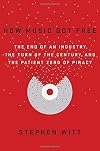
How Music Got Free: The End of an Industry, the Turn of the Century, and the Patient Zero of Piracy (2015) 558 copies, 18 reviews
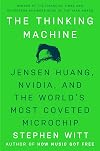
The Thinking Machine: Jensen Huang, Nvidia, and the World’s Most Coveted Microchip (2025) 99 copies, 3 reviews
Tagged
Common Knowledge
- Gender
- male
Members
Reviews
How music got free : the end of an industry, the turn of the century, and the patient zero of piracy by Stephen Witt
I am a member of the pirate generation. When I arrived at college in 1997, I had never heard of an mp3. By the end of my first term I had filled my 2-gigabyte hard drive with hundreds of bootlegged songs. By graduation, I had six 20-gigabyte drives, all full. By 2005, when I moved to New York, I had collected 1,500 gigabytes of music, nearly 15,000 albums worth. It took an hour just to queue up my library, and if you ordered the songs alphabetically by artist, you’d have to listen for ashow more
year and a half to get from ABBA to ZZ Top. I pirated on an industrial scale, but told no one. It was an easy secret to keep. You never saw me at the record store and I didn’t DJ parties. The files were procured in chat channels, and through Napster and BitTorrent; I haven’t purchased an album with my own money since the turn of the millennium. The vinyl collectors of old had filled whole basements with dusty album jackets, but my digital collection could fit in a shoebox. Most of this music I never listened to. I actually hated ABBA, and although I owned four ZZ Top albums, I couldn’t tell you the name of one. What was really driving me, I wonder? Curiosity played a role, but now, years later, I can see that what I really wanted was to belong to an elite and rarefied group. This was not a conscious impulse, and, had you suggested it to me, I would have denied it. But that was the perverse lure of the piracy underground, the point that almost everyone missed. It wasn’t just a way to get the music; it was its own subculture.
And still, the music industry goes forward.
This is a book with mainly, as I see it, two different forks. One is about how the MP3 technology came about, and another is of how digital music piracy came about.
A lot of this book was like walking down memory lane for myself, a computer-savvy teenager as MP3s hit the stage in a world-wide way, along with file-sharing software.
In May 1998, Saehan’s MPMan arrived. The first consumer-grade mp3 player was a box-sized contraption with a tiny monochrome screen that cost $600 and held five songs. It was roundly criticized by reviewers, and sales were limited to enthusiasts.
As the music industry pondered how CDs actually leaked out to piracy groups on the net, one single guy was often responsible for all the releases from a single CD production plant, as he worked there and simultaneously provided for RNS, one of the biggest release groups of them all:
Glover left the technical part to Kali. Unlike many Scene participants, he wasn’t interested in mind-numbing discussions about the relative merits of constant and variable bit rates. He just provided the discs, and after he’d ripped them and transmitted the data, he would usually listen to a smuggled disc only once or twice before growing bored. When he was done with a disc, he stashed it in a black duffel bag he had hidden away in his bedroom closet. By 2002, the duffel bag contained more than 500 discs, representing nearly every major release to have come through the Kings Mountain plant. Glover leaked Lil Wayne’s 500 Degreez, Dr. Dre’s Chronic 2001, and Jay-Z’s The Blueprint. He leaked Queens of the Stone Age’s Rated R and 3 Doors Down’s Away from the Sun. He leaked Björk. He leaked Ashanti. He leaked Ja Rule. He leaked Nelly. He leaked Take Off Your Pants and Jacket. [...] The high point of Kali’s year came in May 2002, when Glover leaked The Eminem Show 25 days early. Even though it would go on to become the year’s bestselling album, the rapper was forced to reschedule his tour. [...] Anything that Doug Morris signed, Dell Glover leaked, and, in what was becoming RNS’ signature move, all of the leaks hit the Internet precisely 14 days before they were due in stores.
Also, how the industry affected the law - especially in the US of A, here - is interesting, as they really lashed out without knowing what they were doing; the ramifications of placing children and their families in major, live-spanning debt for sharing a few Britney Spears songs were just extreme, hellacious and the result of utter capitalism:
The RIAA’s antipiracy division targeted defendants by the number of files they had uploaded, setting a threshold minimum of 1,000 songs shared. The idea was to go after only the worst offenders, but, due to technical factors, it didn’t quite work out that way. Napster and its clones tended to make one’s library uploadable by default. Savvy users often disabled this function, meaning many of the so-called “worst offenders” turned out to be clueless noobs. So to the outside world, Project Hubcap looked arbitrary and vicious. The RIAA seemed to be choosing the defendants at random, picking up IP addresses from peer-to-peer servers like Kazaa and LimeWire and subpoenaing the responsible Internet service providers for customer details. But even with these subpoenas the RIAA never quite seemed to know who it was suing. It targeted single mothers and families without computers. It targeted senior citizens and children. It targeted the unemployed and people who’d been dead for months. In one high-profile case, the RIAA targeted Brianna LaHara, a 12-year-old girl who lived in a New York City housing project and who had downloaded, among other things, the theme song from the TV sitcom Family Matters. Rather than doing the sensible thing—dropping their civil lawsuit against a child—the RIAA instead offered to settle with little Brianna, provided her parents wrote them a check for 2,000 dollars.
As the music business utterly failed to create anything near a community - and they still cannot fathom this, unlike some retailers like Bleep and Bandcamp - sites popped up to meet the demand, sites like Oink's Pink Palace, where one could not only download a specific album, but different versions of said album, in a slew of different formats and qualities:
Hosting bills began to mount. By December, the tracker cost several hundred dollars a month to maintain. In early 2005, Ellis posted the address of a PayPal account for the site and made a polite request for donations. Cash began to trickle in, denominated in currencies from all over the globe. More than money, Oink’s army donated labor. They built out the archive, and their enthusiasm for this venture put even the Scene to shame. Oinkers uploaded their own CD collections, and the CD collections of their friends. Some of the site’s elite “torrent masters” uploaded a thousand albums or more. As Scene participants had done before them, Oinkers started to search eBay for rarities and import pressings. As record stores started closing, Oinkers showed up to buy their fire sale inventory in bulk, and these compulsive uploaders were the music retailers’ last, best customers. First, there were 1,000 albums. Then 10,000. Then 100,000. Ellis the elitist presided over it all. It was a beautiful thing: no low-quality encodes, no fakes, no dupes, no movies, no TV shows. Just music. All of it, in perfect digital clarity. All the music ever recorded.
[...]
Oink grew explosively. By the beginning of 2006 the site had 100,000 users and hosted torrents for nearly a million distinct albums, making it four times bigger than the iTunes Store. The site’s user base was uploading 1,500 new torrents each day. Every album was available in multiple formats, and soon Oink had complete, thoroughly documented discographies for any musician you could care to name. Think of the most obscure release from the most obscure artist you knew; it was there, on Oink, in every issue and reissue, including redacted promo copies and split seven-inch records and bonus tracks from Japanese pressings you’d never even heard of. Take the artist Nick Drake. Obscure in his lifetime, Drake sold only 5,000 copies of his final album Pink Moon before overdosing on pills in 1974 at the age of 26. Over the next 25 years his reputation grew slowly. He became a “musician’s musician,” beloved by connoisseurs but unknown to the public. Then, in 1999, the title track for Pink Moon was featured in a commercial for the Volkswagen Cabrio: young trendsetters on a nighttime joyride, scored with the chronically depressed singer’s lyrics about the meaninglessness of life. It ended with a pan to the sky, where the Volkswagen logo stood in for the moon. The campaign was a bust from Volkswagen’s perspective. The Cabrio never sold well in the United States and was discontinued within three years. But the effect on Drake’s back catalog was dramatic—the advertisers had done a better job selling the music than the car. Within a few months of the commercial’s first airing, Pink Moon had sold more copies than it had in the previous quarter century. And since Drake had released his music on the UK’s Island label, his back catalog was now part of the behemoth they called Universal Music Group. The music executives there moved quickly to take advantage of this serendipitous gift. You could learn all this on Oink, which acted almost as a museum exhibit of Drake’s critical afterlife, charting the repeated attempts to cash in on his growing critical and commercial stature. The website’s incomparable archives had Pink Moon ripped from eight different sources: the exceptionally rare, extremely valuable first-edition 1972 vinyl from Island Records; the 1986 box set CD reissue from Hannibal Records; the 1990 CD release from Island; the 1992 CD re-reissue from Hannibal; the post-Cabrio 2000 CD re-re-reissue from Island; the accompanying Simply Vinyl 180-gram audiophile re-re-reissue, also from 2000; the 2003 Island Records digitally remastered re-re-re-reissue on compact disc; and the Universal Music Japanese vinyl re-re-re-reissue from 2007. Each of the reissues was then encoded into an alphabet soup of file types—FLAC, AAC, and mp3—so that ultimately there were more than thirty options for downloading this one album alone. You couldn’t find stuff like this on iTunes. The size and scope of Oink’s catalog outdid any online music purveyor, and given its distributed nature, the archive was essentially indestructible. But its growth made it difficult to maintain. Alan Ellis now spent almost all his free time keeping the site running, and as his grades suffered, he was forced to repeat a year at university. By the summer of 2006, Oink was getting 10,000 page views a day, and the hosting bills had grown to thousands of dollars a month. Several times, Ellis ran pledge drives on the site’s front page. The response from his community was overwhelming. In the span of a year Ellis’ army donated over 200,000 pounds—nearly half a million dollars. People liked Oink. They were even willing to pay for it.
[...]
By the time Ellis finally graduated from university in 2007, Oink’s army was 180,000 members strong. Among the foot soldiers were several famous musicians, including Nine Inch Nails’ Trent Reznor, who admitted in an interview to being an avid user of the site and described it as “the world’s greatest record store.” Ellis himself could attest to this. While administering the site, he’d gone from being a casual music listener to a total fanatic. He used the music-tracking site Last .fm to publicize his listening habits, and during the three years he’d been running Oink, he had listened to over 91,000 songs—6,000 hours’ worth of music.
[...]
iTunes was just a store, basically a mall—Oink was a community.
Then, the law caught up with Oink:
The evidence trail amounted to the easiest bust in the history of online piracy. On Tuesday, October 23, 2007, Ellis woke before dawn to prepare for another day in the IT pit at the chemical company in downtown Middlesbrough. He took a shower in his apartment’s shared bathroom, then returned to his bedroom, where his girlfriend, having spent the night, was still asleep. As he did every morning, he logged into Oink as administrator, checked the server logs, and read the overnight messages from his deputized lieutenants. Then the door slammed open and a dozen police officers swarmed into his room. All ten of Ellis’ bank accounts were frozen simultaneously. Across the country in Manchester, his father was inexplicably arrested as well, and charged with money laundering. Alan Ellis’ home computer was seized as evidence. So were the Holland servers, which contained the IP and email addresses of all 180,000 Oink members. Unlike the Pirate Bay administrators, Ellis had not planned for this contingency, and the torrents Oink served went dark.
They also detail how artists and labels started thinking differently, in order to get in touch with their fans and buyers:
Artists began to experiment. Lady Gaga moved a million units in a single week by selling her album Born This Way for 99 cents. Beyoncé released a surprise self-titled “visual” album with 17 attached videos, exclusively sold through Apple. Radiohead’s Thom Yorke pulled his work from Spotify and dumped his album Tomorrow’s Modern Boxes onto BitTorrent. Taylor Swift pulled her work too, then sold nearly two million copies of her album 1989 in a month, the bulk of those as compact discs at big-box stores.
All in all, this book is fairly well-written, despite containing some apparent flaws - such as concentrating on just a few of the release sites, in my opinion, as well as writing abhorrently of some people, e.g. Lindsay Lohan - but as a whole, it so far serves as the best document that I have seen in a long time, of how digital music piracy came to be and stays. show less
WHY DID I PICK UP THIS BOOK?
I’ve read a number of books on startups, technology, and even some on chips over the years. This is the first book I’m reading on Artificial Intelligence, although I’ll likely need to read one on Sam Altman next.
I picked up this book first because it was selected by the Financial Times as their top pick from 2025.
Before reading this book, Nvidia was a company I’d had some familiarity with over the years, but never looked at that closely. I wasn’t a show more serious gamer as a teenager, but was aware of Nvidia’s superiority in graphics cards. I remember the days of people using Nvidia chips to mine Ethereum.
Before reading this book, AI was something I’d been hearing about for quite some time. One of my cousins created his first neural net in 1999, and used to run the AI meetup at MIT starting in 2014.
I use AI some in my workflows (especially ChatGPT for research and copy editing, and Grok for current events), but I’m not an AI maximalist.
SO WHO IS JENSEN HUANG?
Huang was born in Taiwan in 1963. When he was ten, his parents sent him to school in the United States. The school they selected was Oneida Baptist Institute in Kentucky. Maybe they thought it was a prep school, but it was actually one of the worst and most violent schools in the country. Unfazed, Huang did well.
As a teenager, Huang started working at Denny’s. He absolutely loved it. He also got into competitive table tennis, and was actually very good.
After college, Huang got a job as a microchip designer in Silicon Valley. By the age of 30, he and a few friends had founded Nvidia. The word means “envy” in Latin (hence their slime-green branding).
It wasn’t until 2014, when Huang was 50, that he learned about Artificial Intelligence. Well, okay, maybe that’s an exaggeration, but, despite his dedication to finding new business lines, up until this point Huang had hobbies—he had a wife, whiskey, dogs, kids, cars, and liked cooking. But after 2014, Huang dropped all of those things and hasn’t picked them up since. Apparently, now, he is AI, 24/7.
WHAT IS HUANG’S MANAGEMENT STYLE?
People say he’s a “yeller.” A lot of people say this. The other nickname people will often use for him is Darth Vader. They don’t mean it as a kind of fascist compliment; they just think he’s evil.
But people also say they like working for Huang, because he is passionate about his field. Actually, they use another word: resonant. I like this descriptor.
Early in his career, when visiting TSMC in Taiwan, Huang became a fan of the Asian 9-9-6 workweek (9:00am to 9:00pm, 6 days a week)—just eight hours shy of two Anglo-style workweeks in one! He brought this culture to Nvidia.
Huang refers to profitability as “insurance.” Although Nvidia has almost gone bankrupt a handful of times, Huang has insisted that his employees behave as though the company is closing in 30 days. He still says that, all the time. You have to wonder: is there a difference in the type and quality of work people do when they feel taken care of rather than when they feel pushed to the brink of exhaustion, all while being threatened with losing their job? As a manager who has worked in Human Resources, I can tell you the answer: yes! And actually, people do better work when they don’t feel threatened. Not only this, but, possibly more importantly, they do different work.
Although Huang still repeats this mantra, he doesn’t entirely mean it. Apparently he has recently also been saying he wants Nvidia to be a company where employees have a lifelong career.
Huang says that he is driven by guilt (or, at least, the author paraphrases it this way). He has a fear of failure, and a paranoia about competitors. He has said that the only way he can sleep at night is if he has pushed himself to the bone. But apparently even this isn’t really working for him anymore, and his sleep has been getting worse. In recent interviews, Huang has stated that he sleeps three hours a night and works every waking hour, every day of the week. That comes out to 147 hours per week (3.7× normal). That’s a little concerning, given that judgment goes down, and hallucination goes up, with sleep deprivation.
Huang does have some great management and startup stuff.
The first, the zero-billion-dollar market, isn’t his—it is Harvard Business Professor Clayton Christensen’s take, from his 1997 book, THE INNOVATOR’S DILEMMA. The key idea? As a startup, all the giants have dibs on markets with a value over $1B. Why? If a big company has a shot at a $1B market, they can (and will) spend $999mm to capture that market. So even if you’re an incredibly well-capitalized startup, say, with $150mm of dry powder, you don’t have a chance. Actually, many companies in recent years, in their drive for monopoly power, will spend in excess of $1B for a $1B market, because if they can drive out competition now and get lock-in, then they can jack up profits later. Amazon is the textbook case of this.
But there’s a loophole: what about markets worth, say, $100mm, that could theoretically grow to be worth $1B+ in the long run? For incumbents, this is simply too speculative and too small. They’d much rather focus on improving margins and volumes on their $1B+ markets than scrounge for loose change on the sidewalk. As a startup, that is your opening.
This is what Nvidia did. In the ’90s, not only was the graphics accelerator segment a niche market (mostly for gamers)—it was extraordinarily competitive, with over thirty companies in the space. There was massive churn, with the top company one year going bankrupt the next. This happened again and again. Somehow, Nvidia hung in there through it all, and actually made it through the Dot-com Crash. For a minute, Huang was a billionaire. It would take him another fourteen years after the crash to regain that status.
The second idea, which it sounds like is actually Huang’s, is an analysis he calls “light speed.” Counterintuitively, light speed doesn’t necessarily mean fast—rather, Huang means it like the universal constant c, as in, nothing can go faster than the speed of light. In practice, this means asking the question: what is the absolute fastest in which something could be completed, in perfect conditions, and how much would it cost to do this? With this information on hand, there are plenty of moments when Huang doesn’t choose for a process to be “light speed,” but at least he knows the real limits that his competitors are also facing, and has leeway to ratchet up certain processes if and when necessary.
Huang also has a good life hack: start your day with the long-term project that you find most fulfilling. That way, even if everything else goes sideways, you finish the day feeling satisfied and accomplished. I love this advice.
DOES HUANG ACTUALLY KNOW ANYTHING ABOUT THE EXISTENTIAL RISK OF AI, OR ANY AI-RELATED RISKS?
Great question! Absolutely not! Actually, he finds even the question repulsive, and refuses to engage in any discussion related to it. But, if you really press him, he will tell you that there is zero risk whatsoever related to AI.
If you’re not familiar with Silicon Valley, I’ll fill you in: SV is full of wildly-successful savants who then think that they are knowledgeable about two or more subjects. This is objectively false. Mark Zuckerberg is not an “expert” on democracy. Elon Musk is not an expert on economics. And yet, not only will people ask them questions about these domains (please don’t), they will then listen to, and reprint, their inanely puerile takes! The world would be a much better place if all journalists refused to print the opinions of tech executives outside of their domains.
But wait, isn’t AI Huang’s domain? I should be more specific: the risks related to AI are, at base, philosophical questions. Jensen has repeatedly insisted that he is belligerently anti-philosophical. He is “serious,” as in—all he cares about is turning all matter into computation, and anyone that stands in the way of this goal, such as by raising the theoretical question of risk, is obstructionist. The author even concludes: most Nvidia staff would rather suffer the extinction of the human race than be yelled at by Huang. People aren’t great at these kinds of “humiliation now, not-the-end-of-the-human-race-and-all-sentient-life” tradeoffs, which is unfortunate.
SO, WHAT IS AI, ANYWAYS?
Funny you ask: I hadn’t actually asked myself that question until after reading this book! And then, I fell down a rabbit hole. AI—or more specifically, Large Language Models (“LLMs”) and Generative Pre-trained Transformers (“GPTs”)—are phenomenally complex! Have you heard of softmax, token limits, random draws, look-ahead masks? If not—now is a great time to learn about them! Actually, I had a number of suspicions about how GPTs worked simply from using them, and it has been fascinating to learn more about the math and the structure behind them to better understand how to use them, and where things can go wrong.
For thirty years, AI was seen as disreputable. This started changing in the 2010s. But then it really changed in 2017, with the publication of a scientific paper, ATTENTION IS ALL YOU NEED. There were some very complex code bases attempting to make AI work. But these researchers stripped things down more, and more, and more, until they only had about twenty lines of code. But then, they ran the model, and ran it many, many times. It worked better than anything else before, by a long shot! AI started to be actually useful, and sentiment changed.
Ominously, the guy that got Huang hooked on AI, Bryan Catanzaro, got into the field himself because he was looking for an application that would require an infinite amount of compute power (because that would be a good market, right?). Well, turns out he was right, but that could have some negative consequences for the planet. AI resource use is growing exponentially, and given that we’re already spending ~$1T/year on AI, it won’t take many more years before AI is the only thing. Of course, there are natural limits. But trusting in those hasn’t actually worked out that well for other planetary and systemic boundaries…
WHAT IS NVIDIA LIKE THESE DAYS?
Well, they have a giant campus in Santa Clara (Silicon Valley). Although they used to have a staff of almost-exclusively white men, in recent years, international candidates have outnumbered domestic candidates ten to one, so at this point, two thirds of the company’s thirty-six thousand employees are Asian.
CONCLUSION
So, should you read the book? I enjoyed it! It wasn’t that long. And, given that Nvidia is now the world’s largest company, it doesn’t hurt to know about their CEO and their history. I found the journalist’s tone neutral, which I appreciate. If there is a downside, I was hoping that the book would go deeper into the technicalities and architecture of AI, but you can also look that stuff up elsewhere (and in other formats). Some have criticized it for contributing to the “Great Man” theory of history, where you look at something amazing and fixate on giving all the credit to the guy at the top. I can understand this criticism, and I’m sure that there have been many contributions to Nvidia’s success, but, at the same time, it feels accurate to say that if you could only choose one person to understand AI chips today, Jensen would be the guy’s story to tell. It also makes the narrative more relatable, and gives it a constant through line. show less
I’ve read a number of books on startups, technology, and even some on chips over the years. This is the first book I’m reading on Artificial Intelligence, although I’ll likely need to read one on Sam Altman next.
I picked up this book first because it was selected by the Financial Times as their top pick from 2025.
Before reading this book, Nvidia was a company I’d had some familiarity with over the years, but never looked at that closely. I wasn’t a show more serious gamer as a teenager, but was aware of Nvidia’s superiority in graphics cards. I remember the days of people using Nvidia chips to mine Ethereum.
Before reading this book, AI was something I’d been hearing about for quite some time. One of my cousins created his first neural net in 1999, and used to run the AI meetup at MIT starting in 2014.
I use AI some in my workflows (especially ChatGPT for research and copy editing, and Grok for current events), but I’m not an AI maximalist.
SO WHO IS JENSEN HUANG?
Huang was born in Taiwan in 1963. When he was ten, his parents sent him to school in the United States. The school they selected was Oneida Baptist Institute in Kentucky. Maybe they thought it was a prep school, but it was actually one of the worst and most violent schools in the country. Unfazed, Huang did well.
As a teenager, Huang started working at Denny’s. He absolutely loved it. He also got into competitive table tennis, and was actually very good.
After college, Huang got a job as a microchip designer in Silicon Valley. By the age of 30, he and a few friends had founded Nvidia. The word means “envy” in Latin (hence their slime-green branding).
It wasn’t until 2014, when Huang was 50, that he learned about Artificial Intelligence. Well, okay, maybe that’s an exaggeration, but, despite his dedication to finding new business lines, up until this point Huang had hobbies—he had a wife, whiskey, dogs, kids, cars, and liked cooking. But after 2014, Huang dropped all of those things and hasn’t picked them up since. Apparently, now, he is AI, 24/7.
WHAT IS HUANG’S MANAGEMENT STYLE?
People say he’s a “yeller.” A lot of people say this. The other nickname people will often use for him is Darth Vader. They don’t mean it as a kind of fascist compliment; they just think he’s evil.
But people also say they like working for Huang, because he is passionate about his field. Actually, they use another word: resonant. I like this descriptor.
Early in his career, when visiting TSMC in Taiwan, Huang became a fan of the Asian 9-9-6 workweek (9:00am to 9:00pm, 6 days a week)—just eight hours shy of two Anglo-style workweeks in one! He brought this culture to Nvidia.
Huang refers to profitability as “insurance.” Although Nvidia has almost gone bankrupt a handful of times, Huang has insisted that his employees behave as though the company is closing in 30 days. He still says that, all the time. You have to wonder: is there a difference in the type and quality of work people do when they feel taken care of rather than when they feel pushed to the brink of exhaustion, all while being threatened with losing their job? As a manager who has worked in Human Resources, I can tell you the answer: yes! And actually, people do better work when they don’t feel threatened. Not only this, but, possibly more importantly, they do different work.
Although Huang still repeats this mantra, he doesn’t entirely mean it. Apparently he has recently also been saying he wants Nvidia to be a company where employees have a lifelong career.
Huang says that he is driven by guilt (or, at least, the author paraphrases it this way). He has a fear of failure, and a paranoia about competitors. He has said that the only way he can sleep at night is if he has pushed himself to the bone. But apparently even this isn’t really working for him anymore, and his sleep has been getting worse. In recent interviews, Huang has stated that he sleeps three hours a night and works every waking hour, every day of the week. That comes out to 147 hours per week (3.7× normal). That’s a little concerning, given that judgment goes down, and hallucination goes up, with sleep deprivation.
Huang does have some great management and startup stuff.
The first, the zero-billion-dollar market, isn’t his—it is Harvard Business Professor Clayton Christensen’s take, from his 1997 book, THE INNOVATOR’S DILEMMA. The key idea? As a startup, all the giants have dibs on markets with a value over $1B. Why? If a big company has a shot at a $1B market, they can (and will) spend $999mm to capture that market. So even if you’re an incredibly well-capitalized startup, say, with $150mm of dry powder, you don’t have a chance. Actually, many companies in recent years, in their drive for monopoly power, will spend in excess of $1B for a $1B market, because if they can drive out competition now and get lock-in, then they can jack up profits later. Amazon is the textbook case of this.
But there’s a loophole: what about markets worth, say, $100mm, that could theoretically grow to be worth $1B+ in the long run? For incumbents, this is simply too speculative and too small. They’d much rather focus on improving margins and volumes on their $1B+ markets than scrounge for loose change on the sidewalk. As a startup, that is your opening.
This is what Nvidia did. In the ’90s, not only was the graphics accelerator segment a niche market (mostly for gamers)—it was extraordinarily competitive, with over thirty companies in the space. There was massive churn, with the top company one year going bankrupt the next. This happened again and again. Somehow, Nvidia hung in there through it all, and actually made it through the Dot-com Crash. For a minute, Huang was a billionaire. It would take him another fourteen years after the crash to regain that status.
The second idea, which it sounds like is actually Huang’s, is an analysis he calls “light speed.” Counterintuitively, light speed doesn’t necessarily mean fast—rather, Huang means it like the universal constant c, as in, nothing can go faster than the speed of light. In practice, this means asking the question: what is the absolute fastest in which something could be completed, in perfect conditions, and how much would it cost to do this? With this information on hand, there are plenty of moments when Huang doesn’t choose for a process to be “light speed,” but at least he knows the real limits that his competitors are also facing, and has leeway to ratchet up certain processes if and when necessary.
Huang also has a good life hack: start your day with the long-term project that you find most fulfilling. That way, even if everything else goes sideways, you finish the day feeling satisfied and accomplished. I love this advice.
DOES HUANG ACTUALLY KNOW ANYTHING ABOUT THE EXISTENTIAL RISK OF AI, OR ANY AI-RELATED RISKS?
Great question! Absolutely not! Actually, he finds even the question repulsive, and refuses to engage in any discussion related to it. But, if you really press him, he will tell you that there is zero risk whatsoever related to AI.
If you’re not familiar with Silicon Valley, I’ll fill you in: SV is full of wildly-successful savants who then think that they are knowledgeable about two or more subjects. This is objectively false. Mark Zuckerberg is not an “expert” on democracy. Elon Musk is not an expert on economics. And yet, not only will people ask them questions about these domains (please don’t), they will then listen to, and reprint, their inanely puerile takes! The world would be a much better place if all journalists refused to print the opinions of tech executives outside of their domains.
But wait, isn’t AI Huang’s domain? I should be more specific: the risks related to AI are, at base, philosophical questions. Jensen has repeatedly insisted that he is belligerently anti-philosophical. He is “serious,” as in—all he cares about is turning all matter into computation, and anyone that stands in the way of this goal, such as by raising the theoretical question of risk, is obstructionist. The author even concludes: most Nvidia staff would rather suffer the extinction of the human race than be yelled at by Huang. People aren’t great at these kinds of “humiliation now, not-the-end-of-the-human-race-and-all-sentient-life” tradeoffs, which is unfortunate.
SO, WHAT IS AI, ANYWAYS?
Funny you ask: I hadn’t actually asked myself that question until after reading this book! And then, I fell down a rabbit hole. AI—or more specifically, Large Language Models (“LLMs”) and Generative Pre-trained Transformers (“GPTs”)—are phenomenally complex! Have you heard of softmax, token limits, random draws, look-ahead masks? If not—now is a great time to learn about them! Actually, I had a number of suspicions about how GPTs worked simply from using them, and it has been fascinating to learn more about the math and the structure behind them to better understand how to use them, and where things can go wrong.
For thirty years, AI was seen as disreputable. This started changing in the 2010s. But then it really changed in 2017, with the publication of a scientific paper, ATTENTION IS ALL YOU NEED. There were some very complex code bases attempting to make AI work. But these researchers stripped things down more, and more, and more, until they only had about twenty lines of code. But then, they ran the model, and ran it many, many times. It worked better than anything else before, by a long shot! AI started to be actually useful, and sentiment changed.
Ominously, the guy that got Huang hooked on AI, Bryan Catanzaro, got into the field himself because he was looking for an application that would require an infinite amount of compute power (because that would be a good market, right?). Well, turns out he was right, but that could have some negative consequences for the planet. AI resource use is growing exponentially, and given that we’re already spending ~$1T/year on AI, it won’t take many more years before AI is the only thing. Of course, there are natural limits. But trusting in those hasn’t actually worked out that well for other planetary and systemic boundaries…
WHAT IS NVIDIA LIKE THESE DAYS?
Well, they have a giant campus in Santa Clara (Silicon Valley). Although they used to have a staff of almost-exclusively white men, in recent years, international candidates have outnumbered domestic candidates ten to one, so at this point, two thirds of the company’s thirty-six thousand employees are Asian.
CONCLUSION
So, should you read the book? I enjoyed it! It wasn’t that long. And, given that Nvidia is now the world’s largest company, it doesn’t hurt to know about their CEO and their history. I found the journalist’s tone neutral, which I appreciate. If there is a downside, I was hoping that the book would go deeper into the technicalities and architecture of AI, but you can also look that stuff up elsewhere (and in other formats). Some have criticized it for contributing to the “Great Man” theory of history, where you look at something amazing and fixate on giving all the credit to the guy at the top. I can understand this criticism, and I’m sure that there have been many contributions to Nvidia’s success, but, at the same time, it feels accurate to say that if you could only choose one person to understand AI chips today, Jensen would be the guy’s story to tell. It also makes the narrative more relatable, and gives it a constant through line. show less
How Music Got Free: The End of an Industry, the Turn of the Century, and the Patient Zero of Piracy by Stephen Witt
I found this a fascinating read. The writing style is conversational and engaging, holding my interest throughout.
I'm an avid music collector, now considered "old school", with my vinyl and CD collection. My sons are a little younger than the author, a part of the "free" generation, and so I was very much aware of the piracy issue from early on. Much of the media information back then came via the music industry, with their shouts of foul play and their lawsuits. They failed to grasp that, show more for the kids, this was not just about getting free stuff; this was a counterculture. Here, Witt gives us the story in its entirety.
The book starts with the invention of the MP3. As an audio format, the industry was not all that interested and it was nearly scrapped. Consumers, however, latched on, surprising everyone with its soaring popularity.
Witt gives us an inside view of the pirate networks, which were, and perhaps still are, a culture all their own. The music industry remained stubbornly determined to stick to their status quo, refusing to acknowledge that their consumers were changing the rules, with or without them.
Stephen Witt's research is impeccable. The content flows well, and is both interesting and enlightening. If you want to know the truth about how and why music became free, as well as just how badly the select few running the music industry failed, definitely read this book.
*I was given a copy of this book by the publisher, via NetGalley, in exchange for my honest review.* show less
I'm an avid music collector, now considered "old school", with my vinyl and CD collection. My sons are a little younger than the author, a part of the "free" generation, and so I was very much aware of the piracy issue from early on. Much of the media information back then came via the music industry, with their shouts of foul play and their lawsuits. They failed to grasp that, show more for the kids, this was not just about getting free stuff; this was a counterculture. Here, Witt gives us the story in its entirety.
The book starts with the invention of the MP3. As an audio format, the industry was not all that interested and it was nearly scrapped. Consumers, however, latched on, surprising everyone with its soaring popularity.
Witt gives us an inside view of the pirate networks, which were, and perhaps still are, a culture all their own. The music industry remained stubbornly determined to stick to their status quo, refusing to acknowledge that their consumers were changing the rules, with or without them.
Stephen Witt's research is impeccable. The content flows well, and is both interesting and enlightening. If you want to know the truth about how and why music became free, as well as just how badly the select few running the music industry failed, definitely read this book.
*I was given a copy of this book by the publisher, via NetGalley, in exchange for my honest review.* show less
How Music Got Free: The End of an Industry, the Turn of the Century, and the Patient Zero of Piracy by Stephen Witt
Lately, I've been having the novel experience of reading about history I remember. I remember the events of this book -- I remember my own perspective, as a very minor I-hate-the-music-industry downloader, of basically everything that happens in this book after the invention of the mp3. This is a fascinating parallax view of history, and I absolutely recommend this for anyone who remembers the heyday of music piracy.
I recommend it for people who don't remember that, too, if they're show more interested in either how we ended up with the music industry the way it is, or massive, total failures to adapt. This book covers both those topics in ample, fascinating detail, and I learned a lot of things I had absolutely no clue about at when they were happening. A small sample of the things I learned from this book:
1. The NHL was at the forefront of the mp3 revolution. Without hockey, we might not be using mp3s today.
2. I should not have disliked Hilary Rosen as much as I did in 2000; she was the dove arguing behind the scenes for making peace with electronic music and pirates.
3. Most pirated music files can be traced back to one of a limited number of groups of rippers; my image of the early days of piracy, which was random people uploading their music collections and downloading other people's, was almost totally incorrect.
4. Metallica's "Until It Sleeps" was the first "officially" pirated song, which seems especially just considering their hysterical opposition to piracy years later.
The book is also -- well, somewhat quirky. Normally non-fiction lives or dies on its narrative voice, and to be honest, Witt doesn't have much of one. Instead, he has weird moments of personal bias. These can be funny, like his truly massive hateboner for Linkin Park, which was so extreme that in reaction I found myself nostalgically wanting to listen to them for the first time since I lived down the street from -- this is true -- a Linkin Park cover garage band made up of teenagers who were just learning to play their instruments. (Three years of that, and yet I hate Linkin Park less than Witt.) But his bias is also unfortunately visible when it comes to describing the life of Dell Glover, the main CD leaker -- like, Witt at one point says Glover, who is black, was born after the era of discrimination. He is, uh, definitely wrong about that, since babies born tomorrow will still be born in the era of discrimination. In general, Witt has a very easy time relating to people who are pretty much like him, and flounders a lot when he's asked to empathize with or understand people who aren't. And his style is clear but not exactly exciting.
However, the story he's telling -- that is exciting. It's interesting watching an entire industry engage in what might best be termed malignant denial. It's interesting learning who got rich off the piracy era and who didn't. It's interesting finding out what happens when pirates grow up.
Basically, it's interesting to learn more about how music got free. show less
I recommend it for people who don't remember that, too, if they're show more interested in either how we ended up with the music industry the way it is, or massive, total failures to adapt. This book covers both those topics in ample, fascinating detail, and I learned a lot of things I had absolutely no clue about at when they were happening. A small sample of the things I learned from this book:
1. The NHL was at the forefront of the mp3 revolution. Without hockey, we might not be using mp3s today.
2. I should not have disliked Hilary Rosen as much as I did in 2000; she was the dove arguing behind the scenes for making peace with electronic music and pirates.
3. Most pirated music files can be traced back to one of a limited number of groups of rippers; my image of the early days of piracy, which was random people uploading their music collections and downloading other people's, was almost totally incorrect.
4. Metallica's "Until It Sleeps" was the first "officially" pirated song, which seems especially just considering their hysterical opposition to piracy years later.
The book is also -- well, somewhat quirky. Normally non-fiction lives or dies on its narrative voice, and to be honest, Witt doesn't have much of one. Instead, he has weird moments of personal bias. These can be funny, like his truly massive hateboner for Linkin Park, which was so extreme that in reaction I found myself nostalgically wanting to listen to them for the first time since I lived down the street from -- this is true -- a Linkin Park cover garage band made up of teenagers who were just learning to play their instruments. (Three years of that, and yet I hate Linkin Park less than Witt.) But his bias is also unfortunately visible when it comes to describing the life of Dell Glover, the main CD leaker -- like, Witt at one point says Glover, who is black, was born after the era of discrimination. He is, uh, definitely wrong about that, since babies born tomorrow will still be born in the era of discrimination. In general, Witt has a very easy time relating to people who are pretty much like him, and flounders a lot when he's asked to empathize with or understand people who aren't. And his style is clear but not exactly exciting.
However, the story he's telling -- that is exciting. It's interesting watching an entire industry engage in what might best be termed malignant denial. It's interesting learning who got rich off the piracy era and who didn't. It's interesting finding out what happens when pirates grow up.
Basically, it's interesting to learn more about how music got free. show less
Lists
Awards


You May Also Like


Statistics
- Works
- 2
- Members
- 657
- Popularity
- #38,399
- Rating
- 4.0
- Reviews
- 21
- ISBNs
- 27
- Languages
- 4
- Favorited
- 1