
Greg Milner
Author of Perfecting Sound Forever: An Aural History of Recorded Music
About the Author
Greg Milner is the author of Perfecting Sound Forever, a finalist for the National Book Critics Circle Award. His writing has appeared in Wired, New York Times Book Review, New York, Slate, Village Voice, Salon, Spin, and Rolling Stone. He lives in Brooklyn, New York.
Works by Greg Milner
Tagged
Common Knowledge
- Gender
- male
- Places of residence
- Brooklyn, New York, USA
- Associated Place (for map)
- New York, USA
Members
Reviews
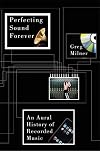
It's easy for a 21st century music listener to forget that for the majority of human history, music appreciation has been an exclusively live, ephemeral, social affair - the serious music nerd with a vast album library, arcane tastes, and expensive headphones and speaker setup is purely an creature of the fruits of technological progress. Milner shows how the invention of sound recording technology had a transformational effect on how people interact with and appreciate music, from the early show more Edison era to the modern period of Pro Tools, covering recording, production, and reproduction.
The first era of sound recording was the acoustic/electric era, and many of the arguments that figures in the era made about recorded sound seem to resonate today in some way. The increasingly deaf yet still innovative Thomas Edison was one of the pioneers of recording, and, as was his wont, got into yet another standards war with a competitor - this time, it was his wax cylinders against the disc records of the Victor corporation's famous Victrola. Right from the start there was a fidelity debate, with electric partisans claiming that electrical recording systems, aided by microphones, could record sounds better than purely acoustic technology, and acoustic partisans arguing the opposite, that acoustic technology was more faithful, more pure than their opponents' systems. Important musical figures weighed in; the famous tenor Enrico Caruso gave Victor a boost by recording a number of performances that were supposed to demonstrate their superiority to the original sound over Edison's setup. In the other direction, Conductor Leopold Stokowski had great enthusiasm for the ability of electrical sound recording to "improve" music; disdaining the idea that a concert experience could truly be duplicated by a record played in someone's living room, he used every means at his disposal to make recordings sound larger than life (he was also one of the primary creative forces behind Fantasia, to this day one of the best and most innovative unions of sight and sound).
The second era of analog involved a switch from cylinders and discs to tape. A hidden legacy of World War 2 is the invention of magnetic tape - the Magnetophon was a German invention used in high-power radio broadcasts. Brought back to the US after the war by a curious radio hobbyist, he eventually teamed with the company Ampex to record Bing Crosby, whereupon tape became a rapidly more popular standard. Another driver was the unsuitability of discs or cylinders as media for field recordings. Father-and-son team John and Alan Lomax hated using bulky and cranky cylinder machines to do field recordings, especially when they happened on talents like Leadbelly. The two fought creatively with Leadbelly, as did later collaborator Moses Asch, since their visions of "true American popular music" didn't always coincide, but they were the first true producers in the modern sense, liberated by the greater possibilities of tape. Les Paul also made pioneering experiments in multi-track recording, when he realized you could simply rewind tape and record over it. Of course, the disc format didn't sit still either - there was yet another format war between the old-school 78s, the "hi-fidelity" 45s, and the long-playing 33 1/3s - and the discovery that different studios seemed to affect performances in different ways both helped artists and helped companies making money off of them, as in the big debates over Elvis moving from Sun's studios to RCA's, and Motown sold many records on the strength of their own unique sound. This also resurrected the debate over the role of the producer - to record "live in the studio" with as few alterations as possible, or to take advantage of newer technology like SSL consoles to help make the sounds bands like Def Leppard had always dreamed about? Both Phil Spector and Steve Albini have their points.
The digital era didn't really settle any disputes, it just made the stakes bigger. Digital technology, in theory allowing for greater fidelity than ever thought possible, also allowed for much greater manipulation of "natural" sounds. Much like in earlier eras, aficionados of the past immediately began arguing that newer technology removed some important element from the music-listener equation, while enthusiasts used that same technology to do things that hadn't been possible before. Sound engineers like Jamaica's King Tubby invented entire new genres like dub, thanks to their mixing boards' ability to manipulate sounds and give artists the chance to do new takes on old material, and the invention of the synthesizer and sampler gave artists almost limitless new options for creating or manipulating sounds themselves. There was even a political angle, as groups like Public Enemy used specific samplers like the SP-1200 to give their records unique, immediately identifiable atmospheres (something that contemporary artists still do, like Kanye West with the 808). New software like Pro Tools made editing far easier than it had been before, and yet, when the conflict between radio stations to draw and keep listeners spilled over into the studio as the CD loudness war, or Auto-Tune began to be applied to music in increasing amounts, the backlash against digital technology got stronger and led to the creation of determinedly low-fidelity movements. However, the economic changes that digital technology unleashed weren't reversible, and the increasing freedom it gave artists to record anyway for far less money than previously eventually led to waves of legendary studios like Muscle Shoals or the Hit Factory closing. Perhaps even more than in previous eras, the implications of new technologies were transformative.
While this isn't a technical book, Milner includes enough background on concepts like clipping, frequency modulation synthesis, and sampling rates to give the reader a solid background in the issues discussed. He's also good about drawing connections between the different eras and showing when the same issues get repeated in new contexts. While it's not strictly a music book either, Milner also has enough passion for what these technologies do for music - his enthusiasm for Led Zeppelin, in particular - that he had me looking up songs to try and hear what he was talking about quite often. Definitely a solid read for anyone interested in the behind-the-scenes work of getting music on disc, or, these days, in the cloud. It'll definitely put a smile on your face the next time you hear anyone go off on what a "warm, more human" sound vinyl has. show less
The first era of sound recording was the acoustic/electric era, and many of the arguments that figures in the era made about recorded sound seem to resonate today in some way. The increasingly deaf yet still innovative Thomas Edison was one of the pioneers of recording, and, as was his wont, got into yet another standards war with a competitor - this time, it was his wax cylinders against the disc records of the Victor corporation's famous Victrola. Right from the start there was a fidelity debate, with electric partisans claiming that electrical recording systems, aided by microphones, could record sounds better than purely acoustic technology, and acoustic partisans arguing the opposite, that acoustic technology was more faithful, more pure than their opponents' systems. Important musical figures weighed in; the famous tenor Enrico Caruso gave Victor a boost by recording a number of performances that were supposed to demonstrate their superiority to the original sound over Edison's setup. In the other direction, Conductor Leopold Stokowski had great enthusiasm for the ability of electrical sound recording to "improve" music; disdaining the idea that a concert experience could truly be duplicated by a record played in someone's living room, he used every means at his disposal to make recordings sound larger than life (he was also one of the primary creative forces behind Fantasia, to this day one of the best and most innovative unions of sight and sound).
The second era of analog involved a switch from cylinders and discs to tape. A hidden legacy of World War 2 is the invention of magnetic tape - the Magnetophon was a German invention used in high-power radio broadcasts. Brought back to the US after the war by a curious radio hobbyist, he eventually teamed with the company Ampex to record Bing Crosby, whereupon tape became a rapidly more popular standard. Another driver was the unsuitability of discs or cylinders as media for field recordings. Father-and-son team John and Alan Lomax hated using bulky and cranky cylinder machines to do field recordings, especially when they happened on talents like Leadbelly. The two fought creatively with Leadbelly, as did later collaborator Moses Asch, since their visions of "true American popular music" didn't always coincide, but they were the first true producers in the modern sense, liberated by the greater possibilities of tape. Les Paul also made pioneering experiments in multi-track recording, when he realized you could simply rewind tape and record over it. Of course, the disc format didn't sit still either - there was yet another format war between the old-school 78s, the "hi-fidelity" 45s, and the long-playing 33 1/3s - and the discovery that different studios seemed to affect performances in different ways both helped artists and helped companies making money off of them, as in the big debates over Elvis moving from Sun's studios to RCA's, and Motown sold many records on the strength of their own unique sound. This also resurrected the debate over the role of the producer - to record "live in the studio" with as few alterations as possible, or to take advantage of newer technology like SSL consoles to help make the sounds bands like Def Leppard had always dreamed about? Both Phil Spector and Steve Albini have their points.
The digital era didn't really settle any disputes, it just made the stakes bigger. Digital technology, in theory allowing for greater fidelity than ever thought possible, also allowed for much greater manipulation of "natural" sounds. Much like in earlier eras, aficionados of the past immediately began arguing that newer technology removed some important element from the music-listener equation, while enthusiasts used that same technology to do things that hadn't been possible before. Sound engineers like Jamaica's King Tubby invented entire new genres like dub, thanks to their mixing boards' ability to manipulate sounds and give artists the chance to do new takes on old material, and the invention of the synthesizer and sampler gave artists almost limitless new options for creating or manipulating sounds themselves. There was even a political angle, as groups like Public Enemy used specific samplers like the SP-1200 to give their records unique, immediately identifiable atmospheres (something that contemporary artists still do, like Kanye West with the 808). New software like Pro Tools made editing far easier than it had been before, and yet, when the conflict between radio stations to draw and keep listeners spilled over into the studio as the CD loudness war, or Auto-Tune began to be applied to music in increasing amounts, the backlash against digital technology got stronger and led to the creation of determinedly low-fidelity movements. However, the economic changes that digital technology unleashed weren't reversible, and the increasing freedom it gave artists to record anyway for far less money than previously eventually led to waves of legendary studios like Muscle Shoals or the Hit Factory closing. Perhaps even more than in previous eras, the implications of new technologies were transformative.
While this isn't a technical book, Milner includes enough background on concepts like clipping, frequency modulation synthesis, and sampling rates to give the reader a solid background in the issues discussed. He's also good about drawing connections between the different eras and showing when the same issues get repeated in new contexts. While it's not strictly a music book either, Milner also has enough passion for what these technologies do for music - his enthusiasm for Led Zeppelin, in particular - that he had me looking up songs to try and hear what he was talking about quite often. Definitely a solid read for anyone interested in the behind-the-scenes work of getting music on disc, or, these days, in the cloud. It'll definitely put a smile on your face the next time you hear anyone go off on what a "warm, more human" sound vinyl has. show less
Parts of this history of recorded sound are fascinating; other parts become tedious. The title of Milner's book is misleading and explains some of my disappointment. This account is not a history of music recording; primarily it's a survey of the developments over the past fifty years in the recording of American pop music.
It's the omissions that irk me. Although he acknowledges recording's initial start in France, Milner really examines only American advances in equipment and recording show more techniques. Surely the British, the French, or the Germans (at least) contributed something to the challenges of transferring sound waves to a persistent medium. There's an interesting story in British Decca's development during World War II of anti-submarine hydrophone technology that subsequently became the basis for their revolutionary ffrr, an important impetus to high fidelity music recording in the 1950's; but you'll learn nothing of that from this book. Milner can also spend several pages on the Beatles' innovative recordings without ever mentioning George Martin; Ricky is the only Martin who makes it into the book's index. What's with that?
Edison's goal, according to Milner, was to make an objectively accurate record of an individual performance. The through-line of Perfecting Sound Forever follows the wandering path from that ideal to recent decades when a CD produces sounds that may never have had any prior physical existence at all. Organizing the book around such a notion requires Milner to virtually ignore classical music after Stokowski's recording of Fantasia (on page 71 of 371) and almost all of acoustic jazz. Fidelity may have vanished in the 1990's from certain types of pop music, but it's grossly over-simplified, even in the era of MP3s, to imply that fidelity has ceased to be a goal of digital recording in general.
Rating the book at two stars would be harsh, but I give it three only because, despite its shortcomings, I found some interesting content in most chapters. show less
It's the omissions that irk me. Although he acknowledges recording's initial start in France, Milner really examines only American advances in equipment and recording show more techniques. Surely the British, the French, or the Germans (at least) contributed something to the challenges of transferring sound waves to a persistent medium. There's an interesting story in British Decca's development during World War II of anti-submarine hydrophone technology that subsequently became the basis for their revolutionary ffrr, an important impetus to high fidelity music recording in the 1950's; but you'll learn nothing of that from this book. Milner can also spend several pages on the Beatles' innovative recordings without ever mentioning George Martin; Ricky is the only Martin who makes it into the book's index. What's with that?
Edison's goal, according to Milner, was to make an objectively accurate record of an individual performance. The through-line of Perfecting Sound Forever follows the wandering path from that ideal to recent decades when a CD produces sounds that may never have had any prior physical existence at all. Organizing the book around such a notion requires Milner to virtually ignore classical music after Stokowski's recording of Fantasia (on page 71 of 371) and almost all of acoustic jazz. Fidelity may have vanished in the 1990's from certain types of pop music, but it's grossly over-simplified, even in the era of MP3s, to imply that fidelity has ceased to be a goal of digital recording in general.
Rating the book at two stars would be harsh, but I give it three only because, despite its shortcomings, I found some interesting content in most chapters. show less
This is a well-researched and intermittently fascinating look at the history of recording technology. Music geeks will like it because they get to learn a lot of semi-technical stuff about compression and waveforms and the like. Milner is not a natural storyteller and occasionally gets himself crossed up; the book could have been substantially shorter. Audiophiles and vinyl snobs will find ammunition for defending their Luddite ways.

An informative, fascinating history featuring the inventors, scientists and musicians behind the development of recording technologies from Thomas Edison to MP3s. With Les Paul and Leadbelly, Nazi broadcasters and King Tubby’s Kingston studio, the Pixies and Shellac, this is a story of the search for fidelity, authenticity, and the perfect sound.
These were groups of musicians accustomed to playing live who were entering a twenty-four-track world. ‘Instead of a band walking into a show more session and playing the way they did every day,’ Albini says, ‘the band would show up at the studio and have a session constructed around them piecemeal in an alien environment. They were doing something different to create a simulacrum of what they did every day. And it should come as no surprise that if a good-looking woman comes into your bedroom and drops her clothes, that’s going to be a lot more effective than if someone brings in an arm and a leg and one ass cheek and starts bolting them together.’
Hazed and Infused Dry Hopped Ale
Beast Bitter Ale show less
These were groups of musicians accustomed to playing live who were entering a twenty-four-track world. ‘Instead of a band walking into a show more session and playing the way they did every day,’ Albini says, ‘the band would show up at the studio and have a session constructed around them piecemeal in an alien environment. They were doing something different to create a simulacrum of what they did every day. And it should come as no surprise that if a good-looking woman comes into your bedroom and drops her clothes, that’s going to be a lot more effective than if someone brings in an arm and a leg and one ass cheek and starts bolting them together.’
Hazed and Infused Dry Hopped Ale
Beast Bitter Ale show less
Lists
Awards


You May Also Like


Statistics
- Works
- 4
- Members
- 566
- Popularity
- #44,191
- Rating
- 3.6
- Reviews
- 9
- ISBNs
- 27
- Languages
- 5