
David Toop
Author of Ocean of Sound
About the Author
David Toop is a writer, musician and curator. His books include Ocean of Sound, Haunted Weather and Sinister Resonance. He is Professor of Audio Culture and Improvisation at University of the Arts London, UK.
Image credit: Unknown
Works by David Toop
Associated Works
Tagged
Common Knowledge
- Birthdate
- 1949-05-05
- Gender
- male
- Nationality
- UK
- Birthplace
- London, England, UK
- Associated Place (for map)
- England, UK
Members
Reviews
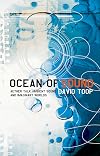
I seldom consider myself an expert in anything, and often diminish my own intellectual sphere of knowledge, but if I am anything, I am the ambient expert of Columbus Ohio. I have heard about 650 ambient albums in my life, and I think it is the most expressive and important human art form. It means the world to me. I have known about this book for a little while, and have heard of David Toop, so it naturally made sense that I check the book out. There are a number of lists on the internet, show more specifically rateyourmusic, that show the appendix section of this book, a well organized and cut down list of references to notable works in the discipline, but I often feel like it is missing a lot of the important things about how this book is constructed. In the introductory pages, he informs the audience that this is a history through his eyes, anecdotally laid out, references bleeding into each other, ideas melding into other ideas.
The problem with recommending this book to most people is that the appendix only accounts for about 30% of the references in this book, and even I, a distinguished student in ambient sound, only recognize about 60% of the names dropped here. Ideas flash in and out, theories and philosophies flow into each other. The book is split into these chapters that either focus on a person, a general idea of listening, or include the 5 stages of “altered states” that go through various environmental phenomena. This leftfield genre brought in so many interesting and brilliant people, people who saw through the noise of everything, and understood the spiritual resonance of sound in the world. At times it made me jealous that I could not be a part of the burgeoning UK 90s loft ambient techno scene, or been contemporaries with john cage, and at other times it makes me wonder if I myself have any ideas this captivating, or quirks this interesting, or philosophies that inspire me. It would take a long time, but I want to compile a proper list of references, albums, and works that David Toop discusses here, because there is enough ambient knowledge in this book to pass down for generations. I do not recommend this book to anyone unfamiliar with ambient beyond the very basics, unless you want to spend your day cross referencing wikipedia pages and searching links to 30 year old ambient albums. That is my dream, I doubt it is yours. show less
What follows in this book is more a personal nomadic drift than a detached chronological history. This drift will trace a web of sources. In my biased opinion, compromised by first-hand involvement, these are the sources that have led to a musical environment which is, despite my reservations, a hydra of creative potential for now and the next century. There are other sources, but those are other books.
The problem with recommending this book to most people is that the appendix only accounts for about 30% of the references in this book, and even I, a distinguished student in ambient sound, only recognize about 60% of the names dropped here. Ideas flash in and out, theories and philosophies flow into each other. The book is split into these chapters that either focus on a person, a general idea of listening, or include the 5 stages of “altered states” that go through various environmental phenomena. This leftfield genre brought in so many interesting and brilliant people, people who saw through the noise of everything, and understood the spiritual resonance of sound in the world. At times it made me jealous that I could not be a part of the burgeoning UK 90s loft ambient techno scene, or been contemporaries with john cage, and at other times it makes me wonder if I myself have any ideas this captivating, or quirks this interesting, or philosophies that inspire me. It would take a long time, but I want to compile a proper list of references, albums, and works that David Toop discusses here, because there is enough ambient knowledge in this book to pass down for generations. I do not recommend this book to anyone unfamiliar with ambient beyond the very basics, unless you want to spend your day cross referencing wikipedia pages and searching links to 30 year old ambient albums. That is my dream, I doubt it is yours. show less

Two-Headed Doctor is an exhaustive (sometimes exhausting) look at Dr. John’s first album; its making and its meaning. There’s much about New Orleans musicians, of course, especially those who participated in the Gris-gris recording sessions, along with speculation about the sources and meanings of the lyrics, the likely history of the actual Doctor John, and more. The book's many digressions sometimes seem only peripherally relevant but just as often lead to some of its most interesting show more ideas. On the history of minstrelsy, for one, and its echoes in today's popular music, in the identities performers adopt, and audience’s notion's of authenticity.
Really quite a remarkable book. show less
Really quite a remarkable book. show less
Really wonderful survey of "ambient," expanded to include jimi hendrix, rahsaan roland kirk, kate bush, etc. More to do with world-building than rock and roll. Hippie but not hokey. "There is talk of the object of the future as something evanescent, light, psychic; of immaterial objects akin to images or holograms." // "Transient non-articulated feelings... 'The Poetics of Space,' whether the ambience of a room, the ribbon of road, or the boundless envelopment of oceanic space." (!!) LOVELY, show more moody, ambling! Recommended for fans of RENEE. show less

[Originally published in EST magazine, 1996]
It seems as if every book title has to have a subtitle these days and Ocean of Sound is no exception: Aether Talk, Ambient Sound and Imaginary Worlds provides a useful clue to Toop's wide-ranging interests. The book discusses ambient music in passing, touching on Brian Eno, Kraftwerk, Aphex Twin, The Orb, Mixmaster Morris, Jon Hassell, Harold Budd, Scanner, Paul Schütze, Pauline Oliveros, Thomas Köner and others. It also explores more show more wide-ranging musical points of reference, such as John Cage, Claude Debussy, Luigi Russolo, Karlheinz Stockhausen, Terry Riley, Derek Bailey, R. Murray Schafer and John Oswald.
But it's also about virtual reality, shamanism, semi-mythical invented instruments, science fiction, post-modernism, environmental sound, the digital revolution, and more. One moment Toop will recount a dream, the next he'll be discussing post-modern philosophy, and then it's on to an autobiographical episode or an interview with a musician. Trivia, theory, anecdote: it's all here.
Ocean of Sound is a survey of the disintegration of all music and sound in the twentieth century, taking Debussy's encounters with gamelan music as a possible point of departure. For Toop, it has become increasingly difficult to tell music apart from background noise, and increasingly unnecessary to differentiate. Music has lost the plot: narrative and structure have been replaced by decentring and formlessness. Space has become more important to music than time.
I'll admit to having in the past found Toop's writing opaque: shoe-horned into a record review or magazine interview, speculation of the sort that fills Ocean of Sound often seems irrelevant. Here, however, everything coalesces, everything makes sense.
It's easily the best music book I've read in years, articulate and enlightening. This is true however much I disagree with Toop's generally positive attitude towards the musical trends he surveys.
At one point he writes: "Blankness - at best a stillness which suggests, rightly or wrongly, political passivity; at worst, a numbness which confirms it - may be one aspect of losing the anchor, circling around an empty centre or whatever the condition is. But openness, another symptom of the condition, may be more significant." I find his willingness to promote post-modern escapism and ignore the "political passivity" which these musical trends breed to be a little disagreeable, but it's a mark of Toop's ability to deal with such substantial issues that his ideas are so provocative. Recommended. show less
It seems as if every book title has to have a subtitle these days and Ocean of Sound is no exception: Aether Talk, Ambient Sound and Imaginary Worlds provides a useful clue to Toop's wide-ranging interests. The book discusses ambient music in passing, touching on Brian Eno, Kraftwerk, Aphex Twin, The Orb, Mixmaster Morris, Jon Hassell, Harold Budd, Scanner, Paul Schütze, Pauline Oliveros, Thomas Köner and others. It also explores more show more wide-ranging musical points of reference, such as John Cage, Claude Debussy, Luigi Russolo, Karlheinz Stockhausen, Terry Riley, Derek Bailey, R. Murray Schafer and John Oswald.
But it's also about virtual reality, shamanism, semi-mythical invented instruments, science fiction, post-modernism, environmental sound, the digital revolution, and more. One moment Toop will recount a dream, the next he'll be discussing post-modern philosophy, and then it's on to an autobiographical episode or an interview with a musician. Trivia, theory, anecdote: it's all here.
Ocean of Sound is a survey of the disintegration of all music and sound in the twentieth century, taking Debussy's encounters with gamelan music as a possible point of departure. For Toop, it has become increasingly difficult to tell music apart from background noise, and increasingly unnecessary to differentiate. Music has lost the plot: narrative and structure have been replaced by decentring and formlessness. Space has become more important to music than time.
I'll admit to having in the past found Toop's writing opaque: shoe-horned into a record review or magazine interview, speculation of the sort that fills Ocean of Sound often seems irrelevant. Here, however, everything coalesces, everything makes sense.
It's easily the best music book I've read in years, articulate and enlightening. This is true however much I disagree with Toop's generally positive attitude towards the musical trends he surveys.
At one point he writes: "Blankness - at best a stillness which suggests, rightly or wrongly, political passivity; at worst, a numbness which confirms it - may be one aspect of losing the anchor, circling around an empty centre or whatever the condition is. But openness, another symptom of the condition, may be more significant." I find his willingness to promote post-modern escapism and ignore the "political passivity" which these musical trends breed to be a little disagreeable, but it's a mark of Toop's ability to deal with such substantial issues that his ideas are so provocative. Recommended. show less
Lists
Awards


You May Also Like


Associated Authors
Statistics
- Works
- 18
- Also by
- 2
- Members
- 931
- Popularity
- #27,576
- Rating
- 3.9
- Reviews
- 10
- ISBNs
- 39
- Languages
- 4
- Favorited
- 2
