
Nelson George
Author of Hip Hop America
About the Author
Nelson George is the author of several non-fiction books, including "The Death of Rhythm & Blues" & "Hip Hop America", both nominated for the National Book Critics Circle Award, & three novels, "One Woman Short", "Seduced", & the "Essence" Blackboard bestseller "Urban Romance". An award-winning show more journalist, he is also an accomplished screenwriter (including "Strictly Business" & "CB-4") & an Emmy Award-winning producer of HBO's "The Chris Rock Show". He lives in Brooklyn, New York. (Bowker Author Biography) show less
Disambiguation Notice:
Nelson George and George Nelson are two different names, please do not combine.
Series
Works by Nelson George
Where Did Our Love Go?: The Rise and Fall of the Motown Sound (Music in American Life) (1985) 123 copies
The Hippest Trip in America: Soul Train and the Evolution of Culture & Style (2014) 37 copies, 3 reviews
The James Brown Reader: Fifty Years of Writing About the Godfather of Soul (2008) 26 copies, 3 reviews
Associated Works
Black on White: Black Writers on What It Means to Be White (1998) — Contributor — 129 copies, 2 reviews
And It Don't Stop: The Best American Hip-Hop Journalism of the Last 25 Years (2004) — Foreword; Contributor — 55 copies
Tagged
Common Knowledge
- Birthdate
- 1957-09-01
- Gender
- male
- Nationality
- USA
- Disambiguation notice
- Nelson George and George Nelson are two different names, please do not combine.
- Associated Place (for map)
- USA
Members
Reviews
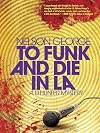
TO FUNK AND DIE IN LA: A D HUNTER MYSTERY by Nelson George was sent to me by Akashic Books as an ‘advance reading copy’ to be read and reviewed.
Mr. George is an author and filmmaker. He has written 3 previous D Hunter mysteries and several nonfiction books spotlighting R & B and Hip Hop.
TO FUNK AND DIE IN LA is the 4th book in the D Hunter crime-fiction series. Ex-bodyguard, D Hunter, returns to LA when his grandfather, Daniel ‘Big Danny’ Hunter, is killed in a brutal drive-by show more shooting. As D investigates, he peels back several layers of his grandfather’s life - store owner, night club owner and friend of the legendary music innovator, Dr. Funk.
I enjoyed this book very much. Mr. George writes with dignity, sensitivity and insightfulness. His short chapters smoothly and seamlessly segue into new conversations, locales and situations. His characters are treated with respect, even though some lack any endearing or humane characteristics.
His words describing music, tones, sounds and voices are so descriptive and emotional.
“When he (Dr. Funk) opened his mouth to sing, a magnificent sound emerged: it was the choir in a Southern backwoods church; working people drinking in a midwestern bar; the rustle of sequined shirts and star-spangled pants; the chemical stink of Jheri-curl juice; the wind in Africa; and the prayers of those kind beings who left us the pyramids.” (p.15)
I’m not sure how it is possible to portray such a formidable, bad-ass character as D in a sympathetic light, but Mr. George’s writing is filled with empathy, sensitivity and dignity. I feel like i should be leery of D, but I’m not - I quite like him.
And the music - always the music - descriptions of music; the layerings of tracks; the evolution of music; the performers - who was better?; distinctive voices and rhythms.
The author transports you to LA, introduces you to these characters (music being a main character in this story) and you start to think about staying for awhile. show less
Mr. George is an author and filmmaker. He has written 3 previous D Hunter mysteries and several nonfiction books spotlighting R & B and Hip Hop.
TO FUNK AND DIE IN LA is the 4th book in the D Hunter crime-fiction series. Ex-bodyguard, D Hunter, returns to LA when his grandfather, Daniel ‘Big Danny’ Hunter, is killed in a brutal drive-by show more shooting. As D investigates, he peels back several layers of his grandfather’s life - store owner, night club owner and friend of the legendary music innovator, Dr. Funk.
I enjoyed this book very much. Mr. George writes with dignity, sensitivity and insightfulness. His short chapters smoothly and seamlessly segue into new conversations, locales and situations. His characters are treated with respect, even though some lack any endearing or humane characteristics.
His words describing music, tones, sounds and voices are so descriptive and emotional.
“When he (Dr. Funk) opened his mouth to sing, a magnificent sound emerged: it was the choir in a Southern backwoods church; working people drinking in a midwestern bar; the rustle of sequined shirts and star-spangled pants; the chemical stink of Jheri-curl juice; the wind in Africa; and the prayers of those kind beings who left us the pyramids.” (p.15)
I’m not sure how it is possible to portray such a formidable, bad-ass character as D in a sympathetic light, but Mr. George’s writing is filled with empathy, sensitivity and dignity. I feel like i should be leery of D, but I’m not - I quite like him.
And the music - always the music - descriptions of music; the layerings of tracks; the evolution of music; the performers - who was better?; distinctive voices and rhythms.
The author transports you to LA, introduces you to these characters (music being a main character in this story) and you start to think about staying for awhile. show less

Rhythm and Blues music and jazz share the same roots and were virtually indistinguishable in the early 20th century, when dance bands became a prominent part of the entertainment world. The word “jazz” was first popularized (not always in a favorable light) by white commentators, few of whom had any knowledge or understanding of the origins of the music. According to Nelson George in The Death of Rhythm and Blues, the appropriation of black musical forms confused styles and divided the show more black audience. Publicists for jazz steered it toward big-band orchestral arrangements and presentation, while the bluesier, grittier music was played for enthusiastic audiences away from the ballrooms. George agrees with Amiri Baraka that the growth of a middle class divided musical tastes in the black community—between the assimilated musical styles preferred by integrationist black elites, and the more working-class, grass-roots sounds heard in black neighborhoods and on so-called ‘race’ records (the term embraced as a point of pride, according to Albert Murray, and misunderstood by white critics).
Before the mid-1940s, says George, the grittier, bluesier music embraced in black communities across the country was seldom played on radio or heard on records, but the decline of big bands during WWII, the evolution of improvised music, and rural electrification enabled Rhythm and Blues to become the dominant dance music of postwar America. The development of Bebop—the complex rhythms and harmonies of the music better suited for listening than dancing—had signaled a shift in the relationship between the audience and those jazz musicians who aspired to be seen as more than mere entertainers. General black tastes tended toward jump blues, ballads, gospel, and big-voiced singers fronting dance orchestras, spurring the emergence of new, independent record labels (most headquartered in Los Angeles) and radio stations playing blues, gospel and jazz. In 1949, Billboard changed the heading of its black popular-music retail-sales chart from “Race” to “Rhythm and Blues.”
The discovery of a black market for popular music enabled black entrepreneurs to form businesses and to profit from black creativity. Record labels, radio stations, retail stores, and live shows made up a whole ‘rhythm and blues world,’ writes George, which in turn provided a model ‘for balancing black capitalism with the realities of a white-dominated society.’ The Chitlin’ Circuit was one manifestation of the R & B world, but residents of black neighborhoods around the country spent money in local record shops and danced in local nightclubs and heard the community news from flamboyant DJs on local radio stations. In George’s telling, the business of the R & B world and black consumerism coincided with the post-WWII self-awareness and black solidarity of a New Negro (echoes of the Harlem Renaissance) ‘pushing against the barricades of racism.’
One of George’s key themes is how cultural integration has had negative consequences for the black community. Over the course of the 20th c., the marketing of black music to white audiences diluted the power and the meaning of the music for blacks (Alain Locke made a similar point in the 1930s), and stymied efforts at economic self-sufficiency. In the 1950s, white DJs began imitating black DJs, and publicists began to market a diluted version of R & B as ‘rock ‘n’ roll,’ so as to dull the racial connotations and make young white consumers more comfortable. By the 1960s, writes George, the link between rock ‘n’ roll and its original black audience had been broken (even as the Beatles and the Beach Boys were ripping off Little Richard and Chuck Berry), and rock became ‘white music made by white people.’
After the 1950s, black popular music moved in a different direction. Rhythm & Blues evolved into Soul, and black cultural and political forms grew more assertive. James Brown demonstrated the possibilities for artistic and economic freedom that black music could provide, says George, and became a symbol of black self-determination. The musical elements that first came to the fore in jazz music surfaced again in black popular music. Brown used horns, guitars and keyboards as percussive instruments, and built grooves around blasts of brass and reeds. Donny Hathaway and Stevie Wonder expanded the harmonic language of R & B with jazz chords, and the sophisticated horn charts and polyrhythmic arrangements of Isaac Hayes, Curtis Mayfield, and Earth Wind & Fire narrowed the gap between R & B/Soul and jazz-based players. (With his focus on Rhythm and Blues music as distinct from jazz, George mostly ignores the leaps across the line represented by hard bop and soul jazz, though he is careful to differentiate between Miles Davis’ electric band and the blander forms of fusion).
The rhythm and blues world of independent record labels, radio stations, concert venues, and neighborhood retail stores was a testament to black creativity and initiative, and all the more an accomplishment given the array of obstacles and forces that undermined black self-reliance. Preston Lauterbach writes about how racial integration, municipal ‘morality campaigns,’ and federal housing programs dismantled flourishing black neighborhoods and vibrant commercial districts. White syndicates and conglomerates absorbed profitable black enterprises; aggressive policing aimed at “corruption and crime-fighting” closed down thriving entertainment quarters (Storyville, Central Avenue, 52nd Street); “urban renewal” replaced functioning neighborhoods with high-rise public housing and freeway interchanges. The cumulative effect of such ‘reforms’ was to undercut a thriving black entertainment environment.
For Nelson George, the erosion of business infrastructure was only part of the reason for the demise of the rhythm and blues world. Black attitudes also played a role. For many, the struggle for equality and integration made the modifying adjective black unnecessary. In the music world, the sale of black hits to a white audience—and the attendant profits—became a powerful lure. The ‘crossover mentality,’ as George calls it, came to dominate the way the business of black music was conducted. The appeal of black music to white audiences pushed black records on to pop radio. Black radio largely rejected the pop efforts of black artists, while R & B veterans were segregated on black radio. Younger, upscale record buyers did not identify with the older artists, and black record executives came to see the older acts—with their ‘processed hair, white suits and chitlin’ circuit ideas’—as relics from the past. When the major record labels began signing black artists, the smaller labels lost performers, writers and administrative personnel. According to George, economic integration and middle-class aspirations changed the tastes of black Americans and undercut the commercial strength of the rhythm and blues world. Blacks failed to develop a strategy of self-sufficiency, the crossover attitude fragmented the market for black radio and record labels, and mom and pop record stores and black concert promoters began to disappear.
Black America’s assimilationist obsession is leading it straight toward cultural suicide…racial pride is as worthy a goal as equality under the law…the challenge facing black artists, producers, radio programmers and entrepreneurs is to free themselves from the comforts of crossover, to recapture racial identity and to fight for the right to exist on their own terms…
Writing in the 1980s, George sounds pessimistic, but anyone who lived through pop-jazz and disco would have been in a sour mood. The Death of Rhythm and Blues includes a few pages on rap and hip hop, but no suggestion of the cultural power that those forms would achieve over the next thirty years. The Hip Hop World seems bigger and richer than the Rhythm and Blues World ever was (and there must be an ever-expanding bibliography on the significance and meaning of that development), and there, in the shade off to one side, spins the Jazz Planet. show less
Before the mid-1940s, says George, the grittier, bluesier music embraced in black communities across the country was seldom played on radio or heard on records, but the decline of big bands during WWII, the evolution of improvised music, and rural electrification enabled Rhythm and Blues to become the dominant dance music of postwar America. The development of Bebop—the complex rhythms and harmonies of the music better suited for listening than dancing—had signaled a shift in the relationship between the audience and those jazz musicians who aspired to be seen as more than mere entertainers. General black tastes tended toward jump blues, ballads, gospel, and big-voiced singers fronting dance orchestras, spurring the emergence of new, independent record labels (most headquartered in Los Angeles) and radio stations playing blues, gospel and jazz. In 1949, Billboard changed the heading of its black popular-music retail-sales chart from “Race” to “Rhythm and Blues.”
The discovery of a black market for popular music enabled black entrepreneurs to form businesses and to profit from black creativity. Record labels, radio stations, retail stores, and live shows made up a whole ‘rhythm and blues world,’ writes George, which in turn provided a model ‘for balancing black capitalism with the realities of a white-dominated society.’ The Chitlin’ Circuit was one manifestation of the R & B world, but residents of black neighborhoods around the country spent money in local record shops and danced in local nightclubs and heard the community news from flamboyant DJs on local radio stations. In George’s telling, the business of the R & B world and black consumerism coincided with the post-WWII self-awareness and black solidarity of a New Negro (echoes of the Harlem Renaissance) ‘pushing against the barricades of racism.’
One of George’s key themes is how cultural integration has had negative consequences for the black community. Over the course of the 20th c., the marketing of black music to white audiences diluted the power and the meaning of the music for blacks (Alain Locke made a similar point in the 1930s), and stymied efforts at economic self-sufficiency. In the 1950s, white DJs began imitating black DJs, and publicists began to market a diluted version of R & B as ‘rock ‘n’ roll,’ so as to dull the racial connotations and make young white consumers more comfortable. By the 1960s, writes George, the link between rock ‘n’ roll and its original black audience had been broken (even as the Beatles and the Beach Boys were ripping off Little Richard and Chuck Berry), and rock became ‘white music made by white people.’
After the 1950s, black popular music moved in a different direction. Rhythm & Blues evolved into Soul, and black cultural and political forms grew more assertive. James Brown demonstrated the possibilities for artistic and economic freedom that black music could provide, says George, and became a symbol of black self-determination. The musical elements that first came to the fore in jazz music surfaced again in black popular music. Brown used horns, guitars and keyboards as percussive instruments, and built grooves around blasts of brass and reeds. Donny Hathaway and Stevie Wonder expanded the harmonic language of R & B with jazz chords, and the sophisticated horn charts and polyrhythmic arrangements of Isaac Hayes, Curtis Mayfield, and Earth Wind & Fire narrowed the gap between R & B/Soul and jazz-based players. (With his focus on Rhythm and Blues music as distinct from jazz, George mostly ignores the leaps across the line represented by hard bop and soul jazz, though he is careful to differentiate between Miles Davis’ electric band and the blander forms of fusion).
The rhythm and blues world of independent record labels, radio stations, concert venues, and neighborhood retail stores was a testament to black creativity and initiative, and all the more an accomplishment given the array of obstacles and forces that undermined black self-reliance. Preston Lauterbach writes about how racial integration, municipal ‘morality campaigns,’ and federal housing programs dismantled flourishing black neighborhoods and vibrant commercial districts. White syndicates and conglomerates absorbed profitable black enterprises; aggressive policing aimed at “corruption and crime-fighting” closed down thriving entertainment quarters (Storyville, Central Avenue, 52nd Street); “urban renewal” replaced functioning neighborhoods with high-rise public housing and freeway interchanges. The cumulative effect of such ‘reforms’ was to undercut a thriving black entertainment environment.
For Nelson George, the erosion of business infrastructure was only part of the reason for the demise of the rhythm and blues world. Black attitudes also played a role. For many, the struggle for equality and integration made the modifying adjective black unnecessary. In the music world, the sale of black hits to a white audience—and the attendant profits—became a powerful lure. The ‘crossover mentality,’ as George calls it, came to dominate the way the business of black music was conducted. The appeal of black music to white audiences pushed black records on to pop radio. Black radio largely rejected the pop efforts of black artists, while R & B veterans were segregated on black radio. Younger, upscale record buyers did not identify with the older artists, and black record executives came to see the older acts—with their ‘processed hair, white suits and chitlin’ circuit ideas’—as relics from the past. When the major record labels began signing black artists, the smaller labels lost performers, writers and administrative personnel. According to George, economic integration and middle-class aspirations changed the tastes of black Americans and undercut the commercial strength of the rhythm and blues world. Blacks failed to develop a strategy of self-sufficiency, the crossover attitude fragmented the market for black radio and record labels, and mom and pop record stores and black concert promoters began to disappear.
Black America’s assimilationist obsession is leading it straight toward cultural suicide…racial pride is as worthy a goal as equality under the law…the challenge facing black artists, producers, radio programmers and entrepreneurs is to free themselves from the comforts of crossover, to recapture racial identity and to fight for the right to exist on their own terms…
Writing in the 1980s, George sounds pessimistic, but anyone who lived through pop-jazz and disco would have been in a sour mood. The Death of Rhythm and Blues includes a few pages on rap and hip hop, but no suggestion of the cultural power that those forms would achieve over the next thirty years. The Hip Hop World seems bigger and richer than the Rhythm and Blues World ever was (and there must be an ever-expanding bibliography on the significance and meaning of that development), and there, in the shade off to one side, spins the Jazz Planet. show less

The author is at his best when he describes the culture of hip hop and the personal experiences of being a Black man in America. The plot and characters, on the other hand, feel disjointed. This book is set in the recent past (2017), and I appreciate the author's unique spin on current events. For example: "What Trump shared with the hip hop moguls was they were all outerborough kids obsessed with Manhattan props. Trump wanted mad fame so much he splashed his name on every surface he owned, show more like a graffiti tagger using gold block letters...Trump deserved a special place in hell for combining rap aesthetics with racism." show less
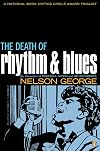
A rich and compelling account that goes far beyond the typical fan-histories popular amongst blues enthusiasts. Its centre-of-mass is on the distinct social and cultural circumstances that fostered blues, jazz and R&B, which developed as African-American music genres that were increasingly appropriated by white performers, record producers, DJs, distributors and consumers. George argues that these genres were diluted and ruined by their assimilation into wider urban culture via the American show more music industry and a growing focus on generating crossover hits. A running theme of the book is his valorising of Booker T. Washington’s idea of black self-sufficiency which, he argues, might have boosted and preserved distinct black music industries. Recommended: this wide-ranging history reaches the parts that most music biographies barely recognise. show less
Lists
Awards


You May Also Like


Associated Authors
Statistics
- Works
- 37
- Also by
- 7
- Members
- 1,325
- Popularity
- #19,399
- Rating
- 3.5
- Reviews
- 53
- ISBNs
- 120
- Languages
- 4
