
Jeff Chang
Author of Can't Stop Won't Stop: A History of the Hip-Hop Generation
About the Author
Image credit: Photo by Joe Mabel (Wikimedia Commons)
Works by Jeff Chang
Associated Works
Tagged
Common Knowledge
- Birthdate
- 1967
- Gender
- male
- Education
- University of Califonia Los Angeles (MA|Asian American Studies|1993|
University of California Berkeley (BA)
'Iolani School - Occupations
- music critic
Executive Director, Stanford University Institute for Diversity in the Arts - Nationality
- USA
- Birthplace
- Hawaii, USA
- Associated Place (for map)
- Hawaii, USA
Members
Reviews
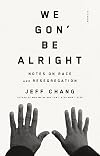
Chang's book is a collection of essays on current events in the United States focusing on racism an inequality in the United States. Topics include:
Chang is a talented and observant show more writer and I intend to look for more of his writing.
Favorite Passages:
- the real meaning and misuse of "diversity"
- student protest movements
- resegregation of American communities
- a detailed breakdown of the police murder of Michael Brown and its aftermath in Ferguson
- the in-between state of Asian Americans between privileges and prejudice
- an examination of Beyonce's album Lemonade
Chang is a talented and observant show more writer and I intend to look for more of his writing.
Favorite Passages:
Over the last quarter century of student protest against racism, the act of calling out so-called political correctness has become a standard strategy of silencing. The legal scholar Mari Matsuda reminds us that racial attacks and hate speech, as well as the “anti-PC” defense of them, are proof that free speech is not a neutral good equally available to all. “The places where the law does not go to redress harm have tended to be the places where women, children, people of color, and poor people live,” she has written. “Tolerance of hate speech is not tolerance borne by the community at large. Rather, it is a psychic tax imposed on those least able to pay.show less
Protest of moral and historic force begins with people facing extreme vulnerability. For those who have been silenced, rising to the act of speaking is a perilously high climb indeed. For them, protest is not an expression of fear and doubt, but an overcoming of fear and doubt. And when it comes from those at the bottom, it can often be a profound proposition about how to make the world better for all. That’s the difference between the mob whipped into a frenzy by a demagogue and the protesters demanding that institutions address harmful conditions that negate their very existence. One excludes, the other raises up.
By itself, gentrification can’t explain the new geography of race that has emerged since the turn of the millennium. It has almost nothing to say about either Hyphy or Ferguson. Gentrification is key to understanding what happened to our cities at the turn of the millennium. But it is only half of the story. It is only the visible side of the larger problem: resegregation.
It was this way all across the country. Neighborhoods where mostly people of color lived were more than twice as likely to have received subprime loans as mostly white neighborhoods. The foreclosure crisis revealed that high-income Blacks were not protected from racist and predatory housing and lending practices. Nor were Latino and Asian American home purchasers. So when the crash came, Blacks and Latinos were 70 percent more likely than whites to lose their homes to foreclosure.
What does it mean to be the evidence that racism is not real? To be fetishized by colorblind liberals and white supremacists alike? To be so innocuous that teachers and policemen and figures of authority mostly allow you the benefit of the doubt? To be desired for your fluid, exotic, futuristic, yielding difference? What does it mean to be the solution?
Migration is always a choice to live. The opposite of migration is not citizenship. It is containment, the condition of being unfree shared with all who are considered less than citizens. The migrant reminds the citizen of the rights that they should be guaranteed. Nations are made of papers. Papers make the border. Papers also turn the migrant into the immigrant. The word “immigrant” is a formal legal term. It centers not the person, but the nation in which the person hopes to become a citizen. “Migration” centers bodies. “Immigration” centers bodies of law. The immigrant is therefore always troubled by the question of status: “legal” or “illegal.” When the immigrant is between the migrant and the citizen, their freedom—and others’ freedom, in turn—depends upon the answer.
In these provocative, powerful essays acclaimed writer/journalist Jeff Chang (Can’t Stop Won’t Stop, Who We Be) takes an incisive and wide-ranging look at the recent tragedies and widespread protests that have shaken the country. Through deep reporting with key activists and thinkers, passionately personal writing, and distinguished cultural criticism, We Gon’ Be Alright links #BlackLivesMatter to #OscarsSoWhite, Ferguson to Washington D.C., the Great Migration to resurgent nativism. show more Chang explores the rise and fall of the idea of “diversity,” the roots of student protest, changing ideas about Asian Americanness, and the impact of a century of racial separation in housing. He argues that resegregation is the unexamined condition of our time, the undoing of which is key to moving the nation forward to racial justice and cultural equity. show less
We Gon’ Be Alright is a hopeful demand for liberation, not just for those who are oppressed, but also the liberation of the oppressors. Chang believes that we need the grace of truth and love. He finds his inspiration in the works of James Baldwin and the idea that love is not an emotion, but an action. Love must be the motivation for revolution. Black people must love themselves enough to demand liberation not just for them, but also their oppressors. As Baldwin wrote, “To love all is show more to fight relentlessly to end exploitation and oppression everywhere, even on behalf of those who think they hate us.”
In spite of the search for grace, We Gon’ Be Alright is not even in the slightest a kumbaya, can’t we just all get along, sort of book. It is a collection of essays asking serious questions about how we have gone from 65% of the American people supporting the Civil Rights Act in 1965 to the current process of resegregation that allows many to ignore and disregard black experience.
It opens with noting the hapless cycle of crisis, reaction, backlash, complacency and crisis. There is an outrage. People demand action. Those in power assert the status quo by invoking fear. Interest subsides into denial or helplessness, and then there is another crisis. Every crisis reinforces complacency because the status quo remains. This raises the question, are we “gon’ be alright?”
From there, Chang looks at the shift from affirmative action to diversity. Thanks to the Bakke decision, efforts to increase opportunities for people of color have been made more difficult. It’s as though in the midst of an experiment, the Supreme Court intervened and forced everyone to use the placebo. Justice Powell “disappeared racial exclusion from the history of higher education, and redirected discussion of affirmative action into a decontextualized present. He radically flattened difference. You’re a farm boy. You’re a violinist. You’re a Louisianan. You’re Black. You’re Chicano. He had affirmed that diversity really was for white people.”
He celebrates student protest and makes an eloquent argument for safe spaces and speech codes, reminding us that the reason students of color are demanding this is because they have been assaulted with racist slurs and symbols while school administrators looked away, allowing harassment to continue with impunity. It is a significant indictment of these institutions of higher learning that the demands of today are similar to the demands students have been making for thirty years.
In another essay he discusses the loss of cultural equity and the privatization of culture, a process that erases experience. “An inequitable culture is one in which people do not have the same power to create, access, or circulate their practices, works, ideas, and stories. It is one in which people cannot represent themselves equally. To say that American culture is inequitable is to say that it moves us away from seeing each other in our full humanity. It is to say that the culture does not point us toward a more just society.” #OscarsSoWhite is inadequate to the effacement of those on the downside of power.
One of the most important essays is Vanilla Cities and Their Chocolate Suburbs. He points out that it is not just gentrification, it’s resegregation. It is about white flight and white colonization. It is about black removal being marketed as urban renewal. This leads of course, into the segregated communities like Ferguson, black communities run by white people to extract all the money they can to finance city services through over-policing, fines and assessments.
And over-policing leads to violence and state-sanctioned murder and now, finally, and gloriously, Black Lives Matter. It is emblematic of the power of racism that something so simple as asserting that lives of black people count is seen as dangerous and insurrectionist. We have so completely accepted the right of police to kill black people, that questioning their power is a revolutionary act, shocking and frightening to those in power. We are so accustomed to absolute police power that asking for police accountability is perceived as an existential threat. The reaction to the simple idea that black lives matter indicts white America. Protesters are saying “Black lives matter too” but reactionaries hear “Black lives matter more.” That they cannot hear the humanity of “black lives matter” demonstrates who little black lives have mattered for a very long time.
Chang writes about the founding of Black Lives Matter and how it differentiates itself from previous civil rights movements. It recognizes that the time for respectability politics is past. Respectability politics in the face of the murders of Trayvon Martin, Tamir Rice, Michael Brown, Eric Garner is inexcusable. He also challenges the misunderstanding of Black Lives Matter as a leaderless movement, quoting Montague Simmons, “One of the things that falls real heavy on us when we hear it is that it’s a leaderless movement. That’s not true. We would say it’s a leader-full movement.”
Another essay focuses on his own identity as Asian American, an identity he did not acquire until he moved to the mainland for college from Hawaii. Perhaps because it was a new imposed identity, he has a different perspective, seeing the challenge of uniting people from all sorts of different ethnicities and histories into one classification. He checks the community for exploiting anti-black racism to advance and promotes the idea of centering civil rights activism on fighting anti-blackness. Many of his ideas are similar to those promoted by RaceFiles and #Asians4BlackLives.
The broad scope of We Gon’ Be Alright makes this a difficult book to review. I think I highlighted about three or four thousand words that I thought were important, that I thought would be nice to include in a book review that might end up as long as the book. I guess the point is that you just have to read the book. What is truly amazing though, is that this is a relatively short book, written with an urgent and fast-moving pace that propels you through the book, unable to look away. Set aside some time when you sit down, because you won’t want to stop until you finish.
Let me finish as Jeff Chang finishes, with his question we must ask ourselves. “Each of us is left with the question: can we, given all the pain that we have had inflicted upon us and that we have inflicted upon others, ever learn to see each other as lovers do, to find our way towards freedom for all?”
We Gon' Be Alright will be released on September 13th. I received an advance e-galley from Macmillan Picador though NetGalley.
https://tonstantweaderreviews.wordpress.com/2016/08/28/we-gon-be-alright-by-jeff... show less
In spite of the search for grace, We Gon’ Be Alright is not even in the slightest a kumbaya, can’t we just all get along, sort of book. It is a collection of essays asking serious questions about how we have gone from 65% of the American people supporting the Civil Rights Act in 1965 to the current process of resegregation that allows many to ignore and disregard black experience.
It opens with noting the hapless cycle of crisis, reaction, backlash, complacency and crisis. There is an outrage. People demand action. Those in power assert the status quo by invoking fear. Interest subsides into denial or helplessness, and then there is another crisis. Every crisis reinforces complacency because the status quo remains. This raises the question, are we “gon’ be alright?”
From there, Chang looks at the shift from affirmative action to diversity. Thanks to the Bakke decision, efforts to increase opportunities for people of color have been made more difficult. It’s as though in the midst of an experiment, the Supreme Court intervened and forced everyone to use the placebo. Justice Powell “disappeared racial exclusion from the history of higher education, and redirected discussion of affirmative action into a decontextualized present. He radically flattened difference. You’re a farm boy. You’re a violinist. You’re a Louisianan. You’re Black. You’re Chicano. He had affirmed that diversity really was for white people.”
He celebrates student protest and makes an eloquent argument for safe spaces and speech codes, reminding us that the reason students of color are demanding this is because they have been assaulted with racist slurs and symbols while school administrators looked away, allowing harassment to continue with impunity. It is a significant indictment of these institutions of higher learning that the demands of today are similar to the demands students have been making for thirty years.
In another essay he discusses the loss of cultural equity and the privatization of culture, a process that erases experience. “An inequitable culture is one in which people do not have the same power to create, access, or circulate their practices, works, ideas, and stories. It is one in which people cannot represent themselves equally. To say that American culture is inequitable is to say that it moves us away from seeing each other in our full humanity. It is to say that the culture does not point us toward a more just society.” #OscarsSoWhite is inadequate to the effacement of those on the downside of power.
One of the most important essays is Vanilla Cities and Their Chocolate Suburbs. He points out that it is not just gentrification, it’s resegregation. It is about white flight and white colonization. It is about black removal being marketed as urban renewal. This leads of course, into the segregated communities like Ferguson, black communities run by white people to extract all the money they can to finance city services through over-policing, fines and assessments.
And over-policing leads to violence and state-sanctioned murder and now, finally, and gloriously, Black Lives Matter. It is emblematic of the power of racism that something so simple as asserting that lives of black people count is seen as dangerous and insurrectionist. We have so completely accepted the right of police to kill black people, that questioning their power is a revolutionary act, shocking and frightening to those in power. We are so accustomed to absolute police power that asking for police accountability is perceived as an existential threat. The reaction to the simple idea that black lives matter indicts white America. Protesters are saying “Black lives matter too” but reactionaries hear “Black lives matter more.” That they cannot hear the humanity of “black lives matter” demonstrates who little black lives have mattered for a very long time.
Chang writes about the founding of Black Lives Matter and how it differentiates itself from previous civil rights movements. It recognizes that the time for respectability politics is past. Respectability politics in the face of the murders of Trayvon Martin, Tamir Rice, Michael Brown, Eric Garner is inexcusable. He also challenges the misunderstanding of Black Lives Matter as a leaderless movement, quoting Montague Simmons, “One of the things that falls real heavy on us when we hear it is that it’s a leaderless movement. That’s not true. We would say it’s a leader-full movement.”
Another essay focuses on his own identity as Asian American, an identity he did not acquire until he moved to the mainland for college from Hawaii. Perhaps because it was a new imposed identity, he has a different perspective, seeing the challenge of uniting people from all sorts of different ethnicities and histories into one classification. He checks the community for exploiting anti-black racism to advance and promotes the idea of centering civil rights activism on fighting anti-blackness. Many of his ideas are similar to those promoted by RaceFiles and #Asians4BlackLives.
The broad scope of We Gon’ Be Alright makes this a difficult book to review. I think I highlighted about three or four thousand words that I thought were important, that I thought would be nice to include in a book review that might end up as long as the book. I guess the point is that you just have to read the book. What is truly amazing though, is that this is a relatively short book, written with an urgent and fast-moving pace that propels you through the book, unable to look away. Set aside some time when you sit down, because you won’t want to stop until you finish.
Let me finish as Jeff Chang finishes, with his question we must ask ourselves. “Each of us is left with the question: can we, given all the pain that we have had inflicted upon us and that we have inflicted upon others, ever learn to see each other as lovers do, to find our way towards freedom for all?”
We Gon' Be Alright will be released on September 13th. I received an advance e-galley from Macmillan Picador though NetGalley.
https://tonstantweaderreviews.wordpress.com/2016/08/28/we-gon-be-alright-by-jeff... show less
Don't get me wrong: that's indeed a great book -very deep, well researched and fascinating to read at least for its far ranging scope (going beyond art itself to touch upon history, politics and a whole culture). However, that's not what I had expected. I wanted an history of hip hop music only; instead I got a heavy history of the whole hip hop culture in which music is just one of many rich aspects. Beware, then! Thus, I can't but feel the book suffers from a terrible lack of balance: to show more me, the time spent on graffiti and b-boying was quite boring (as far as I am concerned, it's interesting but not fascinating) while, on the contrary, the music was far too light. The author focuses on the big names only when, I had in fact expected it to be a tool to delve more into the music beyond such tops and famous. Well, I was disappointed for that reason but, to its credit, the roots of it all are deeply exposed (from Kingston and the Bronx to the whole evolution of DJing and MCing) plus, it serves an original and strikingly relevant approach. In fact, Jeff Chang offers us here a better understanding of the whole sociocultural context in which hip hop music evolved during the last decades, which tempts to make us less judgemental about such evolution. Cleverly indeed, he never judges -he just tries to understand and, the parallels he has to draw between contemporary American history (the heritage of the civil rights movement, the Reagan's years, deindustrialisation and globalisation etc.) and, how such history impacted on the music itself (from conscious hip hop to gangsta rap or, the selfish and greedy branding of some) make for a fascinating read. Yes, it's done from a clear liberal perspective but, as such perspective supports the way some of the artists seem to see themselves it remains relevant. Contrary to what I wanted, it's NOT an history of hip hop music but, it remains a deep read. show less
Lists
Awards


You May Also Like


Associated Authors
Statistics
- Works
- 8
- Also by
- 4
- Members
- 1,581
- Popularity
- #16,322
- Rating
- 4.1
- Reviews
- 33
- ISBNs
- 34
- Languages
- 5