

Wes Anderson
Author of The Grand Budapest Hotel [2014 film]
About the Author
Series
Works by Wes Anderson
The Society of the Crossed Keys: Selections from the Writings of Stefan Zweig, Inspirations for The Grand Budapest Hotel (2014) — Editor — 92 copies, 2 reviews
An Editor’s Burial: Journals and Journalism from the New Yorker and Other Magazines (2021) 66 copies, 1 review
DO NOT DETONATE Without Presidential Approval: A Portfolio on the Subjects of Mid-century Cinema, the Broadway Stage and the American West (2023) 32 copies, 1 review
The Wes Anderson Archive: Ten Films, Twenty-Five Years — Director — 5 copies
The Wonderful Story of Henry Sugar and Three More [2024 film] (2024) — Director/Screenwriter — 2 copies, 1 review
Wes Anderson: The Archives 2 copies
Kuntsmuseum Zubrowka Lecture 1 copy
Mendl's Secret Recipe 1 copy
Associated Works
Tagged
Common Knowledge
- Canonical name
- Anderson, Wes
- Legal name
- Anderson, Wesley Wales
- Birthdate
- 1969-05-01
- Gender
- male
- Education
- University of Texas, Austin
St John's School, Houston, Texas, USA
Westchester High School - Occupations
- director
screenwriter
producer - Relationships
- Anderson, Eric Chase (brother)
- Nationality
- USA
- Birthplace
- Houston, Texas, USA
- Places of residence
- Houston, Texas, USA
New York, New York, USA
Paris, France - Associated Place (for map)
- USA
Members
Reviews
DO NOT DETONATE Without Presidential Approval: A Portfolio on the Subjects of Mid-century Cinema, the Broadway Stage and the American West by Wes Anderson
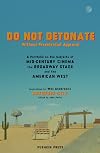
Do Not Detonate Without Presidential Approval, edited by Wes Anderson and Jake Perlin, is a wonderful collection of essays that are interesting in and of themselves but, when taken as material that helped shape the "world of the work" in Anderson's Asteroid City, they become things to consider in relation to each other and, thus, the film.
Wow, that is a bit of a convoluted sentence I just wrote. I'll try to make sense of it. First, the essays (and photographs and interview) are quite show more interesting each on their own. It helps to make sure you know the time when each was written, and which were written specifically for this book, as well as maybe a little about what is written about.
Knowing that what makes a Wes Anderson movie special is the overall atmosphere, the attention to detail and the juxtaposition of elements that separately might not add much but together makes a statement, or at least creates a feeling, then the essays take on a different purpose in reading them. It might be less important that you know much about the movie Borges is talking about and pay more attention to the qualities he is highlighting. Doing this throughout the book, then watching Asteroid City, brings everything into conversation with each other, with you as moderator. The film may have Anderson as moderator, but in the creation that results from your viewing, you take over that position. And this book gives you some of the background to better understand what Anderson did.
Of course, there will be some who will see the film and feel embarrassment for Anderson, you know, because they know better how to make a film. They certainly have more experience, with more critical and popular acclaim. It couldn't be that they simply didn't like it, no, that is far too pedestrian. It sounds so much more (faux) intellectual to speak to how poorly it was done. All I know is I'm glad I don't have a similar outlook on life, if I don't like something, I am confident enough to just say I don't like it, not try to make my subjective opinion into an objective flaw. But I am getting off topic.
Whether you like or dislike Asteroid City (I happened to have liked it, though not as much as some of his other work) this collection will help you appreciate what he did. If you mostly just want to read the essays you will be richly rewarded, these are quite interesting and can lead you down some intriguing rabbit holes if you choose to look things up.
I would recommend this to fans of Anderson's work as well as movie buffs who seek the substance in a film rather than whether a special effect meets their (so-called) quality level. If you're an active reader and moviegoer, you'll find a lot here to enjoy.
Reviewed from a copy made available by the publisher via Edelweiss. show less
Wow, that is a bit of a convoluted sentence I just wrote. I'll try to make sense of it. First, the essays (and photographs and interview) are quite show more interesting each on their own. It helps to make sure you know the time when each was written, and which were written specifically for this book, as well as maybe a little about what is written about.
Knowing that what makes a Wes Anderson movie special is the overall atmosphere, the attention to detail and the juxtaposition of elements that separately might not add much but together makes a statement, or at least creates a feeling, then the essays take on a different purpose in reading them. It might be less important that you know much about the movie Borges is talking about and pay more attention to the qualities he is highlighting. Doing this throughout the book, then watching Asteroid City, brings everything into conversation with each other, with you as moderator. The film may have Anderson as moderator, but in the creation that results from your viewing, you take over that position. And this book gives you some of the background to better understand what Anderson did.
Of course, there will be some who will see the film and feel embarrassment for Anderson, you know, because they know better how to make a film. They certainly have more experience, with more critical and popular acclaim. It couldn't be that they simply didn't like it, no, that is far too pedestrian. It sounds so much more (faux) intellectual to speak to how poorly it was done. All I know is I'm glad I don't have a similar outlook on life, if I don't like something, I am confident enough to just say I don't like it, not try to make my subjective opinion into an objective flaw. But I am getting off topic.
Whether you like or dislike Asteroid City (I happened to have liked it, though not as much as some of his other work) this collection will help you appreciate what he did. If you mostly just want to read the essays you will be richly rewarded, these are quite interesting and can lead you down some intriguing rabbit holes if you choose to look things up.
I would recommend this to fans of Anderson's work as well as movie buffs who seek the substance in a film rather than whether a special effect meets their (so-called) quality level. If you're an active reader and moviegoer, you'll find a lot here to enjoy.
Reviewed from a copy made available by the publisher via Edelweiss. show less

I did not have high hopes for this movie when it was first announced since I've always found Anderson to be a very hit and miss filmmaker. I was happy to find that Fantastic Mr. Fox is one of the hits, although I think it tries a little too hard to be quirky and clever. The stop-motion animation and color palette give the film a distinctive look, and the voice talent is top-notch. It's not quite as good as the book, but it's an adaptation that does get it right.

Expanding the story of Roald Dahl, Mr. Fox steals from and then must escape the wrath of Farmers Boggis, Bunce, and Bean. The first thing viewers will notice about this film is the beautiful stop motion animation. A very autumn-like color palette sets the mood, while the slightly jerky movement of the detailed furry animals enhances it. The madcap action and some of Dahl's humor make this enjoyable for children, but director Wes Anderson adds his trademark dark comedy in the form of the show more dysfunctions of the Fox family and cousin Kristofferson, which will probably fly over younger viewers. Also, the use of the word "cuss" in the place of any type of swearing is a brilliant comedic move that ups the age of true appreciation for the film. A classic humorous tale combines with beautifully odd animation and a new layer of family interaction to make a wonderful film for older viewers. show less

A cosy film about three adult brothers trying to cope with their shared and individual emotional baggage on a train journey in India. It felt like the film as a whole was missing a little something to be truly memorable, but the understated humour is frequently great, the sibling dynamics are consistently excellent, and several emotional beats had satisfyingly strong effects on me -- most notably among them when Adrian Brody's character delivers his heart-wrenching line upon returning bloody show more from the river (I shan't spoil the exact nature of the scene here). show less
Lists
Awards


You May Also Like


Associated Authors
Statistics
- Works
- 42
- Also by
- 1
- Members
- 3,736
- Popularity
- #6,780
- Rating
- 4.0
- Reviews
- 62
- ISBNs
- 103
- Languages
- 3
- Favorited
- 3