
Quentin Tarantino
Author of Once Upon a Time in Hollywood
About the Author
Quentin Tarantino wrote and directed the internationally acclaimed films Django Unchained and Pulp Fiction-for both of which he received an Academy Award for Best Original Screenplay-Reservoir Dogs, Death Proof, Jackie Brown, Inglourious Basterds, and Kill Bill: Volumes 7 2. His other screenplays show more include True Romance, Natural Born Killers, and From Dusk Till Dawn. show less
Image credit: Spike TV Scream Awards 2007, photo by pinguino k
Series
Works by Quentin Tarantino
Four Rooms: Four Friends Telling Four Stories Making One Film [Screenplay] (1995) — Contributor — 43 copies
Quentin Tarantino: Interviews, Revised and Updated (Conversations with Filmmakers Series) (2013) 13 copies
Tarantino Collection (Reservoir Dogs/Pulp Fiction/Jackie Brown/Kill Bill/Kill Bill 2) [DVD] 9 copies
Especulações cinematográficas 4 copies
The Hateful Eight / Django Unchained 4 copies
Tarantino XX: 8-Film Collection (Reservoir Dogs / True Romance / Pulp Fiction / Jackie Brown / Kill Bill: Vol. 1 / Kill Bill: Vol. 2 / Death Proof / Inglourious Basterds)… (2012) — Director — 3 copies
Goodfellas 2 copies
Kill Bill: The Screenplay 1 copy
Pulp Fiction (1994) (DVD) 1 copy
Django: sin cadenas 1 copy
Boulevard de la mort 1 copy
The Wrong Man / Pulp Fiction — Director — 1 copy
Inglorious Basterds 1 copy
Associated Works
Frank Miller's Sin City : Recut & Extended (2005) — Contributor, some editions — 93 copies, 1 review
Unfiltered: The Complete Ralph Bakshi (The Force Behind Fritz the Cat, Mighty Mouse, Cool World, and The Lord of the Rings) (2008) — Foreword — 62 copies
Corman's World: Exploits of a Hollywood Rebel (2011 documentary) (2012) — Actor — 9 copies, 1 review
Freedom's Fury — Executive producer — 2 copies
Tagged
Common Knowledge
- Canonical name
- Tarantino, Quentin
- Legal name
- Tarantino, Quentin Jerome
- Birthdate
- 1963-03-27
- Gender
- male
- Occupations
- director
screenwriter
actor
producer - Organizations
- A Band Apart
- Awards and honors
- Palme d'Or (1994)
Academy Award (1995, 2013)
BAFTA Award (1995, 2013)
Golden Globe Award (1995, 2013, 2020) - Relationships
- Pick, Svika (father-in-law)
Pick, Daniella (wife) - Nationality
- USA
- Birthplace
- Knoxville, Tennessee, USA
- Places of residence
- Los Angeles, California, USA
- Associated Place (for map)
- USA
Members
Reviews

Oh my god. I was not at all prepared for the nature of some the scenes in this movie and I feel like I'm definitely paying for that now. Pulp fiction is a movie that I've always heard people rave about so I figured it was finally time to see what all the hype was about but I made the mistake of going into it blind. I was expecting something similar to Tarantino's other film, Four Rooms, and in some cases it was such as the colorful, dramatic, over-the-top nature of the set and dialogue but show more that's about where the similarities end. While I enjoyed Four Rooms I might go as far as to say I hated Pulp Fiction. While the actors and actresses were phenomenal in their performances right from the beginning I had already been wary due to the immediate use of the N Word. I was hoping that it wouldn't really continue too much throughout the film because I considered it an unnecessary addition especially since it didn't really add anything to the plot but boy was that the least of my problems. Not only was it used, it was used in what felt like every other sentence with the dreadful addition of the hard er at the end AND THEN don't even get me started about the whole pawn shop scene. I'm quite literally feeling sick to my stomach having to recall it while writing this review. The scene entails a very brutal rape of a black man by two white men. There was no reason for it to have been put into the film or for it to have gone on as long as it did. Even when the camera isn't on them the audience is subjected to having to hear the entire horrific ordeal. The whole thing felt like a disgusting fantasy of the subjugation of a black man by a white director because it adds nothing to the plot and it wasn't mentioned or referenced in any meaningful way after the scene finally ends. I've been trying to wrap my head around what could have possibly made Tarantino put it in the film or what he was trying to say and so far I cant come up with anything that could justify it in my mind. All in all I went in with high hopes and ended up with a lingering stomach ache as well as a strong disdain for Pulp Fiction and Tarantino himself. show less
"Rick knows that will never happen, but it's a nice thing to say." (pg. 392)
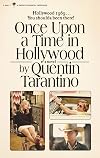
This line, coming towards the end of a scene between Steve McQueen and the fictional character Rick Dalton, reflects two of the three great things about Once Upon a Time in Hollywood, Quentin Tarantino's novelization of his own 2019 film of the same name. Both book and film are a re-imagining of events in Hollywood in 1969, and there is an exuberance to this on the part of Tarantino that makes it magical. The film show more reflects the magic of movies simply by being beautifully written and shot, and also provides a happy ending to one of the era's horrors (the Manson murders). With this alternate history, a surprisingly humane Tarantino provides healing for a cultural wound, and he conveys it by showing his deep-seated love of the screen and screen idols.
In the novel, this climactic (and cathartic) Manson scene is mentioned only in passing, about one hundred pages into the story, before the book continues forging its own path. This choice is not only of practical interest (we read about the boost to Rick Dalton's career caused by his and Cliff's spectacular foiling of Manson's plot), but is one of the first real signs that the book is its own beast, and not a run-of-the-mill movie 'novelization'. Tarantino's not here for the ego-boost of being a published author, like many 'celebrity' writers. He's here to play, and takes the game seriously. It's similar to his evident respect for movie-making: "they don't just pay us to do it. They pay us to do it great" (pg. 394). Tarantino knows there's more to this story, and he's always respected the greater space and license that a novel provides over a film. He's one of those "certain directors [that] make their films with the same power that great authors do" (pg. 228), and he thrives in his new environment. Those who admire how he constructs and paces his films won't be surprised to learn that the leap is not as wide as you might initially think.
The book, then, follows the film in being both a lovingly-constructed, joyous piece of art and something that revels in its license for indulgence. As with some of those beautiful shots and scenes in the movie, Tarantino enjoys himself in the book: the afore-mentioned Steve McQueen scene with Rick; James Stacy riding on his motorbike; the love of film history, trivia and miscellany; and the expansion of Tarantino's self-created Western mock-ups Bounty Law and Lancer. He provides Trudi, the precocious child actor who stole her scenes in the film, with a filmography that includes being cast in a (fictional) film he himself directs in the Nineties (pg. 354). He raises, delightfully, the notion of Michael Caine being cast in the McQueen role in The Great Escape (pg. 377). He even has Rick Dalton sign an autograph for a six-year-old Quentin Tarantino (pg. 364). It's wish fulfilment in the best possible sense: Tarantino is enjoying himself, while also ensuring he maintains his auteur standards. That's been the modus operandi of his career since its beginning, and he doesn't falter here. And we enjoy it too. To appropriate the line from the start of this review, we know this alternate history will never happen, and we know that Hollywood magic provides gloss to an often dark reality (as Manson showed), but we also know that these are damn nice things for Tarantino to say. The book, as with the movie, is a lot of good, high-quality fun, and we revel in it.
But I said at the start that this line reflects two of the three great things about Tarantino's novelization of Once Upon a Time in Hollywood. There is the catharsis of the alternate history and the joyousness of the story. What, then, is the third? The third is the most surprising: it's actually a damn good novel, by any reasonable (i.e. non-snobby) metric.
Not only is Once Upon a Time in Hollywood a cut above your usual movie novelization, but it's a cut above your standard pulp fiction, just as Pulp Fiction was a class above the pulpy crime films it was inspired by. Tarantino is arguably the best writer of dialogue alive today; it just pops, and this novel not only has great passages from the movie but delivers its own. Tarantino has always had an evident Elmore Leonard influence in his writing for the screen, and he leans with great success on that here (the writer is namechecked in chapter 12). Despite one or two clunky moments (so few it would be churlish to quote them), Tarantino's book is very readable. Sometimes, he even provides a flourish. The washed-up Rick's "downswings seemed to find a deeper basement than before" (pg. 109). Sharon Tate has an argument with her husband, and she's always had "such a sunny presence that whenever she blocks out the sun, the effect is chilling" (pg. 385). Some readers will always be inclined to gatekeep, but Tarantino certainly isn't embarrassing himself. This is good writing.
Tarantino also writes good characters. Greater backstory is added to Rick and Cliff (I was going to say greater depth, but because of the different demands of the medium, the depth in the film is provided by the great acting by Leonardo DiCaprio and Brad Pitt). Some of this was a mixed bag (I liked the information on Cliff's wife, but found the "greatest hero of World War Two" stuff hard to buy). But some of it is great. The rationale behind the infamous Bruce Lee scene is convincing, while elsewhere Rick is given closure for his character: in the final pages, he recognises his good fortune to be in the movie-making business. Tarantino knows how to spin a story. When the author digresses into a colourful sidebar about Cliff lending money to his screw-up friend Buster (pg. 66), it got me thinking that this would be recognised as a good story even without the Tarantino name. The book is refreshing, it has energy and originality, and Tarantino is bolder here than many contemporary novelists. Not to mention his dialogue puts them to shame.
What, then, is the result of Tarantino's foray into novel-writing? The big question that remains is how much debt is owed to the film the book is based on. Certainly, it would be difficult to get into this book without having seen the film; the foreknowledge definitely enhances it. At the same time, the book is well-constructed, with great characters, dialogue and scenes. That shouldn't be discarded, or diminished, just because Tarantino had already deployed them in a different medium.
The book even has literary merit, using the greater space and more considered pace that is allowed to a novel to enhance the themes of the film. Leaning more heavily into Rick Dalton's anxieties as a washed-up actor, we begin to see more readily how the Tate murders frame the wider story of how Hollywood chews up its famous denizens. And when Tarantino writes of how Charles Manson would have abandoned his hippie 'Family' cult, "say goodbye to all of them, all that he created, and all he taught them, to trade places with Micky Dolenz and join the Monkees" (pg. 162), he skewers both Manson and the counterculture myth in the same breath. The Sixties dream never went sour; it was always sour. The flower children were always Boomers underneath, and the fame-chasing, underage-groupie-loving superficiality that Tarantino identifies in that line is emphatic. This is a compelling, provocative and downright literary weave from a bona fide writer. Tarantino is in command of his medium, and it bodes well for any writing he might pursue in the future. A great novelist? It's too soon to say, but after Once Upon a Time in Hollywood, the prospect seems far less ridiculous. show less
This line, coming towards the end of a scene between Steve McQueen and the fictional character Rick Dalton, reflects two of the three great things about Once Upon a Time in Hollywood, Quentin Tarantino's novelization of his own 2019 film of the same name. Both book and film are a re-imagining of events in Hollywood in 1969, and there is an exuberance to this on the part of Tarantino that makes it magical. The film show more reflects the magic of movies simply by being beautifully written and shot, and also provides a happy ending to one of the era's horrors (the Manson murders). With this alternate history, a surprisingly humane Tarantino provides healing for a cultural wound, and he conveys it by showing his deep-seated love of the screen and screen idols.
In the novel, this climactic (and cathartic) Manson scene is mentioned only in passing, about one hundred pages into the story, before the book continues forging its own path. This choice is not only of practical interest (we read about the boost to Rick Dalton's career caused by his and Cliff's spectacular foiling of Manson's plot), but is one of the first real signs that the book is its own beast, and not a run-of-the-mill movie 'novelization'. Tarantino's not here for the ego-boost of being a published author, like many 'celebrity' writers. He's here to play, and takes the game seriously. It's similar to his evident respect for movie-making: "they don't just pay us to do it. They pay us to do it great" (pg. 394). Tarantino knows there's more to this story, and he's always respected the greater space and license that a novel provides over a film. He's one of those "certain directors [that] make their films with the same power that great authors do" (pg. 228), and he thrives in his new environment. Those who admire how he constructs and paces his films won't be surprised to learn that the leap is not as wide as you might initially think.
The book, then, follows the film in being both a lovingly-constructed, joyous piece of art and something that revels in its license for indulgence. As with some of those beautiful shots and scenes in the movie, Tarantino enjoys himself in the book: the afore-mentioned Steve McQueen scene with Rick; James Stacy riding on his motorbike; the love of film history, trivia and miscellany; and the expansion of Tarantino's self-created Western mock-ups Bounty Law and Lancer. He provides Trudi, the precocious child actor who stole her scenes in the film, with a filmography that includes being cast in a (fictional) film he himself directs in the Nineties (pg. 354). He raises, delightfully, the notion of Michael Caine being cast in the McQueen role in The Great Escape (pg. 377). He even has Rick Dalton sign an autograph for a six-year-old Quentin Tarantino (pg. 364). It's wish fulfilment in the best possible sense: Tarantino is enjoying himself, while also ensuring he maintains his auteur standards. That's been the modus operandi of his career since its beginning, and he doesn't falter here. And we enjoy it too. To appropriate the line from the start of this review, we know this alternate history will never happen, and we know that Hollywood magic provides gloss to an often dark reality (as Manson showed), but we also know that these are damn nice things for Tarantino to say. The book, as with the movie, is a lot of good, high-quality fun, and we revel in it.
But I said at the start that this line reflects two of the three great things about Tarantino's novelization of Once Upon a Time in Hollywood. There is the catharsis of the alternate history and the joyousness of the story. What, then, is the third? The third is the most surprising: it's actually a damn good novel, by any reasonable (i.e. non-snobby) metric.
Not only is Once Upon a Time in Hollywood a cut above your usual movie novelization, but it's a cut above your standard pulp fiction, just as Pulp Fiction was a class above the pulpy crime films it was inspired by. Tarantino is arguably the best writer of dialogue alive today; it just pops, and this novel not only has great passages from the movie but delivers its own. Tarantino has always had an evident Elmore Leonard influence in his writing for the screen, and he leans with great success on that here (the writer is namechecked in chapter 12). Despite one or two clunky moments (so few it would be churlish to quote them), Tarantino's book is very readable. Sometimes, he even provides a flourish. The washed-up Rick's "downswings seemed to find a deeper basement than before" (pg. 109). Sharon Tate has an argument with her husband, and she's always had "such a sunny presence that whenever she blocks out the sun, the effect is chilling" (pg. 385). Some readers will always be inclined to gatekeep, but Tarantino certainly isn't embarrassing himself. This is good writing.
Tarantino also writes good characters. Greater backstory is added to Rick and Cliff (I was going to say greater depth, but because of the different demands of the medium, the depth in the film is provided by the great acting by Leonardo DiCaprio and Brad Pitt). Some of this was a mixed bag (I liked the information on Cliff's wife, but found the "greatest hero of World War Two" stuff hard to buy). But some of it is great. The rationale behind the infamous Bruce Lee scene is convincing, while elsewhere Rick is given closure for his character: in the final pages, he recognises his good fortune to be in the movie-making business. Tarantino knows how to spin a story. When the author digresses into a colourful sidebar about Cliff lending money to his screw-up friend Buster (pg. 66), it got me thinking that this would be recognised as a good story even without the Tarantino name. The book is refreshing, it has energy and originality, and Tarantino is bolder here than many contemporary novelists. Not to mention his dialogue puts them to shame.
What, then, is the result of Tarantino's foray into novel-writing? The big question that remains is how much debt is owed to the film the book is based on. Certainly, it would be difficult to get into this book without having seen the film; the foreknowledge definitely enhances it. At the same time, the book is well-constructed, with great characters, dialogue and scenes. That shouldn't be discarded, or diminished, just because Tarantino had already deployed them in a different medium.
The book even has literary merit, using the greater space and more considered pace that is allowed to a novel to enhance the themes of the film. Leaning more heavily into Rick Dalton's anxieties as a washed-up actor, we begin to see more readily how the Tate murders frame the wider story of how Hollywood chews up its famous denizens. And when Tarantino writes of how Charles Manson would have abandoned his hippie 'Family' cult, "say goodbye to all of them, all that he created, and all he taught them, to trade places with Micky Dolenz and join the Monkees" (pg. 162), he skewers both Manson and the counterculture myth in the same breath. The Sixties dream never went sour; it was always sour. The flower children were always Boomers underneath, and the fame-chasing, underage-groupie-loving superficiality that Tarantino identifies in that line is emphatic. This is a compelling, provocative and downright literary weave from a bona fide writer. Tarantino is in command of his medium, and it bodes well for any writing he might pursue in the future. A great novelist? It's too soon to say, but after Once Upon a Time in Hollywood, the prospect seems far less ridiculous. show less
After being surprised by the originality and literary quality of Quentin Tarantino's novelization of Once Upon a Time in Hollywood last year, I had strange expectations heading into Cinema Speculation. On the one hand, I was excited about what Tarantino – who in the Once novelization had proved he could replicate his talent in a different medium – could do with a non-fiction book. On the other hand, a book of Tarantino jawing about film seemed to have limited potential for pleasant show more surprises.
So what is Cinema Speculation? It is as expected, but all the more impressive for that. It's Tarantino writing in a freewheelin' style about some of his favourite movies, mostly those of the late Sixties and the Seventies which were a formative influence on him. His passion is infectious and his insights, as one would expect from one of the most dynamic filmmakers of our time, are astute.
The reason it's an impressive book is because it does this well. Tarantino's book is a loose but disciplined series of commentaries, blending film criticism with personal memoir with such a good balance that the reader is never bored, even when the films discussed are obscure. His personal history is interesting, he has a passion for movie lore and gossip, and his insights into the technical side of cinema and the behind-the-scenes horse-trading of film production are comprehensive. When he discusses the decisions and techniques of various filmmakers, he can often draw on personal conversations he has had with them.
It might sound like the sort of book Tarantino could write with his eyes closed, but it must be quite hard to actually pull off. Just last week, I read Bob Dylan's disappointing new book The Philosophy of Modern Song, and Dylan failed to do just about everything which Tarantino succeeds in doing: a master providing a conversational and insightful look into his craft and his personal influences, that both informs and entertains.
Cinema Speculation can sometimes feel redundant, and if Tarantino had written it about modern movies it might well have become an influential swing at the current state of the industry. Aside from one very brief (and diplomatic) jab at the current glut of superhero movies (pg. 160) – I'm one of those who, as Tarantino writes, can't wait for the day – he doesn't really try to make a footprint in the zeitgeist of 2022, the way a genuine critic would aspire to.
In a recent podcast with Tom Segura, Tarantino explained why he doesn't want to talk about current movies – it wouldn't be right to criticise his peers, and he doesn't just want to cheerlead those he likes – which is fair enough. But such talk of contemporary titles and trends would be zestier than any discussion, however informative, of Bullitt and Taxi Driver. At one point, Tarantino talks about Magnum Force, the first Dirty Harry sequel, and how it makes completely different arguments on vigilantism and crime to the first movie. It is, Tarantino writes, "a rather rare Hollywood occurrence. The counterpoint argument sequel" (pg. 60). This would have been a great opportunity to note how this is in fact becoming much less rare: that many modern sequels and remakes are indeed becoming counterpoint arguments which seek to undermine the originals, by recasting, "deconstructing" or side-lining their beloved lead characters in a gormless examination of their purported misogyny, colonialism, or "cis-het white privilege". One cannot blame Tarantino for wanting to stay out of this culture war, for all the damage it is doing to the magic of the movies, but when Cinema Speculation doesn't take such obvious opportunities to engage with the zeitgeist, it can feel like the book is stuck in time.
Nevertheless, taking the book for what it is rather than what it could have been, Cinema Speculation is a charming read. It is never alienating, even in the moments it delves into obscure Seventies flicks, and Tarantino takes a good line between spontaneity and authority, between freewheeling entertainment and obsessive movie-geek seriousness. If Tarantino is serious about pivoting away from movie-making and towards writing, I have growing confidence that it will be worthwhile. While losing Tarantino the filmmaker will be an incalculable loss, the emergence of Tarantino the writer has so far been a pleasant surprise. show less
So what is Cinema Speculation? It is as expected, but all the more impressive for that. It's Tarantino writing in a freewheelin' style about some of his favourite movies, mostly those of the late Sixties and the Seventies which were a formative influence on him. His passion is infectious and his insights, as one would expect from one of the most dynamic filmmakers of our time, are astute.
The reason it's an impressive book is because it does this well. Tarantino's book is a loose but disciplined series of commentaries, blending film criticism with personal memoir with such a good balance that the reader is never bored, even when the films discussed are obscure. His personal history is interesting, he has a passion for movie lore and gossip, and his insights into the technical side of cinema and the behind-the-scenes horse-trading of film production are comprehensive. When he discusses the decisions and techniques of various filmmakers, he can often draw on personal conversations he has had with them.
It might sound like the sort of book Tarantino could write with his eyes closed, but it must be quite hard to actually pull off. Just last week, I read Bob Dylan's disappointing new book The Philosophy of Modern Song, and Dylan failed to do just about everything which Tarantino succeeds in doing: a master providing a conversational and insightful look into his craft and his personal influences, that both informs and entertains.
Cinema Speculation can sometimes feel redundant, and if Tarantino had written it about modern movies it might well have become an influential swing at the current state of the industry. Aside from one very brief (and diplomatic) jab at the current glut of superhero movies (pg. 160) – I'm one of those who, as Tarantino writes, can't wait for the day – he doesn't really try to make a footprint in the zeitgeist of 2022, the way a genuine critic would aspire to.
In a recent podcast with Tom Segura, Tarantino explained why he doesn't want to talk about current movies – it wouldn't be right to criticise his peers, and he doesn't just want to cheerlead those he likes – which is fair enough. But such talk of contemporary titles and trends would be zestier than any discussion, however informative, of Bullitt and Taxi Driver. At one point, Tarantino talks about Magnum Force, the first Dirty Harry sequel, and how it makes completely different arguments on vigilantism and crime to the first movie. It is, Tarantino writes, "a rather rare Hollywood occurrence. The counterpoint argument sequel" (pg. 60). This would have been a great opportunity to note how this is in fact becoming much less rare: that many modern sequels and remakes are indeed becoming counterpoint arguments which seek to undermine the originals, by recasting, "deconstructing" or side-lining their beloved lead characters in a gormless examination of their purported misogyny, colonialism, or "cis-het white privilege". One cannot blame Tarantino for wanting to stay out of this culture war, for all the damage it is doing to the magic of the movies, but when Cinema Speculation doesn't take such obvious opportunities to engage with the zeitgeist, it can feel like the book is stuck in time.
Nevertheless, taking the book for what it is rather than what it could have been, Cinema Speculation is a charming read. It is never alienating, even in the moments it delves into obscure Seventies flicks, and Tarantino takes a good line between spontaneity and authority, between freewheeling entertainment and obsessive movie-geek seriousness. If Tarantino is serious about pivoting away from movie-making and towards writing, I have growing confidence that it will be worthwhile. While losing Tarantino the filmmaker will be an incalculable loss, the emergence of Tarantino the writer has so far been a pleasant surprise. show less
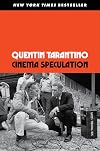
Here in his distinct voice, we have Quentin Tarantino crushing on 13 films mostly from the 70’s. I will state this up front—I AM the target audience for this commentary. I sprang from the 70’s, love movies, love Tarantino movies, love pulp in any form (even orange juice) and am not easily offended. And similar to Tarantino, how I fell in love with movies has a lot to do with the family I grew up in. If that sums you up, immediately knock anyone and anything out of your way and grab show more this book. This was pure fun for me. Avoiding the usual best of/worst of format, Tarantino makes it personal by choosing movies that impacted his ‘70’s childhood. The book begins and ends with largely autobiographical chapters—Tarantino reads these himself for the audiobook. The final chapter is very touching and one of my favorite book endings ever (certain not something I expected here). Reinforcing what a personal experience movies can be, he remains autobiographical in every chapter. He spends almost as much time on how and where he saw the film as he does discussing the actual movie. This could be a distraction, but it made the movies pop for me. His enthusiasm then and now is the juice that runs the projector. Potentially dry commentary is transformed into a living experience. To paraphrase Maya Angelou, I will remember the movies but I will remember more how Tarantino made me feel about the movies. show less
Lists
Film (1)
Favourite Books (1)
Awards


You May Also Like


Associated Authors
Statistics
- Works
- 80
- Also by
- 15
- Members
- 10,756
- Popularity
- #2,206
- Rating
- 3.9
- Reviews
- 135
- ISBNs
- 253
- Languages
- 20
- Favorited
- 8
