
Rodes Fishburne
Author of Going to See the Elephant
About the Author
Works by Rodes Fishburne
Blood & Oil (Season 1) 1 copy
Tagged
Common Knowledge
- Gender
- male
- Occupations
- writer
journalist
playwright - Nationality
- USA
- Associated Place (for map)
- USA
Members
Reviews
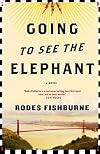
I wasn't sure what to expect from this book, but it was a delight from start to finish. Slater Brown is an unlikely hero, a writer convinced he could be the world's best writer if only he could get the right works on the page in the right order. He considers himself well-read, though his efforts are limited to the first sentences of great books from which he extrapolates the quality of the rest of the unread work. Despite his many eccentricities, Slater Brown's love for San Francisco, for show more the rhythms of the city, lend him an unexpectedly endearing quality.
As Slater's writing takes off, he becomes beloved by the citizens of the city he loves- the ultimate reward for any journalist. His optimism in the face of overwhelming odds is a marked contrast to the rest of the staff on his newspaper, but they gradually come to share his positive outlook for the future. When his efforts to please both his love and his readers collide, Slater must face fundamental questions about the core of his being that lead him to uncomfortable answers.
This book is a quirky and interesting coming of age tale. Fishburne is a master storyteller, and I'll certainly be recommending this novel to others.
http://foreigncircuslibrary.blogspot.com/2009/01/going-to-see-elephant-by-rodes.... show less
As Slater's writing takes off, he becomes beloved by the citizens of the city he loves- the ultimate reward for any journalist. His optimism in the face of overwhelming odds is a marked contrast to the rest of the staff on his newspaper, but they gradually come to share his positive outlook for the future. When his efforts to please both his love and his readers collide, Slater must face fundamental questions about the core of his being that lead him to uncomfortable answers.
This book is a quirky and interesting coming of age tale. Fishburne is a master storyteller, and I'll certainly be recommending this novel to others.
http://foreigncircuslibrary.blogspot.com/2009/01/going-to-see-elephant-by-rodes.... show less
It's often understood that first writers tend to write almost exclusively about what they know. This fact becomes very strongly evident in the first pages of Rodes Fishburne's debut novel Going to See the Elephant, as our intrepid hero, Slater Brown, struggles to find the idea that will capture his imagination and bring him fame as a great writer. Such a metaliterary moment might seem to portend dangerous territory, but Fishburne's novel quickly develops into a charming and entertaining show more story that flies by almost too quickly.
The novel follows Slater Brown to San Francisco, where he has relocated in search of the perfect story (his "elephant," as the brief Author's Note informs us). He struggles in his first days, lacking inspiration and losing both faith and money at an alarming pace. He eventually finds a job at a low-rent, rundown local paper, the Morning Trumpet, where the disbelieving editor forces him to prove himself by writing a great story. Lacking ideas, he seeks out a local lunchtime mystic who gives him a busted radio and headphones that, unwittingly, allows Slater to overhear telephone conversations on the bus, conversations that give him huge scoops on big stories. Soon, his life takes turns he never could have anticipated.
While that last sentence there was an unapologetically clichéd way of admitting that there's more to the plot I don't want to tell, the novel succeeds by virtue of the fact that it seems constantly on the urge of inviting cliché but never falls into the trap. Fishburne's plot has a certain slapstick quality to it, but it never veers so far off course that it sacrifices plausibility. The tone of his writing is also well-matched to the story being told: the pages flip over at a remarkably quick pace, but the book manages to avoid the curse of page-turners by actually remaining memorable, often due to the occasionally brilliant turn of phrase that Fishburne is prone to.
Similarly, the novel succeeds incredibly on the strength of its characters. Slater Brown is a remarkably relatable figure, even if the reader has no inclination to be a writer. His trials while attempting to manage his dreams with his need to survive are incredibly realistic, and the dismay he feels at his wasted potential in the early pages is remarkably poignant. Many of the novel's characters -- from the chess prodigy Callio to the brilliant inventor Milo -- have quirky characteristics, but do battle with reasonable and expected life issues in a way that never alienates them from the reader's sympathies.
It also helps that, unlike many books that advertise their humor and attempt to be funny, this book actually IS funny. Fishburne has a knack, as I've mentioned, for the well-composed line, and his descriptions are often just wry enough to elicit a giggle at a regular pace. But he also paces the story well, inserting moments of humor and silliness at an appropriate remove from the more emotional moments. Neither the funny nor the serious moments ever feel like cheap shots: they feel like the natural progressions of the character's lives, which is a great testament to Fishburne's young but powerful writing abilities.
If the novel has any weaknesses, they are difficult to identify. Without a doubt, many people will find the novel's absurdity to be a stretch of realism, particularly since Fishburne feels so strongly about setting the story within realistic contexts. The city of San Francisco practically becomes a character in and of itself, and its many moods parallel Slater's in interesting if expected ways. Milo's creations may seem out of place in an otherwise reasonably realistic landscape, but they don't push the bounds of credibility too far. And while the bumbling mayor becomes a parody of himself by the novel's end, the politics really don't matter very much when it's all said and done. It's all in service of a larger narrative about dreams, abilities, and embracing the moment -- and to that end, the novel succeeds with flying colors.
While one typically ought to raise a red flag when one sees fairly unblemished praise of a debut novel, I don't feel like such a warning is necessary here. Going to See the Elephant has no pretense of being more than it is, which is a funny, charming story that has a few nuggets of genuine wisdom hidden within its pages. Like Slater himself, the novel finds its niche and operates masterfully within it; I can't praise it any more than to say it accomplishes exactly what it seems to set out to do. Inspiring, amusing, and heartwarming, it's a novel you'll almost certainly be rooting for -- and best of all, in the end, it ends up being the underdog that wins. show less
The novel follows Slater Brown to San Francisco, where he has relocated in search of the perfect story (his "elephant," as the brief Author's Note informs us). He struggles in his first days, lacking inspiration and losing both faith and money at an alarming pace. He eventually finds a job at a low-rent, rundown local paper, the Morning Trumpet, where the disbelieving editor forces him to prove himself by writing a great story. Lacking ideas, he seeks out a local lunchtime mystic who gives him a busted radio and headphones that, unwittingly, allows Slater to overhear telephone conversations on the bus, conversations that give him huge scoops on big stories. Soon, his life takes turns he never could have anticipated.
While that last sentence there was an unapologetically clichéd way of admitting that there's more to the plot I don't want to tell, the novel succeeds by virtue of the fact that it seems constantly on the urge of inviting cliché but never falls into the trap. Fishburne's plot has a certain slapstick quality to it, but it never veers so far off course that it sacrifices plausibility. The tone of his writing is also well-matched to the story being told: the pages flip over at a remarkably quick pace, but the book manages to avoid the curse of page-turners by actually remaining memorable, often due to the occasionally brilliant turn of phrase that Fishburne is prone to.
Similarly, the novel succeeds incredibly on the strength of its characters. Slater Brown is a remarkably relatable figure, even if the reader has no inclination to be a writer. His trials while attempting to manage his dreams with his need to survive are incredibly realistic, and the dismay he feels at his wasted potential in the early pages is remarkably poignant. Many of the novel's characters -- from the chess prodigy Callio to the brilliant inventor Milo -- have quirky characteristics, but do battle with reasonable and expected life issues in a way that never alienates them from the reader's sympathies.
It also helps that, unlike many books that advertise their humor and attempt to be funny, this book actually IS funny. Fishburne has a knack, as I've mentioned, for the well-composed line, and his descriptions are often just wry enough to elicit a giggle at a regular pace. But he also paces the story well, inserting moments of humor and silliness at an appropriate remove from the more emotional moments. Neither the funny nor the serious moments ever feel like cheap shots: they feel like the natural progressions of the character's lives, which is a great testament to Fishburne's young but powerful writing abilities.
If the novel has any weaknesses, they are difficult to identify. Without a doubt, many people will find the novel's absurdity to be a stretch of realism, particularly since Fishburne feels so strongly about setting the story within realistic contexts. The city of San Francisco practically becomes a character in and of itself, and its many moods parallel Slater's in interesting if expected ways. Milo's creations may seem out of place in an otherwise reasonably realistic landscape, but they don't push the bounds of credibility too far. And while the bumbling mayor becomes a parody of himself by the novel's end, the politics really don't matter very much when it's all said and done. It's all in service of a larger narrative about dreams, abilities, and embracing the moment -- and to that end, the novel succeeds with flying colors.
While one typically ought to raise a red flag when one sees fairly unblemished praise of a debut novel, I don't feel like such a warning is necessary here. Going to See the Elephant has no pretense of being more than it is, which is a funny, charming story that has a few nuggets of genuine wisdom hidden within its pages. Like Slater himself, the novel finds its niche and operates masterfully within it; I can't praise it any more than to say it accomplishes exactly what it seems to set out to do. Inspiring, amusing, and heartwarming, it's a novel you'll almost certainly be rooting for -- and best of all, in the end, it ends up being the underdog that wins. show less
 This review was written for LibraryThing Early Reviewers.
Already in his mid-twenties, Slater Brown worries that his dream of becoming the greatest writer of all time is in jeopardy, so he arrives in San Francisco, where he plans to wait for some fortuitous chain of events that will make his literary genius known to the world. In the meantime, the young literary hopeful and modern-day dandy embarks on journalism career, acquiring his much-talked-about scoops by ethically questionable means, becomes a San Francisco celebrity, and falls in love with show more a beautiful, young chess master. (Note that the novel unfolds in a surreal, dreamlike San Francisco where psychic abilities may be real, an inventor named Milo Magnet can create weather events, and a mayor in crisis can consume enough food to render him unable to fit through his office doorway.) Although Slater is phenomenally successful, he begins to doubt whether he desires the success he has obtained. When he realizes that fate doesn't follow the plans he has made for himself, Slater is forced to reassess his life.
While the quirkiness of pseudo-San Francisco and its fictional denizens is amusing, it feels a bit overdone as the novel progresses, and the book starts to drag somewhat once Slater falls in love. I also would have liked to have read more about the sub-plot involving inventor Milo Magnet, since he seemed at least as interesting as Slater Brown. But if, like Slater, you've been enamored with a place, your plans, and your vision of yourself . . . only to realize that your ideas about all of the above lacked any basis in reality, you'll probably find something to appreciate in this book. show less
While the quirkiness of pseudo-San Francisco and its fictional denizens is amusing, it feels a bit overdone as the novel progresses, and the book starts to drag somewhat once Slater falls in love. I also would have liked to have read more about the sub-plot involving inventor Milo Magnet, since he seemed at least as interesting as Slater Brown. But if, like Slater, you've been enamored with a place, your plans, and your vision of yourself . . . only to realize that your ideas about all of the above lacked any basis in reality, you'll probably find something to appreciate in this book. show less
This review was written for LibraryThing Early Reviewers.Going To See The Elephant is a hilarious, quirky, and very full of great little details. It felt to me that the story was set in an alternate universe San Fransisco. For the life of me I couldn't figure out what time period it takes place in and I loved it for that. It's truly original.
The characters in this book are priceless. A sleek young reporter that somehow always has the biggest scoop, the crazy over-eating Mayor, the genius of everything that decides he wants to produce his own show more weather, the chess prodigy who is as sweet as can be, and don't forget the mini weather packets moving around the city. These characters make the story.
And on top of all these fabulous characters are all the back stories that the author weaves in, my favorite being the history of the newspaper, The Morning Trumpet. I felt like I was reading a really great classic, full of quirks and originality.
I went into this story looking for a coming of age story of a 25 year old man which sounded great to me but it was so much more than that, I don't even have the words to describe it. If you like a story full of random details and humor this is for you! show less
The characters in this book are priceless. A sleek young reporter that somehow always has the biggest scoop, the crazy over-eating Mayor, the genius of everything that decides he wants to produce his own show more weather, the chess prodigy who is as sweet as can be, and don't forget the mini weather packets moving around the city. These characters make the story.
And on top of all these fabulous characters are all the back stories that the author weaves in, my favorite being the history of the newspaper, The Morning Trumpet. I felt like I was reading a really great classic, full of quirks and originality.
I went into this story looking for a coming of age story of a 25 year old man which sounded great to me but it was so much more than that, I don't even have the words to describe it. If you like a story full of random details and humor this is for you! show less
This review was written for LibraryThing Early Reviewers.Statistics
- Works
- 3
- Members
- 128
- Popularity
- #157,244
- Rating
- 3.5
- Reviews
- 13
- ISBNs
- 4
