
Stephen Larsen
Author of A Fire in the Mind: The Life of Joseph Campbell
About the Author
Stephen Larsen is Professor Emeritus of psychology, SUNY, Ulster.
Works by Stephen Larsen
The Mythic Imagination: The Quest for Meaning Through Personal Mythology (1990) 124 copies, 1 review
The Healing Power of Neurofeedback: The Revolutionary LENS Technique for Restoring Optimal Brain Function (2006) 32 copies, 1 review
The Neurofeedback Solution: How to Treat Autism, ADHD, Anxiety, Brain Injury, Stroke, PTSD, and More (2012) 21 copies
The Transformational Power of Dreaming : Discovering the Wishes of the Soul (2017) 3 copies, 1 review
Tagged
Common Knowledge
- Legal name
- Larsen, H. Stephen
- Birthdate
- 1941-02-17
- Gender
- male
- Education
- Columbia University
Union Institute & University - Occupations
- professor
psychologist - Organizations
- The Stone Mountain Counseling Center
Joseph Campbell Foundation (founding member)
Center for Symbolic Studies (co-founder)
State University of New York - Relationships
- Larsen, Robin (wife)
- Nationality
- USA
- Places of residence
- New Paltz, New York, USA
- Associated Place (for map)
- New York, USA
Members
Reviews
The Healing Power of Neurofeedback : the revolutionary LENS technique for restoring optimal brain function by Stephen Larsen

I thought I was getting a general book on neurofeedback but quickly realized this is more specialized to a particular technique. It was interesting reading, but somewhat long. The author is readable but wordy. The beginning chapters give the history of neurofeedback and this particular technique. Afterwards there follow chapters on particular brain disorders and case studies that illustrate the effectiveness and also what has been learned as a result of attempting to treat various disorders. show more The book advocates a whole person approach so there were final chapters on other treatment approaches that have been used in conjunction with the LENS treatment and how they have interacted. The case studies were inspiring but after awhile I began to wonder how effective this treatment really is - I'm skeptical like that. Still, I'd like to give it a try. show less
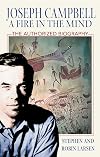
I got quite interested in Campbell in the late 80’s or early nineties, even bought several of his books, but I never got around to reading them. Recently I listened to his interviews with Bill Moyer and my interest in Campbell was reawakened. I bought several of his books as ebooks including this biography about him.
I find Campbell fascinating for a lot of reasons: he certainly was involved with many of the luminaries of the twentieth century and apparently held his own intellectually with show more them.
This book has encouraged me to reconsider trying to tackle Finnegan’s Wake with the help of his skeleton key. Also I need to turn more directly to his works. At this point the two that seem to draw me the most are The Hero with a Thousand Faces and The Inner Reaches of Outer Space. The later because it apparently sums up a lot of the conclusions he came to and because he equates Science Fiction with myth. I had come to a similar conclusion years ago that Science fiction was becoming modern mythology. My grasp of the relationship between Myth, society and self awareness was not developed the way Campbell developed his ideas.
It does seem many people from across the social and political spectrum gained a lot from reading what he had to say.
For me the question is will good intentions keep me on track to studying more of what he had to say. show less
I find Campbell fascinating for a lot of reasons: he certainly was involved with many of the luminaries of the twentieth century and apparently held his own intellectually with show more them.
This book has encouraged me to reconsider trying to tackle Finnegan’s Wake with the help of his skeleton key. Also I need to turn more directly to his works. At this point the two that seem to draw me the most are The Hero with a Thousand Faces and The Inner Reaches of Outer Space. The later because it apparently sums up a lot of the conclusions he came to and because he equates Science Fiction with myth. I had come to a similar conclusion years ago that Science fiction was becoming modern mythology. My grasp of the relationship between Myth, society and self awareness was not developed the way Campbell developed his ideas.
It does seem many people from across the social and political spectrum gained a lot from reading what he had to say.
For me the question is will good intentions keep me on track to studying more of what he had to say. show less
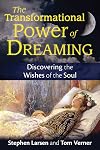
I came across this remarkable book in an unusual way. Several years ago I had been pat of a dream exploration weekend, where there was a session about converting one's dream into a pantoum. This is a cyclic effort where lines of your dreams are repeated further down in the rewriting of the poem. It shows how the beginning and/or the end can be flipped round with surprising new understanding of the dream's message or power. So, I googled pantoums and came up with a bunch of pages revealed show more from Larsen and Verner's book. Wow, I said when I read about their use of pantoums, and so ordered the book through Amazon.
The authors alternate in writing the chapters. Both are older men with plenty of experience. They are personable and I've enjoyed my slow read of their discovery nd knowledge. Myth, history, science, and experience are woven quite nicely.
Verner grew up in Castle Shannon, a smallish town south of Pittsburgh. Tom tosses it off as just a mining town, but I know it differently when I visited there in 1963. It is actually a significant juncture of Pittsburgh's suburban light rail network. When visiting there, I remember riding the branches going out to Library and Drake. The branches are heavily forested and I so felt that I was in Karelia, that Sibelius' tone poem floated into my head, and it has never left. show less
The authors alternate in writing the chapters. Both are older men with plenty of experience. They are personable and I've enjoyed my slow read of their discovery nd knowledge. Myth, history, science, and experience are woven quite nicely.
Verner grew up in Castle Shannon, a smallish town south of Pittsburgh. Tom tosses it off as just a mining town, but I know it differently when I visited there in 1963. It is actually a significant juncture of Pittsburgh's suburban light rail network. When visiting there, I remember riding the branches going out to Library and Drake. The branches are heavily forested and I so felt that I was in Karelia, that Sibelius' tone poem floated into my head, and it has never left. show less
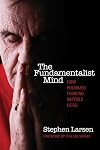
Fundamentalist thinking happens in all of us, including cultural creative, left-wingers, scientists and secularists. It can originate in the part of the brain that triggers our fear response, as well as the tendency to separate thinking and feeling. This book shows us how to identify polarized thinking in ourselves as well as others. He suggests a "natural spirituality": the awareness of spirit in all aspects of life, the humility to admit mistakes, flexibility instead of rigidity, and a show more willingness to tolerate differences. show less
You May Also Like


Associated Authors
Statistics
- Works
- 9
- Members
- 608
- Popularity
- #41,353
- Rating
- 4.2
- Reviews
- 8
- ISBNs
- 25
- Languages
- 2