
Debra Doyle (1952–2020)
Author of The Price of the Stars
About the Author
Disambiguation Notice:
With James D. Macdonald has written as Nicholas Adams, Martin Delrio and Robin Tallis. They have also written under the House Name Victor Appleton. However, they are not the same person, so please do NOT combine Macdonald and Doyle. Thank you for helping keep our bibliographic data accurate.
Image credit: Photo By Kym Lambert
Series
Works by Debra Doyle
Witch garden and other stories 2 copies
Ecdysis 2 copies
Knight's Wyrd 2 copies
MAGEWORLDS: Book (1) One: The Price of the Stars; Book (2) Two: Starpilot's Grave; Book (3) Three: By Honor (Honour) Bet — Author — 1 copy
The Queen's Mirror 1 copy
Remailer 1 copy
The God Voice 1 copy
Associated Works
Bruce Coville's Book of Monsters: Tales to Give You the Creeps (1993) — Contributor — 285 copies, 3 reviews
Murder by Magic: Twenty Tales of Crime and the Supernatural (2004) — Contributor — 266 copies, 4 reviews
Bruce Coville's Book of Spine Tinglers: Tales to Make You Shiver (1996) — Author — 138 copies, 1 review
Tagged
Common Knowledge
- Birthdate
- 1952-11-30
- Date of death
- 2020-10-31
- Gender
- female
- Education
- University of Pennsylvania (Ph.D.|English Literature)
- Organizations
- Science Fiction and Fantasy Writers of America
- Relationships
- Macdonald, James D. (husband)
Crighton, Katherine (daughter) - Cause of death
- cardiac arrest
- Nationality
- USA
- Birthplace
- Florida, USA
- Places of residence
- Colebrook, New Hampshire, USA
- Disambiguation notice
- With James D. Macdonald has written as Nicholas Adams, Martin Delrio and Robin Tallis. They have also written under the House Name Victor Appleton.
However, they are not the same person, so please do NOT combine Macdonald and Doyle. Thank you for helping keep our bibliographic data accurate. - Associated Place (for map)
- USA
Members
Discussions
Teen Becomes Wizard in Name that Book (October 2013)
Wizards school for wizards teacher lets demon out and student saves school then gets banished for un in Name that Book (February 2012)
Children fantasy book series in late 70's-80's in Name that Book (March 2009)
Reviews
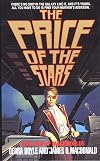
This is the first book of the Magewar trilogy. They are just about my favorite space opera, hence the reread. They're essentially a different take on the Star Wars trilogy. Instead of a princess, a dashing starpilot and his alien sidekick, and a mystical young hero with android sidekicks, we get the Rosselin-Metadi siblings (from youngest to oldest): Beka (princess and swashbucklinging starpilot rolled into one), Owen (unassuming mystical apprentice Adept who fights with two-handed staff), show more and Ari (the giant but peaceful medic in the Space Force). They've got the political, religious, and military angles all covered amongst themselves.
Like the original Star Wars trilogy, these books represent the second generation. Their parents are the famous Domina Perada Rosselin and General Jos Metadi, who were instrumental in stopping the Mages from taking over the "civilized galaxy." Their story is told in the prequel, which I always find interesting for the "continuity errors" between its narrative and the legends/history as portrayed in the main trilogy.
Anyway, Beka is the main plot driver, and most (but certainly not all) of the action revolves around her, but the story jumps around among the three siblings and their important supporting characters. It's a fast-paced action story with some very amusing dialogue.
Beside the main character differences from Star Wars, these books also differ on the story angle. Rather than being a battle between good and evil (or the Dark Side of the Force), it's really about two different cultures and philosophies/religions: the Adepts believe in a kind of metaphysical noninterference policy and are essentially individualists, while the Mages (who fight with one-handed staffs) believe in manipulating space-time/reality for higher purposes and work in groups ("Circles"). The battles with staffs involve just as much light show as lightsabers, but it's generated by each individual's own power rather than a little gizmo. So the Mages aren't evil, per se, just different, and from a different part of the galaxy.
Those are the reasons why I like the stories.
Problems: well, once again, an entire galaxy of white people, even from two apparently completely distinct civilizations. Only one person in the entire series is described as being brown, and with all of the extras involved in such an epic tale, there's plenty of room for more. And of course, as far as we know, everyone is straight.
However, I must say that a definite strength is that there is about a 50:50 gender ratio in terms of characters. If anything, when two secondary characters are presented, the woman is more likely to be in the leadership position. So lots of strong women characters as both protagonists and window dressing. Definitely passes the Bechdel/Wallace test.
Nonhumans get pretty short shrift too; I mean, really, an entire galaxy full of two human civilizations? The Selvaurs are the only ones that get any playtime in the story, since one of them is Jos Metadi's engineer during his privateer days during the Magewar (pilot with alien sidekick, check) in the prequel. It was this relationship that allowed Jos and Perada to begin to form an allied space fleet to kick Mage ass, so the Selvaurs played a pretty pivotal role in the historical context.
And since Ari, the oldest sibling, was fostered on the Selvaur homeworld to cement that alliance, the Selvaurs do turn up as relatively minor characters throughout the trilogy. The only other aliens who make a very brief appearance are the Rotis, who show up in By Honor Betray'd during a key plot moment. That's it? C'mon. What's the use of space opera with some aliens if you don't have fun with it?
And what's with this "civilized" space thing? The Mages are barbarians? They clearly have better technology in a few different fields. They're a unified culture, as opposed to the hodgepodge of independent planets of the Adept territories. And if they were so hurting for goods in their home territory that they needed to start raiding "civilized" space (Vikings, anyone?), how the hell did they get the advanced technology in the first place? So some flaws to basic underlying premises and the way the story is framed.
But hey, if you ignore subtext (subtext, what's that?) and lack of representation and the general shallowness of the story, characters, etc., it is entertaining. And like I said, an interesting spin on Star Wars, defects aside. show less
Like the original Star Wars trilogy, these books represent the second generation. Their parents are the famous Domina Perada Rosselin and General Jos Metadi, who were instrumental in stopping the Mages from taking over the "civilized galaxy." Their story is told in the prequel, which I always find interesting for the "continuity errors" between its narrative and the legends/history as portrayed in the main trilogy.
Anyway, Beka is the main plot driver, and most (but certainly not all) of the action revolves around her, but the story jumps around among the three siblings and their important supporting characters. It's a fast-paced action story with some very amusing dialogue.
Beside the main character differences from Star Wars, these books also differ on the story angle. Rather than being a battle between good and evil (or the Dark Side of the Force), it's really about two different cultures and philosophies/religions: the Adepts believe in a kind of metaphysical noninterference policy and are essentially individualists, while the Mages (who fight with one-handed staffs) believe in manipulating space-time/reality for higher purposes and work in groups ("Circles"). The battles with staffs involve just as much light show as lightsabers, but it's generated by each individual's own power rather than a little gizmo. So the Mages aren't evil, per se, just different, and from a different part of the galaxy.
Those are the reasons why I like the stories.
Problems: well, once again, an entire galaxy of white people, even from two apparently completely distinct civilizations. Only one person in the entire series is described as being brown, and with all of the extras involved in such an epic tale, there's plenty of room for more. And of course, as far as we know, everyone is straight.
However, I must say that a definite strength is that there is about a 50:50 gender ratio in terms of characters. If anything, when two secondary characters are presented, the woman is more likely to be in the leadership position. So lots of strong women characters as both protagonists and window dressing. Definitely passes the Bechdel/Wallace test.
Nonhumans get pretty short shrift too; I mean, really, an entire galaxy full of two human civilizations? The Selvaurs are the only ones that get any playtime in the story, since one of them is Jos Metadi's engineer during his privateer days during the Magewar (pilot with alien sidekick, check) in the prequel. It was this relationship that allowed Jos and Perada to begin to form an allied space fleet to kick Mage ass, so the Selvaurs played a pretty pivotal role in the historical context.
And since Ari, the oldest sibling, was fostered on the Selvaur homeworld to cement that alliance, the Selvaurs do turn up as relatively minor characters throughout the trilogy. The only other aliens who make a very brief appearance are the Rotis, who show up in By Honor Betray'd during a key plot moment. That's it? C'mon. What's the use of space opera with some aliens if you don't have fun with it?
And what's with this "civilized" space thing? The Mages are barbarians? They clearly have better technology in a few different fields. They're a unified culture, as opposed to the hodgepodge of independent planets of the Adept territories. And if they were so hurting for goods in their home territory that they needed to start raiding "civilized" space (Vikings, anyone?), how the hell did they get the advanced technology in the first place? So some flaws to basic underlying premises and the way the story is framed.
But hey, if you ignore subtext (subtext, what's that?) and lack of representation and the general shallowness of the story, characters, etc., it is entertaining. And like I said, an interesting spin on Star Wars, defects aside. show less
I first read this book some years ago and it a testament to the story that I somehow return to it once a year even though I no longer read much science fiction. This wonderful space opera introduces a wonderful cast of characters and a suitably convoluted plot to carry through the series. Space battles, mysterious enemies with unknown powers, sibling dramas and voyages of personal discovery- the Mage Worlds series has them all! I especially love that the main character is Beka, a rebellious show more young woman who left home rather than continue her training as the hereditary ruler to a dead planet. When her mother is assassinated, Beka starts a quest to hunt down the killers and ends up saving the galaxy. Of course, the saving the galaxy part doesn't happen until later in the series, but the cornerstones are all laid in this first book. A great read that stands the test of time- 5 stars! show less
I decided to put a hold on The Price of the Stars, written by Debra Doyle and James D. MacDonald, after reading this article on swashbuckling science fiction heroes from the past 100 years. I mean, just look at that cover! She is wearing a red eye-patch! Anyway, reading this book was definitely one of the better decisions (reading-related or otherwise) I've made recently; it was the perfect combination of action, adventure, romance, humor, magic, and techno-geekery to help me celebrate the show more turning of the year.
Beka Rosselin-Metadi is the youngest child of a powerful politician and the head of the galaxy's military forces, both of whom were responsible for essentially saving the universe at some point predating The Price of the Stars. Given the weight of all that prestige, and the fact that she is slated to inherit her mother's title as ruler of a now-dead planet, it's little surprise that Beka left town as soon as possible to become a freewheeling starship pilot. However, after her mother is assassinated on the Senate floor, her father tracks her down and offers her a bargain: his prized ship Warhammer for the names of those responsible. With the assistance of a mysterious stranger, she assumes the alternate personality of a ruthless (male) gunslinger with a reputation for violence and begins her hunt, uncovering in the process the shape of a much larger conspiracy that may stretch into the sinister Mageworlds themselves.
Doyle and MacDonald present the story from five primary points of view: Beka, her equally talented brother Ari, the urbane medic Jessan (himself secret royalty), the Adept Llannat, and the much put-upon Commander Gil, aide to General Metadi himself. The characters are engaging, and the plot--well, here is the best recommendation I can give it (and I am aware that this will immediately date me): The Price of the Stars reminded me of the original Star Wars, except the female characters were infinitely more kick-ass, the dialogue was better, and the worldbuilding felt like it had the weight of serious thought behind it. A delicious romp through space! show less
Beka Rosselin-Metadi is the youngest child of a powerful politician and the head of the galaxy's military forces, both of whom were responsible for essentially saving the universe at some point predating The Price of the Stars. Given the weight of all that prestige, and the fact that she is slated to inherit her mother's title as ruler of a now-dead planet, it's little surprise that Beka left town as soon as possible to become a freewheeling starship pilot. However, after her mother is assassinated on the Senate floor, her father tracks her down and offers her a bargain: his prized ship Warhammer for the names of those responsible. With the assistance of a mysterious stranger, she assumes the alternate personality of a ruthless (male) gunslinger with a reputation for violence and begins her hunt, uncovering in the process the shape of a much larger conspiracy that may stretch into the sinister Mageworlds themselves.
Doyle and MacDonald present the story from five primary points of view: Beka, her equally talented brother Ari, the urbane medic Jessan (himself secret royalty), the Adept Llannat, and the much put-upon Commander Gil, aide to General Metadi himself. The characters are engaging, and the plot--well, here is the best recommendation I can give it (and I am aware that this will immediately date me): The Price of the Stars reminded me of the original Star Wars, except the female characters were infinitely more kick-ass, the dialogue was better, and the worldbuilding felt like it had the weight of serious thought behind it. A delicious romp through space! show less
Once again, I stumbled over this in a thrift store. I was familiar with Doyle and MacDonald's Mageworlds books, which I greatly enjoy as one of the most entertaining and interesting space operas in the Star Wars mold. I had no idea they also wrote fantasy.
This is an excellent rendition of an Arthurian style romance. It is set in a fantasy alternate of medieval Great Britain divided into Suthanglia, Nordanglia, Caledon, and Ierne, home to various peoples as well as magical creatures like show more trolls and ogres. It is modeled along late medieval society with feudalism and chivalry in full swing--heavy armor, jousting, tournaments, border castles, etc. Our hero is William Odosson and the story opens the day before he is knighted and continues through his first season away from home. All along the way he encounters dangers and challenges and follows the hero's route. But this is not the story of the lone wanderer, he accomplishes the various tasks with the assistance of his friends and others.
I thought the authors did an excellent job portraying the time period and its people. The writing was generally good, carrying the story largely through dialogue and actions, rather than lots of exposition and internal monologue. It was an elegant little story and I was disappointed when it was over. show less
This is an excellent rendition of an Arthurian style romance. It is set in a fantasy alternate of medieval Great Britain divided into Suthanglia, Nordanglia, Caledon, and Ierne, home to various peoples as well as magical creatures like show more trolls and ogres. It is modeled along late medieval society with feudalism and chivalry in full swing--heavy armor, jousting, tournaments, border castles, etc. Our hero is William Odosson and the story opens the day before he is knighted and continues through his first season away from home. All along the way he encounters dangers and challenges and follows the hero's route. But this is not the story of the lone wanderer, he accomplishes the various tasks with the assistance of his friends and others.
I thought the authors did an excellent job portraying the time period and its people. The writing was generally good, carrying the story largely through dialogue and actions, rather than lots of exposition and internal monologue. It was an elegant little story and I was disappointed when it was over. show less
Lists
Awards

You May Also Like


Associated Authors
Statistics
- Works
- 54
- Also by
- 32
- Members
- 4,641
- Popularity
- #5,434
- Rating
- 3.6
- Reviews
- 54
- ISBNs
- 131
- Languages
- 9
- Favorited
- 10