
Michael Treharne Davies (1936–2004)
Author of A Short History of the Roman Mass
About the Author
Works by Michael Treharne Davies
Cranmer's Godly Order: The Destruction of Catholicism Through Liturgical Change (Liturgical Revolution) (1976) 82 copies, 2 reviews
Liturgical Time Bombs In Vatican II: Destruction of the Faith through Changes in Catholic Worship (2009) 63 copies
I Am With You Always: The Divine Constitution and Indefectibility of the Catholic Church (1997) 22 copies
Associated Works
Tagged
Common Knowledge
- Legal name
- Davies, Michael Treharne
- Birthdate
- 1936-03-13
- Date of death
- 2004-09-25
- Gender
- male
- Education
- University of London
St. Mary's University College, Twickenham - Occupations
- author
apologist
historian - Organizations
- Foederatio Internationalis Una Voce
- Short biography
- Michael Treharne Davies (13 March 1936 – 25 September 2004) was a British teacher and traditionalist Catholic writer of many books about the Catholic Church following the Second Vatican Council. From 1992 to 2004 he was the president of the international Traditionalist Catholic organisation Foederatio Internationalis Una Voce and was responsible for the unification of Una Voce America.
Davies was born to Cyril and Annie (née Garnworthy) Davies. His father, a Welshman, was a Baptist, and his mother, who was English, was an Anglican. Davies was brought up in Yeovil, Somerset, but proud of his Welsh descent. He served as a regular soldier in the Somerset Light Infantry during the Malayan Emergency, the Suez Crisis, and the EOKA campaign in Cyprus.
Davies was a Baptist who converted to Catholicism while still a student in the 1950s. While initially a supporter of the Second Vatican Council, Davies became critical of the liturgical changes that followed in its wake, which he argued were a result of distortions and misreadings of the Council's mandates for liturgical reform. Davies later supported the French Archbishop Marcel Lefebvre, founder of the Society of St. Pius X (SSPX), writing a three-volume series titled Apologia Pro Marcel Lefebvre in which he defended Lefebvre against accusations of disobedience and schism for refusing to celebrate the Mass of Paul VI. Although Davies opposed Lefebvre's canonically-illicit consecration of four SSPX bishops in 1988 against the wishes of Pope John Paul II, he continued to publicly support Lefebvre's defence of the Tridentine Mass and traditional Church teachings.
William D. Dinges, Professor of Religion and Culture at The Catholic University of America, described Davies as "[i]nternationally, one of the most prolific traditionalist apologists".
Davies was a critic of the alleged apparitions of the Blessed Virgin at Medjugorje, which he believed to be false.
Davies died on 25 September 2004, aged 68, following a battle with cancer and was buried in the churchyard of St. Mary's, Chislehurst, Kent. He was survived by his wife, Marija, one daughter and two sons, one of whom is the barrister Adrian Davies. - Cause of death
- cancer
- Nationality
- England
- Birthplace
- Yeovil, Somerset, England, UK
- Places of residence
- Yeovil, Somerset, England, UK
Kent, England, UK - Place of death
- Kent, England, UK
- Burial location
- St. Mary's, Chislehurst, Kent, England, UK
- Map Location
- UK
Members
Reviews

The Reign of Christ the King is the slighted edited version of a lecture Davies gave in 1991 about how the Western world has ceased to recognized Christ as King and instead has put man before him. Davies gives the reasons why Christ is King and how we reached the point in which his kingship has become something that embarrasses many Catholics, who seek to follow the world instead of Christ. In short, Davies is against the separation of church and state, which he views as an evil that came show more out of humanism and the French Revolution. Over twenty years later, many of his points are still valid if not even more valid than when he made them. Even if you disagree with Davies, he's always interesting and gives you something to think about. This book is no exception. show less
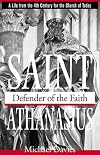
Saint Athanasius: Defender of the Faith is a remarkable book that manages to be both about the past and the present at the same time. Davies does not focus on the life of Athanasius of Alexandria so much as on the bigger picture: on his actions and those of his enemies and what they meant. The book's unstated purpose is as an apology, in the traditional sense of the word, for Archbishop Marcel Lefebvre, who was an interesting man whatever you think of his choices. But it also does well at show more providing hope for anyone who looks around at the Church and worries about the direction it is going. There is also a detailed defense for the existence of the Fall of Pope Liberius in an appendix.
Perfect for any Catholic with an interest in St. Athanasius and how history is reflected and replayed today. Highly recommended. show less
Perfect for any Catholic with an interest in St. Athanasius and how history is reflected and replayed today. Highly recommended. show less

A Short History of the Roman Mass is a brief, fifty-page overview of the origin and development of the Roman Rite of the mass (the main form of the liturgy in the West). From the New Testament to today, Davies gives a thorough summary of how the mass became what it is today, including the form of the low mass. It should be noted that the author was famously anti-the new mass, so post-Vatican II developments are relegated to a couple of pages about how underhanded and a betrayal of previous show more processes it the mass of Paul VI was. But if you're interesting in the older forms of the mass, there is much to chew on here.
Recommended for Catholics of a certain stripe, Davies gets a bit bitter towards the end, so lovers of the new mass may want to stay away. show less
Recommended for Catholics of a certain stripe, Davies gets a bit bitter towards the end, so lovers of the new mass may want to stay away. show less

This book stands on its own but is the second volume of the author’s “Liturgical Revolution” trilogy. This is a well written and researched scholarly work. We can see how this Ecumenical Council was called in an age of prosperity within the Church and not in the face of any threat; which has never happen before. You can see how the progressive bishops from Germany were well organized and literal took control of the council and the important commissions while throwing out all the show more schema, documents of the Council Preparatory Committee, that took years to prepare for this council.
It is amazing at how this group was able to get the votes to support their agenda by using vague language hidden within enough traditional text. During the council the well respected and traditional cardinals, such as Cardinal Ottaviani, actually had their microphones shut off when they attempted to defend the Faith. The world media was complicit in the liberal deceit and along with protestant observers influenced the council toward liberalism. The ambiguities left in thee documents have enabled the liberals to ignore or destroy infallible dogmas and tradition which has lead to the decline of the Church in the west all in the “Spirit of Vatican II.” show less
It is amazing at how this group was able to get the votes to support their agenda by using vague language hidden within enough traditional text. During the council the well respected and traditional cardinals, such as Cardinal Ottaviani, actually had their microphones shut off when they attempted to defend the Faith. The world media was complicit in the liberal deceit and along with protestant observers influenced the council toward liberalism. The ambiguities left in thee documents have enabled the liberals to ignore or destroy infallible dogmas and tradition which has lead to the decline of the Church in the west all in the “Spirit of Vatican II.” show less
You May Also Like


Associated Authors
Statistics
- Works
- 42
- Also by
- 1
- Members
- 948
- Popularity
- #27,124
- Rating
- 4.5
- Reviews
- 16
- ISBNs
- 68
- Languages
- 1