
Laura Shepperson
Author of Phaedra
Works by Laura Shepperson
Tagged
Common Knowledge
Members
Reviews
This being a retelling, everything that happens is a foregone conclusion. Lavinia can doubt and distrust Aeneas all she wants, but she will end up with him in the end.
I like how much this book emphasizes that all of the women of the Aeneid were doomed from the start. Creusa, Dido and Lavinia are all stepping stones for Aeneas and his glorious fate.
It is unfair and mysogynist, and I think that made for a compelling red thread throughout the book.
My only downside would be that I hoped for a show more bit more showing instead of telling. The friendships with Camilla and Turnus are supposedly good childhood memories, but I barely saw them.
The conclusion that Aeneas was just as trapped as them, and that Lavinia made a pragmatic choice made sense. She has no choice but to make the best out of her marriage to Aeneas, and I loved that she made the choice for herself, to rule Latium, and not out of romantic affection.
It still felt a bit like a downer ending to me. All this war and loss, all the histories of the women before Lavinia and she still chooses him? That's what makes it a good tragedy.
I received an ARC of this book. show less
I like how much this book emphasizes that all of the women of the Aeneid were doomed from the start. Creusa, Dido and Lavinia are all stepping stones for Aeneas and his glorious fate.
It is unfair and mysogynist, and I think that made for a compelling red thread throughout the book.
My only downside would be that I hoped for a show more bit more showing instead of telling. The friendships with Camilla and Turnus are supposedly good childhood memories, but I barely saw them.
The conclusion that Aeneas was just as trapped as them, and that Lavinia made a pragmatic choice made sense. She has no choice but to make the best out of her marriage to Aeneas, and I loved that she made the choice for herself, to rule Latium, and not out of romantic affection.
It still felt a bit like a downer ending to me. All this war and loss, all the histories of the women before Lavinia and she still chooses him? That's what makes it a good tragedy.
I received an ARC of this book. show less

This is a retelling of the story of Aeneas from the perspective of his three wives: Creusa, Dido, and Lavinia. It reminded me of Pat Barker’s Silence of the Girls, taking a story traditionally written by and about men and reconsidering it from a feminist perspective.
Each chapter starts with a section of the original Greek or Roman story, which took me out of the story every time. The first 25% or so felt very plot-driven, when I wanted more focus on the women’s thoughts and feelings. As show more the book progressed though, the women developed and I became invested in the story.
This wasn’t a light read, or one that I jumped right into, but once it got going I found the story really compelling. show less
Each chapter starts with a section of the original Greek or Roman story, which took me out of the story every time. The first 25% or so felt very plot-driven, when I wanted more focus on the women’s thoughts and feelings. As show more the book progressed though, the women developed and I became invested in the story.
This wasn’t a light read, or one that I jumped right into, but once it got going I found the story really compelling. show less
 This review was written for LibraryThing Early Reviewers.
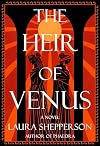
The Heir of Venus: The story of Aeneas as it's never been told before from the Sunday Times bestselling author of The Heroines by Laura Shepperson
3.75⭐️
“ ‘He led us out of the burning city of Troy and guided us across the ocean to this fertile land. He had cared for us almost as well as he has cared for his own son.’ ”
‘He’s going to found the new Troy, and be the father of many generations of our children. We owe everything to him. Without Father Aeneas, the Greeks would have destroyed everything that is Trojan.’ ”
Set in years after the Trojan War, The Heir of Venus by Laura Shepperson is a feminist reimagining of show more the story of Aeneas, the son of the Trojan prince Anchises and Venus (Roman equivalent to the Greek goddess Aphrodite), a demigod who escaped the fallen city with his infant son Ascanius, his aging father and several other survivors.
The narrative is non-linear and is presented in alternating perspectives of the women whose lives and fates were intertwined with Aeneas’s; his wife Creusa who was left behind in the burning city and who was the daughter of Trojan King Priam and Hekuba; and Lavinia, princess of Laurentum where Aeneas and the Trojans set up camp and whom Aeneas is to marry; and from Anna, a mysterious traveler, who tells the story of Queen Dido of Tyre, who founded Carthage and for whose tragic fate Anna hold the Trojan prince responsible and strangely enough, whose story Aeneas has neglected to share while he talked of his travels.
Lavinia’s perspective describes how her life and destiny and that of Laurentum change after Aeneas’s arrival. I was immersed as the narrative follows Lavinia’s thoughts and emotions as the events in Laurentum unfold - Aeneas’s agreement with her father King Latinus, his friction with Prince Turnus of Rutuli, Lavinia’s childhood friend who had hoped to marry her and the war that ensued. I was sympathetic to her situation and her pain and disillusionment are palpable as she is forced to accept that despite her being her father’s only child and having participated with her father in his role as ruler, her father’s plans for her to support her ambitions. I applauded her efforts to accept her father’s decisions but on her own terms.
The prose is beautiful and as a fan of Greek mythology (and retellings), I found this book to be an enjoyable read. The narrative is consistently paced and flows well. The structure of the novel works well to tell the story and allow us to see Aeneas as a person, with his strengths and flaws, as perceived by the women who knew him best. I liked that each chapter began with a quote from the source material. I appreciate that the author has given a voice to these women whose stories are often relegated to the background in the interest of glorifying the heroes of the Greek myths. Dido, Creusa and Lavinia not only present facets of the Greek hero revered for his origins and the prophecy that guided his actions, but they are women who deserve to have their stories told and the author has done a commendable job in this regard.
However, I thought that too much of the narrative was presented through telling rather than showing. I would have preferred that Aeneas’s adventures post the Trojan War before his arrival at Laurentum had been described in more detail. However, the telling of past events will provide those not conversant with the key players and crucial details of the Trojan War with a well-rounded, albeit brief, background to Aeneas’s story.
I paired my reading with the audiobook expertly narrated by Frances Butt, who has done a brilliant job of voicing these characters and breathing life into this story. The audio narration certainly elevated my overall experience.
Many thanks to Alcove Press for the digital review copy and Dreamscape Media for the ALC via NetGalley. All opinions expressed in this review are my own. show less
“ ‘He led us out of the burning city of Troy and guided us across the ocean to this fertile land. He had cared for us almost as well as he has cared for his own son.’ ”
‘He’s going to found the new Troy, and be the father of many generations of our children. We owe everything to him. Without Father Aeneas, the Greeks would have destroyed everything that is Trojan.’ ”
Set in years after the Trojan War, The Heir of Venus by Laura Shepperson is a feminist reimagining of show more the story of Aeneas, the son of the Trojan prince Anchises and Venus (Roman equivalent to the Greek goddess Aphrodite), a demigod who escaped the fallen city with his infant son Ascanius, his aging father and several other survivors.
The narrative is non-linear and is presented in alternating perspectives of the women whose lives and fates were intertwined with Aeneas’s; his wife Creusa who was left behind in the burning city and who was the daughter of Trojan King Priam and Hekuba; and Lavinia, princess of Laurentum where Aeneas and the Trojans set up camp and whom Aeneas is to marry; and from Anna, a mysterious traveler, who tells the story of Queen Dido of Tyre, who founded Carthage and for whose tragic fate Anna hold the Trojan prince responsible and strangely enough, whose story Aeneas has neglected to share while he talked of his travels.
Lavinia’s perspective describes how her life and destiny and that of Laurentum change after Aeneas’s arrival. I was immersed as the narrative follows Lavinia’s thoughts and emotions as the events in Laurentum unfold - Aeneas’s agreement with her father King Latinus, his friction with Prince Turnus of Rutuli, Lavinia’s childhood friend who had hoped to marry her and the war that ensued. I was sympathetic to her situation and her pain and disillusionment are palpable as she is forced to accept that despite her being her father’s only child and having participated with her father in his role as ruler, her father’s plans for her to support her ambitions. I applauded her efforts to accept her father’s decisions but on her own terms.
The prose is beautiful and as a fan of Greek mythology (and retellings), I found this book to be an enjoyable read. The narrative is consistently paced and flows well. The structure of the novel works well to tell the story and allow us to see Aeneas as a person, with his strengths and flaws, as perceived by the women who knew him best. I liked that each chapter began with a quote from the source material. I appreciate that the author has given a voice to these women whose stories are often relegated to the background in the interest of glorifying the heroes of the Greek myths. Dido, Creusa and Lavinia not only present facets of the Greek hero revered for his origins and the prophecy that guided his actions, but they are women who deserve to have their stories told and the author has done a commendable job in this regard.
However, I thought that too much of the narrative was presented through telling rather than showing. I would have preferred that Aeneas’s adventures post the Trojan War before his arrival at Laurentum had been described in more detail. However, the telling of past events will provide those not conversant with the key players and crucial details of the Trojan War with a well-rounded, albeit brief, background to Aeneas’s story.
I paired my reading with the audiobook expertly narrated by Frances Butt, who has done a brilliant job of voicing these characters and breathing life into this story. The audio narration certainly elevated my overall experience.
Many thanks to Alcove Press for the digital review copy and Dreamscape Media for the ALC via NetGalley. All opinions expressed in this review are my own. show less
Phaedra has witnessed the death of one brother and the disappearance of her other brother and older sister, so when her sister's would be husband returns to Knossos to ask for her hand she is wary. Theseus is much older, a legendary hero and soon to be king. However on her arrival in Athens, Phaedra finds herself neglected and then brutally raped by her stepson Hippolytus. Will she get any form of justice for herself and the scores of abused women around her.
This is not a straightforward show more retelling of myth, a genre which is increasingly popular, rather Shepperson has taken aspects of several stories and woven them together. In that respect I really liked the ambition. The story is very sad, the women feel powerless and even to get justice, Phaedra has to rely on political manoeuvring by the men. I found the ending inevitable but it felt a little too simple and not developed as much as the rest of the story. show less
This is not a straightforward show more retelling of myth, a genre which is increasingly popular, rather Shepperson has taken aspects of several stories and woven them together. In that respect I really liked the ambition. The story is very sad, the women feel powerless and even to get justice, Phaedra has to rely on political manoeuvring by the men. I found the ending inevitable but it felt a little too simple and not developed as much as the rest of the story. show less
Statistics
- Works
- 4
- Members
- 358
- Popularity
- #66,977
- Rating
- 3.2
- Reviews
- 19
- ISBNs
- 16
- Languages
- 1
