
Nicholas Faith
Author of Black Box: Why Air Safety Is No Accident
About the Author
Image credit: Nicholas Faith
Works by Nicholas Faith
Tagged
Common Knowledge
- Canonical name
- Faith, Nicholas
- Birthdate
- 1933-07-06
- Gender
- male
- Occupations
- journalist
writer - Nationality
- UK
- Birthplace
- London, England, UK
- Associated Place (for map)
- England, UK
Members
Reviews

To give a comprehensive overview of the many ways in which the coming of railways changed the world between about 1830 and the First World War in a readable, single-volume history is obviously a difficult, if not impossible task. Faith therefore delivers a bit less than what his title promises, providing something more like an anthology that dips into the railway history of various regions and times to illustrate particular points of interest, but stays clear of any larger generalisations. show more There's a lot that is over-familiar -- Fanny Kemble on Stephenson; Wordsworth and Ruskin trying to keep the railways out of their own backyards; Buster Keaton's General, etc., but Faith spreads his net widely, and there was also a good deal in the chapters on imperialism and on economics that was new to me.
There are a few points where he clearly has an opinion of his own: in particular, he is convinced that many nineteenth-century railway promoters and contractors have been unfairly treated by history, particularly in the US and Canada. He points out that the methods they used for raising capital were mostly perfectly legitimate, according to the business ethics of the day (in most cases, it was the scale on which railways needed to raise money that drew attention to the flaws in contemporary practice and led to reform), and that it is good economic sense when building a line through undeveloped territory to start with the cheapest possible construction, knowing that necessary improvements can be financed out of revenues once traffic starts to develop.
Another area where he refuses to accept the conventional wisdom is urban development: he considers that the growth of suburbs was an existing phenomenon to which the railways made only accidental contributions. Electric trams, horse buses and underground lines were much more important in allowing people to live further from their work in the 19th century; in most cases, railway commuting was only accessible to the very rich. This is probably true, but in many of the biggest cities it changed fundamentally in the 20th century, as the balance of cost between housing and transport shifted.
Despite the very readable, chatty style, Faith is conscientious about identifying his sources, and this is clearly a book that would make a very good starting point for more detailed study of any of the areas he touches upon. show less
There are a few points where he clearly has an opinion of his own: in particular, he is convinced that many nineteenth-century railway promoters and contractors have been unfairly treated by history, particularly in the US and Canada. He points out that the methods they used for raising capital were mostly perfectly legitimate, according to the business ethics of the day (in most cases, it was the scale on which railways needed to raise money that drew attention to the flaws in contemporary practice and led to reform), and that it is good economic sense when building a line through undeveloped territory to start with the cheapest possible construction, knowing that necessary improvements can be financed out of revenues once traffic starts to develop.
Another area where he refuses to accept the conventional wisdom is urban development: he considers that the growth of suburbs was an existing phenomenon to which the railways made only accidental contributions. Electric trams, horse buses and underground lines were much more important in allowing people to live further from their work in the 19th century; in most cases, railway commuting was only accessible to the very rich. This is probably true, but in many of the biggest cities it changed fundamentally in the 20th century, as the balance of cost between housing and transport shifted.
Despite the very readable, chatty style, Faith is conscientious about identifying his sources, and this is clearly a book that would make a very good starting point for more detailed study of any of the areas he touches upon. show less

Locomotion: The Railway Revolution (Kindle Edition) by Nicholas Faith is the companion book to the BBC series Locomotion. Faith is a distinguished veteran journalist, a former senior editor at The Economist and the London Sunday Times. He also founded and was chairman of the International Spirits Challenge, now the most prestigious event of its kind in the world. He has written twenty-three books, including The Winemakers of Bordeaux and Safety in Numbers: The Mysterious World of Swiss show more Banking.
When I was growing up in East Cleveland I always wanted to ride the commuter trains that I could see from my house. In evenings my parents walk me down to the tracks and I would wait for freight trains to come on by. When I was stationed in Europe the trains could take you anywhere. Now I spend half my commute on light rail, the other half on bike. There is something relaxing about riding the train as you zip by the gridlock on the highway and the anxiety that goes with it. In America, trains have been pushed far out of the picture of transportation. People would rather have more highway lanes than public transportation. Many put up the ridiculous argument that trains need subsidies and the highway system doesn't. Amtrak in Texas takes seven hours to go from Dallas to Austin while the drive is half that time. The problem is the upkeep of the tracks and the limits on the speed they present. It has been said, with some truthfulness, that the United States has a train system that would embarrass Bulgaria.
Locomotion is a companion book to the BBC series so it is not a definitive history of rail. It does cover many of the concepts such as the relationship between government and private industry. Railways were perhaps one of the greatest developments of the late 19th century. Railways not only moved people but they also material. Coal, oil, grain, fish, and other food items could be delivered quickly and safely to industry and markets. Livestock was delivered to market without the weight loss of traveling cross country -- trains replaced the cowboy cattle drives. Fish from the coast could be delivered inland overnight and fresh. On the darker side trains became a tool of war quickly moving troops and supplies at a much greater speed than a march.
Railways created the first instance where men had to conform to machines. It is not the evil Skynet from Terminator, but rail systems created demands on people. The standardization of time and clocks are a result of rail systems crossing various "time zones." To have a train run on times across a country, like the US, standardized time zones were needed. Trains also needed to be at a certain place at a certain time. To get trains where they needed to be, it took almost military discipline. This military discipline can be seen in many European train crews. Uniforms of the German railway workers, for example, mimicked that of the military.
Locomotion looks at trains systems in the UK, US, Russia, China, Africa, South America, and Europe. Each region had their own development. Chile and Argentina connected through the Andes. Russia built the trans-Siberian railroad. Both the US and Canada joined their nations together with rail. China connected and was better able to distribute food. Africa remains still colonial in the sense that its railways connect resources to ports rather than part of a growing infrastructure. Railways spread across the globe and grew. It wasn't until the Berlin Airlift and later the Interstate highway system that cracks began to develop in the dominance of rails. Railways are making a turn around with high-speed trains in Europe, Japan, and China, but are still dragging in the US. It is fairly easy to live without a car in urban Europe while still difficult in much of the US.
Locomotion, as I have said before, is a companion book to a TV series. In this sense, it is an excellent book. For those wanting a brief overview, it is also an excellent stand alone book. However, for those wanting a definitive history of railways around the world, it is lacking and is not its intended purpose. Well worth the read as an overview. show less

"The Story of Champagne" is a book of great depth, balance, and intensity. Refined and classy. Like a bottle of Brut champagne, the book tends to be rather dry. For those whose tastes run to complexity, this would be a good fit.
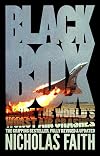
Both an interesting and sobering look at the reasons planes crash. The author covers each of the main causes for air accidents, human error, aircraft malfunction, shoddy maintenance, weather and criminal acts, and presents copious examples of each from the chequered history of aviation. I might have preferred a more detailed coverage of each incident, but that is a small niggle. Fascinating book.
Awards


You May Also Like


Associated Authors
Statistics
- Works
- 38
- Members
- 629
- Popularity
- #40,057
- Rating
- 3.6
- Reviews
- 12
- ISBNs
- 96
- Languages
- 6