
About the Author
Tilar J. Mazzeo is a New York Times bestselling author of books that include The Widow Clicquot: The Story of a Champagne Empire and the Woman Who Ruled It, The Secret of Chanel No. 5: The Intimate Story of the World's Most Famous Perfume, and The Hotel On The Place Vendôme: Life, Death, And show more Betrayal At The Hôtel Ritz In Paris. She also writes extensively on wine for the media and is the author of The Back Lane Wineries of Napa, The Back Lane Wineries of Sonoma, and the forthcoming guide to The Back Lane Wineries of the Pacific Northwest. She received her Ph.D. from the University of Washington, Seattle, and today writes narrative nonfiction and memoir on the history of war, women, and luxury. She teaches English as the Clara C. Piper Associate Professor of English at Colby College and teaches narrative nonfiction at writer's workshops in the Canadian Gulf Islands of British Columbia. (Bowker Author Biography) show less
Works by Tilar Mazzeo
Irena's Children: The Extraordinary Story of the Woman Who Saved 2,500 Children from the Warsaw Ghetto (2016) — Author — 683 copies, 23 reviews
The Widow Clicquot: The Story of a Champagne Empire and the Woman Who Ruled It (2009) 647 copies, 30 reviews
Irena's Children Young Readers Edition: A True Story of Courage (2016) — Author — 356 copies, 8 reviews
The Hotel on Place Vendome: Life, Death, and Betrayal at the Hotel Ritz in Paris (2014) 341 copies, 8 reviews
Eliza Hamilton: The Extraordinary Life and Times of the Wife of Alexander Hamilton (2018) 298 copies, 7 reviews
The Secret of Chanel No. 5: The Intimate History of the World's Most Famous Perfume (2010) 207 copies, 10 reviews
The Sea Captain's Wife: A True Story of Mutiny, Love, and Adventure at the Bottom of the World (2025) 107 copies, 10 reviews
Sisters in Resistance: How a German Spy, a Banker's Wife, and Mussolini's Daughter Outwitted the Nazis (2022) 106 copies, 3 reviews
How to Write a Bestseller: An Insider's Guide to Writing Narrative Nonfiction for General Audiences (2024) 4 copies, 1 review
Tagged
Common Knowledge
- Other names
- MAZZEO, Tiljar J.
MAZZEO, Tiljar - Birthdate
- 20th Century
- Gender
- female
- Education
- University of Washington
- Occupations
- professor (English)
biographer
cultural historian
wine writer - Organizations
- University of Montreal
Colby College
University of Wisconsin-Oshkosh - Nationality
- USA (dual citizenship)
Canada (dual citizenship) - Places of residence
- California, USA
New York, New York, USA
Maine, USA
Oshkosh, Wisconsin, USA
Vancouver Island, British Columbia, Canada - Associated Place (for map)
- USA
Members
Reviews
Eliza Hamilton: The Extraordinary Life and Times of the Wife of Alexander Hamilton by Tilar J. Mazzeo
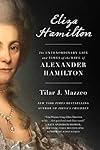
Like many, I fell in love with the protagonist of Broadway's biggest hit in recent years Hamilton. The true protagonist of that story is not Alexander Hamilton but his wife Eliza Hamilton. Her life as one of our country's founding mothers brings accolades that stack up well alongside her husband's.
She bore seven children. Mindful of her husband's past and her children's present, she helped found the country's first private orphanage. She helped raise money to fund the Washington Monument. show more She was close personal friends with Martha and George Washington. She was a noble "Roman wife" whose work directly helped found the United States of America. She loved her family and tolerated her enemies.
Eliza was not brilliant. That was Alexander's part. She had heart, though, and loved Alexander and her family deeply.
Most interesting is Mazzeo's take of the Reynolds affair. The way this tale is traditionally told is that Alexander, while Treasury Secretary, had a sexual tryst with a Maria Reynolds with Maria's husband's full knowledge in Eliza's bed. A love note supposedly corroborated the affair. James Reynolds, Maria's husband, supposedly blackmailed Alexander for money with the threat of telling Eliza.
But Eliza never divorced Alexander and defended him with passion for the rest of her life. Why? Mazzeo contends that Alexander falsified the Reynolds pamphlet to cover up for insider trading. She contends that politicians of his time and enemies of Hamilton's political party (including future presidents James Monroe and Thomas Jefferson) knew this and forced the brilliant Alexander out of politics. Mazzeo even outlines her theory in a closing Author's Note within the book.
Well-written and an interesting profile of one of our founding mothers, Eliza Hamilton tells a story not of a saint but of someone's interesting angle on life. show less
She bore seven children. Mindful of her husband's past and her children's present, she helped found the country's first private orphanage. She helped raise money to fund the Washington Monument. show more She was close personal friends with Martha and George Washington. She was a noble "Roman wife" whose work directly helped found the United States of America. She loved her family and tolerated her enemies.
Eliza was not brilliant. That was Alexander's part. She had heart, though, and loved Alexander and her family deeply.
Most interesting is Mazzeo's take of the Reynolds affair. The way this tale is traditionally told is that Alexander, while Treasury Secretary, had a sexual tryst with a Maria Reynolds with Maria's husband's full knowledge in Eliza's bed. A love note supposedly corroborated the affair. James Reynolds, Maria's husband, supposedly blackmailed Alexander for money with the threat of telling Eliza.
But Eliza never divorced Alexander and defended him with passion for the rest of her life. Why? Mazzeo contends that Alexander falsified the Reynolds pamphlet to cover up for insider trading. She contends that politicians of his time and enemies of Hamilton's political party (including future presidents James Monroe and Thomas Jefferson) knew this and forced the brilliant Alexander out of politics. Mazzeo even outlines her theory in a closing Author's Note within the book.
Well-written and an interesting profile of one of our founding mothers, Eliza Hamilton tells a story not of a saint but of someone's interesting angle on life. show less
Sisters in Resistance: How a German Spy, a Banker's Wife, and Mussolini's Daughter Outwitted the Nazis by Tilar J. Mazzeo
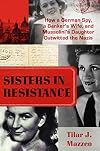
Sisters in Resistance by Tilar J Mazzeo is that splendid mix of history and narrative that both entertains and informs.
As she states early in the book, this is not a story about heroes, these people largely had personal rather than humanistic or even redemptive motivation. That doesn't make the story any less compelling nor the value of their actions any lower.
Because the story involves people from several governments as well as acquaintances, there is a bit of information that has to be show more given in order to make this into a narrative rather than a brain dump. Part of that entails some repetition, since we may well need a piece of information we learned while immersed in the part of the story that involved many of the Italians but now we are immersed in a bunch of Americans and their objectives. So to make sure we have all the pieces of each puzzle (and this is not a story about one simple puzzle) we are reminded of things we learned in one context so we can apply it in this new context. Technically, yes, that is repetition, but the kind that is essential to any storytelling, fiction or nonfiction.
This is a propulsive read, in part due to relatively short chapters and each of them separated into sections, but also because there is so much intrigue. Even knowing how it will turn out (the case with nonfiction) we are anxious for these people when they are trying to make deals, or trick each other. Are there many truly likable people here? Not really. But we can, on some level, understand their motivations. Couple this personal level of narrative with the larger historical aspect of what was at stake and, as readers in the 21st century know, the value of the diaries.
I didn't have any real complaints about the book, it managed to keep quite a few people and a lot of information organized for the reader while also providing a compelling narrative. Does it read like a spy thriller? Well, duh, it is a spy thriller, a real life one. Maybe we want our true stories to be more boring and only movies and fiction book to be exciting and dramatic. No, we aren't that jaded yet, are we?
I would recommend this to history buffs who have an interest in World War II period intrigue as well as those who enjoy spy novels and want to read some true stories as well.
Reviewed from a copy made available by the publisher via NetGalley. show less
As she states early in the book, this is not a story about heroes, these people largely had personal rather than humanistic or even redemptive motivation. That doesn't make the story any less compelling nor the value of their actions any lower.
Because the story involves people from several governments as well as acquaintances, there is a bit of information that has to be show more given in order to make this into a narrative rather than a brain dump. Part of that entails some repetition, since we may well need a piece of information we learned while immersed in the part of the story that involved many of the Italians but now we are immersed in a bunch of Americans and their objectives. So to make sure we have all the pieces of each puzzle (and this is not a story about one simple puzzle) we are reminded of things we learned in one context so we can apply it in this new context. Technically, yes, that is repetition, but the kind that is essential to any storytelling, fiction or nonfiction.
This is a propulsive read, in part due to relatively short chapters and each of them separated into sections, but also because there is so much intrigue. Even knowing how it will turn out (the case with nonfiction) we are anxious for these people when they are trying to make deals, or trick each other. Are there many truly likable people here? Not really. But we can, on some level, understand their motivations. Couple this personal level of narrative with the larger historical aspect of what was at stake and, as readers in the 21st century know, the value of the diaries.
I didn't have any real complaints about the book, it managed to keep quite a few people and a lot of information organized for the reader while also providing a compelling narrative. Does it read like a spy thriller? Well, duh, it is a spy thriller, a real life one. Maybe we want our true stories to be more boring and only movies and fiction book to be exciting and dramatic. No, we aren't that jaded yet, are we?
I would recommend this to history buffs who have an interest in World War II period intrigue as well as those who enjoy spy novels and want to read some true stories as well.
Reviewed from a copy made available by the publisher via NetGalley. show less
The Widow Clicquot: The Story of a Champagne Empire and the Woman Who Ruled It (P.S.) by Tilar J. Mazzeo
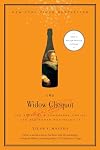
I confess, although I'm a wine lover, I normally don't like Champagne. Sparkling wines are not for me, and bubbles give me headache. But... But, if I have to get a glass, then it's a no-brainer: I'll settle either for a Clicquot, or a Heidsieck. This book, though, isn't about tasting. It's about the woman behind the Clicquot Empire, and, beyond, the history of a drink. And what a history!
The (fascinating) thing with Champagne, is that everything that most people 'know' about it is downright show more bogus. First of all, it didn't originated in France, but in England. Dom Pérignon, the monk often credited with the bubbly magic, had not only nothing to do with it, but, on the contrary, may have been trying to get rid of the bubbles so as to keep it a still wine in the first place! Then, the Champagne region might be a very protected terroir as of nowadays, but it wasn't always the case. In fact, it had once flooded the fizzy market with so much cheap wines that it nearly crashed down. As for the drink itself, it's a miracle it became the epitome of glitz and glamour; the drink of choice for any occasions to be celebrated; even, a symbol from romance to luxury, since it had been close, very close indeed, to be completely obliterated by history...
Now, of course, the author retraces here such circumvoluted odyssey through time, and where myths of all sorts have ultimately conquered the popular narrative over historical facts. But this isn't about Champagne only. This is about, especially, the woman that greatly contributed to overcome all that and give us the wine that we all know today. What happened?
Wine geeks and lovers will (most probably) know about her main contribution when it comes to wine making itself that is, the new technique she contributed to develop (riddling and disgorging) and that would transform how Champagne looks and tastes forever. But, there is more to it than that. There is, above all, a personal history, a family history, a drink history, and History.
Barbe-Nicole Ponsardin (Madame Clicquot's birth name) might have come from a very privileged and powerful provincial family, yet, everything was against her. She was a woman in a world dominated by men. She was barely 27 when she became a widow, and so found herself inheriting the business of her late husband -something that would turn out to be a massive challenge indeed. She operated in a market that might have been very, very small, yet was highly competitive. Last but not least, hers was in a France gripped by the Napoleonic regime and its wars, a serious impediment given that the biggest market for her drinks at the time was... blockaded Russia! How on earth did she managed to propels her business forward in such a context makes for a gripping story.
In the end, it doesn't matter if you like or not Champagne, and the Clicquot brand especially. What matters, is that behind what came to become a cultural icon is a personal journey, having hurled itself head on against History to change how we drink and celebrate. This, here, is a very engrossing book. show less
The (fascinating) thing with Champagne, is that everything that most people 'know' about it is downright show more bogus. First of all, it didn't originated in France, but in England. Dom Pérignon, the monk often credited with the bubbly magic, had not only nothing to do with it, but, on the contrary, may have been trying to get rid of the bubbles so as to keep it a still wine in the first place! Then, the Champagne region might be a very protected terroir as of nowadays, but it wasn't always the case. In fact, it had once flooded the fizzy market with so much cheap wines that it nearly crashed down. As for the drink itself, it's a miracle it became the epitome of glitz and glamour; the drink of choice for any occasions to be celebrated; even, a symbol from romance to luxury, since it had been close, very close indeed, to be completely obliterated by history...
Now, of course, the author retraces here such circumvoluted odyssey through time, and where myths of all sorts have ultimately conquered the popular narrative over historical facts. But this isn't about Champagne only. This is about, especially, the woman that greatly contributed to overcome all that and give us the wine that we all know today. What happened?
Wine geeks and lovers will (most probably) know about her main contribution when it comes to wine making itself that is, the new technique she contributed to develop (riddling and disgorging) and that would transform how Champagne looks and tastes forever. But, there is more to it than that. There is, above all, a personal history, a family history, a drink history, and History.
Barbe-Nicole Ponsardin (Madame Clicquot's birth name) might have come from a very privileged and powerful provincial family, yet, everything was against her. She was a woman in a world dominated by men. She was barely 27 when she became a widow, and so found herself inheriting the business of her late husband -something that would turn out to be a massive challenge indeed. She operated in a market that might have been very, very small, yet was highly competitive. Last but not least, hers was in a France gripped by the Napoleonic regime and its wars, a serious impediment given that the biggest market for her drinks at the time was... blockaded Russia! How on earth did she managed to propels her business forward in such a context makes for a gripping story.
In the end, it doesn't matter if you like or not Champagne, and the Clicquot brand especially. What matters, is that behind what came to become a cultural icon is a personal journey, having hurled itself head on against History to change how we drink and celebrate. This, here, is a very engrossing book. show less
An interesting look at Barb-Nicole Clicquot, the widow (veuve in French) behind the world-renowned Veuve Clicquot champagne. There is not much documentation about Madam Clicquot, so the author has to resort to some supposition, but she does it well and never in an exaggerated manner. There is more documentation about the times and the industry itself, which the author uses to fill in the story. A very compelling look at the life of a woman who lived outside the normal rules and expectations show more for women and turned her small business into an international success during the time of the French Revolution and other major wars. Really, the book was a perfect blend of the life of Madam Clicquot and the times she lived in, making for a rich portrayal of her story.
While reading the book, I purchased a half-bottle of Veuve Clicquot champagne and enjoyed it. It was fun to examine the label and understand the significance of aspects of it. And I certainly had a greater appreciation than ever before for how much work is required to generate those lovely and lively bubbles. show less
While reading the book, I purchased a half-bottle of Veuve Clicquot champagne and enjoyed it. It was fun to examine the label and understand the significance of aspects of it. And I certainly had a greater appreciation than ever before for how much work is required to generate those lovely and lively bubbles. show less
Lists
Awards


You May Also Like


Associated Authors
Statistics
- Works
- 14
- Members
- 2,901
- Popularity
- #8,828
- Rating
- 3.7
- Reviews
- 101
- ISBNs
- 119
- Languages
- 9
- Favorited
- 1