
Benjamin Wallace (1)
Author of The Billionaire's Vinegar: The Mystery of the World's Most Expensive Bottle of Wine
For other authors named Benjamin Wallace, see the disambiguation page.
Works by Benjamin Wallace
The Billionaire's Vinegar: The Mystery of the World's Most Expensive Bottle of Wine (2009) 1,035 copies, 45 reviews
Associated Works
Tagged
Common Knowledge
- Birthdate
- 20th Century
- Gender
- male
- Nationality
- USA
- Associated Place (for map)
- USA
Members
Reviews
The Billionaire's Vinegar: The Mystery of the World's Most Expensive Bottle of Wine by Benjamin Wallace
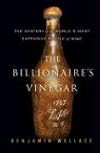
I really liked this book. A real life mystery reminiscent of The Devil in the White City (not for the subject matter, but for the reality of it), I was totally engaged as much as if I had been reading a good fictional mystery. I happen to be interested in wine, so that helped, although I know next to nothing about wine -- only that I drink what I like and because of what I can afford, my taste in wine is necessarily very modest. Not so these guys in the book. Very interesting. I recommend it show more to those for whom forgers have a fascination, anyone interested in food and wine, anyone interested in collecting, and anyone who likes a good real-life mystery. show less
The Billionaire's Vinegar: The Mystery of the World's Most Expensive Bottle of Wine by Benjamin Wallace
What's that old saying we all learn sometime fairly early in life? Oh yes: when something seems too good to be true, it usually is. And yet stories of people getting taken in crop up all the time. One such is that recounted in Benjamin Wallace's new book The Billionaire's Vinegar: The Mystery of the World's Most Expensive Bottle of Wine (Crown, 2008). Wallace reports on the most famous (not to mention lucrative) wine hoax of all time, the sale of a cache of vintage bottles "discovered" in a show more Paris cellar and engraved with the initials "Th.J".
In 1985, the first of these bottles to go on the open market (a 1737 Lafite) set a still-standing record for the highest price ever paid at auction for a bottle of wine when it sold at Christie's to the family of Malcolm Forbes for the equivalent $156,000. The bottle had been authenticated by Christie's experts as having belonged to (or at least ordered by and engraved for) Thomas Jefferson during his time as the American ambassador to Paris. But even before this sale, doubts surfaced about the authenticity of the bottle, and while Christie's wine department (headed by the great Michael Broadbent) and the bottle's consignor (the somewhat-mysterious German wine collector with the inimitable - if ultimately fictional - name of Hardy Rodenstock) pooh-poohed the concerns of Monticello researchers and others, concerns persisted.
In the intervening two decades, as Rodenstock sold more bottles and continued to find more surprising and unexpected rarities, the doubts mounted and the facade slowly began to crumble. Wallace ably leads his reader through the many twists and turns in the very complicated story, introducing us to Rodenstock and his fellow wine enthusiasts (be they auctioneers, writers, collectors, or just tasters) as well as to the culture of high-end wine collecting and tasting, the sharp rivalries between competitors in the wine world and to the fascinating investigative process (on both scientific and circumstantial fronts) which finally resulted in the discovery of the hoax and the ultimate end of Rodenstock's Icarus-like flights of wine-fancy.
Not knowing much about the rare-wine world at all, I found this book a perfect entreé into the subject; Wallace provided sufficient background to handle the oenocentric portion, and combined that with ample helpings of mystery, historical discussion (of wine-making, Jefferson, forgery, &c.), and journalistic character-sketches and interviews of the characters involved with all aspects of the case. Most fascinating was the cult of gullibility which seemed to develop and Rodenstock and his implausible discoveries: everyone involved so wanted the bottles to be real that they all accepted what Wallace calls the "standard of plausible confirmability" and drank the Rodenstock Kool-Aid (there's a phrase sure to give a true oenophile chills up the spine, I'm sure).
Sure to be one of my top books of 2008. I had to pace myself with it, because I would have read it in one sitting if I wasn't careful.
And, there's more. Patrick Radden Keefe wrote a New Yorker article about the matter last year, and reportedly both his and Wallace's works have been optioned for movies (both would make good ones). Also, word just a few days ago that Bill Koch (who you'll meet near the end of Wallace's book and is playing a major part in ongoing litigation against Rodenstock) claims that new evidence of Rodenstock's business dealings adds fuel to the lawsuits against him. So there are more shoes yet to drop in this utterly compelling case.
http://philobiblos.blogspot.com/2008/06/book-review-billionaires-vinegar.html show less
In 1985, the first of these bottles to go on the open market (a 1737 Lafite) set a still-standing record for the highest price ever paid at auction for a bottle of wine when it sold at Christie's to the family of Malcolm Forbes for the equivalent $156,000. The bottle had been authenticated by Christie's experts as having belonged to (or at least ordered by and engraved for) Thomas Jefferson during his time as the American ambassador to Paris. But even before this sale, doubts surfaced about the authenticity of the bottle, and while Christie's wine department (headed by the great Michael Broadbent) and the bottle's consignor (the somewhat-mysterious German wine collector with the inimitable - if ultimately fictional - name of Hardy Rodenstock) pooh-poohed the concerns of Monticello researchers and others, concerns persisted.
In the intervening two decades, as Rodenstock sold more bottles and continued to find more surprising and unexpected rarities, the doubts mounted and the facade slowly began to crumble. Wallace ably leads his reader through the many twists and turns in the very complicated story, introducing us to Rodenstock and his fellow wine enthusiasts (be they auctioneers, writers, collectors, or just tasters) as well as to the culture of high-end wine collecting and tasting, the sharp rivalries between competitors in the wine world and to the fascinating investigative process (on both scientific and circumstantial fronts) which finally resulted in the discovery of the hoax and the ultimate end of Rodenstock's Icarus-like flights of wine-fancy.
Not knowing much about the rare-wine world at all, I found this book a perfect entreé into the subject; Wallace provided sufficient background to handle the oenocentric portion, and combined that with ample helpings of mystery, historical discussion (of wine-making, Jefferson, forgery, &c.), and journalistic character-sketches and interviews of the characters involved with all aspects of the case. Most fascinating was the cult of gullibility which seemed to develop and Rodenstock and his implausible discoveries: everyone involved so wanted the bottles to be real that they all accepted what Wallace calls the "standard of plausible confirmability" and drank the Rodenstock Kool-Aid (there's a phrase sure to give a true oenophile chills up the spine, I'm sure).
Sure to be one of my top books of 2008. I had to pace myself with it, because I would have read it in one sitting if I wasn't careful.
And, there's more. Patrick Radden Keefe wrote a New Yorker article about the matter last year, and reportedly both his and Wallace's works have been optioned for movies (both would make good ones). Also, word just a few days ago that Bill Koch (who you'll meet near the end of Wallace's book and is playing a major part in ongoing litigation against Rodenstock) claims that new evidence of Rodenstock's business dealings adds fuel to the lawsuits against him. So there are more shoes yet to drop in this utterly compelling case.
http://philobiblos.blogspot.com/2008/06/book-review-billionaires-vinegar.html show less
The Billionaire's Vinegar: The Mystery of the World's Most Expensive Bottle of Wine by Benjamin Wallace
I seem to be drawn to true-life tales of con artists, scoundrels, and scallywags (see my review of the just-released Charlatan and the high rating I have on The Whiskey Robber).
It's not that I admire them, per se; they have all cheated, defrauded, and stolen from both governments and individuals for no higher purpose than their own gain.
But I do have to admit that I can't help but admire their chutzpah--the sheer ballsiness of their schemes. You can't help but wonder what this combination of show more confidence, nerve, and ambition could accomplish in more legitimate pursuits.
The nervy bastard at the center of The Billionaire's Vinegar is Hardy Rodenstock, a self-made wine connoisseur/dealer from Germany who ascended to the top of the rare wine market in the 80s via some incredible "finds" of rare vintages. Chief among these finds was a cache of rare bottles dating from the late 1700s, each engraved "Th:J." implying that they once belonged to Thomas Jefferson.
Despite the fact that questions are raised about the bottles' authenticity (from historical sources outside the wine industry/culture) from the beginning, the Forbes family paid $156,000 for a single bottle of "Jefferson wine" to be displayed along with other Jeffersonian artifacts owned by the family. This purchase sent the market for rare wines into the stratosphere.
Rodenstock was everywhere after this, with a seemingly never-ending supply of the rarest wines, a prickly personality, and a shady background.
Wallace does an excellent job setting up the culture of folks who buy and drink rare wines and how that culture changed once the paradigm shifted from buying rare wines to drink to buying rare wines as an investment or a way to show off (predictably, this vulgarization occurs once the Americans really get involved). He also does an excellent job showing how snobbery, pride, and tradition made supposed experts willfully blind to the idea of fraud.
Definitive answers are hard to come by in books like this; it's difficult to test the wine without ruining it, and no one who's paid an insane amount for a bottle of wine wants to be proved a fool. Still, the circumstantial evidence of fraud is pretty clear, meaning many very, very wealthy people spent outrageous amounts of money for wine not nearly as old or rare as what they thought.
And maybe it makes me a bad person, but it's hard not to take some small measure of satisfaction in snobby rich folks looking like fools. show less
It's not that I admire them, per se; they have all cheated, defrauded, and stolen from both governments and individuals for no higher purpose than their own gain.
But I do have to admit that I can't help but admire their chutzpah--the sheer ballsiness of their schemes. You can't help but wonder what this combination of show more confidence, nerve, and ambition could accomplish in more legitimate pursuits.
The nervy bastard at the center of The Billionaire's Vinegar is Hardy Rodenstock, a self-made wine connoisseur/dealer from Germany who ascended to the top of the rare wine market in the 80s via some incredible "finds" of rare vintages. Chief among these finds was a cache of rare bottles dating from the late 1700s, each engraved "Th:J." implying that they once belonged to Thomas Jefferson.
Despite the fact that questions are raised about the bottles' authenticity (from historical sources outside the wine industry/culture) from the beginning, the Forbes family paid $156,000 for a single bottle of "Jefferson wine" to be displayed along with other Jeffersonian artifacts owned by the family. This purchase sent the market for rare wines into the stratosphere.
Rodenstock was everywhere after this, with a seemingly never-ending supply of the rarest wines, a prickly personality, and a shady background.
Wallace does an excellent job setting up the culture of folks who buy and drink rare wines and how that culture changed once the paradigm shifted from buying rare wines to drink to buying rare wines as an investment or a way to show off (predictably, this vulgarization occurs once the Americans really get involved). He also does an excellent job showing how snobbery, pride, and tradition made supposed experts willfully blind to the idea of fraud.
Definitive answers are hard to come by in books like this; it's difficult to test the wine without ruining it, and no one who's paid an insane amount for a bottle of wine wants to be proved a fool. Still, the circumstantial evidence of fraud is pretty clear, meaning many very, very wealthy people spent outrageous amounts of money for wine not nearly as old or rare as what they thought.
And maybe it makes me a bad person, but it's hard not to take some small measure of satisfaction in snobby rich folks looking like fools. show less
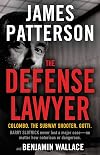
This biography of uber-successful lawyer Barry Slotnick examines the highlights of his career and is essentially the glorification of a lawyer who sought fame and fortune as he defended those with enough money to hire him. While it is true that everyone deserves representation, the choices made by this lawyer who refers to himself as “Liberty’s Last Champion” are not particularly commendable and the “not guilty” verdicts rendered in these cases may leave readers wondering if show more justice was truly served.
Well-written, often reading like a crime novel rather than a true-life biography, readers receive an unintended lesson in devious techniques and despicable actions. Nevertheless, the cases are interesting and, despite the egotistical lawyer that is the subject of the narrative, the book is eminently readable. show less
Well-written, often reading like a crime novel rather than a true-life biography, readers receive an unintended lesson in devious techniques and despicable actions. Nevertheless, the cases are interesting and, despite the egotistical lawyer that is the subject of the narrative, the book is eminently readable. show less
Lists
You May Also Like


Associated Authors
Statistics
- Works
- 4
- Also by
- 2
- Members
- 1,210
- Popularity
- #21,233
- Rating
- 3.5
- Reviews
- 47
- ISBNs
- 87
- Languages
- 2