
Tom Standage
Author of A History of the World in 6 Glasses
About the Author
Tom Standage is a journalist and author from England. A graduate of Oxford University, he has worked as a science and technology writer for The Guardian, as the business editor at The Economist, has been published in Wired, The New York Times, and The Daily Telegraph. His non-fiction works include show more The Victorian Internet, A History of the World in Six Glasses, An Edible History of Humanity (on the New York Times bestseller list in 2014), and Writing on the Wall: Social Media -- The First 2,000 Years. (Bowker Author Biography) show less
Image credit: Judah Passow/Network Photographers
Works by Tom Standage
The Victorian Internet: The Remarkable Story of the Telegraph and the Nineteenth Century's On-Line Pioneers (1998) — Author — 1,478 copies, 32 reviews
The Turk: The Life and Times of the Famous Eighteenth-Century Chess-Playing Machine (2002) 463 copies, 10 reviews
The Neptune File: A Story of Astronomical Rivalry and the Pioneers of Planet Hunting (2000) 196 copies, 3 reviews
A Brief History of Motion: From the Wheel, to the Car, to What Comes Next (2021) 134 copies, 5 reviews
ヴィクトリア朝時代のインターネット (ハヤカワ文庫NF) 1 copy
Istoria lumii în 6 pahare 1 copy
Associated Works
Tagged
Common Knowledge
- Birthdate
- 1969
- Gender
- male
- Education
- University of Oxford
- Occupations
- journalist
writer
author - Organizations
- The Guardian
The Economist - Nationality
- UK
- Places of residence
- London, England, UK
- Map Location
- UK
Members
Reviews
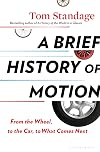
The car is considered an improvement over horses. Horses required food and stables; and produced tons of manure which needed to be cleaned from city streets. But cars created a dependency on oil and gas, produced unhealthy chemical emissions, killed thousands of people each year, take up huge amounts of space, and hugely altered city neighborhoods and country terrain.
Cars were game changers, and as such, much of the world’s urban planning, and suburban residential shopping and show more recreational developments, focused almost exclusively on travel by car. The result is that millions of people were compelled to adapt their lives, not just how to travel but where to live, work, and shop, around this costly modern-day miracle.
Robert Moses was an ambitious, over-reaching politician when it came to urban planning centered on vehicles. Like the world’s very first drivers, mostly very wealthy men, sped unconcerned about those they hurt or killed, Moses narrow-mindedly and insensitively, implemented construction of roads and highways by plowing through and tearing apart poor Black and Latino neighborhoods. Working under Governor Al Smith, Moses held over 12 official titles, with access to a large budget, and free rein to build parks and beaches for upper class whites, deliberately designing bridges connecting New York City to be too low for buses from inner city neighborhoods thus keeping out middle- and lower-class citizens. Yes, Americans can travel the country through our interstate highway system due to Moses’ forceful and aggressive ‘get-it-done’ dynamism. But at what cost?
To slow climate change, gain more critically needed green space, produce less emissions, reduce car accidents and deaths, people have been considering and talking about travel alternatives for years. Options include electric vehicles and automatic vehicles (AV’s) or self-driving cars. AV’s have been tested but because city roads and highways, their signage, traffic controls are complex, AV’s have been determined to have become 90% safe. Until the remaining 10% is achieved they cannot be used in large-scale settings.
While trains, buses and cars may be the best choice for long trips, travel for families and groups, and for transporting large or heavy items, there are many options better suited for local travel. Ride-sharing, biking, and scooters are examples. Logistically, travel in the future needs to be flexible. As we know, utilizing horses and cars had both good and bad consequences. With any new invention and innovation, despite testing, scrutiny and deliberation, it can be challenging to think of everything that could happen down the road and go wrong. That is why using a variety of travel options provides the versatility and adjustability to avoid getting trapped in a travel monoculture.
The smart phone, an innovation like the automobile is key to coordinating, ordering and paying for long and short trips, or a combination of both.
I learned a lot from Standage’s A Brief History of Motion…, and enjoyed reading it. But the word ‘Brief’ is inaccurate. At this point in my life, I appreciate reading more condensed and less comprehensive non-fiction books. show less
Cars were game changers, and as such, much of the world’s urban planning, and suburban residential shopping and show more recreational developments, focused almost exclusively on travel by car. The result is that millions of people were compelled to adapt their lives, not just how to travel but where to live, work, and shop, around this costly modern-day miracle.
Robert Moses was an ambitious, over-reaching politician when it came to urban planning centered on vehicles. Like the world’s very first drivers, mostly very wealthy men, sped unconcerned about those they hurt or killed, Moses narrow-mindedly and insensitively, implemented construction of roads and highways by plowing through and tearing apart poor Black and Latino neighborhoods. Working under Governor Al Smith, Moses held over 12 official titles, with access to a large budget, and free rein to build parks and beaches for upper class whites, deliberately designing bridges connecting New York City to be too low for buses from inner city neighborhoods thus keeping out middle- and lower-class citizens. Yes, Americans can travel the country through our interstate highway system due to Moses’ forceful and aggressive ‘get-it-done’ dynamism. But at what cost?
To slow climate change, gain more critically needed green space, produce less emissions, reduce car accidents and deaths, people have been considering and talking about travel alternatives for years. Options include electric vehicles and automatic vehicles (AV’s) or self-driving cars. AV’s have been tested but because city roads and highways, their signage, traffic controls are complex, AV’s have been determined to have become 90% safe. Until the remaining 10% is achieved they cannot be used in large-scale settings.
While trains, buses and cars may be the best choice for long trips, travel for families and groups, and for transporting large or heavy items, there are many options better suited for local travel. Ride-sharing, biking, and scooters are examples. Logistically, travel in the future needs to be flexible. As we know, utilizing horses and cars had both good and bad consequences. With any new invention and innovation, despite testing, scrutiny and deliberation, it can be challenging to think of everything that could happen down the road and go wrong. That is why using a variety of travel options provides the versatility and adjustability to avoid getting trapped in a travel monoculture.
The smart phone, an innovation like the automobile is key to coordinating, ordering and paying for long and short trips, or a combination of both.
I learned a lot from Standage’s A Brief History of Motion…, and enjoyed reading it. But the word ‘Brief’ is inaccurate. At this point in my life, I appreciate reading more condensed and less comprehensive non-fiction books. show less
The Victorian Internet: The Remarkable Story of the Telegraph and the Nineteenth Century's On-line Pioneers by Tom Standage
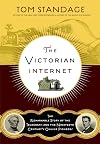
The second edition of Tom Standage’s Victorian Internet does not contain much that is new, but that is OK because most of it is still valid. Standage’s thesis is simple: The telegraph revolutionized Victorian communication much like the Internet revolutionized late twentieth-century communication. It did more to tie the country together than the transcontinental railroad. It also generated many of the same complaints and caused many of the same sorts of social problems as the Internet. show more It generated a coded economy, generated security concerns, and created its own abbreviated, slangy argot. Plus la change … show less
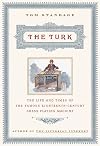
Picture a bygone era ripe with new inventions. This was the industrial revolution. Everyone is coming up with something practical to make life easier or something clever to wow the public's imagination. Wolfgang von Kempelen's creativity was sparked when he attended a conjuring show at the court of Austria-Hungary's empress, Maria Theresa. Kempelen felt he could impress the empress further with his own ingenuity. She gave him six months to prepare a show of his own and at the end of the six show more months a mechanical Turkish dressed chess player was born. Outfitted with a high turban and a long smoking pipe, the automaton appeared to be capable of thought as he singlehandedly beat even the most skilled chess player at his own game. Kempelen allowed his audience to peer into the machine's inner workings and yet they still couldn't figure it out. the automaton became even more lifelike and mysterious when his second owner, Johann Maezel, introduced speech. The Turk, as the mechanical chess player became known, could talk! Instead of nodding three times, the automaton could tell his opponents, "check" in French further adding to his mystique. Like the boy who came to life in Pinocchio, the Turk was pure magic.
For eighty-seven years the Turk wowed audiences all across Europe and the eastern United States (Baltimore, Philadelphia, New York, and Boston primarily) before a raging fire extinguished his career. The mystery was not the how the automaton worked. Not really. The bigger and better mystery was how, for all those years and kept by multiple owners, the secret did not get out.
It is sad to think the Turk is not squirreled away in some fantastic museum. I fantasize about turning a corner, coming into a dusty room and standing face to face with the mechanical man in a turban who could say, "echec." show less
For eighty-seven years the Turk wowed audiences all across Europe and the eastern United States (Baltimore, Philadelphia, New York, and Boston primarily) before a raging fire extinguished his career. The mystery was not the how the automaton worked. Not really. The bigger and better mystery was how, for all those years and kept by multiple owners, the secret did not get out.
It is sad to think the Turk is not squirreled away in some fantastic museum. I fantasize about turning a corner, coming into a dusty room and standing face to face with the mechanical man in a turban who could say, "echec." show less
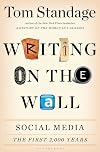
A refreshing and thought-provoking look at "social media" in its current and historical forms. Standage defines a social media system as "an environment in which information was passed from one person to another along social connections, to create a distributed discussion or community." This allows him to bring into the discussion such examples as Cicero's network of correspondents, Tudor courtiers sharing commonplace books of poems, and the coffeehouse culture of Enlightenment Europe. He's show more chosen his examples quite well, and drawn from the right sources to make his arguments stick.
After providing a few case studies of historical social media environments, Standage offers some chapters on the mass media culture which sprang up around the 1830s with newspapers and continued through the rise of radio and television (though, as he points out, at the beginning of the radio world there was a time when that too functioned basically as a social media system). Now, he maintains, the tide has turned again, with the Internet and all its tools offering an opportunity for social interaction on a grand scale never before known. The main point is that while today's methods and scale and media may be new, the ideas behind them--"social platforms that enable ideas to travel from one person to another, rippling through networks of people connected by social bonds, rather than having to squeeze through the privileged bottleneck of broadcast media"--have been with us for a very long time indeed.
Witty and amusing, as Standage's writing tends to be (and thus, quite fun to read). show less
After providing a few case studies of historical social media environments, Standage offers some chapters on the mass media culture which sprang up around the 1830s with newspapers and continued through the rise of radio and television (though, as he points out, at the beginning of the radio world there was a time when that too functioned basically as a social media system). Now, he maintains, the tide has turned again, with the Internet and all its tools offering an opportunity for social interaction on a grand scale never before known. The main point is that while today's methods and scale and media may be new, the ideas behind them--"social platforms that enable ideas to travel from one person to another, rippling through networks of people connected by social bonds, rather than having to squeeze through the privileged bottleneck of broadcast media"--have been with us for a very long time indeed.
Witty and amusing, as Standage's writing tends to be (and thus, quite fun to read). show less
Lists
Awards


You May Also Like


Associated Authors
Statistics
- Works
- 21
- Also by
- 1
- Members
- 7,224
- Popularity
- #3,387
- Rating
- 3.8
- Reviews
- 209
- ISBNs
- 131
- Languages
- 13
- Favorited
- 8

