
Bee Wilson
Author of Consider the Fork: A History of How We Cook and Eat
About the Author
Bee Wilson is an acclaimed food writer, historian, and author. The author of numerous books, including Consider the Fork, Wilson lives in Cambridge, United Kingdom.
Works by Bee Wilson
Swindled: The Dark History of Food Fraud, from Poisoned Candy to Counterfeit Coffee (2008) 282 copies, 10 reviews
The Way We Eat Now: How the Food Revolution Has Transformed Our Lives, Our Bodies, and Our World (2019) — Author; Narrator, some editions — 182 copies, 6 reviews
Sylvia Plath's Tomato Soup Cake: A Compendium of Classic Authors' Favourite Recipes (2024) — Foreword — 6 copies
Associated Works
Women on Food: Charlotte Druckman and 115 Writers, Chefs, Critics, Television Stars, and Eaters (2019) — Contributor — 41 copies
Tagged
Common Knowledge
- Canonical name
- Wilson, Bee
- Legal name
- Wilson, Beatrice Dorothy
- Birthdate
- 1974-03-07
- Gender
- female
- Education
- Trinity College, Cambridge (BA|1992|Ph.D|2002)
University of Pennsylvania (MA) - Occupations
- food writer
journalist
historian - Organizations
- New Statesman (food critic)
Sunday Telegraph (columnist)
Cambridge University (St John's College) (research fellow) - Awards and honors
- Royal Society of Literature (Fellow, 2023)
BBC Radio 4 Food Writer of the Year (2002)
British Guild of Food Writers (Food Journalist of the Year ∙ 2004)
British Guild of Food Writers (Food Journalist of the Year ∙ 2008) - Relationships
- Wilson, Emily R. (sister)
Wilson, A.N. (father)
Duncan-Jones, Katherine (mother) - Nationality
- UK
- Birthplace
- Oxford, Oxfordshire, England, UK
- Map Location
- England, UK
Members
Reviews
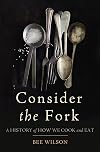
Here's the book you never knew you needed: a socio-economic history of (particularly, not exclusively) the Western world, via the use of cooking utensils.
So that saying "you don't know what you don't know" fits in very well here. I am amazed at my own ignorance on the topic of food (preparation) throughout the centuries and cultures. Such a simple thing but I've never thought about it. I hadn't considered that if you all lost your teeth before the invention of the cooking pot, you just ... show more starved to death. There weren't any ways to make food soft, smooshy, edible. I hadn't considered how to properly time things before the use of kitchen clocks (one method is to count repetitions of well-known prayers).
Plus: Science stuff! Cooking knowledge! God, the level of food interest is almost pornographic at times -- or maybe that's just me; i'm sick with some indeterminable illness and I have had an ever-decreasing diet of "safe" foods for the last several years (currently down to four: blueberries, red meat, iceberg lettuce, and applesauce.) Considering that, you'd expect me to read these lurid descriptions & feel deprived.
The opposite is true. I feel full up. show less
So that saying "you don't know what you don't know" fits in very well here. I am amazed at my own ignorance on the topic of food (preparation) throughout the centuries and cultures. Such a simple thing but I've never thought about it. I hadn't considered that if you all lost your teeth before the invention of the cooking pot, you just ... show more starved to death. There weren't any ways to make food soft, smooshy, edible. I hadn't considered how to properly time things before the use of kitchen clocks (one method is to count repetitions of well-known prayers).
Plus: Science stuff! Cooking knowledge! God, the level of food interest is almost pornographic at times -- or maybe that's just me; i'm sick with some indeterminable illness and I have had an ever-decreasing diet of "safe" foods for the last several years (currently down to four: blueberries, red meat, iceberg lettuce, and applesauce.) Considering that, you'd expect me to read these lurid descriptions & feel deprived.
The opposite is true. I feel full up. show less
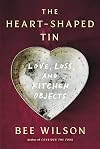
Bee Wilson takes on an interesting premise - an examination of a variety of kitchen-related objects and the stories that these objects generate. She reminds us that certain objects in our lives hold meaning beyond their original intended use, a somewhat revolutionary idea in the ‘weed and purge’ era in which we live. The heart-shaped tin cited in the title refers to the cake tin she used to make her wedding cake and subsequent birthday cakes for her children. When we meet her, she is show more recently divorced, and the tin has become old and rusty with disuse. Short essays evolve from this first one, as she looks at everyday objects such as china, drinking glasses, salt shakers, washing up bowls (she is British) and even my own obsession, toast racks. She ties each of these objects with their meaning to the owner. Throughout the book, she weaves a narrative of recovery from a surprising divorce and her own mother’s last few years. I am a baker (for our businesses in Detroit) - I bake from my home - and I could relate to her feelings about the objects that surround her. I have a teacup collection given to me from my aunt that is special to me. My stainless steel mixing bowls are used almost every day of the week, and I’d have a hard time doing any of my work without them. As I said earlier, I have a thing for toast racks, ever since I got my first heart-shaped one a couple of decades ago. I never start the morning without it. This is one of those books whose message will linger with me for a while. Thanksgiving comes up this week. For the first time in year, I think I’ll pull out the family china. I don’t think I would have considered that without reading this book. show less
I am surprised to find myself wanting to so enthusiastically recommend a book about kitchen utensils and appliances. To be precise, the book is a history and anthropological look at the utensils and appliances we use for eating and for preparing food. I was so excited by the book because I found out so many interesting things in every chapter revealing how we live, how we eat and how what we eat affects us.
The book is well-written with a lively writing style. Each chapter is structured show more around one aspect of food preparation with explanations of utensils ranging from the prehistoric to the present day. Although the book has a Western focus, the author provides many international examples. The author's use of British terms does, however, take some time to get used to.
The book is not just another cook book or book for foodies. Instead, it should be interest to anyone interested in social history, the history of technology or anthropology. Rest assured that you do not need to a cook to enjoy the book. I offer my own laughable cooking skills as testimony that the book can be enjoyed by nearly anyone.
A very small selection of some of the most interesting facts include:
1) The invention of the cooking pot allowed prehistoric people who had lost their teeth to survive longer since it allowed dishes to be prepared that did not require chewing
2) In the early 19th century after the fork was invented there was a short period where people thought it was fashionable to eat soup with a fork.
3) In Victorian times, vegetables were much less tender then the varieties we have today so Victorian cookbooks called for boiling them much longer than what we would do today.
4) Early British cooking roasted large pieces of meat on spits for hours in front of open fires. This is in contrast to Chinese cooking on a wok using small pieces of meat. the author explains that the British method required tremendous amounts of fuel. The smaller pieces used in Chinese cooking cooked faster and required much less fuel.
5) The overbite modern Westerners have has only become common in the last 200-250 years. Before that people had an edge-to-edge bite where the teeth meet each other. One theory for why this occurred is how people started using knives to cut their meat into smaller bites.
6) Albert Einstein patented a design for a refrigerator.
7) A Victorian-era woman created an ice-cream making machine that outperforms modern ice cream machines. Unfortunately, it uses a toxic amount of zinc.
8) Many of the foods we enjoy today (e.g. marmalade, salami) were developed as a way to preserve food. If refrigeration had been developed a few centuries earlier, it is possible we would not have had those foods. show less
The book is well-written with a lively writing style. Each chapter is structured show more around one aspect of food preparation with explanations of utensils ranging from the prehistoric to the present day. Although the book has a Western focus, the author provides many international examples. The author's use of British terms does, however, take some time to get used to.
The book is not just another cook book or book for foodies. Instead, it should be interest to anyone interested in social history, the history of technology or anthropology. Rest assured that you do not need to a cook to enjoy the book. I offer my own laughable cooking skills as testimony that the book can be enjoyed by nearly anyone.
A very small selection of some of the most interesting facts include:
1) The invention of the cooking pot allowed prehistoric people who had lost their teeth to survive longer since it allowed dishes to be prepared that did not require chewing
2) In the early 19th century after the fork was invented there was a short period where people thought it was fashionable to eat soup with a fork.
3) In Victorian times, vegetables were much less tender then the varieties we have today so Victorian cookbooks called for boiling them much longer than what we would do today.
4) Early British cooking roasted large pieces of meat on spits for hours in front of open fires. This is in contrast to Chinese cooking on a wok using small pieces of meat. the author explains that the British method required tremendous amounts of fuel. The smaller pieces used in Chinese cooking cooked faster and required much less fuel.
5) The overbite modern Westerners have has only become common in the last 200-250 years. Before that people had an edge-to-edge bite where the teeth meet each other. One theory for why this occurred is how people started using knives to cut their meat into smaller bites.
6) Albert Einstein patented a design for a refrigerator.
7) A Victorian-era woman created an ice-cream making machine that outperforms modern ice cream machines. Unfortunately, it uses a toxic amount of zinc.
8) Many of the foods we enjoy today (e.g. marmalade, salami) were developed as a way to preserve food. If refrigeration had been developed a few centuries earlier, it is possible we would not have had those foods. show less

Fascinating. She points out in the introduction that of the many, many histories of food, very few look at the tools we've used - most focus on the development of agriculture, without mentioning the metates/mortar and pestles necessary to turn grain into something edible, for instance. She points out some things that are obvious once she's mentioned them - like that knives predated fire by many many years (thousands? Millions? Not sure). There's also things that are important factors that show more I'd never thought of - for instance, that the English "Roast Beef" food culture requires both pasturage for cattle (I knew that) and lots of woodland to supply firewood (I'd never thought of that). European food culture in the same period used much less fuel, because they didn't have as much - and Chinese food culture was and is designed to use very little fuel (food cut into small pieces, so that they can cook very quickly, for instance). And then the implications of those factors for table manners - the use of knives at the table, in particular. Later she discusses mechanical kitchen tools - stand mixers, food processors and the like, and how they again changed the food we ate and even our physical structure. Modern man has an overbite - your upper teeth overlap your lower ones. As recently as the 1800s, our teeth met edge to edge - because we had to bite off relatively tough food, and the scissors bite was more efficient for that. Nowadays, food is a lot softer (more thoroughly processed), and our teeth and jaws have altered to suit. The development of food preservation techniques, from canning to refrigeration, is the last subject - and again, as the tools changed, so did our food and our attitudes towards it. I quoted bits from the book to my family over and over as I was reading - fascinating stuff! I'll be rereading this, and I'll look for more by this author. show less
Lists
Awards


You May Also Like


Associated Authors
Statistics
- Works
- 11
- Also by
- 2
- Members
- 2,668
- Popularity
- #9,619
- Rating
- 3.9
- Reviews
- 88
- ISBNs
- 93
- Languages
- 10
- Favorited
- 1