

Tikva Frymer-Kensky (1943–2006)
Author of In the Wake of the Goddesses: Women, Culture and the Biblical Transformation of Pagan Myth
About the Author
Tikva Frymer-Kensky is a professor of Hebrew Bible at the Divinity School at the University of Chicago.
Works by Tikva Frymer-Kensky
In the Wake of the Goddesses: Women, Culture and the Biblical Transformation of Pagan Myth (1992) 276 copies, 2 reviews
Associated Works
Tagged
Common Knowledge
- Birthdate
- 1943
- Date of death
- 2006-08-31
- Gender
- female
- Education
- Yale University
- Nationality
- USA
- Associated Place (for map)
- USA
Members
Reviews
In the Wake of the Goddesses: Women, Culture and the Biblical Transformation of Pagan Myth by Tikva Frymer-Kensky

The current return to spiritual values has spawned a surge of interest in the ancient goddess-based religions as a remedy to a long tradition of misogyny in the Western religions.
But how accurate are these current representations of the goddess in polytheism? And did Judeo-Christian religion really turn its back on women? These are some of the questions that scholar and feminist Tivka Frymer-Kensky sets out to answer in this iconoclastic study of gender in religions past and present. Her show more argument, illustrated with fascinating accounts of myth and ritual dating back to the early days of Sumer, Assyria, and Greece, is that although polytheism did accord females an important role, the strict division between male and female actually served to keep women in a subordinate position. The goddesses were progressively "ghettoized": their sphere was eventually relegated to home and hearth, while male gods took over as patrons of wisdom and learning. This dualism was displaced by the Bible, which embraced a surprisingly egalitarian view of human nature in which women were not considered to be inherently inferior. - from book cover show less
But how accurate are these current representations of the goddess in polytheism? And did Judeo-Christian religion really turn its back on women? These are some of the questions that scholar and feminist Tivka Frymer-Kensky sets out to answer in this iconoclastic study of gender in religions past and present. Her show more argument, illustrated with fascinating accounts of myth and ritual dating back to the early days of Sumer, Assyria, and Greece, is that although polytheism did accord females an important role, the strict division between male and female actually served to keep women in a subordinate position. The goddesses were progressively "ghettoized": their sphere was eventually relegated to home and hearth, while male gods took over as patrons of wisdom and learning. This dualism was displaced by the Bible, which embraced a surprisingly egalitarian view of human nature in which women were not considered to be inherently inferior. - from book cover show less
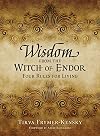
Summary: A modern midrash on the witch of Endor and four lessons or rules we may draw from her story.
Tikva Frymer-Kensky was a biblical scholar from the University of Chicago Divinity School who passed away in 2006. She authored Reading the Women of the Bible and represented a school of scholars who platformed the voices of minor and marginalized figures in scripture. Often these stories are more significant than many, mostly male, dominant culture interpreters have credited (and there were show more reasons for their inclusion).
This book, drawn from the author’s papers offers us a close reading of the story of the witch of Endor, commending her as an exemplar of four qualities that we do well to follow to live effectively. In the Preface, this is described as a modern midrash on the biblical text.
The first part of this brief book re-tells the biblical story, and explains her work with the ‘ob, an instrument of unknown character used to communicate with the spirits of the dead. The author helpfully differentiates this practice, known as necromancy, from other forms of witchcraft involving incantations, potions, and spells. Nevertheless, she downplays the uniform prohibition of this practice in scripture, emphasizing Saul’s prohibition.
The second part of the book emphasizes “life lessons” we might draw from her. First she knew her power, even though forbidden, and did not give up but exercised determined commitment and self-knowledge. Second, she strove to excel, exercising proficiency in the use of the ‘ob. Third, she chooses the moment, after securing Saul’s promise that no harm will come to her. In her wisdom, she is cautious. Finally, she “won well.” She uncovers the king in his desperate hypocrisy and is an instrument by which the spirit of Samuel foretells Saul’s death. Instead of crowing or taunting, she persuades him to eat and is benevolent.
While in themselves, there may be nothing wrong with these rules or lessons (although, as I will contend, not all powers are good or pleasing to God), this platforming of the witch distorts the story and wrongly valorizes her. Here are my reasons:
1. The uniform prohibition of necromancy. God speaks through the law, through Urim and Thummim, and through his sent prophets. Turning to necromancy is turning away from God’s ways of disclosing God’s self, and seeking knowledge God, in God’s wisdom, chooses not to disclose.
2. The story of Saul offers a case study in disobeying God’s disclosures and, when God refuses to speak, he turns to means he himself has forbidden.
3. The four lessons, good perhaps, are examples of moralizing. They may well be modern midrash but do not represent good biblical interpretation.
4.Finally, good interpretation centers not on self-help principles but on the character and work of God.
This book reminds me of Bruce Wilkinson’s Prayer of Jabez, which was also questionable hermeneutically, but wildly popular. I suspect the title, the cover design, and the format (similar to The Prayer of Jabez) will be a draw for some. But I cannot commend the book.
____________________
Disclosure of Material Connection: I received a complimentary copy of this book from the publisher for review. show less
Tikva Frymer-Kensky was a biblical scholar from the University of Chicago Divinity School who passed away in 2006. She authored Reading the Women of the Bible and represented a school of scholars who platformed the voices of minor and marginalized figures in scripture. Often these stories are more significant than many, mostly male, dominant culture interpreters have credited (and there were show more reasons for their inclusion).
This book, drawn from the author’s papers offers us a close reading of the story of the witch of Endor, commending her as an exemplar of four qualities that we do well to follow to live effectively. In the Preface, this is described as a modern midrash on the biblical text.
The first part of this brief book re-tells the biblical story, and explains her work with the ‘ob, an instrument of unknown character used to communicate with the spirits of the dead. The author helpfully differentiates this practice, known as necromancy, from other forms of witchcraft involving incantations, potions, and spells. Nevertheless, she downplays the uniform prohibition of this practice in scripture, emphasizing Saul’s prohibition.
The second part of the book emphasizes “life lessons” we might draw from her. First she knew her power, even though forbidden, and did not give up but exercised determined commitment and self-knowledge. Second, she strove to excel, exercising proficiency in the use of the ‘ob. Third, she chooses the moment, after securing Saul’s promise that no harm will come to her. In her wisdom, she is cautious. Finally, she “won well.” She uncovers the king in his desperate hypocrisy and is an instrument by which the spirit of Samuel foretells Saul’s death. Instead of crowing or taunting, she persuades him to eat and is benevolent.
While in themselves, there may be nothing wrong with these rules or lessons (although, as I will contend, not all powers are good or pleasing to God), this platforming of the witch distorts the story and wrongly valorizes her. Here are my reasons:
1. The uniform prohibition of necromancy. God speaks through the law, through Urim and Thummim, and through his sent prophets. Turning to necromancy is turning away from God’s ways of disclosing God’s self, and seeking knowledge God, in God’s wisdom, chooses not to disclose.
2. The story of Saul offers a case study in disobeying God’s disclosures and, when God refuses to speak, he turns to means he himself has forbidden.
3. The four lessons, good perhaps, are examples of moralizing. They may well be modern midrash but do not represent good biblical interpretation.
4.Finally, good interpretation centers not on self-help principles but on the character and work of God.
This book reminds me of Bruce Wilkinson’s Prayer of Jabez, which was also questionable hermeneutically, but wildly popular. I suspect the title, the cover design, and the format (similar to The Prayer of Jabez) will be a draw for some. But I cannot commend the book.
____________________
Disclosure of Material Connection: I received a complimentary copy of this book from the publisher for review. show less

I need to remember to get this out whenever reading one of the included stories. Especially if I am trying to work thorough the Hebrew. There is so much information here, both on the wording of the story, and reasons for the use of each word, and on connections with other Biblical passages! So far I haven't found references to the structure of passages. But I suppose you can't have everything in one book.
In the Wake of the Goddesses: Women, Culture and the Biblical Transformation of Pagan Myth by Tikva Frymer-Kensky
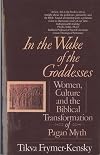
This book is one of my all-time favorite religious books. It isn't hyper-scholarly but rather pretty accessible.
Lists
Awards

You May Also Like


Associated Authors
Statistics
- Works
- 12
- Also by
- 1
- Members
- 924
- Popularity
- #27,776
- Rating
- 4.1
- Reviews
- 6
- ISBNs
- 23
- Languages
- 1