
Maria Dahvana Headley
Author of Unnatural Creatures
About the Author
Maria Dahvana Headley is a New York Times bestselling author. She is the author of The Year of Yes which has been translated into Korean, German, Dutch, Italian, Hebrew, and Chinese. Headley's title The End of the Sentence, co-written with Kat Howard, published by Subterranean Press in September show more 2014 was named one of NPR's Best Books of 2014. Her title Give Her Honey When You Hear Her Scream was published by Lightspeed Magazine in 2012, and was a Nebula Award finalist in the short story category. Her New York Times best-selling title, Magonia, also garnered a starred review in Publisher's Weekly in February, 2015. (Bowker Author Biography) show less
Series
Works by Maria Dahvana Headley
Vergil: A Mythological Musical 2 copies
The Krakatoan [short story] 2 copies
Game 1 copy
Seerauber 1 copy
Aza Ray 2: Aerie 1 copy
Aza Ray 1: Magonia 1 copy
Magônia (Magônia, #1) 1 copy
Black Powder {short story} 1 copy
The Thule Stowaway 1 copy
Astronaut 1 copy
Dim Sun 1 copy
Who Is Your Executioner? 1 copy
Mayday {short story} 1 copy
Associated Works
A People's Future of the United States: Speculative Fiction from 25 Extraordinary Writers (2019) — Contributor — 544 copies, 20 reviews
Lightspeed Magazine, Issue 49 • June 2014 (Women Destroy Science Fiction! special issue) (2014) — Contributor — 175 copies, 11 reviews
Worlds Seen in Passing: Ten Years of Tor.com Short Fiction (2018) — Contributor — 162 copies, 1 review
Some of the Best from Tor.com: 2020 Edition: A Tor.com Original (2021) — Contributor — 102 copies, 3 reviews
What the #@&% Is That?: The Saga Anthology of the Monstrous and the Macabre (2016) — Contributor — 94 copies, 1 review
The Best Science Fiction and Fantasy of the Year, Volume 13 (2019) — Contributor — 69 copies, 3 reviews
New York Fantastic: Fantasy Stories from the City that Never Sleeps (2017) — Contributor — 43 copies, 1 review
Dark Fantasies. Antología de fantasía oscura, terror y horror internacional (Nova Fantástica #5) (2017) — Contributor — 3 copies, 1 review
Tagged
Common Knowledge
- Birthdate
- 1977-06-21
- Gender
- female
- Education
- Vallivue High School, Caldwell, Idaho
New York University - Relationships
- Schenkkan, Robert (former spouse)
- Nationality
- USA
- Birthplace
- Estacada, Oregon, USA
- Places of residence
- Brooklyn, New York, USA
Seattle, Washington, USA
Caldwell, Idaho, USA - Associated Place (for map)
- USA
Members
Discussions
Headley's "Beowulf": combine or keep separate? in Combiners! (October 2020)
Reviews
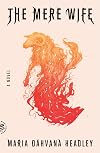
What is a monster? At different points in The Mere Wife, nearly every character is identified or self-identifies as a monster. About the only monster-fact that holds universally is that it takes one to know one. But if we are all monsters then we are all also not monsters. What then shall we be?
This is a modern reworking of Beowulf. Modern in that it is set in the nominal present, there are guns and trains and mother-in-laws. But in other respects it feels ancient. Headley does a remarkable show more job generating a visceral and muscular form of tale-telling. She moves focus from one protagonist to the next, periodically offering the joint voice of the chorus of mothers (very scary!) or the animated voice of the earth itself and its working as a further alternative. But the focus primarily is on Dana Mills, the former soldier and prisoner-of-war, the one who was executed by the enemy but somehow — it’s never quite clear — survived. Dana is the mother of Gren, progeny of she-knows-not-what event, only that when she came back to herself in the desert, she was both alive and quick with child. Alternately, the focus is on Willa, the mother of Dylan, a self-possessed centre of almost pure desire. Mostly Willa desires more — more wealth, safety, power. And if inconvenient husbands threaten her ascent, well, oopsy.
The action involves a burgeoning friendship between Gren and Dylan that upsets the natural order. But basically everything conspires to bring Dana and Gren into direct conflict with, first, Willa and her first husband, Roger (who is, in reality, her second husband) and then, ten years later, with Willa and her second husband, Ben (who is really her third husband). The outcome may never be fully in doubt. But the lyrical (almost operatic) means by which Headley reaches her end (i.e. everyone’s end) is mesmerizing.
Not at all what I expected but captivating, and yes, a bit haunting, nonetheless.
Gently recommended. show less
This is a modern reworking of Beowulf. Modern in that it is set in the nominal present, there are guns and trains and mother-in-laws. But in other respects it feels ancient. Headley does a remarkable show more job generating a visceral and muscular form of tale-telling. She moves focus from one protagonist to the next, periodically offering the joint voice of the chorus of mothers (very scary!) or the animated voice of the earth itself and its working as a further alternative. But the focus primarily is on Dana Mills, the former soldier and prisoner-of-war, the one who was executed by the enemy but somehow — it’s never quite clear — survived. Dana is the mother of Gren, progeny of she-knows-not-what event, only that when she came back to herself in the desert, she was both alive and quick with child. Alternately, the focus is on Willa, the mother of Dylan, a self-possessed centre of almost pure desire. Mostly Willa desires more — more wealth, safety, power. And if inconvenient husbands threaten her ascent, well, oopsy.
The action involves a burgeoning friendship between Gren and Dylan that upsets the natural order. But basically everything conspires to bring Dana and Gren into direct conflict with, first, Willa and her first husband, Roger (who is, in reality, her second husband) and then, ten years later, with Willa and her second husband, Ben (who is really her third husband). The outcome may never be fully in doubt. But the lyrical (almost operatic) means by which Headley reaches her end (i.e. everyone’s end) is mesmerizing.
Not at all what I expected but captivating, and yes, a bit haunting, nonetheless.
Gently recommended. show less
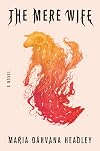
Superb. It really feels like a story taken from the Younger Edda, especially when told through the lens of Willa and Dana. Willa is such a delicious character. She has an interesting mix of being repulsive and benevolent but only in the worst of ways. Dana, on the other hand, is very much maternal and combative to the world around her. Much of the story is centered around these two mothers unwittingly being the catalyst for their family's destruction. This, however, is a small backdrop to show more all the themes and motifs used to tell an allegorical tale about trying and failing to stay afloat when you are a member of the downtrodden. Another important element is how society treats women and how women rise above that. Diane and Tina, for example, are prime examples of this. Which reminds me of that famous scene in Dolores Clairbourne when Vera says "Sometimes you have to be a high-riding bitch to survive. Sometimes being a bitch is all a woman has to hold onto" Plenty of motifs are present but none is used more consistently than this. Even though I loved the book I was really bummed about the ending. W.T.F, like really? I can't have one slither of hope in this world, you gotta take that away from me too! Overall I was really taken aback by how much I cared for these characters especially Dylan and Gren. (how could you?) and Can you puh-lease write a romance novel? show less
It's pretty rare that I pick up a book off the library's shelf at random and actually enjoy it, and it's even more rare that I sit down to read a new book and devour it in less than 48 hours. But the Mere Wife is an exception to these rules, since it's a truely exceptional novel.
I first read Beowulf in its entirety as part of a second year university course for which I no longer remember the context, but Seamus Heaney's lyrical translation of the epic gave the story the passion and drama it show more deserves and made it clear why the story has survived as one of the world's oldest epics. Headley takes the story of Beowulf and his otherworldly opponents and plants it firmly in the suburbia of current times, giving the world just a little push to be slightly more extreme than we normally see it. The story could have easily ended up being a trite melo-drama of one battle between housewives after another or a simple rehashing of the everyday American war, but the author channels House of Cards level politics (without the politics), Game of Thrones dragons (without the physical dragons), and wraps it neatly with a bow of unfulfillment and the motivations behind power dynamics. The reader is drawn in initially to sympathize with Dana Mills (the unwitting mother of a "monster"), but even though we're led to despise the encroachment of suburbia (symbolized neatly by Herot Hall and its socialites) we can't quite write off the characters who live there. Willa may be a contrived creation of her upbringing, but her son Dylan is an innocent, and it's absolutely heartbreaking to see his childhood innocence shattered by the judgement of adults. In true epic style Headley doesn't shy away from leaving a pile of bodies on the floor in the final scenes, but even tough we expected this ending that doesn't make it any easier to read. We hope that in the 1000 years between the writing of the Beowulf epic and now that humanity has evolved to be more accepting, but the reality is unfortunately the opposite. Unlike our forebearers, though, we are much more likely to question what we see and question the perception of others, so hopefully the message is slowly changing. show less
I first read Beowulf in its entirety as part of a second year university course for which I no longer remember the context, but Seamus Heaney's lyrical translation of the epic gave the story the passion and drama it show more deserves and made it clear why the story has survived as one of the world's oldest epics. Headley takes the story of Beowulf and his otherworldly opponents and plants it firmly in the suburbia of current times, giving the world just a little push to be slightly more extreme than we normally see it. The story could have easily ended up being a trite melo-drama of one battle between housewives after another or a simple rehashing of the everyday American war, but the author channels House of Cards level politics (without the politics), Game of Thrones dragons (without the physical dragons), and wraps it neatly with a bow of unfulfillment and the motivations behind power dynamics. The reader is drawn in initially to sympathize with Dana Mills (the unwitting mother of a "monster"), but even though we're led to despise the encroachment of suburbia (symbolized neatly by Herot Hall and its socialites) we can't quite write off the characters who live there. Willa may be a contrived creation of her upbringing, but her son Dylan is an innocent, and it's absolutely heartbreaking to see his childhood innocence shattered by the judgement of adults. In true epic style Headley doesn't shy away from leaving a pile of bodies on the floor in the final scenes, but even tough we expected this ending that doesn't make it any easier to read. We hope that in the 1000 years between the writing of the Beowulf epic and now that humanity has evolved to be more accepting, but the reality is unfortunately the opposite. Unlike our forebearers, though, we are much more likely to question what we see and question the perception of others, so hopefully the message is slowly changing. show less
This is a feminist modern retelling of Beowulf, focusing on the women of the story. Grendel's mother is a veteran of some Middle Eastern war - after being nearly beheaded by the enemy, she comes home pregnant with only vague memories of how she got there. She hides in a cave to raise her son Gren, because her extreme PTSD has made her terrified of people. Gren is resentful of being raised in isolation and just wants to make friends. The cave where she lives is near Herot Hall, the show more mostly-glass mansion of the wealthy Herot family. The Herot scenes focus on Willa (the queen in the original). She is a trophy wife who doesn't want to play the role, and she is made out to be the biggest monster of the book. She recruits a local cop, Ben Wolf, to help her get rid of the creature that is playing with her son. Ben is also a former soldier, and is running from fear of his own incompetence.
Headley's writing is frankly brilliant. It manages to be at once extremely modern and also still capture the flavor of the original. The book is surreal, but the original Beowulf feels surreal to the modern reader too. There is lots of clever word-play that pays homage to the Old English. I found it to be utterly absorbing - it's one of those books that transports you into it's strange and grim world. show less
Headley's writing is frankly brilliant. It manages to be at once extremely modern and also still capture the flavor of the original. The book is surreal, but the original Beowulf feels surreal to the modern reader too. There is lots of clever word-play that pays homage to the Old English. I found it to be utterly absorbing - it's one of those books that transports you into it's strange and grim world. show less
Lists
Unread books (1)
At the Library (1)
Awards


You May Also Like


Associated Authors
Statistics
- Works
- 30
- Also by
- 56
- Members
- 4,195
- Popularity
- #5,994
- Rating
- 3.8
- Reviews
- 163
- ISBNs
- 87
- Languages
- 6


