
Emma Jung (1882–1955)
Author of The Grail Legend
Works by Emma Jung
On the Nature of the Animus 1 copy
Tagged
Common Knowledge
- Canonical name
- Jung, Emma
- Other names
- Rauschenbach, Emma (birth)
- Birthdate
- 1882-03-30
- Date of death
- 1955-11-27
- Gender
- female
- Occupations
- psychoanalyst
author
scholar
lecturer - Organizations
- Jung Institute, Zurich, Switzerland (vice-president)
- Relationships
- Jung, Carl (husband)
von Franz, Marie-Louise (co-author)
Hoerni, Ulrich (grandson) - Short biography
- Emma Jung, née Rauschenbach, was born into a wealthy Swiss-German family. Although her father, an industrialist, was a patron of the arts, he did not provide his daughter with a higher education. She was a teenager when Carl Gustav Jung, an old friend of her parents, noticed her on a visit to the family home. He recounted in his memoirs that he thought, "This is my wife." In 1903, seven years later, they married and went on to have five children. Emma Jung took a great interest in her husband's intellectual activities and participated in his research. As was customary in family psychoanalysis at the time, Jung began to analyze Emma in 1910. She started to work as an analyst herself in 1930. She also conducted a long research study of the psychological symbolism of the legendary Holy Grail published by Marie-Louise von Franz. In 1931, Emma led a conference at the Psychological Club of Zurich on "The Problem of the Animus," published by Jung in 1934. In 1950, she wrote an essay on "The Mythical Representations of the Anima," published in 1955. These two essays dealing with the opposing archetypes of the feminine "anima" in the man, and the masculine "animus" in the woman, were brought together a single publication in 1957. Emma Jung's writings were distinguished by her woman's approach to the female psyche, marking an important difference from the often sexist works of the male pioneers of psychoanalysis.
- Nationality
- Switzerland
- Birthplace
- Schaffhausen, Switzerland
- Place of death
- Zurich, Switzerland
- Associated Place (for map)
- Switzerland
Members
Reviews

It has been a while since I've read this book. But very clearly I remember that it presented the anima/animus concepts much more clearly than her husband. Based on the presentation, I suspect that these concepts might have been more hers than his; at the least, she seems to have developed them more. A lot of Jungian psychology gets a bad rap for subjectivity, but personality theories outside of depth psychology have confirmed that a move toward accepting qualities of the self denied early in show more life (here stereotyped by gender) is an important step in the maturation process at midlife. Even if you don't "buy the full myth," there is much truth to be found here for those who would look, and this concise presentation is an excellent entry point for those who would not delve fully into the integrated Jungian system. show less

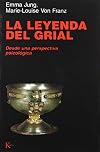
LA LEYENDA DEL GRIAL
La leyenda del Grial ha estado siempre en contacto con las capas más profundas de la psique humana y ha sido objeto a lo largo de los siglos de numerosas interpretaciones históricas, religiosas y literarias. El Grial era ya un antiguo símbolo celta de prosperidad, y también símbolo cristiano de redención y vida eterna (el cáliz que contuvo la sangre de Cristo crucificado).
El presente libro ilumina la leyenda desde una perspectiva histórica, pero también desde show more otros ángulos. Así se ha recurrido al simbolismo alquímico. Igualmente se estudia el contexto místico, las vivencias del círculo de la caballería medieval, en las que ocupa un lugar central el problema del eros religioso y el culto del amor mundano.
Siguiendo la psicología profunda de C.G. Jung, el Grial es un símbolo del sí-mismo en el que lo femenino-receptor y el elemento introvertido aparecen con más fuerza que en la imagen de Cristo de los teólogos. En las novelas cortesanas del Grial aparecen ya presentadas varias partes de la problemática psicología moderna. Se apunta una solución al enigma del ánima (la imagen anímica femenina del hombre), a la cuestión del eros y también al problema del mal.
Con una magistral mezcla de narración e interpretación La leyenda del Grial nos presenta así un mito que no sólo sigue vivo, sino que tiene muchísimo que ver con nuestra vida actual. show less
La leyenda del Grial ha estado siempre en contacto con las capas más profundas de la psique humana y ha sido objeto a lo largo de los siglos de numerosas interpretaciones históricas, religiosas y literarias. El Grial era ya un antiguo símbolo celta de prosperidad, y también símbolo cristiano de redención y vida eterna (el cáliz que contuvo la sangre de Cristo crucificado).
El presente libro ilumina la leyenda desde una perspectiva histórica, pero también desde show more otros ángulos. Así se ha recurrido al simbolismo alquímico. Igualmente se estudia el contexto místico, las vivencias del círculo de la caballería medieval, en las que ocupa un lugar central el problema del eros religioso y el culto del amor mundano.
Siguiendo la psicología profunda de C.G. Jung, el Grial es un símbolo del sí-mismo en el que lo femenino-receptor y el elemento introvertido aparecen con más fuerza que en la imagen de Cristo de los teólogos. En las novelas cortesanas del Grial aparecen ya presentadas varias partes de la problemática psicología moderna. Se apunta una solución al enigma del ánima (la imagen anímica femenina del hombre), a la cuestión del eros y también al problema del mal.
Con una magistral mezcla de narración e interpretación La leyenda del Grial nos presenta así un mito que no sólo sigue vivo, sino que tiene muchísimo que ver con nuestra vida actual. show less
LA LEYENDA DEL GRIAL
a leyenda del Grial ha estado siempre en contacto con las capas más profundas de la psique humana y ha sido objeto a lo largo de los siglos de numerosas interpretaciones históricas, religiosas y literarias. El Grial era ya un antiguo símbolo celta de proseridad, y también símbolo cristiano de redención y vida eterna (el cáliz que contuvo la sangre de Cristo curcificado).
El presente libro ilumina la leyenda desde una perspectiva histórica, pero también desde otros show more ángulos. Así se ha recurrido al simbolismo alquímico. Igualmente se estudia el contexto místico, las vivencias del círculo de la caballería medieval, en las que ocupa un lugar central el problema del eros religioso y el culto del amor mundano.
Siguiendo la psicología profunda de C.G. Jung, el Grial es un símbolo del sí-mismo en el que lo femenino-receptor y el elemento introvertido aparecen con más fuerza que en la imagen de Cristo de los teólogos. En las novelas cortesanas del Grial aparecen ya presentadas varias partes de la problemática psicología moderna. Se apunta una solución al enigma del ánima (la imagen anímica femenina del hombre), a la cuestión del eros y también al problema del mal.
Con una magistral mezcla de narración e interpretación La leyenda del Grial nos presenta así un mito que no sólo sigue vivo, sino que tiene muchísimo que ver con nuestra vida actual. show less
a leyenda del Grial ha estado siempre en contacto con las capas más profundas de la psique humana y ha sido objeto a lo largo de los siglos de numerosas interpretaciones históricas, religiosas y literarias. El Grial era ya un antiguo símbolo celta de proseridad, y también símbolo cristiano de redención y vida eterna (el cáliz que contuvo la sangre de Cristo curcificado).
El presente libro ilumina la leyenda desde una perspectiva histórica, pero también desde otros show more ángulos. Así se ha recurrido al simbolismo alquímico. Igualmente se estudia el contexto místico, las vivencias del círculo de la caballería medieval, en las que ocupa un lugar central el problema del eros religioso y el culto del amor mundano.
Siguiendo la psicología profunda de C.G. Jung, el Grial es un símbolo del sí-mismo en el que lo femenino-receptor y el elemento introvertido aparecen con más fuerza que en la imagen de Cristo de los teólogos. En las novelas cortesanas del Grial aparecen ya presentadas varias partes de la problemática psicología moderna. Se apunta una solución al enigma del ánima (la imagen anímica femenina del hombre), a la cuestión del eros y también al problema del mal.
Con una magistral mezcla de narración e interpretación La leyenda del Grial nos presenta así un mito que no sólo sigue vivo, sino que tiene muchísimo que ver con nuestra vida actual. show less
You May Also Like


Associated Authors
Statistics
- Works
- 4
- Members
- 544
- Popularity
- #45,826
- Rating
- 3.4
- Reviews
- 7
- ISBNs
- 22
- Languages
- 7
- Favorited
- 1