

David Oppegaard
Author of The Suicide Collectors
Works by David Oppegaard
The Ragged Mountains 1 copy
HI Ipredatori del suicidio 1 copy
Tagged
Common Knowledge
Members
Reviews
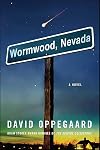
Tyler and Anna Mayfield, a young married couple looking for their place in life, move to Wormwood, Nevada from Lincoln, Nebraska. In Wormwood they find a desolate town filled with disenchanted people, drug dealers, a meteor impact in the center of town, alien cultists, and eventually actual aliens. A rock-em sock-em science fiction thriller, right? Well, actually, not so much.
What attracted me to this novel was actually sampling the first couple of pages after reading the book blurb. It show more reads more like literary fiction than plot driven science fiction. David Oppegaard’s prose are character focused and deeply immersive. He alternates between Tyler’s point-of-view and Anna’s. He takes his time, and the end result is a real feel for this town and especially for Tyler and Anna. I couldn’t resist this literary beast in science fiction clothing. Unfortunately for Oppegaard, the way the book is presented from the promotional material will mostly attract a science fiction thriller crowd, who will likely be disappointed. Some of the negative reviews seem to reflect exactly this opinion. The literary reader who might really enjoy this, may never even know it exists.
Oppegaard treats the science fiction content in a tongue-in-cheek fashion, giving us the stuff you’d expect from old fashioned pulp magazines or B movies. Don’t expect cutting edge science fiction concepts here, because it isn’t the point. The science fiction elements, the cultists, and even the desolate town itself are mirrors for the yearning inside Tyler and Anna. Tyler has never gotten over the childhood disappearance of his older brother, nor ever stopped wondering what life even means in the light of such an event. Anna is a former beauty queen who feels like the world wants her to apologize for having enjoyed that life, and who fears that the future holds no more than a slow fading away from her former glory.
Tyler and Anna are all of us at some point in our life, questioning what it all means. The coming of the aliens seems like the moment when all such questions will finally be answered. But then they are gone, the next day dawns, and all the old questions are still there. In the end, I believe Oppegaard is telling us that there are no such universal answers, and that we must each quest for our own meaning in our own way. And that the quest is a lifetime journey with no real end. All in all a very worthwhile read, assuming you understand what you’re getting yourself into, and not getting yourself into, with this novel. show less
What attracted me to this novel was actually sampling the first couple of pages after reading the book blurb. It show more reads more like literary fiction than plot driven science fiction. David Oppegaard’s prose are character focused and deeply immersive. He alternates between Tyler’s point-of-view and Anna’s. He takes his time, and the end result is a real feel for this town and especially for Tyler and Anna. I couldn’t resist this literary beast in science fiction clothing. Unfortunately for Oppegaard, the way the book is presented from the promotional material will mostly attract a science fiction thriller crowd, who will likely be disappointed. Some of the negative reviews seem to reflect exactly this opinion. The literary reader who might really enjoy this, may never even know it exists.
Oppegaard treats the science fiction content in a tongue-in-cheek fashion, giving us the stuff you’d expect from old fashioned pulp magazines or B movies. Don’t expect cutting edge science fiction concepts here, because it isn’t the point. The science fiction elements, the cultists, and even the desolate town itself are mirrors for the yearning inside Tyler and Anna. Tyler has never gotten over the childhood disappearance of his older brother, nor ever stopped wondering what life even means in the light of such an event. Anna is a former beauty queen who feels like the world wants her to apologize for having enjoyed that life, and who fears that the future holds no more than a slow fading away from her former glory.
Tyler and Anna are all of us at some point in our life, questioning what it all means. The coming of the aliens seems like the moment when all such questions will finally be answered. But then they are gone, the next day dawns, and all the old questions are still there. In the end, I believe Oppegaard is telling us that there are no such universal answers, and that we must each quest for our own meaning in our own way. And that the quest is a lifetime journey with no real end. All in all a very worthwhile read, assuming you understand what you’re getting yourself into, and not getting yourself into, with this novel. show less
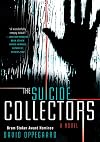
Oppegard's debut novel takes a familiar genre trope - the post-apocalyptic road-trip - and adds some welcome kinks. To start with, there are no zombies, nor radiation-addled mutants, nor roving bands of cannibals. What ended the civilized world was something simultaneously much more mundane, and more chilling: a rash of suicides that has left the world at something around a tenth of its population. His characters are less magically immune to this inexplicable phenomenon than simply stubborn, show more weary men and women that nonetheless cling to life, more as an act of defiance than for any particular goal. Survival in this particular apocalypse is less a matter of finding how to survive - no zombies to fight, no precious resources to husband - but more a matter of finding a reason why.
Oppegaard lays out this new world with stunning efficiency in the first few chapters as we're introduced to the last two members of a small Florida town; Norman, who loses his wife to the suicidal impulse that has swept the globe in the opening pages, and Pops, who lost his much earlier. They talk; they drink; they mourn those lost; they don't do a whole lot of anything, because there's really not much point, anymore. But there's an even darker turn to this despair ravaged world - a group of people known as Collectors who claim the dead, carting them off to parts unknown if they're not put in the ground immediately. Norman, in his grief, takes umbrage at the very knowledge that they're going to collect his wife, and waits by her body with his loaded shotgun. In the chaos that ensues, Norman and Pops have angered the last true power in the world, and it's road trip time - from Florida to Seattle, where a fabled Despair-free zone might await.
The Suicide Collectors settles in quickly to an epsodic format after that, chronicling both Norman and Pops' adventures through a despair-ravaged America, and branching off to tell the stories of others who have found a reason to survive. It's in these middle stretches that Oppegaard hits his stride, crafting frighteningly plausible reactions to an America hanging under a cloud of constant suicide while simultaneously mining a rich vein of dark humor to be had in a world abandoned by hope. And while I won't spoil the latter half of the book, suffice it to say that Oppegaard is not afraid to rock the boat of his narrative, swapping back and forth between light social commentary, tense thriller, and a kind of bleak humanism that does his supremely likeable characters justice.
-Drew show less
Oppegaard lays out this new world with stunning efficiency in the first few chapters as we're introduced to the last two members of a small Florida town; Norman, who loses his wife to the suicidal impulse that has swept the globe in the opening pages, and Pops, who lost his much earlier. They talk; they drink; they mourn those lost; they don't do a whole lot of anything, because there's really not much point, anymore. But there's an even darker turn to this despair ravaged world - a group of people known as Collectors who claim the dead, carting them off to parts unknown if they're not put in the ground immediately. Norman, in his grief, takes umbrage at the very knowledge that they're going to collect his wife, and waits by her body with his loaded shotgun. In the chaos that ensues, Norman and Pops have angered the last true power in the world, and it's road trip time - from Florida to Seattle, where a fabled Despair-free zone might await.
The Suicide Collectors settles in quickly to an epsodic format after that, chronicling both Norman and Pops' adventures through a despair-ravaged America, and branching off to tell the stories of others who have found a reason to survive. It's in these middle stretches that Oppegaard hits his stride, crafting frighteningly plausible reactions to an America hanging under a cloud of constant suicide while simultaneously mining a rich vein of dark humor to be had in a world abandoned by hope. And while I won't spoil the latter half of the book, suffice it to say that Oppegaard is not afraid to rock the boat of his narrative, swapping back and forth between light social commentary, tense thriller, and a kind of bleak humanism that does his supremely likeable characters justice.
-Drew show less
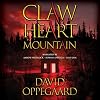
I'd say I enjoyed about two-thirds to three-quarters of this book, but the ending just lost me. Bannock, presented until that point as the epitome of a stone-cold psychopathic killer-for-hire, suddenly taking a liking to a random teenage girl he meets--who dares to hold information hostage from him, in fact--because she's, what, got spunk? Frankly, it ruined the characterization for me. I did like the teens, for the most part, although I would have appreciated more insight into how Nova felt show more when she realized the shallowness of her protests over keeping the money. Wouldn't she have felt worse about that insight, not just blown past it?
Also, if you want to make a hairy, giant, man-eating cryptid who hides in the woods and eats people creepy...blue-green fur wasn't it for me. I immediately jumped to muppet.
Well-written for the first part of the book, though, and the audiobook narration was extremely well done. show less
Also, if you want to make a hairy, giant, man-eating cryptid who hides in the woods and eats people creepy...blue-green fur wasn't it for me. I immediately jumped to muppet.
Well-written for the first part of the book, though, and the audiobook narration was extremely well done. show less

This novel takes place in a post-apocalyptic world, where a strange plague of depression has swept the world, driving most people to kill themselves. After Norman's wife kills herself, he and the wise old man known as "Pops" are the only two people left alive in their Florida town. Remembering a rumor he heard from a drifter, Norman suggests they move to Seattle where there is supposed to be a core of survivors working on a cure. Add to the mix a mysterious group of black robe-wearing show more strangers that magically appear to collect the bodies of the dead. Just who are these "collectors" and what do they want?
Wow, this book was awful. I thought it was just really boring and poorly written until the end - in which nothing was explained or resolved. What is causing the Despair? What are the Collectors doing with the dead bodies and why? I hope you didn't want to know, because you will never find out. An odd combination of cliches, awkward dialogue, and endless exposition, this book reads more like a series of unconnected and grisly vignettes. Not a lot of character development or depth. Simply terrible. show less
Wow, this book was awful. I thought it was just really boring and poorly written until the end - in which nothing was explained or resolved. What is causing the Despair? What are the Collectors doing with the dead bodies and why? I hope you didn't want to know, because you will never find out. An odd combination of cliches, awkward dialogue, and endless exposition, this book reads more like a series of unconnected and grisly vignettes. Not a lot of character development or depth. Simply terrible. show less
Lists
Awards


You May Also Like


Statistics
- Works
- 9
- Members
- 276
- Popularity
- #84,077
- Rating
- 3.2
- Reviews
- 24
- ISBNs
- 19
- Languages
- 1
- Favorited
- 1
