
Marcel Theroux
Author of Far North
About the Author
Image credit: On-line article in The Guardian: https://www.theguardian.com/books/2014/mar/09/strange-bodies-review-marcel-theroux
Works by Marcel Theroux
The Christmas Pudding 1 copy
Associated Works
Tagged
Common Knowledge
- Birthdate
- 1969-06-13
- Gender
- male
- Education
- University of Cambridge (Clare College)
Westminster School, London
Yale University - Occupations
- broadcaster
novelist - Relationships
- Theroux, Paul (father)
Theroux, Louis (brother)
Theroux, Alexander (uncle)
Theroux, Justin (cousin)
Theroux, Peter (uncle)
Theroux, Phyllis (aunt) (show all 7)
Son-Theroux, Sarah (aunt) - Nationality
- UK
USA - Birthplace
- Kampala, Uganda
- Places of residence
- Tooting, London, England, UK
Singapore, Republic of Singapore
Wandsworth, London, England, UK - Map Location
- England, UK
Members
Reviews
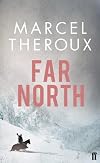
This was an extremely thought provoking read. It made me wonder just what lengths I would go to in order to survive in a world that was self-destructing, or would I choose to end my life after losing all my loved ones. I found myself questioning how charitable we would all be to each other and whether we really would resort to savagery as depicted in this book. The chilling prospect that the events in Far North could maybe become reality for us all one day filled me with horror, as show more Theroux’s excellent writing skills made it sound all too possible. This is a story that is unremitting in its telling, with twists, surprises and horrors on every page. Theroux’s book is a bleak tale, but compelling nonetheless. He has written in a captivating style and drew me in from the opening pages. Highly recommended for lovers of dystopian novels. show less
 This review was written for LibraryThing Early Reviewers.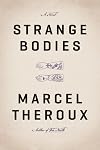
The Theroux family has an impressive literary heritage. I first encountered Paul Theroux, an American travel writer and novelist, through reading his popular and mesmerizing travel narrative The Great Railway Bazaar. I also enjoyed his novel, The Mosquito Coast, that won the 1981 James Tait Black Memorial Prize. Then there is his brother, Alexander, who is a writer and artist whose Darconville's Cat: A Novel is a Rabelaisian epic both in its words and multiple styles. But there is a new show more generation of literary members of this family that includes Marcel Theroux, Paul's son.
It is Marcel's most recent novel that I found on the library shelves recently. It is a labyrinthine exploration of identity and mortality, filled with big ideas. That would have carried many for many more than the less than three hundred pages of this unique story. It qualifies as what I, adopting the approach of Margaret Atwood, would call speculative fiction; others might go further and call it science fiction. Either way it is a neat combination of literary criticism (the protagonist is a Samuel Johnson scholar, or perhaps he was); a conspiracy about the science of consciousness involving new bodies (sort of neo-Frankenstein); and a love angle or two that may involve some necrotic foreplay.
Dr. Nicholas Slopen—the literary scholar and Johnson expert—has already been declared dead at least once, before the novel presents itself as the testimony found by a former lover on a flash memory stick. The document begins in a mental ward, where the patient is trying to convince his therapists that he is in fact Slopen, whose death has been well-documented. He then relates the tale of how he (Slopen) had been hired to document some newly discovered Johnson letters that he immediately dismissed as fake, before realizing that he was in the midst of something far more extraordinary and sinister. Vera, a woman Nicholas makes friends with after a mysterious Silicon Valley type has hired him to authenticate some unearthed writings by Johnson, wears corrective shoes and acts as a kind of menial for more elite bosses. When Nicholas's examination of the unearthed documents turns up some oddities, he finds himself in communication with the novel's most interesting character, Jack—an initially nonverbal savant who was convinced that he was in fact Johnson and who eventually convinces the scholar that something stranger is afoot than fraud or even madness. “I felt I understood less and less, even as, intuitively, I was drawing closer to the hidden chamber of the infinitely dark truth.”
And within that infinitely dark truth, distinctions between sanity and madness, life and death are not nearly as absolute as they might have initially appeared: “All madness has a touch of death to it....But the finer details of reality—the state of a marriage, artistic merit, a person’s true nature—have something delicate and consensual about them....Each time someone drops out of our collective reality, it weakens a little.” The author interpolates comments from the observers of the supposed Nicholas Slopen and the plot gradually becomes one of strange bodies and stranger activities. The exact way in which the titular strange bodies begin to manifest themselves in the tale at this point makes reading this novel worth your while.
This fictional narrative could be compared to Philip K. Dick or perhaps Borges, but whether it reminds you of them or others you may have read it is unique in the style and marvelous tightness of Theroux's structure, which launches the final part of the story with more than one delicious twist. Twists aside, though, this is a thoughtful book that interrogates the intersection of literature and the self. Why are we drawn to certain works? To what extent are we defined by our literatures? Can books and ideas grant us a kind of immortality? Can great authors really shape our lives or our world? There is also a theme that seems to ask to what extent we can control books and authors—how much of them are "ours" (the rightful property of the public domain) and how much of them should be? These questions keep you wondering—and ensure that Theroux's strange little world will work its way under your skin. Theroux, like his father and uncle, is a master prose-smith; he builds a great, brooding atmosphere of slow-burning dread, splicing bits of Milton into conversations in which characters have "the haunted and knowing eyes of a caged ape" (p. 71). As Nicholas's ordinary life begins to disintegrate, the self-pitying tone in which he narrates the beginning of the novel takes on new meaning and leaves us ultimately moved by his plight.
Often enthralling and occasionally maddening, the novel expands the reader’s sense of possibility even as it strains credulity. show less
It is Marcel's most recent novel that I found on the library shelves recently. It is a labyrinthine exploration of identity and mortality, filled with big ideas. That would have carried many for many more than the less than three hundred pages of this unique story. It qualifies as what I, adopting the approach of Margaret Atwood, would call speculative fiction; others might go further and call it science fiction. Either way it is a neat combination of literary criticism (the protagonist is a Samuel Johnson scholar, or perhaps he was); a conspiracy about the science of consciousness involving new bodies (sort of neo-Frankenstein); and a love angle or two that may involve some necrotic foreplay.
Dr. Nicholas Slopen—the literary scholar and Johnson expert—has already been declared dead at least once, before the novel presents itself as the testimony found by a former lover on a flash memory stick. The document begins in a mental ward, where the patient is trying to convince his therapists that he is in fact Slopen, whose death has been well-documented. He then relates the tale of how he (Slopen) had been hired to document some newly discovered Johnson letters that he immediately dismissed as fake, before realizing that he was in the midst of something far more extraordinary and sinister. Vera, a woman Nicholas makes friends with after a mysterious Silicon Valley type has hired him to authenticate some unearthed writings by Johnson, wears corrective shoes and acts as a kind of menial for more elite bosses. When Nicholas's examination of the unearthed documents turns up some oddities, he finds himself in communication with the novel's most interesting character, Jack—an initially nonverbal savant who was convinced that he was in fact Johnson and who eventually convinces the scholar that something stranger is afoot than fraud or even madness. “I felt I understood less and less, even as, intuitively, I was drawing closer to the hidden chamber of the infinitely dark truth.”
And within that infinitely dark truth, distinctions between sanity and madness, life and death are not nearly as absolute as they might have initially appeared: “All madness has a touch of death to it....But the finer details of reality—the state of a marriage, artistic merit, a person’s true nature—have something delicate and consensual about them....Each time someone drops out of our collective reality, it weakens a little.” The author interpolates comments from the observers of the supposed Nicholas Slopen and the plot gradually becomes one of strange bodies and stranger activities. The exact way in which the titular strange bodies begin to manifest themselves in the tale at this point makes reading this novel worth your while.
This fictional narrative could be compared to Philip K. Dick or perhaps Borges, but whether it reminds you of them or others you may have read it is unique in the style and marvelous tightness of Theroux's structure, which launches the final part of the story with more than one delicious twist. Twists aside, though, this is a thoughtful book that interrogates the intersection of literature and the self. Why are we drawn to certain works? To what extent are we defined by our literatures? Can books and ideas grant us a kind of immortality? Can great authors really shape our lives or our world? There is also a theme that seems to ask to what extent we can control books and authors—how much of them are "ours" (the rightful property of the public domain) and how much of them should be? These questions keep you wondering—and ensure that Theroux's strange little world will work its way under your skin. Theroux, like his father and uncle, is a master prose-smith; he builds a great, brooding atmosphere of slow-burning dread, splicing bits of Milton into conversations in which characters have "the haunted and knowing eyes of a caged ape" (p. 71). As Nicholas's ordinary life begins to disintegrate, the self-pitying tone in which he narrates the beginning of the novel takes on new meaning and leaves us ultimately moved by his plight.
Often enthralling and occasionally maddening, the novel expands the reader’s sense of possibility even as it strains credulity. show less
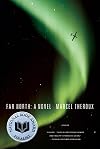
Makepeace's family originally moved to a settlement in Siberia to remove themselves from the modern world. But now, due to climate change, modern civilization has collapsed, and Makepeace patrols the frontier alone, where the greatest danger is from other people.
This was a simply written book, but the narrator has such a unique voice that I found it very compelling. Essentially, this story is a Western. Even though the setting is unusual, it is still the wild frontier, and Makepeace's guns show more are her most important possession. Makepeace herself is a self-appointed sheriff who patrols her deserted town and tries to deny her loneliness and her longing for some sign that civilization has not broken down completely. When she gets that sign--a plane crashing in the woods nearby as she is on the verge of committing suicide--she leaves her home and embarks on a journey, but where she ends up is entirely unexpected. Makepeace is a subtle and fascinating character, marked by lye burns on her face, androgynous, self-reliant, so closed that even in her own narrative she doesn't reveal everything about herself, at least not directly. This book is a musing on the world that humankind is making, whether such a world is inevitable, and how it might be salvaged. Despite its bleakness, I found it quite beautiful. show less
This was a simply written book, but the narrator has such a unique voice that I found it very compelling. Essentially, this story is a Western. Even though the setting is unusual, it is still the wild frontier, and Makepeace's guns show more are her most important possession. Makepeace herself is a self-appointed sheriff who patrols her deserted town and tries to deny her loneliness and her longing for some sign that civilization has not broken down completely. When she gets that sign--a plane crashing in the woods nearby as she is on the verge of committing suicide--she leaves her home and embarks on a journey, but where she ends up is entirely unexpected. Makepeace is a subtle and fascinating character, marked by lye burns on her face, androgynous, self-reliant, so closed that even in her own narrative she doesn't reveal everything about herself, at least not directly. This book is a musing on the world that humankind is making, whether such a world is inevitable, and how it might be salvaged. Despite its bleakness, I found it quite beautiful. show less
Framed as autobiography, Marcel Theroux’s novel Strange Bodies follows disenchanted English academic Nicholas Slopen through a murky labyrinth of literary fraud and scientific espionage. In the brief preface, a woman describes an encounter with her former boyfriend Nicholas, who she thought was dead. Physically the man claiming to be Nicholas Slopen does not resemble the man she was involved with 20 years earlier, but his memories of their time together are complete and persuasive. The show more remainder of the novel is made up of a manuscript she finds on a flash drive, left behind after Slopen’s sudden death. Incarcerated in a mental institution, Slopen narrates a story that begins innocently enough, with a wealthy music producer and collector of literary artefacts named Hunter Gould seeking his advice regarding the authenticity of newly discovered letters supposedly written by Samuel Johnson, letters that Gould is considering purchasing. Slopen’s investigation into the Johnson letters brings him into contact with a group of mysterious characters from the former Soviet Union and a situation that, as gradually becomes clear, is not at all what it first appears to be. As the improbable events pile up, Slopen comes to realize that everyone involved is hiding something, and the mystery only deepens once Slopen learns where the letters originated. From there he is sucked into a churning vortex of deception, trickery and scientific hubris that places him and those he loves in mortal danger. To give away more of the plot would be a disservice to an enormously engaging and intelligent novel that delivers twists and bombshells aplenty and an author of great imaginative gifts. Let it be said that in Strange Bodies, Marcel Theroux speculates how the experience of being human would be altered if our lives were not necessarily tethered to the mortal carcass in which we were born. His dramatic exploration of this question is provocative and entertaining. show less
Lists
Awards


You May Also Like


Associated Authors
Statistics
- Works
- 9
- Also by
- 2
- Members
- 1,375
- Popularity
- #18,703
- Rating
- 3.6
- Reviews
- 80
- ISBNs
- 67
- Languages
- 3
- Favorited
- 2
