
Katherine Ellison (1) (1957–)
Author of Buzz: A Year of Paying Attention
For other authors named Katherine Ellison, see the disambiguation page.
Works by Katherine Ellison
Square Peg: My Story and What It Means for Raising Innovators, Visionaries, and Out-of-the-Box Thinkers (2013) 32 copies, 2 reviews
Tagged
Common Knowledge
- Birthdate
- 1957-08-19
- Gender
- female
- Awards and honors
- Pulitzer Prize (International Reporting, 1985)
- Nationality
- USA
- Birthplace
- Minnesota, USA
- Associated Place (for map)
- Minnesota, USA
Members
Reviews
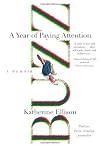
As I started reading Katherine Ellison's BUZZ, I had hoped to gain some insight into the 'other side' of children with ADHD-- I'm a current student heading into a career where I'm certain to encounter them frequently, and I figured being able to better understand them and their families beyond a clinical level would be a valuable thing. Having just set the book down after finishing reading it, I'm pleased to report that the book did fulfill my hopes for it... in actuality, it far surpassed show more them: in addition to being informative, it was also quite thoughtful/thought-provoking at times and an extremely enjoyable read.
A caveat: I do think the back cover description is slightly inaccurate-- it downplays the investigative aspect of the book in favor of talking up its memoir form. I happen to really enjoy this type of non-fiction, so I was really pleased by the true content of the book, but it's much more than just a "hilarious and heartrending account" of Ellison and her son's struggles. In fact, I think the sections where the work really shines are the ones in which the author puts her investigative skills to work.
It is with that in mind that I've already had the occasion to recommend it to a few people at my workplace (in a high school)-- while I'm sure that those who themselves have or have family members with ADHD would enjoy the book, I think it's also an especially great read for people who encounter these types of kids at work, whether that be in a clinic or in a classroom. show less
A caveat: I do think the back cover description is slightly inaccurate-- it downplays the investigative aspect of the book in favor of talking up its memoir form. I happen to really enjoy this type of non-fiction, so I was really pleased by the true content of the book, but it's much more than just a "hilarious and heartrending account" of Ellison and her son's struggles. In fact, I think the sections where the work really shines are the ones in which the author puts her investigative skills to work.
It is with that in mind that I've already had the occasion to recommend it to a few people at my workplace (in a high school)-- while I'm sure that those who themselves have or have family members with ADHD would enjoy the book, I think it's also an especially great read for people who encounter these types of kids at work, whether that be in a clinic or in a classroom. show less
 This review was written for LibraryThing Early Reviewers.
Square Peg: My Story and What It Means for Raising Innovators, Visionaries, and Out-of-the-Box Thinkers by L. Todd Rose
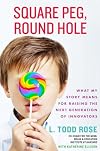
Albert Camus said, "We are all special cases." Square Peg: My Story and What It Means for Raising Innovators, Visionaries, and Out-of-the-Box Thinkers by Todd Rose, with Katherine Ellison, certainly proves that we are all special and unique, especially in the way we approach learning. Square Peg is both a memoir and a personal manifesto. Todd Rose was a bright child who could not seem to avoid trouble and was quickly labeled a delinquent. Part of his problem was the way the educational show more system reacted to him in a misguided attempt to change or alter his behavior. Rose ended up a high school drop out, but he later went on to become a professor at the Harvard Graduate School of Education.
Rose elaborates on four ideas derived from the study of complex systems and recent neuroscience findings: variability is the rule (our perceptions and reactions are much more dynamic and diverse than previously thought); emotions are serious stuff (children's emotional states do influence their ability to learn); context is key (the circumstances can effect the behavior - this includes labeling children with a disorder); feedback loops determine long-term success or failure (chaos theory and small changes making a difference). At the end of each chapter Rose offers a summary of the "Big Ideas" from that chapter and "Action Items" for parents.
It was enlightening to see what Rose's mother and grandmother did right as Rose makes a case for student centered education. He makes it clear that we can't fix a child's behavior. Behavior is an extremely complex system that originates from the interaction of a person's biology, past experiences, and immediate context. If we can understand this complex systems, we could learn to do a better job as teachers and parents in supporting and educating kids, rather than setting them up for failure. Once a child is caught up in a negative feedback loop, it is hard to escape.
Medicating ADHD children so they can fit into the environment of school, while beneficial for many, may not completely address the root cause of a child's learning difficulties. The stress children can feel while at school does not help their ability to learn. Finding a way to use current technology to help all children individualize their education could potentially transform education and help many overcome their special needs or limitations. For example, Rose himself had problems with his short term memory, so the ability to record a multi-step series of instructions with built in reminders would have benefited him enormously.
Square Peg is entertaining as well as informative. I appreciate the "Big Ideas" and "Action Items" at the end of each chapter. It is a nice way to summarize what points Rose believes are the most important from all the information and personal anecdotes he provides. Square Peg includes an epilogue with Rose's current research findings, chapter notes, and a bibliography.
Very Highly Recommended - I truly enjoyed this book!
http://shetreadssoftly.blogspot.com/
Disclosure: I received an advanced reading copy of this book from the publisher and TLC for review purposes. show less
Rose elaborates on four ideas derived from the study of complex systems and recent neuroscience findings: variability is the rule (our perceptions and reactions are much more dynamic and diverse than previously thought); emotions are serious stuff (children's emotional states do influence their ability to learn); context is key (the circumstances can effect the behavior - this includes labeling children with a disorder); feedback loops determine long-term success or failure (chaos theory and small changes making a difference). At the end of each chapter Rose offers a summary of the "Big Ideas" from that chapter and "Action Items" for parents.
It was enlightening to see what Rose's mother and grandmother did right as Rose makes a case for student centered education. He makes it clear that we can't fix a child's behavior. Behavior is an extremely complex system that originates from the interaction of a person's biology, past experiences, and immediate context. If we can understand this complex systems, we could learn to do a better job as teachers and parents in supporting and educating kids, rather than setting them up for failure. Once a child is caught up in a negative feedback loop, it is hard to escape.
Medicating ADHD children so they can fit into the environment of school, while beneficial for many, may not completely address the root cause of a child's learning difficulties. The stress children can feel while at school does not help their ability to learn. Finding a way to use current technology to help all children individualize their education could potentially transform education and help many overcome their special needs or limitations. For example, Rose himself had problems with his short term memory, so the ability to record a multi-step series of instructions with built in reminders would have benefited him enormously.
Square Peg is entertaining as well as informative. I appreciate the "Big Ideas" and "Action Items" at the end of each chapter. It is a nice way to summarize what points Rose believes are the most important from all the information and personal anecdotes he provides. Square Peg includes an epilogue with Rose's current research findings, chapter notes, and a bibliography.
Very Highly Recommended - I truly enjoyed this book!
http://shetreadssoftly.blogspot.com/
Disclosure: I received an advanced reading copy of this book from the publisher and TLC for review purposes. show less
I really loved this book. Since I work at a school that specializes in the education of ADD kids, I wasn't really expecting to hear much that I hadn't heard already. Katherine Ellison does a wonderful job of getting inside the head of her ADD son, Buzz, and also her own head because she has ADD also. I was fascinated with her descriptions of family life when one or more member is so distracted and disorganized. She is such a believable parent. And she tells on herself. Many of us as teachers show more and parents know what the right thing to do or say is - but we don't always do it. Ms. Ellison gets right down in the trenches and admits her failings and her small successes. I really appreciate the service she has done to folks dealing with this neurological disorder. show less
This review was written for LibraryThing Early Reviewers.
Full confession: I have three children (all girls) and none of them have ADD. Which is good, because from Katherine Ellison's description, ADD (especially in boys) absolutely sucks. Absolutely. Sucks.
(In all honesty, I wondered a bit about Ms. Ellison. There is just the merest hint of the unreliable narrator there: I got the slightest soupcon, the tiniest suspicion, that perhaps she is a somewhat inconsistent mother. I do not AT ALL condemn her for her confessed lapses - saying "shut up" and show more so on - but I did wonder if she might be the sort of mother who tries one disciplinary method one day and another thing the next, leaving her child somewhat bewildered about what the consequences of misbehavior might be. That said? Her description of life with her ADD son, Buzz, is sort of horrifying, and her commitment to spend a year trying to understand her son's (and possibly her own) disorder is commendable and brave.)
And for me, at least, it worked. I think differently about ADD now, thanks to Ellison's straightforward description of the many tests, therapeutic interventions, and results of her quest to get a lock on Buzz's disorder. It went a long way (with me at least) that Ellison is an investigative reporter: when she reports on a new intervention, she invariably offers the pros and cons, the critics' caveats as well as the disciples' raves. As I traveled with Katherine and Buzz through brain scans, tutoring, medications, and biofeedback therapies, I could feel a subtle shift in my attitude toward these kids and families; my attitude became less judgmental and considerably more nuanced. In the end, I think Ellison's message is that ADD is an extraordinarily complex disorder that makes extraordinary demands of the children who are afflicted by it and their families, teachers, relatives and friends. And it really helps that Ellison is an engaging writer with an often wickedly satirical voice.
I would strongly recommend this memoir to two groups: parents of ADD children, and people who think that the ADD diagnosis and its attendant pharmaceutical therapies are simply a band-aid to cover up bad parenting. Oh, and, people like me who love a memoir. Wait, does that mean I've recommended it to basically everyone? Well, that works too.
Thanks to LibraryThing's Early Reviewer Program for sending me an advance copy of this book! show less
(In all honesty, I wondered a bit about Ms. Ellison. There is just the merest hint of the unreliable narrator there: I got the slightest soupcon, the tiniest suspicion, that perhaps she is a somewhat inconsistent mother. I do not AT ALL condemn her for her confessed lapses - saying "shut up" and show more so on - but I did wonder if she might be the sort of mother who tries one disciplinary method one day and another thing the next, leaving her child somewhat bewildered about what the consequences of misbehavior might be. That said? Her description of life with her ADD son, Buzz, is sort of horrifying, and her commitment to spend a year trying to understand her son's (and possibly her own) disorder is commendable and brave.)
And for me, at least, it worked. I think differently about ADD now, thanks to Ellison's straightforward description of the many tests, therapeutic interventions, and results of her quest to get a lock on Buzz's disorder. It went a long way (with me at least) that Ellison is an investigative reporter: when she reports on a new intervention, she invariably offers the pros and cons, the critics' caveats as well as the disciples' raves. As I traveled with Katherine and Buzz through brain scans, tutoring, medications, and biofeedback therapies, I could feel a subtle shift in my attitude toward these kids and families; my attitude became less judgmental and considerably more nuanced. In the end, I think Ellison's message is that ADD is an extraordinarily complex disorder that makes extraordinary demands of the children who are afflicted by it and their families, teachers, relatives and friends. And it really helps that Ellison is an engaging writer with an often wickedly satirical voice.
I would strongly recommend this memoir to two groups: parents of ADD children, and people who think that the ADD diagnosis and its attendant pharmaceutical therapies are simply a band-aid to cover up bad parenting. Oh, and, people like me who love a memoir. Wait, does that mean I've recommended it to basically everyone? Well, that works too.
Thanks to LibraryThing's Early Reviewer Program for sending me an advance copy of this book! show less
This review was written for LibraryThing Early Reviewers.You May Also Like


Associated Authors
Statistics
- Works
- 9
- Members
- 423
- Popularity
- #57,687
- Rating
- 3.4
- Reviews
- 62
- ISBNs
- 48
- Languages
- 6
