
About the Author
Image credit: unesco.org http://portal.unesco.org/es/files/44556/12348064153rub_eclairage01_250.jpg/rub_e...
Series
Works by Clea Koff
Tagged
Common Knowledge
- Birthdate
- 1972
- Gender
- female
- Occupations
- forensic anthropologist
- Short biography
- Clea Koff is a British-born American forensic anthropologist who worked several years for the United Nations International Criminal Tribunal for Rwanda (ICTR; 2 missions) and the International Criminal Tribunal for the former Yugoslavia (5 missions) in Rwanda, Bosnia, Croatia, Serbia, and in 2000 in Kosovo.
- Nationality
- USA
- Birthplace
- England, UK
- Places of residence
- Kenya
Tanzania
Somalia
Los Angeles, California, USA
Melbourne, Victoria, Australia
Members
Reviews
The Bone Woman: A Forensic Anthropologist's Search for Truth in the Mass Graves of Rwanda, Bosnia, Croatia, and Kosovo by Clea Koff
Inspired as a young person by an account of forensic investigators unearthing mass graves and bringing war criminals to justice, Clea Koff dedicates herself to doing the same. Ten years later she is recovering bones in Rwanda, Bosnia, Croatia and Kosovo while working for the UN.
This fascinating yet grisly memoir recounts her time in the field between 1996 and 2000 uncovering mass graves and working with local survivors to identify bodies. Clea's voice is primarily clinical but very show more accessible. She explains the details clearly and doesn't hold back from the harsh realities. This book is not for the faint of heart.
What surprised me was the perfect balance she strikes in humanizing these large global tragedies. She provides just the right amount of context to break the reader's heart. This book examines the true consequences of war which is harrowing in an age where many are simply used to a constant cycle of violence. show less
This fascinating yet grisly memoir recounts her time in the field between 1996 and 2000 uncovering mass graves and working with local survivors to identify bodies. Clea's voice is primarily clinical but very show more accessible. She explains the details clearly and doesn't hold back from the harsh realities. This book is not for the faint of heart.
What surprised me was the perfect balance she strikes in humanizing these large global tragedies. She provides just the right amount of context to break the reader's heart. This book examines the true consequences of war which is harrowing in an age where many are simply used to a constant cycle of violence. show less
This is the memoir of Clea Koff, a forensic anthropologist, about her time working to provide evidence for the international criminal tribunals in Rwanda and former Yugoslavia.
This involves, essentially, exhuming mass graves (or on her first mission in Rwanda, reconstituting skeletons from body parts picked up from a hillside). Gruesome work, but it's what Koff had wanted to do since she was a little girl - starting off with somewhat macabre hobbies and eventually realising that helping the show more dead to talk was a powerful way to bring murderers to justice. She feels hugely rewarded when she sees a newspaper article reporting that Kosovan villagers have asked for an international forensic mission to prove that their dead were executed, not killed in combat; devastated by reports from Congo that soldiers were exhuming mass graves and burning the bodies to prevent forensic investigation.
Because of her drive towards this humanitarian goal, working on the bodies makes her happy - but it's when she's off duty that she thinks about what actually happened to these people, or occasionally when a body has some very personal detail, like a boy with a pocket full of marbles in Kosovo - and working on such horror does take its toll. This is sometimes a harrowing book to read. In Rwanda, Koff gets used to one colleague saying 'I mean, Jesus' whenever he looks at a body and figures out how it was killed. And there are several incidents where a reader is bound to be horrified, and think, how and why?
Unfortunately, this is where the book falls down. This is not an academic book, nor a political one. Koff mentions many of the UN's bureaucratic imperfections in passing (arriving on site to find that none of the scalpel blades provided match the scalpel handles), but it's not a critique like, say, Shake Hands With The Devil. This is really very much about Koff's own, personal, response to everything in the field, from the horrors of her work to her fear of driving over a landmine to tensions with her workmates. It's also not very well-crafted. For example, when writing about difficulties between 'workers' and 'management' during one mission, Koff comments that later when she was 'management', in Kosovo, she learnt the lessons from what went wrong - but when she's writing about that mission, she hardly writes about her role as 'management'.
So even though Koff is clearly a brave, hard-working and admirable person, I don't think I would recommend this book to anyone. I am not sure who would want to read about these horrors without being given any sort of context to put them in. My personal interest is in post-conflict reconciliation and how to do it. It's incredibly difficult to find a suitable balance between truth, justice and reconciliation - for example, securing the truth might involve offering amnesties, and exposing the truth about what happened might make reconciliation harder. But Koff is a true believer in her work, too immersed in it to stand back and explain how it fits in. show less
This involves, essentially, exhuming mass graves (or on her first mission in Rwanda, reconstituting skeletons from body parts picked up from a hillside). Gruesome work, but it's what Koff had wanted to do since she was a little girl - starting off with somewhat macabre hobbies and eventually realising that helping the show more dead to talk was a powerful way to bring murderers to justice. She feels hugely rewarded when she sees a newspaper article reporting that Kosovan villagers have asked for an international forensic mission to prove that their dead were executed, not killed in combat; devastated by reports from Congo that soldiers were exhuming mass graves and burning the bodies to prevent forensic investigation.
Because of her drive towards this humanitarian goal, working on the bodies makes her happy - but it's when she's off duty that she thinks about what actually happened to these people, or occasionally when a body has some very personal detail, like a boy with a pocket full of marbles in Kosovo - and working on such horror does take its toll. This is sometimes a harrowing book to read. In Rwanda, Koff gets used to one colleague saying 'I mean, Jesus' whenever he looks at a body and figures out how it was killed. And there are several incidents where a reader is bound to be horrified, and think, how and why?
Unfortunately, this is where the book falls down. This is not an academic book, nor a political one. Koff mentions many of the UN's bureaucratic imperfections in passing (arriving on site to find that none of the scalpel blades provided match the scalpel handles), but it's not a critique like, say, Shake Hands With The Devil. This is really very much about Koff's own, personal, response to everything in the field, from the horrors of her work to her fear of driving over a landmine to tensions with her workmates. It's also not very well-crafted. For example, when writing about difficulties between 'workers' and 'management' during one mission, Koff comments that later when she was 'management', in Kosovo, she learnt the lessons from what went wrong - but when she's writing about that mission, she hardly writes about her role as 'management'.
So even though Koff is clearly a brave, hard-working and admirable person, I don't think I would recommend this book to anyone. I am not sure who would want to read about these horrors without being given any sort of context to put them in. My personal interest is in post-conflict reconciliation and how to do it. It's incredibly difficult to find a suitable balance between truth, justice and reconciliation - for example, securing the truth might involve offering amnesties, and exposing the truth about what happened might make reconciliation harder. But Koff is a true believer in her work, too immersed in it to stand back and explain how it fits in. show less
The Bone Woman: A Forensic Anthropologist's Search for Truth in the Mass Graves of Rwanda, Bosnia, Croatia, and Kosovo by Clea Koff
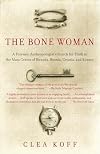
This really is an extraordinary book but needs to be taken for what it is and not for what the reader thinks it should be; the key lies in the subtitle, "A Forensic Anthropologist's Search..." "The Bone Woman" is not about exhuming mass graves and forensic analysis, though plenty of that is in here. Nor is it specifically about investigating crimes against humanity, though that also figures strongly in the overall reach. It's about what it takes, what it means, and the cost exacted on a show more person doing these jobs. In Koff's own words,
"I knew that, despite the importance of the work we were doing a toll would be exacted by this life. I didn't know what kind of toll, or when it would happen, or how long I would last." (p. 150)
In today's world of autocratic flexing, demographic divisiveness, conflict, and war in Ukraine, this dive into the casualties of "cleansings" is very relevant, and the faces of the families, survivors, and overtaxed aid workers need to be seen. That is what Koff's true quest, her 'mitzvah,' is in writing this book; she speaks of her "double vision" when describing how she perceives the bodies and associated materials as both clinical evidence for legal justice and as loved ones of the living, sometimes unaware of their deaths. Koff means to bring those faces, the dead and the living, out of the shadows and into the light. show less
"I knew that, despite the importance of the work we were doing a toll would be exacted by this life. I didn't know what kind of toll, or when it would happen, or how long I would last." (p. 150)
In today's world of autocratic flexing, demographic divisiveness, conflict, and war in Ukraine, this dive into the casualties of "cleansings" is very relevant, and the faces of the families, survivors, and overtaxed aid workers need to be seen. That is what Koff's true quest, her 'mitzvah,' is in writing this book; she speaks of her "double vision" when describing how she perceives the bodies and associated materials as both clinical evidence for legal justice and as loved ones of the living, sometimes unaware of their deaths. Koff means to bring those faces, the dead and the living, out of the shadows and into the light. show less
Silent Evidence: the bone-chilling thriller that will keep you on the edge of your seat in 2024 (The Jayne and Steelie Series, Book 1) by Clea Koff
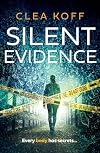
“Silent Evidence” focuses on female anthropologist duo Jayne and Steelie of Agency 32/1 as they assist FBI agent Scott Houston on a serial killer case involving multiple dismembered bodies. This book had an engaging storyline with several twists that I didn’t see coming. My favorite character was Steelie as she came across as a tough cookie and had mostly witty banter. This was a medium paced read and could be enjoyed by anyone who loves a good crime novel or likes to solve a mystery.
Lists
Awards

You May Also Like


Associated Authors
Statistics
- Works
- 9
- Members
- 576
- Popularity
- #43,501
- Rating
- 3.8
- Reviews
- 21
- ISBNs
- 31
- Languages
- 6