
George W. E. Nickelsburg
Author of Christians among Jews and Gentiles: Essays in Honor of Krister Stendahl on His Sixty-Fifth Birthday
About the Author
George W. E. Nickelsburg is Emeritus Professor of Religion at the University of Iowa
Works by George W. E. Nickelsburg
Christians among Jews and Gentiles: Essays in Honor of Krister Stendahl on His Sixty-Fifth Birthday (1976) — Editor — 540 copies, 2 reviews
Jewish Literature Between the Bible and the Mishnah: A Historical and Literary Introduction (1981) 383 copies, 2 reviews
Faith and Piety in Early Judaism: Texts and Documents (1983) — Author; Author — 106 copies, 1 review
1 Enoch 1: A Commentary on the Book of 1 Enoch, Chapters 1-36; 81-108 (Hermeneia) (2001) 105 copies, 1 review
Early Judaism and Its Modern Interpreters (The Bible and Its Modern Interpreters) (1986) — Editor — 70 copies
Resurrection, Immortality, and Eternal Life in Intertestamental Judaism and Early Christianity: Expanded Edition (Harvard Theological Studies) (1972) 51 copies
1 Enoch 2: A Commentary on the Book of 1 Enoch, Chapters 37-82 (Hermeneia) (2011) 36 copies, 1 review
Associated Works
Mimesis and Intertextuality in Antiquity and Christianity (Studies in Antiquity & Christianity) (2001) — Contributor — 26 copies
Other Worlds and Their Relation to This World: Early Jewish and Ancient Christian Traditions (Supplements to the Journal for the Study of Judaism) (2010) — Contributor — 13 copies
This World and the World to Come: Soteriology in Early Judaism (The Library of Second Temple Studies) (2011) — Contributor — 13 copies
Ideal figures in ancient Judaism: Profiles and paradigms (Septuagint and cognate studies) (1980) 12 copies
A Teacher for All Generations (2 vol. set) (Supplements to the Journal for the Study of Judaism) (2011) — Contributor — 9 copies
The Early Enoch Literature (Supplements to the Journal for the Study of Judaism) (2007) — Contributor — 8 copies
Fourth Ezra and Second Baruch: Reconstruction after the Fall (Supplements to the Journal for the Study of Judaism) (2013) — Contributor — 7 copies
Tagged
Common Knowledge
Members
Reviews
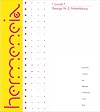
1 Enoch 1: A Commentary on the Book of 1 Enoch, Chapters 1-36; 81-108 (Hermeneia) by George W. E. Nickelsburg
In April 1773, the British Parliament passed the Tea Act which would lead to the Boston Tea Party. Two years after passage of the act, almost to the day, the British attempt to seize a cache of colonial weapons at Concord, Massachusetts served as the final spark that ignited the American Revolution.
I bring this up to contextualize how recently Europeans recovered the Book of Enoch. One month before Parliament passed the Tea Act, Scottish adventurer James Bruce returned to France from show more Ethiopia bearing a copy of a book no European had seen in a thousand years.
Excavators in Egypt later discovered a third of the book in Greek translation, and researchers identified Aramaic fragments of it among the Dead Sea Scrolls. To this day, though, medieval Ethiopic translations remain the only complete versions of a text once famous enough to be quoted directly by the canonical Book of Jude, as well as (sometimes favorably, sometimes not) by early church fathers.
George W. E. Nickelsburg of the University of Iowa is highly suited to write this commentary, given his decades of research into this and other Second Temple writings. And his task is not easy: consensus holds that this Jewish document originated in Aramaic before migrating into Greek and, later, Ethiopic.
Given this fraught textual history, any conclusions on its centuries of augmentation, editing, and translation are tentative. I find Nickelsburg cautious and well-reasoned in creating his own critical text and translation from highly divergent text forms, which gives me confidence in his text as a whole.
The Book of Enoch presents itself as the experiences, prophecies, and exhortations of Enoch, the seventh righteous descendant of Adam who “was not, for God took him.” As Nickelsburg points out, this empowered the authors and adherents of Enochic teachings to claim an authority prior and superior to the Law of Moses and the Jerusalem priesthood.
Most famously, Enoch expands on Genesis 6:1-4, extrapolating the intermarriage of the “sons of God” with the “daughters of men” into a sprawling epic of angels abandoning their proper station, mingling in lust with human women, spawning a race of carnivorous half-breed giants, and watching God slay their children before being bound and cast into the abyss to await Judgment Day. (Oh, also, demons are the spirits of the giants let loose to roam the Earth, in case you were wondering where demons come from.)
Nickelsburg suggests that the book’s historical context, to the extent we can know it, is an interpretive key. The book seethes with the impotent frustration of Jewish religionists held down by pagan Greeks. It swings from promises that God will slay the wicked (as he did the giants) and cast their souls into hell on the one hand, to prophecies on the other hand that the righteous will themselves exterminate heathens and compromisers.
Despite its Jewish origins, the Book of Enoch was never accepted as divine by Jewish guardians of the Mosaic Law. Enochic devotion seems to have been an influential but ultimately fringe movement within Judaism, which goes a long way to explain both its tepid reception by the early church and its eventual extinction in Mediterranean Christianity.
Though it should not be considered a “lost book of the Bible” or any such nonsense, Enoch does provide a valuable window into the apocalyptic genre as it developed during Seleucid domination of the Levant. Imagery that seems bizarre to us in canonical books such as Daniel and Revelation find parallels in Enoch, suggesting that they wouldn’t have seemed so bizarre to contemporaries.
Most of all, I’m reminded yet again that the past is a foreign country. We would do well to recognize we find ourselves in but one part of a river that stretches further into the past than we can see. We stand on the shoulders of giants — just, hopefully, not *those* giants. show less
I bring this up to contextualize how recently Europeans recovered the Book of Enoch. One month before Parliament passed the Tea Act, Scottish adventurer James Bruce returned to France from show more Ethiopia bearing a copy of a book no European had seen in a thousand years.
Excavators in Egypt later discovered a third of the book in Greek translation, and researchers identified Aramaic fragments of it among the Dead Sea Scrolls. To this day, though, medieval Ethiopic translations remain the only complete versions of a text once famous enough to be quoted directly by the canonical Book of Jude, as well as (sometimes favorably, sometimes not) by early church fathers.
George W. E. Nickelsburg of the University of Iowa is highly suited to write this commentary, given his decades of research into this and other Second Temple writings. And his task is not easy: consensus holds that this Jewish document originated in Aramaic before migrating into Greek and, later, Ethiopic.
Given this fraught textual history, any conclusions on its centuries of augmentation, editing, and translation are tentative. I find Nickelsburg cautious and well-reasoned in creating his own critical text and translation from highly divergent text forms, which gives me confidence in his text as a whole.
The Book of Enoch presents itself as the experiences, prophecies, and exhortations of Enoch, the seventh righteous descendant of Adam who “was not, for God took him.” As Nickelsburg points out, this empowered the authors and adherents of Enochic teachings to claim an authority prior and superior to the Law of Moses and the Jerusalem priesthood.
Most famously, Enoch expands on Genesis 6:1-4, extrapolating the intermarriage of the “sons of God” with the “daughters of men” into a sprawling epic of angels abandoning their proper station, mingling in lust with human women, spawning a race of carnivorous half-breed giants, and watching God slay their children before being bound and cast into the abyss to await Judgment Day. (Oh, also, demons are the spirits of the giants let loose to roam the Earth, in case you were wondering where demons come from.)
Nickelsburg suggests that the book’s historical context, to the extent we can know it, is an interpretive key. The book seethes with the impotent frustration of Jewish religionists held down by pagan Greeks. It swings from promises that God will slay the wicked (as he did the giants) and cast their souls into hell on the one hand, to prophecies on the other hand that the righteous will themselves exterminate heathens and compromisers.
Despite its Jewish origins, the Book of Enoch was never accepted as divine by Jewish guardians of the Mosaic Law. Enochic devotion seems to have been an influential but ultimately fringe movement within Judaism, which goes a long way to explain both its tepid reception by the early church and its eventual extinction in Mediterranean Christianity.
Though it should not be considered a “lost book of the Bible” or any such nonsense, Enoch does provide a valuable window into the apocalyptic genre as it developed during Seleucid domination of the Levant. Imagery that seems bizarre to us in canonical books such as Daniel and Revelation find parallels in Enoch, suggesting that they wouldn’t have seemed so bizarre to contemporaries.
Most of all, I’m reminded yet again that the past is a foreign country. We would do well to recognize we find ourselves in but one part of a river that stretches further into the past than we can see. We stand on the shoulders of giants — just, hopefully, not *those* giants. show less
1 Enoch 2: A Commentary on the Book of 1 Enoch, Chapters 37-82 (Hermeneia: a Critical and Historical Commentary on the Bible) by George W. E. Nickelsburg
A thorough commentary on a sacred text accepted only by the Ethiopian church. I recently completed my undergraduate thesis on medieval angelology, and this text figured prominently. It is a shame it has not been further studied, however this commentary is excellent.
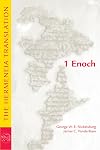
A basic introduction to the book of Enoch (1 Enoch) and a translation of the text.
The authors also wrote Hermeneia commentaries on 1 Enoch; the translation has been partially modified from those commentaries. The introduction provides a standard scholarly take on 1 Enoch, explaining the contents of its various sections, postulating possible dating, and providing a basic explanation of its textual history.
The translation itself is fresh and beneficial, far easier to follow and make sense of show more than the standard turn of the century translation by R.H. Charles. The translation is full of notes indicating where other textual witnesses diverge and how.
A useful resource to better understand the book of Enoch. show less
The authors also wrote Hermeneia commentaries on 1 Enoch; the translation has been partially modified from those commentaries. The introduction provides a standard scholarly take on 1 Enoch, explaining the contents of its various sections, postulating possible dating, and providing a basic explanation of its textual history.
The translation itself is fresh and beneficial, far easier to follow and make sense of show more than the standard turn of the century translation by R.H. Charles. The translation is full of notes indicating where other textual witnesses diverge and how.
A useful resource to better understand the book of Enoch. show less
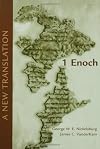
Excellent entre into a complex and fascinating document.
You May Also Like


Associated Authors
Statistics
- Works
- 16
- Also by
- 11
- Members
- 1,645
- Popularity
- #15,615
- Rating
- 4.0
- Reviews
- 9
- ISBNs
- 38
- Languages
- 3