
Ariel Schrag
Author of Rethinking Normal: A Memoir in Transition
About the Author
Image credit: Ariel Schrag (credit: Chloe Aftel)
Series
Works by Ariel Schrag
Awkward and Definition: The High School Comic Chronicles of Ariel Schrag (High School Chronicles of Ariel Schrag) (2008) 153 copies, 5 reviews
Likewise: The High School Comic Chronicles of Ariel Schrag (High School Chronicles of Ariel Schrag) (2009) 119 copies, 4 reviews
The L Word 1 copy
Associated Works
Drawing Power: Women's Stories of Sexual Violence, Harassment, and Survival (2019) — Contributor — 65 copies, 2 reviews
The Best American Comics 2018 (The Best American Series ®) (2018) — Contributor — 55 copies, 2 reviews
Scheherazade: Comics About Love, Treachery, Mothers, and Monsters (2004) — Contributor — 54 copies, 2 reviews
How Much Queer Work!: LGBT Comics from Around the World — Contributor — 1 copy
Tagged
Common Knowledge
- Birthdate
- 1979-12-29
- Gender
- female
- Education
- Berkeley High School
Columbia University (BA - English Literature) - Occupations
- cartoonist
television writer
screenwriter
teacher - Nationality
- USA
- Birthplace
- Berkeley, California, USA
- Places of residence
- Brooklyn, New York, USA
- Associated Place (for map)
- USA
Members
Reviews
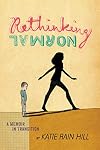
Have you ever worried that you'd never be able to live up to your parents' expectations? Have you ever imagined that life would be better if you were just invisible? Have you ever thought you would do anything--anything--to make the teasing stop? Katie Hill had and it nearly tore her apart.
Katie never felt comfortable in her own skin. She realized very young that a serious mistake had been made; she was a girl who had been born in the body of a boy. Suffocating under her peers' bullying and show more the mounting pressure to be "normal," Katie tried to take her life at the age of eight years old. After several other failed attempts, she finally understood that "Katie"--the girl trapped within her--was determined to live.
In this first-person account, Katie reflects on her pain-filled childhood and the events leading up to the life-changing decision to undergo gender reassignment as a teenager. She reveals the unique challenges she faced while unlearning how to be a boy and shares what it was like to navigate the dating world and experience heartbreak for the first time in a body that matched her gender identity. show less
Katie never felt comfortable in her own skin. She realized very young that a serious mistake had been made; she was a girl who had been born in the body of a boy. Suffocating under her peers' bullying and show more the mounting pressure to be "normal," Katie tried to take her life at the age of eight years old. After several other failed attempts, she finally understood that "Katie"--the girl trapped within her--was determined to live.
In this first-person account, Katie reflects on her pain-filled childhood and the events leading up to the life-changing decision to undergo gender reassignment as a teenager. She reveals the unique challenges she faced while unlearning how to be a boy and shares what it was like to navigate the dating world and experience heartbreak for the first time in a body that matched her gender identity. show less
Adam by Ariel Schrag

This book was vile. Pretty much full of the white cis male gaze and the exploitation of lesbians and trans people. Even if some of the settings and characters were interesting and authentic, they were tainted by an unreliable narrator who only cared about having (straight) sex with (lesbian) women.
Adam by Ariel Schrag
This book horrified me. It had all the understanding of trans people that a minstrel show has toward black people. I can only think that Ariel Schrag gets away with the deeply insulting way that trans men are used in her book because she is a lesbian--maybe her cis/straight reviewers get mixed up about the letters in "LGBT" and think this is a book from an insider, a book that gives them a view into a world they don't understand. I have to imagine the praise this book has received is from show more ignorance, and from a desire on the part of reviewers to be sensitive to the author's own minority status.
What a disappointment. This book isn't edgy. It's exploitative. And, it's wrong. I wish I could get my $$ going to Ariel Schrag's royalty payment back again--I feel like I've supported something that hurts people who are already misunderstood and maligned and put in danger every day just by being themselves. show less
What a disappointment. This book isn't edgy. It's exploitative. And, it's wrong. I wish I could get my $$ going to Ariel Schrag's royalty payment back again--I feel like I've supported something that hurts people who are already misunderstood and maligned and put in danger every day just by being themselves. show less
Adam by Ariel Schrag
Torn between giving it two or three stars, I have mixed feelings about this book. Upon reading its summary, I was appalled — a teenage boy pretends to be trans in order to get into girls' pants? — and would have never tortured myself to read it, had the main character not been from Piedmont. Even suffering through an offense premise is worth seeing how an author represents Piedmont High in fiction, I thought. On that front, the novel didn't offer much. Adam doesn't attend public school; show more he goes to a fancy, entirely fictional private school called East Bay Prep, although some existing Bay Area schools are mentioned, including Bishop O'Dowd. At first, I thought Adam to be from Berkeley, since all his and his sister's friends go to Berkeley High. That might be believable for someone living in Albany, but it's hard to understand for a Piedmonter. Of course, the author herself grew up in Berkeley, so I'm not surprised that she'd add that element in exchange for an accurate portrayal of Piedmont youth.
I generally avoid novels written or narrated by men, and Adam was a good reminder of why. Adam watches pornography, masturbates obsessively, and literally cannot look at a girl without getting a hard-on. His best friend, Brad, is even worse. A borderline rapist, he dates girls for the sex, and then discards them when he's bored. He coaxes his girlfriend into cyber sex while Adam is reading the whole thing too, unawares to her. And the scene that I found one of the most painful to read: he drags Adam into the backyard so the two of them can watch, through the curtains, Adam's lesbian sister have sex with her girlfriend. Offensive doesn't even describe it. Male behavior in this novel straight-up horrifying, and I pitied every woman who had any interaction with these characters.
At the same time, the novel was addictive. I kept putting it down and then picking it up again, until I finished it in nearly one sitting. Plot-wise, Adam quickly leaves Piedmont and heads to New York to spend a summer at his sister's, where he finds himself immersed in the queer community. In exquisite detail, Ariel Schrag paints a vivid and realistic picture of queer/trans politics, circa 2006. From characters who read Donna Haraway ("She identifies as a cyborg" p. 146) to zie and hir pronouns to intracommunity clashes over the radicalness of same-sex marriage ("He could tell Casey was quickly realizing there was something not cool about being for gay marriage" p. 116), this aspect of the novel feels very real, and it's thrilling to see this reality represented in fiction. The scene is portrayed with some distance, from a narrator who is neither gay, trans, or female and is decidedly unaware of what's going on, at least at the beginning of the novel.
Schrag obviously has had first-hand experience in the scene she describes, and it's a fantastic opportunity to offer some critique, which I was eager for. Occasionally, you get glimmers of criticism in some lines:
"'What do you mean 'gay marriage is not the solution'?" said Hazel. 'It's the solution to gay people not being able to get married.'" (p. 120)
"'You guys were dating,' said Adam. 'He sucks.'
"'It's just, it's kind of a trans thing, though,' she said. 'He's new to his body, his sexuality. As an emerging trans person, he needs to be free to explore sexual experiences now that he's not constricted by his assigned gender.'
"Casey was doing that thing where she repeats something someone else told her and it sounds totally weird coming out of her mouth.
"'I guess,' said Adam. He'd learned that anything that had anything to do with 'being trans' was not a thing you questioned." (pp. 101–102)
"'You guys from L.A., the Bay, or what?' said Schuyler.
"'We're from San Francisco.'
"San Francisco?
"'We live in Piedmont,' said Adam.
"Casey glared at him. 'Nobody knows Piedmont. We're from the Bay Area — people know San Francisco.'
[...]
"'Isn't Piedmont kind of rich?' said Schuyler.
"'It's near Oakland,' said Casey."
(p. 86)
(Despite the book's Berkeley-centricism elsewhere, that last excerpt offered a flawless portrayal of Piedmont youth and their rush to disavow themselves of visible privilege.)
So I hoped, really hoped, that Schrag would offer a scathing critique of both the disgusting, entitled male mindset and the toxic queer culture she portrayed. Unfortunately, this was rather lacking. Adam, who has never had any female friends, as far as I could tell, and only approaches women in order to get sexual satisfaction from them, imagines a beautiful red-haired girl who will fall in love with him and make him the envy of his male friends. Is his absurd fantasy and objectification of women challenged? No, to the contrary: It's validated, when he does meet his fantasy redhead, who falls for him immediately. His friend, Brad, exploits women left and right and, let me repeat again, had the idea to watch Casey and her girlfriend have sex through the window. Does Adam end the friendship, outraged by his appalling behavior? Only when it turns out that Brad is, unsurprisingly, a raging transphobe as well as a misogynist. At the same time, the queer scene is full of disturbingly coercive sex. The whole cast of characters ends up at a "play party," where women are being beaten, splayed out naked, and judged for their abilities to fellate dildos. One of the few characters who seemed to have any integrity, Casey's roommate June, jumps on Casey when the latter is drunk out of her mind, rips off her clothes in front of a crowd of people, and begins to "hand-fuck" her in front of everybody. The only person who seems at all taken aback by such incidents, offering mild criticism of the abusive characters involved in such scenes, is Adam. Who is in no place to talk about manipulation and rape culture.
Let's get back to the core of the story. Adam is not trans. He's not gay. A heterosexual virgin, embittered by girls' rejection of him, he realizes that when lesbian and bisexual women read him as a trans guy, he may have a way into their pants. And so he goes for it, quickly picking up aforementioned redhead fantasy girl, a character established to be a lesbian. There's not much reflection on the phenomenon of lesbians dating trans men (except for this brief exchange: "[Adam, to his up-to-that-point-lesbian-identified sister] I thought you were gay?" [Casey] "[...] I'm queer, or whatever"), but it is obvious from the text that these characters are only interested in female-bodied partners, despite their mantra "Trans men are men." And, taking advantage of that, Adam maintains the façade that he, too, has a vagina, only he doesn't want anyone to see or touch it, because of "gender stuff." Failing to tell Gillian the truth on their first date, he continues the charade into a sexually active and growingly serious relationship, spinning lies about testosterone doses and top surgery.
So, wow. Blatant disregard for lesbians' boundaries (Adam's love interest, Gillian, expresses multiple times how turned off she is by "bio guys") and shameless appropriation of trans men's lives.
But a shitty main character isn't necessarily a sympathetic portrayal. And the novel could have redeemed itself — had there been some serious reflection on how terrible Adam is. But, besides a lot of guilt pooling in the bottom of Adam's stomach, especially when he hears the news of a trans girl murdered by men who slept with her, he faces no consequences for his actions. His growth as a character is represented by clapping enthusiastically at Julia Serano's unnecessarily long reading of the spoken word piece "Cocky" at Camp Trans. I was not impressed.In fact, when he finally tells Gillian that he's not actually trans, she doesn't even blink. "I know," she says, and immediately rewards him with PIV. Literally. She later goes on to date another "bio" man, proving that lesbians can be "converted" after all!
What a mess.
There's also a strange current of (internalized and externalized) antisemitism in the novel, from comments about "the Jews," as the Hasidic landlord and co. get called, and Gillian's fetishization of Adam's Jewishness. I'm not sure how to read that, since Schrag is Jewish, and I'm not, but I'll just throw that out there.
So what to say. I really don't know. On the back cover of the paperback, Alison Bechdel described the book as "the most twisted, hilarious, and deeply gratifying reading experience [she has] had in a long time." And, finding it hard to put down, I was consumed by the novel as well. But, ultimately, it failed spectacularly at what it could have delivered, instead reinforcing oppressive narratives and offering a slap in the face to lesbians and trans men. show less
I generally avoid novels written or narrated by men, and Adam was a good reminder of why. Adam watches pornography, masturbates obsessively, and literally cannot look at a girl without getting a hard-on. His best friend, Brad, is even worse. A borderline rapist, he dates girls for the sex, and then discards them when he's bored. He coaxes his girlfriend into cyber sex while Adam is reading the whole thing too, unawares to her. And the scene that I found one of the most painful to read: he drags Adam into the backyard so the two of them can watch, through the curtains, Adam's lesbian sister have sex with her girlfriend. Offensive doesn't even describe it. Male behavior in this novel straight-up horrifying, and I pitied every woman who had any interaction with these characters.
At the same time, the novel was addictive. I kept putting it down and then picking it up again, until I finished it in nearly one sitting. Plot-wise, Adam quickly leaves Piedmont and heads to New York to spend a summer at his sister's, where he finds himself immersed in the queer community. In exquisite detail, Ariel Schrag paints a vivid and realistic picture of queer/trans politics, circa 2006. From characters who read Donna Haraway ("She identifies as a cyborg" p. 146) to zie and hir pronouns to intracommunity clashes over the radicalness of same-sex marriage ("He could tell Casey was quickly realizing there was something not cool about being for gay marriage" p. 116), this aspect of the novel feels very real, and it's thrilling to see this reality represented in fiction. The scene is portrayed with some distance, from a narrator who is neither gay, trans, or female and is decidedly unaware of what's going on, at least at the beginning of the novel.
Schrag obviously has had first-hand experience in the scene she describes, and it's a fantastic opportunity to offer some critique, which I was eager for. Occasionally, you get glimmers of criticism in some lines:
"'What do you mean 'gay marriage is not the solution'?" said Hazel. 'It's the solution to gay people not being able to get married.'" (p. 120)
"'You guys were dating,' said Adam. 'He sucks.'
"'It's just, it's kind of a trans thing, though,' she said. 'He's new to his body, his sexuality. As an emerging trans person, he needs to be free to explore sexual experiences now that he's not constricted by his assigned gender.'
"Casey was doing that thing where she repeats something someone else told her and it sounds totally weird coming out of her mouth.
"'I guess,' said Adam. He'd learned that anything that had anything to do with 'being trans' was not a thing you questioned." (pp. 101–102)
"'You guys from L.A., the Bay, or what?' said Schuyler.
"'We're from San Francisco.'
"San Francisco?
"'We live in Piedmont,' said Adam.
"Casey glared at him. 'Nobody knows Piedmont. We're from the Bay Area — people know San Francisco.'
[...]
"'Isn't Piedmont kind of rich?' said Schuyler.
"'It's near Oakland,' said Casey."
(p. 86)
(Despite the book's Berkeley-centricism elsewhere, that last excerpt offered a flawless portrayal of Piedmont youth and their rush to disavow themselves of visible privilege.)
So I hoped, really hoped, that Schrag would offer a scathing critique of both the disgusting, entitled male mindset and the toxic queer culture she portrayed. Unfortunately, this was rather lacking. Adam, who has never had any female friends, as far as I could tell, and only approaches women in order to get sexual satisfaction from them, imagines a beautiful red-haired girl who will fall in love with him and make him the envy of his male friends. Is his absurd fantasy and objectification of women challenged? No, to the contrary: It's validated, when he does meet his fantasy redhead, who falls for him immediately. His friend, Brad, exploits women left and right and, let me repeat again, had the idea to watch Casey and her girlfriend have sex through the window. Does Adam end the friendship, outraged by his appalling behavior? Only when it turns out that Brad is, unsurprisingly, a raging transphobe as well as a misogynist. At the same time, the queer scene is full of disturbingly coercive sex. The whole cast of characters ends up at a "play party," where women are being beaten, splayed out naked, and judged for their abilities to fellate dildos. One of the few characters who seemed to have any integrity, Casey's roommate June, jumps on Casey when the latter is drunk out of her mind, rips off her clothes in front of a crowd of people, and begins to "hand-fuck" her in front of everybody. The only person who seems at all taken aback by such incidents, offering mild criticism of the abusive characters involved in such scenes, is Adam. Who is in no place to talk about manipulation and rape culture.
Let's get back to the core of the story. Adam is not trans. He's not gay. A heterosexual virgin, embittered by girls' rejection of him, he realizes that when lesbian and bisexual women read him as a trans guy, he may have a way into their pants. And so he goes for it, quickly picking up aforementioned redhead fantasy girl, a character established to be a lesbian. There's not much reflection on the phenomenon of lesbians dating trans men (except for this brief exchange: "[Adam, to his up-to-that-point-lesbian-identified sister] I thought you were gay?" [Casey] "[...] I'm queer, or whatever"), but it is obvious from the text that these characters are only interested in female-bodied partners, despite their mantra "Trans men are men." And, taking advantage of that, Adam maintains the façade that he, too, has a vagina, only he doesn't want anyone to see or touch it, because of "gender stuff." Failing to tell Gillian the truth on their first date, he continues the charade into a sexually active and growingly serious relationship, spinning lies about testosterone doses and top surgery.
So, wow. Blatant disregard for lesbians' boundaries (Adam's love interest, Gillian, expresses multiple times how turned off she is by "bio guys") and shameless appropriation of trans men's lives.
But a shitty main character isn't necessarily a sympathetic portrayal. And the novel could have redeemed itself — had there been some serious reflection on how terrible Adam is. But, besides a lot of guilt pooling in the bottom of Adam's stomach, especially when he hears the news of a trans girl murdered by men who slept with her, he faces no consequences for his actions. His growth as a character is represented by clapping enthusiastically at Julia Serano's unnecessarily long reading of the spoken word piece "Cocky" at Camp Trans. I was not impressed.
What a mess.
There's also a strange current of (internalized and externalized) antisemitism in the novel, from comments about "the Jews," as the Hasidic landlord and co. get called, and Gillian's fetishization of Adam's Jewishness. I'm not sure how to read that, since Schrag is Jewish, and I'm not, but I'll just throw that out there.
So what to say. I really don't know. On the back cover of the paperback, Alison Bechdel described the book as "the most twisted, hilarious, and deeply gratifying reading experience [she has] had in a long time." And, finding it hard to put down, I was consumed by the novel as well. But, ultimately, it failed spectacularly at what it could have delivered, instead reinforcing oppressive narratives and offering a slap in the face to lesbians and trans men. show less
Lists
Awards


You May Also Like


Associated Authors
Statistics
- Works
- 19
- Also by
- 9
- Members
- 1,177
- Popularity
- #21,847
- Rating
- 3.6
- Reviews
- 53
- ISBNs
- 22
- Favorited
- 1