
Michelle Tea
Author of Valencia
About the Author
Image credit: Author Michelle Tea at the 2018 Texas Book Festival in Austin, Texas, United States. By Larry D. Moore, CC BY-SA 4.0, https://commons.wikimedia.org/w/index.php?curid=74314826
Series
Works by Michelle Tea
Modern Tarot: Connecting with Your Higher Self through the Wisdom of the Cards (2017) 285 copies, 5 reviews
The Passionate Mistakes and Intricate Corruption of One Girl in America (1998) 242 copies, 3 reviews
Without a net : the female experience of growing up working class (2003) — Editor — 241 copies, 2 reviews
It's So You: 35 Women Write About Personal Expression Through Fashion and Style (2007) — Editor — 56 copies, 2 reviews
Sister Spit: Writing, Rants and Reminiscence from the Road (City Lights/Sister Spit) (2012) — Editor — 51 copies
CLOWNS: Anthology 2 copies
Heartbreak Cigarettes 1 copy
Blackwave 1 copy
Associated Works
Working Sex: Sex Workers Write About a Changing Industry (2007) — Contributor — 101 copies, 2 reviews
Read Hard: Five Years of Great Writing from the Believer (2009) — Contributor — 87 copies, 2 reviews
You Don't Have to Be Everything: Poems for Girls Becoming Themselves (2021) — Contributor — 87 copies, 2 reviews
Fist of the Spider Woman: Tales of Fear and Queer Desire (2009) — Contributor — 61 copies, 4 reviews
Tagged
Common Knowledge
- Other names
- Tomasik, Michelle (birth name)
- Birthdate
- 1971
- Gender
- female
- Occupations
- poet
author
literary arts organiser - Organizations
- Sister Spit (co-founder)
- Awards and honors
- Jim Duggins Outstanding Mid-Career Novelists' Prize (2008)
- Agent
- Lindsay Edgecombe
- Nationality
- USA
- Birthplace
- Chelsea, Massachusetts, USA
- Places of residence
- Boston, Massachusetts, USA
San Francisco, California, USA
Tucson, Arizona, USA
Los Angeles, California, USA - Associated Place (for map)
- USA
Members
Reviews
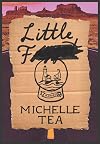
Rating: 4* of five
The Publisher Says: A new epic novel about a teenage queer runaway from cult classic author of Blackwave and Valencia Michelle Tea.
In Spencer’s fantasies, the breezy, queer streets of Provincetown, MA, are utopia, a place where he can be free. Yet when a violent attack in his suburban Arizona schoolyard sends him to the hospital, he decides queer utopia can’t wait. And one night, with the help of his best friend, the teenage witch Joy, he hitches a ride to find it.
The show more cross-country road odyssey that follows brings Spencer from new moon rituals in Arizona canyons to Texas bus stations, from the luxe drag stages of Houston’s Montrose district to the jazz-soaked streets of the French Quarter and beyond. This new novel from Michelle Tea tells the story, by turns raw, romantic, and sweet, of a sheltered boy taking his first leap into queer life, among all the complicated queers who live it.
I RECEIVED A DRC FROM THE PUBLISHER VIA EDELWEISS+. THANK YOU.
My Review: Road novels lend themselves beautifully to the coming-of-age genre. In a road novel, the main character is by definition seeking some unknown, longed-for thing...adulthood is that thing, the long-dreamed-of delights of not being under someone else's thumb, making your own decisions....
I know, I know, it's as far from reality as a time-travel novel is. The traveler/comer-of-age doesn't know that (yet) so let it ride while the trip educates the youth into disillusionment's many pleasures. ...wait...pleasures? Spencer is, like so many of us formerly young queer lads going to run head-first into reality and find it pretty good.
Escaping homophobia is not possible, but getting out of a bully's sights is not a bad idea. As Spencer moves to other peoples' whims, aka hitchhikes, to get to Provincetown, the world shows him a bright face. He meets people who help him, in spite of taking him away from the direction he's set; lots of endearing, heartfelt chats; sleeping on couches (my back twinged just typing it); finding his first reciprocated love.
A lovely story, but not one we haven't read before (over thirty, anyway), so best really as a gift for your sweet young giftee. You know the one...not ready to come out; not ready for The Talk; but turning life over in their mind painfully loudly.
Give them this book to give those gears a bit of "others before you have been there, here's what they say about it" lubrication before you, their parents, and the rest of us go deaf. show less
The Publisher Says: A new epic novel about a teenage queer runaway from cult classic author of Blackwave and Valencia Michelle Tea.
In Spencer’s fantasies, the breezy, queer streets of Provincetown, MA, are utopia, a place where he can be free. Yet when a violent attack in his suburban Arizona schoolyard sends him to the hospital, he decides queer utopia can’t wait. And one night, with the help of his best friend, the teenage witch Joy, he hitches a ride to find it.
The show more cross-country road odyssey that follows brings Spencer from new moon rituals in Arizona canyons to Texas bus stations, from the luxe drag stages of Houston’s Montrose district to the jazz-soaked streets of the French Quarter and beyond. This new novel from Michelle Tea tells the story, by turns raw, romantic, and sweet, of a sheltered boy taking his first leap into queer life, among all the complicated queers who live it.
I RECEIVED A DRC FROM THE PUBLISHER VIA EDELWEISS+. THANK YOU.
My Review: Road novels lend themselves beautifully to the coming-of-age genre. In a road novel, the main character is by definition seeking some unknown, longed-for thing...adulthood is that thing, the long-dreamed-of delights of not being under someone else's thumb, making your own decisions....
I know, I know, it's as far from reality as a time-travel novel is. The traveler/comer-of-age doesn't know that (yet) so let it ride while the trip educates the youth into disillusionment's many pleasures. ...wait...pleasures? Spencer is, like so many of us formerly young queer lads going to run head-first into reality and find it pretty good.
Escaping homophobia is not possible, but getting out of a bully's sights is not a bad idea. As Spencer moves to other peoples' whims, aka hitchhikes, to get to Provincetown, the world shows him a bright face. He meets people who help him, in spite of taking him away from the direction he's set; lots of endearing, heartfelt chats; sleeping on couches (my back twinged just typing it); finding his first reciprocated love.
A lovely story, but not one we haven't read before (over thirty, anyway), so best really as a gift for your sweet young giftee. You know the one...not ready to come out; not ready for The Talk; but turning life over in their mind painfully loudly.
Give them this book to give those gears a bit of "others before you have been there, here's what they say about it" lubrication before you, their parents, and the rest of us go deaf. show less
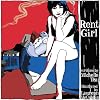
Rent Girl is a graphic novel and I do mean graphic.
Rent Girl has an autobiographical feeling to it which is bolstered by the publishers comment "A graphic and uncompromising autobiographical bender, the story of Tea's years as a prostitute...". The book itself doesn't actually say it is autobiographical but the details are so real, so sadly funny, that they ring true.
A young lesbian needs money and when her worldy older girlfriend reveals that she is a prostitute it looks like a chance. show more After all, this girlfriend is emotionally healthy. Isn't she? The life of an in-call or out-call prostitute has its benefits (money) but so many more things that speak against it. Reading it, I wondered if I was living this how I could even think while feeling all that tiredness and despair and lack of nourishing brain food. In and out of the business life goes on and across the country prostitution leads to drug dealing (though she is terrible at it).
If she is a victim, it is a victim of lassitude, of not knowing how to break out or of lacking the energy to get into the new way. And when she leaves sex work for "legitimate" jobs the constant beating down and humiliation for such small amounts of wages leer at her more than the johns. She wonders what is worse verbally abused or silently judged and concludes that is is silently judged but that judgement touches copy store minimum wage workers as much as it does tarty women at bars.
I laughed quite often while reading this book. One of my favorite (non-laughable) bits came at the beginning of the book: "she was of course revealing herself to be a liar, something neither of us understood at the time...it lodged a suspicion, a bit of doom, in my heart. A magnetized sliver of grimness that drew to it every lie Steph would tell, getting chunkier and heavier as time went on." This is exactly how it feels to realize someone you trust is a liar; even if you understand the lies and aren't on the recieving end of the ones you see/hear, the sliver grows.
A solid feeling look at sex work seen without the filter of victim or superhero. show less
Rent Girl has an autobiographical feeling to it which is bolstered by the publishers comment "A graphic and uncompromising autobiographical bender, the story of Tea's years as a prostitute...". The book itself doesn't actually say it is autobiographical but the details are so real, so sadly funny, that they ring true.
A young lesbian needs money and when her worldy older girlfriend reveals that she is a prostitute it looks like a chance. show more After all, this girlfriend is emotionally healthy. Isn't she? The life of an in-call or out-call prostitute has its benefits (money) but so many more things that speak against it. Reading it, I wondered if I was living this how I could even think while feeling all that tiredness and despair and lack of nourishing brain food. In and out of the business life goes on and across the country prostitution leads to drug dealing (though she is terrible at it).
If she is a victim, it is a victim of lassitude, of not knowing how to break out or of lacking the energy to get into the new way. And when she leaves sex work for "legitimate" jobs the constant beating down and humiliation for such small amounts of wages leer at her more than the johns. She wonders what is worse verbally abused or silently judged and concludes that is is silently judged but that judgement touches copy store minimum wage workers as much as it does tarty women at bars.
I laughed quite often while reading this book. One of my favorite (non-laughable) bits came at the beginning of the book: "she was of course revealing herself to be a liar, something neither of us understood at the time...it lodged a suspicion, a bit of doom, in my heart. A magnetized sliver of grimness that drew to it every lie Steph would tell, getting chunkier and heavier as time went on." This is exactly how it feels to realize someone you trust is a liar; even if you understand the lies and aren't on the recieving end of the ones you see/hear, the sliver grows.
A solid feeling look at sex work seen without the filter of victim or superhero. show less

Plans led to disappointment, to regret, to chain-smoking and sadness. Michelle refused to be tragic. She would resist having plans.
Michelle is a young lesbian living in a run-down apartment in San Francisco during the 1990s, and also as the world is ending. She works in a bookstore, but she wrote a book once, and so she's collecting experiences for her next book, which mainly means she drinks a lot and takes whatever drugs are offered to her. In the name of artistic experience, of course, show more she's not an addict or anything.
Their hard drinking was a sort of lifestyle performance, like the artist who wore only red for a year, then only blue, then yellow. They were playing the parts of hardened females, embodying a sort of Hunter S. Thompson persona, a deeply feminist stance for a couple of girls to take. They were too self-aware to be alcoholics. Real alcoholics didn't know they could even be alcoholics, they just drank and drank and ruined their lives and didn't have any fun and were men.
The first half of [Black Wave] follows Michelle and her compatriots as they carouse around the dying city. It's a self-destructive artist novel in the style of the many published during the nineties, from Suicide Blonde to The Story of Junk. I read a slew of them back then and the story remains the same, although the characters always believe they are forging new ground.
The second half of the novel is an entirely different animal. Here, Michelle Tea makes the dystopian end-of-the-world theme explicit, while also going meta and becoming a novel about the writing of the novel, where what is happening in Michelle-the-character's life becomes a topic of debate. Tea also makes the decision to have Every Thing That Michelle Says Capitalized and has everyone else speak in italics. I had thought that I was fairly open to stylistic quirks, but this annoyed me to the point that I couldn't concentrate on what Tea was doing, or even what was going on in the story.
With Black Wave, author Michelle Tea takes big risks. That they don't entirely work means that the book doesn't hold together the way it might had she played it safe. But I can't help but admire her courage. show less
Michelle is a young lesbian living in a run-down apartment in San Francisco during the 1990s, and also as the world is ending. She works in a bookstore, but she wrote a book once, and so she's collecting experiences for her next book, which mainly means she drinks a lot and takes whatever drugs are offered to her. In the name of artistic experience, of course, show more she's not an addict or anything.
Their hard drinking was a sort of lifestyle performance, like the artist who wore only red for a year, then only blue, then yellow. They were playing the parts of hardened females, embodying a sort of Hunter S. Thompson persona, a deeply feminist stance for a couple of girls to take. They were too self-aware to be alcoholics. Real alcoholics didn't know they could even be alcoholics, they just drank and drank and ruined their lives and didn't have any fun and were men.
The first half of [Black Wave] follows Michelle and her compatriots as they carouse around the dying city. It's a self-destructive artist novel in the style of the many published during the nineties, from Suicide Blonde to The Story of Junk. I read a slew of them back then and the story remains the same, although the characters always believe they are forging new ground.
The second half of the novel is an entirely different animal. Here, Michelle Tea makes the dystopian end-of-the-world theme explicit, while also going meta and becoming a novel about the writing of the novel, where what is happening in Michelle-the-character's life becomes a topic of debate. Tea also makes the decision to have Every Thing That Michelle Says Capitalized and has everyone else speak in italics. I had thought that I was fairly open to stylistic quirks, but this annoyed me to the point that I couldn't concentrate on what Tea was doing, or even what was going on in the story.
With Black Wave, author Michelle Tea takes big risks. That they don't entirely work means that the book doesn't hold together the way it might had she played it safe. But I can't help but admire her courage. show less
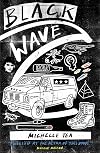
A goodreads list of Jeff VanderMeer's climate fiction recommendations led me to 'Black Wave'. I don't think it's a climate change novel really, or at least didn't read it as such. The end of the world, caused by environmental destruction, certainly features. But it seemed to me more focused on the details of personal apocalypses: mental illness, drug & alcohol addiction, and loneliness. This isn't a criticism, as I found the writing really vivid and insightful. It follows Michelle, the show more protagonist, around the San Francisco queer scene in the late 1990s, then onwards to Los Angeles. The apocalypse only starts to impinge upon her life during the latter half of the book. There's also the very meta thread of Michelle writing memoirs. She's unsure how to conclude them, so says she's 'just going to have the world explode'. Given that the author is also named Michelle, the apocalypse seems essentially metaphorical. Although meta writing can get so self-referential that it becomes timesome, here the concept of memoir writing is examined so critically and thoughtfully that it works really well:
I really enjoyed the style in which Tea wrote Michelle's introspection, which is sad, funny, insightful, and deluded by turns. The background of urban poverty, substance abuse, and apocalyptic disaster is distinctive and memorable. As the world comes to an end, Michelle's life gets progressively weirder.The epidemic of soulmate-matching dreams is an inspired concept. The whole book is full of thought-provoking commentary on identity, illness, family, sexuality, relationships, drugs, and writing. It's also interesting as a snapshot of Generation X. As I'm a older millennial who was still at school in the 1990s, I had to look up who Matt Dillion is - but am old enough to recognise his face when I did. show less
Then Michelle started hanging out at the Zen Centre too much. What was a story if you didn't even exist? Michelle observed the way she told the same stories about herself, thereby cementing this false idea of self harder and harder into her psyche. It was all ego. There was no Michelle, so how could there be her memoir? It seemed to Michelle, sitting on a straw floor in a wide room, her legs folded atop each other, eyes half-mast, that being a writer of memoir was one of the most violent, anti-Buddhist things a person could do with their life. She thought of her fight with Lu. It was her story fighting with Lu's story. If neither of them even existed, why bother fighting? No self, no story. Michelle felt the ache and burn of her ego hurling itself against such thoughts as she sat down in front of her computer in Los Angeles.
[...]
Page after page she built a straight, male, middle class Michelle who did not drink and did not do drugs. Oh wait - could she do that now? As a straight, male, middle class man could she now shoot up literary heroin and go on a literary crack bender? It depended, she suspected, on where straight, male, middle class Michelle worked and how many dependents depended on him. Michelle realised that this was what they called raising the stakes. Sometimes the fact that she had not gone to college really did seem to have a negative effect on her life. If Michelle had gone to college she was certain she'd have been taught to write from the perspective of a straight, white, middle class man. She would have to teach herself to be universal. She could do it, it would just take time. Meanwhile, she found a job around the corner, at the used book and record store.
I really enjoyed the style in which Tea wrote Michelle's introspection, which is sad, funny, insightful, and deluded by turns. The background of urban poverty, substance abuse, and apocalyptic disaster is distinctive and memorable. As the world comes to an end, Michelle's life gets progressively weirder.
Lists
Read These Too (1)
Awards


You May Also Like


Associated Authors
Statistics
- Works
- 32
- Also by
- 14
- Members
- 3,928
- Popularity
- #6,439
- Rating
- 3.8
- Reviews
- 91
- ISBNs
- 88
- Languages
- 2
- Favorited
- 22

