
Eileen Myles
Author of Chelsea Girls
About the Author
Eileen Myles is an American poet and writer born on December 9, 1949 in Cambridge, Massachusetts. She is a graduate of the University of Massachusetts Boston (1971). She moved to New York City in 1974 where she participated in workshops and worked with and for several famous poets. Her career show more includes working as Artistic Director of St. Mark's Poetry Project, serving as Professor of Writing at the University of California, San Diego, and Visiting Writer at seven colleges. Myles's first book, The Irony of the Leash, was published in 1978. Some of her other work include A Fresh Young Voice From the Plains, Not Me, Inferno, Maxfield Parrish/early and new poems, School of Fish, Skies, On My Way, Snowflake / Different Streets, and The Importance of Being Iceland. She has also written articles, essays, plays and other works of fiction and nonfiction. She founded the Lost Texans Collective with Elinor Nauen and Barbara McKay and performed in group and solo performances. She has received numerous awards for her work. Her latest awards include The Clark Prize for Excellence in Arts Writing (2015) and The Lambda Pioneer Award (2016). (Bowker Author Biography) show less
Disambiguation Notice:
Note that Myles uses "they/them" (identifying as plural femme). http://eileenmyles.com/bio2.php
Image credit: Credit: David Shankbone, Sept. 14, 2008, Brooklyn Book Festival
Works by Eileen Myles
We, the Poets 1 copy
Ballroom 1 copy
Associated Works
The Letter Q: Queer Writers' Notes to their Younger Selves (2012) — Contributor — 296 copies, 5 reviews
A Woman Like That: Lesbian and Bisexual Writers Tell Their Coming Out Stories (1999) — Contributor — 260 copies, 3 reviews
Gay and Lesbian Poetry in Our Time (Stonewall Inn Editions) (1988) — Contributor — 191 copies, 1 review
Light the Dark: Writers on Creativity, Inspiration, and the Artistic Process (2017) — Contributor — 167 copies, 5 reviews
Working Sex: Sex Workers Write About a Changing Industry (2007) — Contributor — 101 copies, 2 reviews
The Best American Poetry 2014 (The Best American Poetry series) (2014) — Contributor — 89 copies, 1 review
Pills, Thrills, Chills, and Heartache: Adventures in the First Person (2004) — Contributor — 69 copies
It's So You: 35 Women Write About Personal Expression Through Fashion and Style (2007) — Contributor — 56 copies, 2 reviews
Take My Advice: Letters to the Next Generation from People Who Know a Thing or Two (2002) — Contributor — 50 copies
Eleven More American Women Poets in the 21st Century: Poetics Across North America (2012) — Contributor — 12 copies
Coming Attractions: An Anthology of American Poets in Their Twenties (1980) — Contributor — 8 copies
Saturday morning, vol. II, no. 1 & 2, New york City issue — Contributor — 3 copies
CUZ 1 — Author — 2 copies
Talisman: A Journal of Contemporary Poetry and Poetics, Number 1, The Alice Notley Issue — Contributor — 1 copy
Telephone 14 — Contributor — 1 copy
Tagged
Common Knowledge
- Canonical name
- Myles, Eileen
- Birthdate
- 1949
- Gender
- female
- Education
- University of Massachusetts, Boston
- Nationality
- USA
- Birthplace
- Cambridge, Massachusetts, USA
- Places of residence
- Boston, Massachusetts, USA
San Diego, California, USA - Disambiguation notice
- Note that Myles uses "they/them" (identifying as plural femme). http://eileenmyles.com/bio2.php
- Associated Place (for map)
- Massachusetts, USA
Members
Reviews

Experimental without being difficult to read--Myles plays with the form of the memoir, switching up details and messing around with language in this work that is situated between fiction and autobiography. The end result is more fun than not, especially considering some of the grim content in this story.
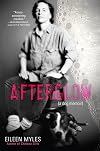
I think a lot of the time poets' prose efforts can be so packed that they're by nature uneven—I guess you can say the same for poetry as well. That's definitely the case with this book, and honestly I get the feeling that Eileen Myles would be just fine with the idea of taking what you want and leaving the rest. Some of it is just gorgeous, lyrical, madly associative and evocative. And some of it is just too dense or esoteric for the likes of me, and I was perfectly happy to read along and show more let some of it settle to the bottom in order for the stuff that resonated for me to rise. Although Myles definitely stretches the definition of "a dog memoir," there is some marvelous writing on dogs, and about dog ownership in particular—both the intense scrutiny that's borne out of love and also the dilemma of all that tenderness and adoration weighed against the wrongness of leading another living being around by the neck. I love Myles's directness, often bordering on crudeness, and the love that shines through it all for her Rosie—"the physiognomy of dearness unsurpassed." This one takes a little suspension of the need to get every sentence, but the rewards are great. show less
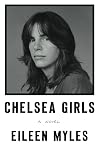
Eileen Myles has an incredibly strong voice, and ‘Chelsea Girls’ made me want to be in a room with her. She approaches difficult subjects with an openness and curiosity that didn’t make me want to judge, but just to listen. Listen to her raw, heartbreaking, unflinching look at a life defined by poverty and art, friendship, love and sex. ‘Chelsea Girls’ is about figuring out how to live when the rules are all subject to question even when we don’t know what questions to ask. I show more found myself cheering Eileen on as she made herself into the person she already was, although she had no way of knowing it. show less
 This review was written for LibraryThing Early Reviewers.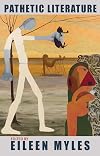
Pathetic Literature, edited by Eileen Myles, is an extremely satisfying anthology both for the works included and for the thought-provoking introduction.
I can't say for sure that what I take to be pathetic literature is the same as what Myles expresses, even if it is their introduction that got me to think about it. My take (and don't hold any gross conceptual errors against them, any errors are all mine) is that we are going back to the root of pathetic, think pathos here. Appealing to show more emotions and stirring feelings as one source states it. But I think inclusion in the category goes beyond simply that. It is from these emotions and feelings that meaning comes. Rather than a purely rational expression (which isn't to say these are irrational) we are led to experience conflict, pain (physical, emotional, and spiritual), discomfort, and other feelings but through someone else's perspective, their eyes, their hearts, their fears, and their reality. Then we can hopefully make some meaning from it all.
Even setting aside trying to fully understand the definition of pathetic literature, this is a wonderful anthology, period. No, you likely won't be equally moved by every work, such is the nature of any collection. But you will read works from familiar writers and some you aren't likely aware of. You'll read excerpts from longer works, some you probably know, which, taken separately, can alter how they speak to you. And hopefully, through feeling and emotional connection, you will arrive at some new and/or modified meaning of the world around you.
In recommending this book I would include those who want to read it straight through as well as those who will use it as reading for when you have little time. I went through it rather quickly so I could share my thoughts, but it is the kind of book I would prefer to work through over several weeks or a couple of months. Read an entry or two, think about it, feel it, maybe look up things it might make me think about. Then either reread or move on to the next entry. Even any piece you don't care for, ask yourself why. Was it the voice? Was it truly an authorial voice or the racial/ethnic/gendered/etc voice that turned you off? And again, why? Discomfort? Dislike? Lack of knowledge? Feelings and emotions don't have to be separate, use them with your so-called rational mind to look closer at the work, our society, and yourself.
Reviewed from a copy made available by the publisher via NetGalley. show less
I can't say for sure that what I take to be pathetic literature is the same as what Myles expresses, even if it is their introduction that got me to think about it. My take (and don't hold any gross conceptual errors against them, any errors are all mine) is that we are going back to the root of pathetic, think pathos here. Appealing to show more emotions and stirring feelings as one source states it. But I think inclusion in the category goes beyond simply that. It is from these emotions and feelings that meaning comes. Rather than a purely rational expression (which isn't to say these are irrational) we are led to experience conflict, pain (physical, emotional, and spiritual), discomfort, and other feelings but through someone else's perspective, their eyes, their hearts, their fears, and their reality. Then we can hopefully make some meaning from it all.
Even setting aside trying to fully understand the definition of pathetic literature, this is a wonderful anthology, period. No, you likely won't be equally moved by every work, such is the nature of any collection. But you will read works from familiar writers and some you aren't likely aware of. You'll read excerpts from longer works, some you probably know, which, taken separately, can alter how they speak to you. And hopefully, through feeling and emotional connection, you will arrive at some new and/or modified meaning of the world around you.
In recommending this book I would include those who want to read it straight through as well as those who will use it as reading for when you have little time. I went through it rather quickly so I could share my thoughts, but it is the kind of book I would prefer to work through over several weeks or a couple of months. Read an entry or two, think about it, feel it, maybe look up things it might make me think about. Then either reread or move on to the next entry. Even any piece you don't care for, ask yourself why. Was it the voice? Was it truly an authorial voice or the racial/ethnic/gendered/etc voice that turned you off? And again, why? Discomfort? Dislike? Lack of knowledge? Feelings and emotions don't have to be separate, use them with your so-called rational mind to look closer at the work, our society, and yourself.
Reviewed from a copy made available by the publisher via NetGalley. show less
Lists
Awards


You May Also Like


Associated Authors
Statistics
- Works
- 37
- Also by
- 39
- Members
- 2,287
- Popularity
- #11,226
- Rating
- 3.8
- Reviews
- 40
- ISBNs
- 101
- Languages
- 8
- Favorited
- 11


