
Can Xue
Author of Frontier
About the Author
Image credit: Sonya >> 搜你丫, July 3, 2006
Works by Can Xue
Isolarii - Purple Perilla 2 copies
末世爱情 1 copy
残雪作品精选(精) 1 copy
Book 9791280084798 1 copy
Kafka & I 1 copy
DIALOGHI 1 copy
Associated Works
The Art of the Story: An International Anthology of Contemporary Short Stories (1999) — Contributor — 394 copies, 5 reviews
Words Without Borders: The World Through the Eyes of Writers: An Anthology (2007) — Contributor — 159 copies, 6 reviews
Tagged
Common Knowledge
- Legal name
- Deng Xiaohua
邓小华; - Birthdate
- 1953-05-30
- Gender
- female
- Occupations
- metalworker
novelist - Nationality
- China
- Birthplace
- Changsha, Hunan, China
- Places of residence
- Changsha City, Hunan Province, South China
Beijing, China - Associated Place (for map)
- China
Members
Reviews
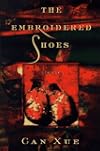
My second Can Xue and she's turning out one of my favourite living writers. The thing you notice most after reading is you're unsure what's actually happened. The stories simply seem to explore states of mind. And there are very interesting minds at work here. In fact you could probably say that she explores neurodiversity in it's broadest sense (not just confined to autism spectrum). In terms of narrative she just drops you into the story and you've no idea where it will lead. She's show more experimental, yes, but I find her eminently readable. I think readers who cling to 'realism' and the logical may have problems but if you just enter into her subjective narrative and expect the unexpected you will be rewarded. Personally I find she rarely writes a boring line, there are no longeurs and she keeps the intensity up throughout. The stories are stated simply which belies their complexity. They have something in common with Sufi tales: their multi-layeredness, allegorical nature and fantastic element but they differ in having no Eureka moment of enlightenment. It's up to the reader to draw conclusions and there's a mystery to them and an absurd element. There's a Zen quality to them in their non-logical development but no conclusions, not even one beyond words. Rather, they're open-ended and perspectival. I couldn't really pick favourites, the quality is consistent throughout. I haven't read enough Kafka or Borges with whom she's compared, but based on my reading experience I'd say she's one of the most exciting and unique writers around. show less
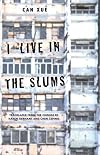
Chinese experimental author Can Xue is like the Lady Gaga of modern Chinese literature.
- Harvard Review
Can Xue is an avant-garde writer who is mentioned sometimes as a candidate for the Nobel Prize for Literature. Her stories are described as surreal, nonrational, dream-like; or on the other hand, incoherent, bizarre, impossible to make sense of. Most of her work has not been translated into English but I Live in the Slums, a novella and a collection of short stories, has just been named to show more the International Booker Prize longlist.
(Can Xue also has a delightful self-puffery streak; a fun game of "Who Said It: Zlatan Ibrahimovic or Can Xue?" could be had. "I can't help but laugh at how perfect I am." - Zlatan. "Can Xue's works are truly exceptional, these kinds of fictions have already surpassed the profundity of philosophy." - Can Xue.)
She has said that both she and her readers are involved in the creation of meaning and interpretation of her works. Readers should work (hard, mind you, she doesn't like to be disappointed by us) to actively create meaning and perform the creative process while reading. With all this in mind, I curiously opened this volume and read the novella that begins the book, titled "Story of the Slums."
This novella features a rat ("I'm not a rat" - Rat) existing on the margins of a deprived community, shuttling from house to house, abused and victimized by violence, with all manner of bizarre settings and actions described with no rational cause and effect. Strange, but not lacking in the ability to have themes and meaning taken from it. What lines I jotted down from the story:
The themes I get from it are of existing apart, existing as an outsider who doesn't fit in or understand people and things around them, indeed is often baffled by what goes on. Existing as someone who is commonly treated badly. Yet, being a survivor, a tough thing that strives and survives. These themes seem to me to continue being present in the stories that continue the book.
In "Our Human Neighbors" a magpie couple are set apart (and above) the rest of their flock, and as all the other birds disappear to a seeming grim end, they alone survive. "It's impossible to understand what's going on in people's minds, isn't it?" asks our narrator's wife. "How dare you doubt your own species?" thunders our narrator's father. "When I tried to get close to them, they looked as if they were saying there was no need for me to exist in this world," says our narrator.
And it continues. In "The Swamp", whose narrator tries to find a geographic location hidden from him, he's told "What you mean is certainly not what I mean! God, why have I kept talking with you all along? How could you ever understand me? Impossible!" In "The Other Side of the Partition" the story's narrator is excited to jump into the darkness on the other side of a dividing line from all her family and community, despite being caused considerable physical pain the first time, she survives it and goes right back. In "Shadow People", our narrator is the only being who consists of more than a mere shadow, "I couldn't touch him, either... I belonged to the shadow people, and yet I was different from the others." He is told, "You'd better lie on your stomach on the floor and not move. Then no one can see you. If they can't see you, they won't be annoyed."
Despite being set apart and often abused, these outsider characters actually seem to have something that makes them superior to their supposed peers. In "Our Human Neighbors", our magpies have made the best and most cleverly formed nest, by far. In "Shadow People" our narrator decides that, "He had spoken that way because he envied me. I - a shadow with a tail." In "Crow Mountain", it's the narrator's friend who is different, and "The path she'd taken had everything - flowers, birds, cherries, chestnuts. I, on the other hand, was surrounded by darkness."
"I Am A Willow Tree" I interpreted as a description of what it can feel like to be an intellectual - like, say, Can Xue. A willow tree is planted into a garden with many other kinds of plants but does not receive the same nourishment and needs-meeting from the gardener. When rain falls, it does not get the same enjoyment, and from the shallow soil it cannot draw the same sustenance. The other plants all sing the gardener's praises, but not the willow tree, and in turn the gardener always seems to be keeping a suspicious eye on the willow, and at one point chops off part of a root and fills in the hole with dirt.
The gardener can be seen here as the government, the other plants in the garden the masses, the willow is the intellectual - set apart from the masses, different, tolerated by the government but sometimes the recipient of its violence (the chopping away of a root and filling in its space with dirt being particularly ominous). "I had no way out. My way out lay in thinking of a way out. It lay in 'thinking' itself," muses the willow, while its roots reach far down and contact some unknown region, stimulating its growth. It sometimes wonders if it can survive in this garden, but as is the book's general theme, it endures and lives.
"Her Old Home" is an examination of looking backwards at history. A woman left her old home very sick, and recovered health in her new environment. Twenty years later she is invited back by her home's new owner, who has recreated the home's interior exactly, and who even looks like her in pictures at places the woman remembers from her past. She doesn't remember the details of this place perfectly, but there is a warm comfort there and it tries to really draw her in and keep her there. "You don't need to fully understand us. All you need is to feel our love, that's enough," says a memory/person, in a most warm and inviting manner. But beware the dangers of sentimentality, though it may feel good. She was not healthy here, looking backwards toward an idealized history is dangerous and self-deceiving, and in the end she vows to not indulge it anymore.
All in all these are very interesting stories, though I feel it would be best to read them spaced further apart in time. Do not gorge on Can Xue, the brain is not a natural at reading stories like these where rationality and logical patterns are frequently absent, and it can become tiring. Each story given space and time with the reader, however, intrigues. show less
- Harvard Review
Can Xue is an avant-garde writer who is mentioned sometimes as a candidate for the Nobel Prize for Literature. Her stories are described as surreal, nonrational, dream-like; or on the other hand, incoherent, bizarre, impossible to make sense of. Most of her work has not been translated into English but I Live in the Slums, a novella and a collection of short stories, has just been named to show more the International Booker Prize longlist.
(Can Xue also has a delightful self-puffery streak; a fun game of "Who Said It: Zlatan Ibrahimovic or Can Xue?" could be had. "I can't help but laugh at how perfect I am." - Zlatan. "Can Xue's works are truly exceptional, these kinds of fictions have already surpassed the profundity of philosophy." - Can Xue.)
She has said that both she and her readers are involved in the creation of meaning and interpretation of her works. Readers should work (hard, mind you, she doesn't like to be disappointed by us) to actively create meaning and perform the creative process while reading. With all this in mind, I curiously opened this volume and read the novella that begins the book, titled "Story of the Slums."
This novella features a rat ("I'm not a rat" - Rat) existing on the margins of a deprived community, shuttling from house to house, abused and victimized by violence, with all manner of bizarre settings and actions described with no rational cause and effect. Strange, but not lacking in the ability to have themes and meaning taken from it. What lines I jotted down from the story:
*)What in the world happened? I didn't know. Really didn't know. Everything was baffling.
*)I couldn't say I understood her. I didn't. I seemed to understand every word of that dialect, but when I put them together, I had no idea what she was saying."
*)My tangled relationship with people was probably the main reason I continued staying in the slums.
*)"Will the little thing die?"
"No way. It's a born survivor."
*)People were so fickle! I thought, we probably aren't the same.
*)The slums were my home, and also the hardest place for me to understand. Generally speaking, I didn't make a deliberate effort to understand it. Destiny drove me from one place to another.
*)I endured, I endured.
The themes I get from it are of existing apart, existing as an outsider who doesn't fit in or understand people and things around them, indeed is often baffled by what goes on. Existing as someone who is commonly treated badly. Yet, being a survivor, a tough thing that strives and survives. These themes seem to me to continue being present in the stories that continue the book.
In "Our Human Neighbors" a magpie couple are set apart (and above) the rest of their flock, and as all the other birds disappear to a seeming grim end, they alone survive. "It's impossible to understand what's going on in people's minds, isn't it?" asks our narrator's wife. "How dare you doubt your own species?" thunders our narrator's father. "When I tried to get close to them, they looked as if they were saying there was no need for me to exist in this world," says our narrator.
And it continues. In "The Swamp", whose narrator tries to find a geographic location hidden from him, he's told "What you mean is certainly not what I mean! God, why have I kept talking with you all along? How could you ever understand me? Impossible!" In "The Other Side of the Partition" the story's narrator is excited to jump into the darkness on the other side of a dividing line from all her family and community, despite being caused considerable physical pain the first time, she survives it and goes right back. In "Shadow People", our narrator is the only being who consists of more than a mere shadow, "I couldn't touch him, either... I belonged to the shadow people, and yet I was different from the others." He is told, "You'd better lie on your stomach on the floor and not move. Then no one can see you. If they can't see you, they won't be annoyed."
Despite being set apart and often abused, these outsider characters actually seem to have something that makes them superior to their supposed peers. In "Our Human Neighbors", our magpies have made the best and most cleverly formed nest, by far. In "Shadow People" our narrator decides that, "He had spoken that way because he envied me. I - a shadow with a tail." In "Crow Mountain", it's the narrator's friend who is different, and "The path she'd taken had everything - flowers, birds, cherries, chestnuts. I, on the other hand, was surrounded by darkness."
"I Am A Willow Tree" I interpreted as a description of what it can feel like to be an intellectual - like, say, Can Xue. A willow tree is planted into a garden with many other kinds of plants but does not receive the same nourishment and needs-meeting from the gardener. When rain falls, it does not get the same enjoyment, and from the shallow soil it cannot draw the same sustenance. The other plants all sing the gardener's praises, but not the willow tree, and in turn the gardener always seems to be keeping a suspicious eye on the willow, and at one point chops off part of a root and fills in the hole with dirt.
The gardener can be seen here as the government, the other plants in the garden the masses, the willow is the intellectual - set apart from the masses, different, tolerated by the government but sometimes the recipient of its violence (the chopping away of a root and filling in its space with dirt being particularly ominous). "I had no way out. My way out lay in thinking of a way out. It lay in 'thinking' itself," muses the willow, while its roots reach far down and contact some unknown region, stimulating its growth. It sometimes wonders if it can survive in this garden, but as is the book's general theme, it endures and lives.
"Her Old Home" is an examination of looking backwards at history. A woman left her old home very sick, and recovered health in her new environment. Twenty years later she is invited back by her home's new owner, who has recreated the home's interior exactly, and who even looks like her in pictures at places the woman remembers from her past. She doesn't remember the details of this place perfectly, but there is a warm comfort there and it tries to really draw her in and keep her there. "You don't need to fully understand us. All you need is to feel our love, that's enough," says a memory/person, in a most warm and inviting manner. But beware the dangers of sentimentality, though it may feel good. She was not healthy here, looking backwards toward an idealized history is dangerous and self-deceiving, and in the end she vows to not indulge it anymore.
All in all these are very interesting stories, though I feel it would be best to read them spaced further apart in time. Do not gorge on Can Xue, the brain is not a natural at reading stories like these where rationality and logical patterns are frequently absent, and it can become tiring. Each story given space and time with the reader, however, intrigues. show less
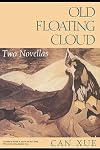
A rare scatological mosaic elevated to the highest levels of artistic expression. Can Xue is my favorite contender for the Nobel Prize. Rising out of humble beginnings in China to become in the space of a decade, a force to be reckoned with in world literature. A titan of disjointed, haunting, sloppy elegance. A feverish, hyperactive geezer with a child's imagination. She has published some 50 novellas, a few dozen stories and about 9 novels so far. They all partake of the same show more excruciatingly visceral style. The critics love comparing it to this or that author, like Kafka and Bruno Schulz and Cortazar and others, but she is entirely in her own league in my opinion.
Yellow Mud Street, the first novella in the collection, is a revolting, beautiful, contradictory summation of life in the ditch. A recounting of a fabulous town sinking into a pit of its own excrement. The bats and the centipedes, and the people and pigs, all leaking and spewing into each other, the roofs collapsing, and the hungry, sad animals beneath them called human beings, crumbling and festering in their own resentful sties. Can Xue conjures a continual excrescence of polyp-sprouting images. The characters and lunatics she peoples this scourged landscape with are hideous, Goya-esque renditions of nightmare beings, hovering between life and death and love and salvation.
So why is Can Xue doing all this? Why does she fly in the face of convention and challenge the notion of enjoyable reading and the status quo? Each moment, each gory detail, each unimaginable horror taking place is the even-toned, straight-faced, loving joke of an activist. She uses our fears and aggravations to build a castle of images, colors and flavors. Whether the Chinese government reads it or American students or Argentine professors, there is something to be gained from her intense vision. You can draw parallels to the questionable bureaucracies that spawned the human suffering she depicts in exaggerated detail. Beneath the hyperbole lie wounds of truth and blisters of history. You can find in the hairy horrors and pus-dripping walls, the squealing prostitutes and puddles bubbling with frogs, a cause and a purpose. She sees human beings as dependent creatures. Communities, when built upon mud, can only foster mud creatures. Yet in death and decay there is often found a germ of life and a sick kind of natural beauty. Can Xue excoriates our taste, and abrades our minds. She is the loving dictator of the lost hells of impoverished villages, where patches of our worst habits lurked and corrupted our ancestors.
Old Floating Cloud, the second novella, is a subtler, pointillist display of her powers. She weaves a tapestry of symbols to convey brilliant satires and memorable dreams. Plot and character development are not her main concern. The roles of family and community, the emotion and trauma we compile in our daily, animalistic existences, are her bread and butter. We are walking contradictions, all of us, and what we love, often destroys us. Our adornments are all sequins, and our blemishes are our defining characteristics. While this story is far more readable, far easier to digest, it is not as powerful as Yellow Mud Street. The sheer accumulation of her images, and the Jenga tower of her atmospheric malaise are impressive to a startling degree. Even more than her other short story collections, these two exemplar works are enough to prove to anyone that she is not afraid to expose and explode our literary refinements and the sealed bags of cultural baggage we all lug upon our shoulders like severed heads.
Can Xue may be overlooked by some now, but in the future, I think, her great artistry will continue to grow in influence. show less
Yellow Mud Street, the first novella in the collection, is a revolting, beautiful, contradictory summation of life in the ditch. A recounting of a fabulous town sinking into a pit of its own excrement. The bats and the centipedes, and the people and pigs, all leaking and spewing into each other, the roofs collapsing, and the hungry, sad animals beneath them called human beings, crumbling and festering in their own resentful sties. Can Xue conjures a continual excrescence of polyp-sprouting images. The characters and lunatics she peoples this scourged landscape with are hideous, Goya-esque renditions of nightmare beings, hovering between life and death and love and salvation.
So why is Can Xue doing all this? Why does she fly in the face of convention and challenge the notion of enjoyable reading and the status quo? Each moment, each gory detail, each unimaginable horror taking place is the even-toned, straight-faced, loving joke of an activist. She uses our fears and aggravations to build a castle of images, colors and flavors. Whether the Chinese government reads it or American students or Argentine professors, there is something to be gained from her intense vision. You can draw parallels to the questionable bureaucracies that spawned the human suffering she depicts in exaggerated detail. Beneath the hyperbole lie wounds of truth and blisters of history. You can find in the hairy horrors and pus-dripping walls, the squealing prostitutes and puddles bubbling with frogs, a cause and a purpose. She sees human beings as dependent creatures. Communities, when built upon mud, can only foster mud creatures. Yet in death and decay there is often found a germ of life and a sick kind of natural beauty. Can Xue excoriates our taste, and abrades our minds. She is the loving dictator of the lost hells of impoverished villages, where patches of our worst habits lurked and corrupted our ancestors.
Old Floating Cloud, the second novella, is a subtler, pointillist display of her powers. She weaves a tapestry of symbols to convey brilliant satires and memorable dreams. Plot and character development are not her main concern. The roles of family and community, the emotion and trauma we compile in our daily, animalistic existences, are her bread and butter. We are walking contradictions, all of us, and what we love, often destroys us. Our adornments are all sequins, and our blemishes are our defining characteristics. While this story is far more readable, far easier to digest, it is not as powerful as Yellow Mud Street. The sheer accumulation of her images, and the Jenga tower of her atmospheric malaise are impressive to a startling degree. Even more than her other short story collections, these two exemplar works are enough to prove to anyone that she is not afraid to expose and explode our literary refinements and the sealed bags of cultural baggage we all lug upon our shoulders like severed heads.
Can Xue may be overlooked by some now, but in the future, I think, her great artistry will continue to grow in influence. show less
I was sitting here trying to figure out how to describe the experience of reading this novel and here is what I came up with: Reading this novel is like watching a game of Go when you don't know any of the rules. Or maybe, it's like playing Go yourself, but you make up your own rules, and your partner makes up a different set of rules, and you don't tell each other the rules of your game and then you go ahead and play that way together until the board is filled with small stones and you have show more a grand old time.
Both this novel and the game of Go are from China but that is purely coincidental. The novel is not like Go in the way of: "this is a very Chinese novel, like Go is a very Chinese game." No. The novel is like Go in that there are distinct patterns in the prose, black, white, black, white, and as I read along the words make patterns, but the patterns I perceive are made up in my own head, and I can't say for sure what it means, or who won, even when the game is over.
Can I say how much fun it was, though? How much it delighted me? There. I've said it. show less
Both this novel and the game of Go are from China but that is purely coincidental. The novel is not like Go in the way of: "this is a very Chinese novel, like Go is a very Chinese game." No. The novel is like Go in that there are distinct patterns in the prose, black, white, black, white, and as I read along the words make patterns, but the patterns I perceive are made up in my own head, and I can't say for sure what it means, or who won, even when the game is over.
Can I say how much fun it was, though? How much it delighted me? There. I've said it. show less
Lists
Awards


You May Also Like


Associated Authors
Statistics
- Works
- 48
- Also by
- 7
- Members
- 1,057
- Popularity
- #24,365
- Rating
- 3.5
- Reviews
- 31
- ISBNs
- 70
- Languages
- 10
- Favorited
- 3