

David Wojnarowicz (1954–1992)
Author of Close to the Knives: A Memoir of Disintegration
About the Author
Works by David Wojnarowicz
Weight of the Earth: The Tape Journals of David Wojnarowicz (Semiotext(e) / Native Agents) (2018) 74 copies
Wojnarowicz 3 copies
It's So Fomo, 9 1 copy
It's So Fomo, 10 1 copy
It's So Fomo, 4 1 copy
It's So Fomo, 8 1 copy
It's So Fomo, 6 1 copy
It's So Fomo, 7 1 copy
It's So Fomo, 5 1 copy
It's So Fomo, 2 1 copy
It's So Fomo, 3 1 copy
It's So Fomo, 1 1 copy
Seven: ... :Sounds 1 copy
Associated Works
The Assassin's Cloak: An Anthology of the World's Greatest Diarists (2000) — Contributor, some editions — 622 copies, 9 reviews
Theories and Documents of Contemporary Art: A Sourcebook of Artists' Writings (1995) — Contributor — 417 copies, 1 review
The Second Gates of Paradise: The Anthology of Erotic Short Fiction (1997) — Contributor — 38 copies
Gauntlet: Exploring the Limits of Free Expression, No. 2 - Stephen King Special (1991) — Contributor — 31 copies, 1 review
CUZ 1 — Author — 2 copies
イリュミナシオン 創刊号 — Contributor — 1 copy
Tagged
Common Knowledge
- Birthdate
- 1954-09-14
- Date of death
- 1992-07-22
- Gender
- male
- Occupations
- artist
AIDS activist - Cause of death
- AIDS
- Nationality
- USA
- Birthplace
- Red Bank, New Jersey, USA
- Place of death
- Manhattan, New York, USA
- Burial location
- Miller Run, Driftwood, Pennsylvania, USA
- Associated Place (for map)
- USA
Members
Reviews
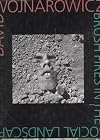
David Wojnarowicz's use of photography, often done in conjunction with writing or painting, was extraordinary--as was his way of addressing the AIDS crisis and issues of censorship and homophobia. Brush Fires in the Social Landscape, begun in collaboration with the artist before his death in 1992 and first published in 1994, engaged what Wojnarowicz would refer to as his tribe or community. Contributors--from artist and writer friends such as Karen Finley, Nan Goldin, Kiki Smith, Vince show more Aletti, C. Carr and Lucy R. Lippard, to David Cole, the lawyer who represented him in his case against Donald Wildmon and the American Family Association--together offer a compelling, provocative understanding of the artist and his work. Brush Fires is also the only book that features the breadth of Wojnarowicz's work with photography. Now, on the twentieth anniversary of Brush Fires, when interest in the artist's work has increased exponentially, this expanded and redesigned edition of this seminal publication puts the work in front of an audience all over again while maintaining the integrity of the original. Through the lens of various contributors, the book addresses Wojnarowicz's profound legacy: the relentless censorship and ethical issues, alongside his aesthetic brilliance, courage and influence. show less

Dear Jean Pierre collects David Wojnarowicz’s transatlantic correspondence to his Parisian lover Jean Pierre Delage between 1979 and 1982. Capturing a truly foundational moment for Wojnarowicz’s artistic and literary practice, these letters not only reveal his captivating personality—and its concomitant tenderness, compassion, and neuroses—but also index the development of the visual language that would go on to define him as one of the preeminent artists of his generation.
Through show more this collection, readers are introduced to Wojnarowicz’s Rimbaud series, the band 3 Teens Kill 4, the publication of his first photographs, his early friendship with Peter Hujar, his participation in the then-emerging East Village art and music scenes, and the preparations for the publication of his first book. Included with these writings are postcards, drawings, xeroxes, photographs, collages, flyers, ephemera, and contact sheets that showcase some of the artist’s iconic images and work, such as the Burning House motif and Untitled (Genet, after Brassai).
Beyond these milestones, the book offers a striking portrayal of Wojnarowicz as a twenty-something, detailing his day-to-day life with the type of unbridled earnestness that comes with that age and the softness of love and longing. This disarming tenderness provides a picture of a young man just beginning to find his voice in the world and the love he has found in it.
Although the two exchanged letters in equal measure, Delage’s correspondences have largely been lost, leaving us with only a revelatory glimpse into the internal world of Wojnarowicz during what turned out to be his formative years.
David Wojnarowicz (1954-1992) was born in Red Bank, New Jersey. Wojnarowicz channeled a vast accumulation of raw images, sounds, memories and lived experiences into a powerful voice that was an undeniable presence in the New York City art scene of the 1970s, 80s and early 90s. Through his several volumes of fiction, poetry, memoirs, painting, photography, installation, sculpture, film and performance, Wojnarowicz left a legacy, affirming art’s vivifying power in a society he viewed as alienating and corrosive. His use of blunt semiotics and graphic illustrations exposed what he felt the mainstream repressed: poverty, abuse of power, blind nationalism, greed, homophobia and the devastation of the AIDS epidemic. Wojnarowicz died of AIDS-related complications on July 22, 1992 at the age of 37. show less
Through show more this collection, readers are introduced to Wojnarowicz’s Rimbaud series, the band 3 Teens Kill 4, the publication of his first photographs, his early friendship with Peter Hujar, his participation in the then-emerging East Village art and music scenes, and the preparations for the publication of his first book. Included with these writings are postcards, drawings, xeroxes, photographs, collages, flyers, ephemera, and contact sheets that showcase some of the artist’s iconic images and work, such as the Burning House motif and Untitled (Genet, after Brassai).
Beyond these milestones, the book offers a striking portrayal of Wojnarowicz as a twenty-something, detailing his day-to-day life with the type of unbridled earnestness that comes with that age and the softness of love and longing. This disarming tenderness provides a picture of a young man just beginning to find his voice in the world and the love he has found in it.
Although the two exchanged letters in equal measure, Delage’s correspondences have largely been lost, leaving us with only a revelatory glimpse into the internal world of Wojnarowicz during what turned out to be his formative years.
David Wojnarowicz (1954-1992) was born in Red Bank, New Jersey. Wojnarowicz channeled a vast accumulation of raw images, sounds, memories and lived experiences into a powerful voice that was an undeniable presence in the New York City art scene of the 1970s, 80s and early 90s. Through his several volumes of fiction, poetry, memoirs, painting, photography, installation, sculpture, film and performance, Wojnarowicz left a legacy, affirming art’s vivifying power in a society he viewed as alienating and corrosive. His use of blunt semiotics and graphic illustrations exposed what he felt the mainstream repressed: poverty, abuse of power, blind nationalism, greed, homophobia and the devastation of the AIDS epidemic. Wojnarowicz died of AIDS-related complications on July 22, 1992 at the age of 37. show less
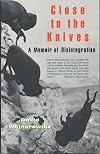
The memoirs of an American Jean Genet (that's "Jean Genie," then) turned out to be a very good thing--brief encounters not in jail but very Americanly "on the lam" in the midst of the somehow always post-apocalyptic (and like, for an aesthete, terrifying and empty) Middle American landscape and New York in the eighties, so art and heroin and then the AIDS crisis, which blots out all else, and you realize he's imprisoned much more comprehensively than JG ever was--the body unfolds no sensual show more sphincteral-floral miracle of the rose here but only an ever-expanding Kaposi's lesion; the body is not for pleasure, never again, but for torment and death only, and the memories of friends and lovers and abusers that maybe are unspeakably precious now that there won't be any more memories or maybe just drive you mad before you die. Bleak, and all the bleaker when he starts rattling on about "the State" as though the Big Brother Ronnie Raygun line'll make any of this make sense or hurt any less. show less

these short, rich glimpses of various lives read like pieces of the same monologue, one that tells the stories of the hidden and unwanted, the savvy and fearless, the lost and forlorn and hopeful. the only downside, aside from some possible triggers, is that these are too short -- i want to know more about these people, i want to hear them talking to me with their own voices. maybe the abruptness of only two or three pages doesn't suit my current mood. still, from the diaries of a wolf boy show more was my favorite piece precisely because it stuck around long enough for me to explore all of its corners. and it included some of the most striking writing of the whole heavy pile of beautifully striking writing.
"Death was a smudge in the distance. I don't know exactly what I mean by that but lying down inside this cradle of arms in my head was sometimes all I wanted ... I'm lost in a world that's left all its mythologies behind in the onward crush of wars and civilization, my body traveling independent of brushes with life and death, no longer knowing what either means anymore. I'm so tired of feeling weary and alien, even my dreams look stupid to me."
is it more heartbreaking because wojnarowicz died way too young, kicking and fighting against the forces who tried to tell him, until the very last, that he was sick and wrong? maybe. it's hard to separate the reality of his life from the words and images that came out of it, and i'm not so sure we should try. these things stand together, but they also stand on their own. but i can't help, whenever i read his stuff, mourning the words he could have written. show less
"Death was a smudge in the distance. I don't know exactly what I mean by that but lying down inside this cradle of arms in my head was sometimes all I wanted ... I'm lost in a world that's left all its mythologies behind in the onward crush of wars and civilization, my body traveling independent of brushes with life and death, no longer knowing what either means anymore. I'm so tired of feeling weary and alien, even my dreams look stupid to me."
is it more heartbreaking because wojnarowicz died way too young, kicking and fighting against the forces who tried to tell him, until the very last, that he was sick and wrong? maybe. it's hard to separate the reality of his life from the words and images that came out of it, and i'm not so sure we should try. these things stand together, but they also stand on their own. but i can't help, whenever i read his stuff, mourning the words he could have written. show less
Lists
Awards


You May Also Like


Associated Authors
Statistics
- Works
- 31
- Also by
- 13
- Members
- 1,470
- Popularity
- #17,474
- Rating
- 4.1
- Reviews
- 20
- ISBNs
- 45
- Languages
- 4
- Favorited
- 6
