
Howell Raines
Author of My Soul Is Rested: Movement Days in the Deep South Remembered
About the Author
Howell Raines is a veteran journalist and former executive editor of The New York Times.
Image credit: Eye on Books
Works by Howell Raines
Associated Works
Booknotes: America's Finest Authors on Reading, Writing, and the Power of Ideas (1997) — Contributor — 457 copies, 5 reviews
A Nation Challenged: A Visual History of 9/11 and Its Aftermath (2002) — Introduction — 225 copies, 2 reviews
Tagged
Common Knowledge
- Birthdate
- 1943-02-05
- Gender
- male
- Education
- Birmingham-Southern College
University of Alabama - Occupations
- journalist
editor (newspaper)
columnist - Organizations
- Atlanta Constitution
St. Petersburg Times
The New York Times
Condé Nast Portfolio - Awards and honors
- Pulitzer Prize (Feature Writing, 1992)
- Nationality
- USA
- Places of residence
- Birmingham, Alabama, USA
Atlanta, Georgia, USA
New York, New York, USA - Associated Place (for map)
- USA
Members
Reviews
Silent Cavalry: How Union Soldiers from Alabama Helped Sherman Burn Atlanta--and Then Got Written Out of History by Howell Raines
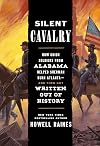
When this book wound up on my TBR list, I took the front cover at face value that I was getting a history of the 1st Alabama Cavalry, USA, and how it became an embarrassment to "right-thinking" Alabamians post-Reconstruction.
What I got was the memoir of Howell Raines, and how being a descendant of pro-Union men impacted his personal outlook. Some of that would have been fine, but this is not a well-organized book, and reading it reminded me of some of the more tedious researchers I dealt show more with when I was a reference specialist at the U.S. National Archives; generally well-meaning folks with a bad case of tunnel vision.
If you're more interested in the foundations of the "Southern" mentality, you'll probably get more out of this than I did. show less
What I got was the memoir of Howell Raines, and how being a descendant of pro-Union men impacted his personal outlook. Some of that would have been fine, but this is not a well-organized book, and reading it reminded me of some of the more tedious researchers I dealt show more with when I was a reference specialist at the U.S. National Archives; generally well-meaning folks with a bad case of tunnel vision.
If you're more interested in the foundations of the "Southern" mentality, you'll probably get more out of this than I did. show less
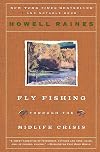
I don't completely fit the demographic for this book, which is aimed at middle-aged men and those who would understand them, but I enjoyed it much the same. Howell Raines, who went on to be the executive editor of the New York Times, chronicles his transformation from a fish murdering follower of the "Redneck Way" to a fly fisherman who only kills the occasional fish to eat, and feels damn guilty about it. (In a move that he admits is somewhat hypocritical, Raines speckles his book with a show more handful of fish recipes and even a diagram for filleting a northern pike.) This transformation corresponds with the aging of his children, the ending of his marriage, and a mid-life crisis of epic proportions.
While all of this is self indulgent, Raines has the decency to admit it. The book ends with an affirmation that his fishing is ultimately a selfish activity, and one that he refuses to feel bad about.
Raines personal development provides a frame for the meat of the book, which consists of interviews, snippets of history, entomology and biography related to fly fishing and its development. Raines uses his clout as an NYT big shot to interview famous anglers, conservationists, and even gets to go spin casting with the, then president, George H.W. Bush. In fact a surprising amount of the book is dedicated to presidential fisherman most notably Hoover, who fly fished his private streams while the country went to hell, and Carter who had private lessons with Lee Wulf (the greatest American fly fisherman of the 20th century) at camp David.
The heart of the book is Raines friend ship with Dick Blalock, a former foreign-service officer who Raines suspects is a former or current C.I.A. officer. What Blalock is, is a larger than life epicurean who cooks braised lamb instead of trout at his streamside cabin, and who calls up radio shows to harass the republican governor of Maryland so often that the governor knows his voice. Blalock serves as Raines and the reader's guide to the philosophy of fly-fishing and conservation, while proving that fishing is more about the people you do it with than how many fish you pull out of the stream. show less
While all of this is self indulgent, Raines has the decency to admit it. The book ends with an affirmation that his fishing is ultimately a selfish activity, and one that he refuses to feel bad about.
Raines personal development provides a frame for the meat of the book, which consists of interviews, snippets of history, entomology and biography related to fly fishing and its development. Raines uses his clout as an NYT big shot to interview famous anglers, conservationists, and even gets to go spin casting with the, then president, George H.W. Bush. In fact a surprising amount of the book is dedicated to presidential fisherman most notably Hoover, who fly fished his private streams while the country went to hell, and Carter who had private lessons with Lee Wulf (the greatest American fly fisherman of the 20th century) at camp David.
The heart of the book is Raines friend ship with Dick Blalock, a former foreign-service officer who Raines suspects is a former or current C.I.A. officer. What Blalock is, is a larger than life epicurean who cooks braised lamb instead of trout at his streamside cabin, and who calls up radio shows to harass the republican governor of Maryland so often that the governor knows his voice. Blalock serves as Raines and the reader's guide to the philosophy of fly-fishing and conservation, while proving that fishing is more about the people you do it with than how many fish you pull out of the stream. show less
Silent Cavalry: How Union Soldiers from Alabama Helped Sherman Burn Atlanta--and Then Got Written Out of History by Howell Raines
A political book in which the author felt compelled to expose readers to the coverup of the role some citizens of Alabama had in serving in the Union Army during the American Civil War.
I found the book to be a tedious read.
The author admits to writing as a journalist and not as a trained historian.
The book contains a helpful index.
I found the book to be a tedious read.
The author admits to writing as a journalist and not as a trained historian.
The book contains a helpful index.
Lists
Awards


You May Also Like


Associated Authors
Statistics
- Works
- 9
- Also by
- 4
- Members
- 602
- Popularity
- #41,740
- Rating
- 3.8
- Reviews
- 3
- ISBNs
- 25
- Languages
- 1