
Oxford University Press
Author of The New Testament: New English Bible
About the Author
Image credit: Photo by George Sylvain / Flickr.
Series
Works by Oxford University Press
The New Oxford Annotated Bible with the Apocrypha, Revised Standard Version (1973) — Author — 1,066 copies, 2 reviews
The Complete Parallel Bible with the Apocryphal/Deuterocanonical Books: New Revised Standard Version, Revised English Bible, New American Bible, New Jerusalem Bible (1993) 210 copies, 1 review
The Oxford Dictionary and Thesaurus: The Ultimate Language Reference for American Readers (1995) 140 copies, 2 reviews
Oxford Family Encyclopedia: The Ultimate Single-Volume Reference for Home, School and Office (1997) 72 copies, 1 review
Holocaust and Genocide Studies 53 copies
The S. S. Teacher's Edition The Holy Bible Containing the Old and New Testaments (1884) 15 copies, 1 review
Oxford Advanced Learner's Dictionary Hardback (with 1 year's access to both Premium Online and App) (2020) 11 copies
The Oxford Children's Encyclopedia of Science and Technology (Oxford children's encyclopedias) (1999) 11 copies
Diccionario Oxford Pocket: Edicion latinoamericana espanol-ingles/ingles-espanol (2005) 9 copies, 1 review
Oxford Read and Discover: Level 4: 750-Word Vocabulary Incredible Earth Activity Book (2010) 7 copies
Oxford Junior Student Atlas 6 copies
Oxford Pocket Slownik kieszonkowy angielsko-polski, polsko-angielski (English and Polish Edition) (2005) 5 copies
4. El Cid (Clásicos Adaptados) 5 copies
Book of Common Prayer: Pew Edition 4 copies
World Development Report 1990 4 copies
Essential English-English-Bengali Dictionary A compact bilingual dictionary for everyday use (Multilingual Edition) (2019) 4 copies
Oxford Home Atlas Of The World 3 copies
Oxford Wordpower = 3 copies
Little Women 3 copies
Concise Oxford Paravia Il Dizionario Inglese Italiano, Italiano Inglese (Dictionary) (2006) 2 copies
Notes to O.U.P. authors 2 copies
The Shoemaker and the Elves 2 copies
Λεξικό για όλους - Αγγλικής Γλώσσας 2 copies
Oxford Children's Picture Dictionary for learners of English: A topic-based dictionary for young learners (2016) 2 copies
The Oxford Essential Guide to Writing[OXFORD ESSENTIAL GT WRITING][Mass Market Paperback] (2000) 2 copies
Pakistan — Editor — 2 copies
The Tibetan Book of the Dead 2 copies
China studies 2 copies
The Essential Reader 2 copies
A Christmas carol service book — Composer — 2 copies
Iconic women Writers OWC set 2 copies
The Book of Common Prayer 2 copies
DICTIONARY OF FINANCE AND BANKING 2 copies
Sylloge Nummorum Graecorum: Volume 5: Ashmolean Museum, Oxford. Part 4: Paeonia-Thessaly (Vol 5) (1981) 2 copies
The Little Oxford Dictionary 1 copy
Oxford Literature Companions: Othello: Get Revision with Results (Oxford Literature Companions for A Level) (2017) 1 copy
Uniform Law Review 1 copy
English file. C1. With EC, Student's book, Workbook. Per le Scuole superiori. Con e-book. Con espansione online (2022) 1 copy
The Canadian Oxford Atlas 1 copy
Microeconomic Thoery 1 copy
Science Oz Box 6 1 copy
Geography Oz Box 6 1 copy
History Oz Box 6 1 copy
New Oxford Modern English 1 copy
Oxford American Thesaurus 1 copy
Brian Wildsmith 1 2 3 1 copy
Guide for authors article 1 copy
Holy Bible - The New Scofield Reference Edition - Authorized King James - Natural Morocco Leather Lined (1967) 1 copy
Greek-English Lexicon 1 copy
Oxford Sci Shelf Windows 1 copy
Pippi 1 copy
Catholic Study Bible 2005 1 copy
New Headway: English Course 1 copy
Let's Do: Social Studies 1 copy
Let's Do: Home Economics 1 copy
Progress in English 1 copy
backup 1 copy
Speed Reading 1 copy
Oxford Language Reference 1 copy
Starting Geography 1 copy
African Affairs 1 copy
A History of Wiltshire: Volume XII: Ramsbury Hundred, Selkley Hundred, the Borough of Marlborough (1983) 1 copy
Notes and Queries 1 copy
Review of English Studies 1 copy
The little book of new words 1 copy
The little book of sport 1 copy
The little book of writing 1 copy
OUP Literature 2012 Booklist 1 copy
Songs of Praise 1 copy
The Magic Cooking Pot 1 copy
The Fisherman and his Wife 1 copy
The Little Red Hen 1 copy
Three Billy-Goats 1 copy
The Gingerbread Man 1 copy
The Ugly Duckling 1 copy
'New study sheds light on the origin of the European Jewish population' in ScienceDaily, 16 Jan 2013 1 copy
Rumplestiltskin 1 copy
DICCIONARIO MEDICO TEIDE 1 copy
Oxford paperback dictionary 1 copy
History of the dictionary 1 copy
Pocket World Atlas 1 copy
American Headway 2 1 copy
Raphael 1 copy
The Psalms of David 1 copy
The world's classics 1 copy
Oxford publishing since 1478 1 copy
The Bird Watchers 1 copy
The reading programme 1 copy
Dictionary milestones 1 copy
Contributors 1 copy
Dictionary editors 1 copy
Forms of Prayer Vol III 1 copy
Support for Spelling 1 copy
Oxford Junior Student Atlas 1 copy
ENGLISH FOR EARLY LEARNERS 1 copy
English File: Intermediate: iTools: English File third edition: Intermediate: iTools Intermediate (2013) 1 copy
The shorter Oxford English dictionary, on historical principles... reset with etymologies revised... and with revised addenda (1978) 1 copy
Nazmain For Class 3 1 copy
Tagged
Common Knowledge
Members
Reviews

This book is a compilation of the many introductory books in the "Very short introductions" series, and hence, covers a wide range of topics. I picked up this book because I thought it would be interesting to become familiar with things that I have no knowledge about. However, that was not the case. It did not feel like this was an introductory book. From reading it, it felt like I had to have some prior knowledge of the topic itself, just so I could understand and follow the text. As a show more result, I ended up scanning through a lot of the text just because I did not understand it. Each topic felt like it was a 'review' of each of the introductory book on the topic, rather than an 'introduction' of the topic. The text deterred me from reading and finishing the book. It also deterred me from picking up another book from this series, which is unfortunate. show less
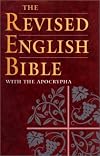
http://nwhyte.livejournal.com/2011647.html
http://nwhyte.livejournal.com/2047769.html
First off, I don't think I actually would recommend reading the Old Testament (or indeed the Bible) through from start to finish as I did. It wasn't written or compiled to be read in that way, and it doesn't do the text any services to read as if it were a novel, a short story collection, or a book of essays and meditations. I chose this approach because I wanted to feel that I had control of what I was show more reading, and that I was not missing anything, but if you want to get a fair flavour of it, it's probably better to follow one of the many reading guides available online and elsewhere, which are designed both to showcase the good bits and to keep the reader interested.
Second, a lot of it is pretty dull, actually. 2 Chronicles in particular comes close to Mark Twain's description of the Book of Mormon, as "choroform in print". Large chunks of the Pentateuch are lists of laws and, even less exciting, census returns. The historical bits have an awful lot of tediously horrible ethnic cleansing and dynastic struggle, leavened by the occasional good bit (the Saul/David/Solomon succession in particular). The prophets are rather indistinguishable in tone of outrage. I recommend finding some way of skipping the dull bits.
Third, the good bits are indeed good. I've singled out the Book of Job in a previous post; I found the Psalms generally inspiring and uplifting, and I've always been a fan of Ecclesiastes. The narrative histories, which I thought I knew fairly well, still had some surprises for me - in Numbers 12, God smites Moses' sister with leprosy for racism towards Moses' black wife, for instance. There are some fun bits in the prophets - Jonah, and the deuterocanonical addenda to Daniel (Susanna, and Bel and the Dragon). I also rather liked Sirach, aka Ecclesiasticus, which again is deuterocanonical. And 2 Maccabees is a fairly lucid, if brutal, historical note to finish on.
Fourth, there were indeed a few themes running through the entire OT whose importance I hadn't perhaps fully grasped: the importance of God's endowing his people with the land, the importance of the cult of the Temple, and the trauma of the Babylonian exile (which of course shaped most of the text we have very directly). I'm not saying that these are the only or even the main main themes, but that these are the ones whose importance was enhanced for me by reading through the entire thing.
As for the New Testament: it falls rather naturally into three sections. The Gospels and Acts are among the most readable narratives in the Bible; the most striking things are that the three synoptic gospels are so very close to each other, leaving John as the outlier, and that Luke's better Greek prose style comes through in almost any translation of his gospel and Acts. I am also struck every time that the Feeding of the Five Thousand is the only miracle other than the Resurrection reported in all four gospels.
I was much less familiar with the various epistles. They are not as easy to read as the gospels, combining as they do advice on local disputed, personal salutations, declarations about correct practice and belief, and attempts to put words on the ineffable (Hebrews in particular is an attempt at a theological manifesto avant la lettre). I was struck by how hardline Paul is, particularly in the early letters, on the issues that hardliners still stick to today, and also on the question of justification by faith; but there is a significant counterbalance from some of the later letters, especially 1 Peter which seems to be a direct response in some ways. (And the Epistle of Jude seems strangely familiar after 2 Peter ch 2...)
Finally, Revelation is the most Old Testament-y of the New Testament books. (There is nothing like the letters in the Old Testament, and the gospels and Acts are quite different in style from the OT historical books.) Again, Revelation is an attempt to express in words that which cannot be expressed in words; it is clearly not meant to be taken literally, but as one person's attempt to concretise the underlying truths. show less
http://nwhyte.livejournal.com/2047769.html
First off, I don't think I actually would recommend reading the Old Testament (or indeed the Bible) through from start to finish as I did. It wasn't written or compiled to be read in that way, and it doesn't do the text any services to read as if it were a novel, a short story collection, or a book of essays and meditations. I chose this approach because I wanted to feel that I had control of what I was show more reading, and that I was not missing anything, but if you want to get a fair flavour of it, it's probably better to follow one of the many reading guides available online and elsewhere, which are designed both to showcase the good bits and to keep the reader interested.
Second, a lot of it is pretty dull, actually. 2 Chronicles in particular comes close to Mark Twain's description of the Book of Mormon, as "choroform in print". Large chunks of the Pentateuch are lists of laws and, even less exciting, census returns. The historical bits have an awful lot of tediously horrible ethnic cleansing and dynastic struggle, leavened by the occasional good bit (the Saul/David/Solomon succession in particular). The prophets are rather indistinguishable in tone of outrage. I recommend finding some way of skipping the dull bits.
Third, the good bits are indeed good. I've singled out the Book of Job in a previous post; I found the Psalms generally inspiring and uplifting, and I've always been a fan of Ecclesiastes. The narrative histories, which I thought I knew fairly well, still had some surprises for me - in Numbers 12, God smites Moses' sister with leprosy for racism towards Moses' black wife, for instance. There are some fun bits in the prophets - Jonah, and the deuterocanonical addenda to Daniel (Susanna, and Bel and the Dragon). I also rather liked Sirach, aka Ecclesiasticus, which again is deuterocanonical. And 2 Maccabees is a fairly lucid, if brutal, historical note to finish on.
Fourth, there were indeed a few themes running through the entire OT whose importance I hadn't perhaps fully grasped: the importance of God's endowing his people with the land, the importance of the cult of the Temple, and the trauma of the Babylonian exile (which of course shaped most of the text we have very directly). I'm not saying that these are the only or even the main main themes, but that these are the ones whose importance was enhanced for me by reading through the entire thing.
As for the New Testament: it falls rather naturally into three sections. The Gospels and Acts are among the most readable narratives in the Bible; the most striking things are that the three synoptic gospels are so very close to each other, leaving John as the outlier, and that Luke's better Greek prose style comes through in almost any translation of his gospel and Acts. I am also struck every time that the Feeding of the Five Thousand is the only miracle other than the Resurrection reported in all four gospels.
I was much less familiar with the various epistles. They are not as easy to read as the gospels, combining as they do advice on local disputed, personal salutations, declarations about correct practice and belief, and attempts to put words on the ineffable (Hebrews in particular is an attempt at a theological manifesto avant la lettre). I was struck by how hardline Paul is, particularly in the early letters, on the issues that hardliners still stick to today, and also on the question of justification by faith; but there is a significant counterbalance from some of the later letters, especially 1 Peter which seems to be a direct response in some ways. (And the Epistle of Jude seems strangely familiar after 2 Peter ch 2...)
Finally, Revelation is the most Old Testament-y of the New Testament books. (There is nothing like the letters in the Old Testament, and the gospels and Acts are quite different in style from the OT historical books.) Again, Revelation is an attempt to express in words that which cannot be expressed in words; it is clearly not meant to be taken literally, but as one person's attempt to concretise the underlying truths. show less
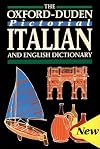
Unfortunately, this (or at least the Italian part) seems to have been translated from a German original. Not that it's a bad translation, but a translated bilingual dictionary is... peculiar. Still, there aren't that many English/Italian visual dictionaries, so this is still a useful tool (and I do use it).
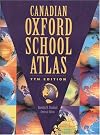
I've used this atlas many times as a Social Studies teacher and it is a good resource for introducing geography. The multiple thematic maps provide a basis for skill building. I'd like to see more thematic maps included regarding social issues such as poverty, life span, etc.
Lists
Awards


You May Also Like


Associated Authors
Statistics
- Works
- 643
- Members
- 15,040
- Popularity
- #1,525
- Rating
- 4.1
- Reviews
- 70
- ISBNs
- 662
- Languages
- 6
- Favorited
- 2