

Michael J. Caduto
Author of Keepers of the Earth: Native American Stories and Environmental Activities for Children
About the Author
Author, storyteller and musician Michael J. Caduto was born in 1955. He studied agriculture at the University of Rhode Island (B.A., 1978) and University of Michigan (M.S., 1981) with the intention of owning and working his own farm. Along the way, he became an ecologist and educator interested in show more Native American myths, legends and practices. He performs and gives workshops to raise environmental awareness and has taught collegiate environmental studies. His Earth Tales from Around the World (1997) won an Aesop Prize, awarded to the most outstanding books incorporating folklore and published in English for children. He is also author of Keepers of the Earth, Keepers of the Animals, Native American Gardening, and others. His articles have appeared in numerous periodicals in natural history, including Nature Study, Vermont Life, Organic Gardening, and Vermont Natural History. (Bowker Author Biography) show less
Image credit: www.lanes.org
Works by Michael J. Caduto
Keepers of the Earth: Native American Stories and Environmental Activities for Children (1988) 619 copies, 6 reviews
Keepers of the Animals: Native American Stories and Wildlife Activities for Children (1991) 334 copies, 3 reviews
Keepers of Life: Discovering Plants through Native American Stories and Earth Activities for Children (Keepers of the Earth) (1994) 198 copies, 3 reviews
Keepers of the Night: Native American Stories and Nocturnal Activities for Children (Keepers of the Earth) (1994) 195 copies, 1 review
Keepers of the Earth Teachers Guide 4 copies
Keepers of Life: Teacher's Guide 3 copies
keeper of the animals 1 copy
Tagged
Common Knowledge
- Birthdate
- 1955-12-20
- Gender
- male
- Education
- University of Rhode Island (BS|Natural Resources Management)
University of Michigan (MS|Natural Resources/Environmental Education) - Occupations
- artist
musician
storyteller
teacher - Organizations
- Phi Kappa Phi
- Awards and honors
- Aesop Prize by the Children's Folklore Section, American Folklore Society (1997)
NAPPA Gold and Silver Awards (National Parenting Publications Award)
Brimstone Award for Applied Storytelling (National Storytelling Network)
New York State Outdoor Education Association's Art and Literary Award - Short biography
- of Italian ancestry, in 1984 he founded a service called P.E.A.C.E.® - Programs for Environmental Awareness and Cultural Exchange which promotes understanding, awareness, appreciation and stewardship as the foundation for building a harmonious, sustainable relationship between people and Earth, and among the cultures of the world.
Michael earned a B.S. in Natural Resources Management from the University of Rhode Island (magna cum laude). He was awarded a full Rackham Fellowship from the University of Michigan (M.S. in Natural Resources/Environmental Education, summa cum laude ) and was elected a member of the National Honor Society of Phi Kappa Phi. - Nationality
- USA
- Associated Place (for map)
- USA
Members
Reviews

When a group of children discover that their favorite swimming hole, in a local river, is covered in foul-smelling green slime, they investigate upstream, where they encounter a wise older woman named Riparia, who takes them on an educational hike along the shores, pointing out the pollutants - from run-off fertilizers to livestock allowed to stand in the river itself - that have caused the problem. Enlisting the help of their friend Amy, whose father owns the farm causing the trouble, the show more children begin a project to restore the river, drawing the farm's fields and livestock back from the river a safe distance, to create a buffer zone, and replanting along the shore.
Although I found the 'fairy-tale' aspect of Riparia's River a little hokey - Riparia, whose name is clearly an adaptation of the word riparian, meaning "of or pertaining to the banks of a river," seems to be a kind of nature spirit, appearing and disappearing mysteriously - I liked the message imparted, about caring for the environment, and restoring damaged ecosystems, all the same. I also really appreciated Riparia's cautionary words to the children, concerning how they should approach their friend Amy about the problem, and the idea that, when seeking to resolve troubling issues, discussion works better than accusation or demands. All in all, this was an enjoyable book, one with an engaging story, good message and appealing artwork. Recommended to young ecologists and river lovers! show less
Although I found the 'fairy-tale' aspect of Riparia's River a little hokey - Riparia, whose name is clearly an adaptation of the word riparian, meaning "of or pertaining to the banks of a river," seems to be a kind of nature spirit, appearing and disappearing mysteriously - I liked the message imparted, about caring for the environment, and restoring damaged ecosystems, all the same. I also really appreciated Riparia's cautionary words to the children, concerning how they should approach their friend Amy about the problem, and the idea that, when seeking to resolve troubling issues, discussion works better than accusation or demands. All in all, this was an enjoyable book, one with an engaging story, good message and appealing artwork. Recommended to young ecologists and river lovers! show less
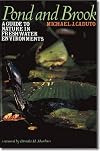
Overall this is a good introduction to freshwater ecology for the nonspecialist. On the positive side, it's pretty comprehensive and has a good amount of detail considering its audience. In addition to ecology, it addresses geology and geomorphology, formation of waterways, water chemistry, and hydrology. And it discusses lentic environments (still water, i.e. ponds and lakes) as well as lotic (flowing water) systems and wetlands, and even slightly touches on estuaries (where fresh and show more saltwater mix). I haven't seen other fairly brief, non-scholarly books with a scope this broad. On the negative side, it's sometimes a bit too warm and fuzzy, and the photographic reproductions are poor. The other graphics serve their purposes reasonably well, and there's a good amount of them, but they're just adequate and sometimes they don't support the text as well as they might. The book design is kind of amateurish, but that's a quibble, and the editing has weak spots, but that is too. On what really matters, the book's pretty successful; I learned a good bit about things I was interested in knowing better, and it neither skimped on nor overwhelmed with the scientific material. show less
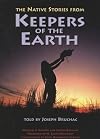
This book contains the Native American legends originally published in Keepers of the Earth: Native American Stories and Environmental Activities for Children. Though written to be accessible to child readers, there is humor and depth here for audiences of all ages.
Joseph Bruchac, an acclaimed Abenaki author, relates these stories with skill and understated wit. John Kahionhes Fadden (Mohawk) provides lively illustrations, and a map connecting each tale with its region of origin. Readers of show more Native legends and folklore would do well to seek out anthologies prepared by Native authors such as this one, rather than limit themselves to the less authentic (and more common) collections retold by non-Natives. show less
Joseph Bruchac, an acclaimed Abenaki author, relates these stories with skill and understated wit. John Kahionhes Fadden (Mohawk) provides lively illustrations, and a map connecting each tale with its region of origin. Readers of show more Native legends and folklore would do well to seek out anthologies prepared by Native authors such as this one, rather than limit themselves to the less authentic (and more common) collections retold by non-Natives. show less
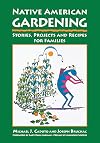
Along with Caduto and Bruchac's Keeper series, Native American Gardening is dsigned to be part of an elementary-school practical science curriculum, either at school or home. I liked this one a lot: science is explicitly linked to culture and worldview; the fundamental perceptual unit is the ecology / community, not the organism or individual; cultural elements are presented as part of an integrated whole. That last is especially important: cultural stories don't make proper sense outside of show more their context, and Bruchac is careful to make sure that the stories are supported with all the knowledge that an inside-the-culture listener is expected to bring to the circle.
They call this a science text, but it could just as easily be a text about worldview, culture, or philosophy, depending on how one chose to spin it. Reading this one, I can't help but imagine all the lesson plans I could launch from this: it's rich, and highly usable. show less
They call this a science text, but it could just as easily be a text about worldview, culture, or philosophy, depending on how one chose to spin it. Reading this one, I can't help but imagine all the lesson plans I could launch from this: it's rich, and highly usable. show less
Lists
Awards


You May Also Like


Associated Authors
Statistics
- Works
- 24
- Members
- 2,209
- Popularity
- #11,610
- Rating
- 3.7
- Reviews
- 27
- ISBNs
- 61