

Richard Erdoes (1912–2008)
Author of American Indian Myths and Legends
About the Author
Richard Erdoes traveled a long way from his birthplace in Vienna, Austria, to become a prominent writer on Native American issues and the Indian Civil Rights Movement. Born on July 7, 1912 into an artistic family, Erdoes moved to the United States where he lived and worked as a magazine illustrator show more and photographer. While visiting an American Indian reservation, Erdoes was shocked and outraged at conditions he found there. Although Erdoes had illustrated many books during his long career, the first illustrated work of his own dealing with Native Americans was The Pueblo Indians (1967). While doing a painting and portfolio for Life magazine on a Sioux Indian Reservation Erdoes met an old medicine man that asked him to write his biography. This resulted in Lame Deer, Seeker of Visions (1971). Erdoes lives in Santa Fe, New Mexico, where he writes, paints, and is active in Native American issues. (Bowker Author Biography) show less
Image credit: courtesy of Erich Erdoes
Works by Richard Erdoes
Associated Works
Tagged
Common Knowledge
- Canonical name
- Erdoes, Richard
- Birthdate
- 1912-07-07
- Date of death
- 2008-07-16
- Gender
- male
- Education
- Berlin Academy of Art (studies interrupted fled the Nazi regime)
Kunstgewerbeschule (now University of Applied Arts, Vienna) - Occupations
- illustrator
photographer - Awards and honors
- Beinecke Rare Book and Manuscript Library at Yale University (his archive)
- Short biography
- Richard Erdoes was born July 7, 1912, in Vienna, Austria. He studied art in Vienna, Berlin, and Paris. While working as a free-lance illustrator, he came to America as a refugee fleeing from the Nazis. In New York he met his future wife, Jean Sternbergh. She was an art director at Time, Inc., and she had contacted him to illustrate a book for her. For thirty years he made his living as a magazine illustrator and photographer. He had many travel assignments that took him and his family to the American West. In 1970 he accidentally got into serious writing when a writer with whom he was on assignment became ill, and he had to write the story for him. He found writing so rewarding that it became his focus. His books have been translated and published in eight foreign countries.
- Nationality
- Austria
USA - Birthplace
- Frankfurt am Main, Germany (Wikipedia)
Vienna, Austria (obituary and book jackets) - Places of residence
- Vienna, Austria
Berlin, Germany
Paris, France
London, England, UK
New York, New York, USA
Santa Fe, New Mexico, USA - Place of death
- Santa Fe, New Mexico, USA
- Burial location
- Santa Fe, New Mexico, USA
Members
Reviews

This works great as a forthcoming autobiography of a wasted youth in alcohol, joy-riding, and skirt-chasing to in adulthood learn the value of lessons adults had tried to impart. However, this is not a coming-of-age tale from one man to another, but a "medicine man" to another culture: Native American spirituality is real, cohesive, and valuable; respect it and at least don't destroy it. Also, don't destroy the Black Hills sacred ground with more mountain-marring statues, even of Crazy show more Horse. (Lame Deer was an active participant in one of the Mt. Rushmore occupations decrying treaties broken as late as the 1940s.)
Lame Deer tells the story to his friend and admirer (definitely read his epilogue), and this reads like a transcript; very natural and conversational. Some others pop in to attest, including another medicine man from a line of medicine men: Peter Catches. (See http://www.ocetiwakan.org/pages/about-us/our-history.html)
One of my favorite lines from a movie is "It's a sad and beautiful word" from Down by Law. How does one existence amid such hopeless contradiction. I like the reaction (and also a movie quote), "Accept the mystery! This seems aligned with what I feel is Lame Deer's key message summed up in this line of the book, "Man cannot live without mystery. He has a great need of it."
Along the way, Lame Deer reveals the details of many ceremonial rites: inside the sweat lodge, pulling an embedded eagle claw from the flesh, the yuwipi binding ceremony, cross-tribal peyote sacrament, and more.
Lame Deer espouses some things I find hard to "swallow" from the succulence of puppy flesh to magic like controlling the weather. But, what do I know? As Lame Deer observes, "The elk is an athlete. In spite of his big antlers he can run through a dense forest no matter how close the trees are standing together. You don’t quite know how he does it. He lives with the trees, is himself formed like a tree; his antlers are like branches."
Once, while walking a trail on Isle Royale with my nose in a Nietzche compendium I stumbled on a large moose an arm's length away. I was afraid of being crushed in the dense forest by its sudden moves, but it ran through the dense forest no matter how close the trees were standing together. I don’t quite know know he did it. show less
Lame Deer tells the story to his friend and admirer (definitely read his epilogue), and this reads like a transcript; very natural and conversational. Some others pop in to attest, including another medicine man from a line of medicine men: Peter Catches. (See http://www.ocetiwakan.org/pages/about-us/our-history.html)
One of my favorite lines from a movie is "It's a sad and beautiful word" from Down by Law. How does one existence amid such hopeless contradiction. I like the reaction (and also a movie quote), "Accept the mystery! This seems aligned with what I feel is Lame Deer's key message summed up in this line of the book, "Man cannot live without mystery. He has a great need of it."
Along the way, Lame Deer reveals the details of many ceremonial rites: inside the sweat lodge, pulling an embedded eagle claw from the flesh, the yuwipi binding ceremony, cross-tribal peyote sacrament, and more.
Lame Deer espouses some things I find hard to "swallow" from the succulence of puppy flesh to magic like controlling the weather. But, what do I know? As Lame Deer observes, "The elk is an athlete. In spite of his big antlers he can run through a dense forest no matter how close the trees are standing together. You don’t quite know how he does it. He lives with the trees, is himself formed like a tree; his antlers are like branches."
Once, while walking a trail on Isle Royale with my nose in a Nietzche compendium I stumbled on a large moose an arm's length away. I was afraid of being crushed in the dense forest by its sudden moves, but it ran through the dense forest no matter how close the trees were standing together. I don’t quite know know he did it. show less

Some of the stories are ancient, some a bit more modern with a few “white” influences (mostly along the lines of “welp, there goes the continent”). It's an overview of the whole country, from Maine to the Plains to the pueblos to the Pacific Northwest and Alaska.
It was refreshing to read something new instead of RE-reading another translation of something I’d already read. I’ve been interested in mythology since forever, and all but one (thanks to Neil DeGrasse Tyson’s COSMOS, show more actually) of these stories were completely new to me. You’d think someone who has an interest in this sort of stuff would have come across more of it already, but no. I’ve been hearing about the “old standby” mythologies (Greco-Roman, Norse, Egyptian, etc. etc.) my whole life, and next to zilch about the ones that were already here. If that doesn’t sum up the imperialst colonial something-or-other, then I don’t know what does. All I can say is I feel gypped. Education system FAIL.
Seriously - brave warriors, resourceful maidens, clever tricksters, shapeshifters, ghosts, talking animal companions, giants, terrible monsters, trips to the underworld, they’ve got it all. Including a huge disembodied head that rolls all over the place EATING PEOPLE (except in the Iroquois version of the story, where instead of rolling, it has wings and flies around, because Of Course It Fucking Does). Move over Medusa, how’s THAT for nightmare fuel?
In short, this one’s definitely a keeper and a re-reader. show less
It was refreshing to read something new instead of RE-reading another translation of something I’d already read. I’ve been interested in mythology since forever, and all but one (thanks to Neil DeGrasse Tyson’s COSMOS, show more actually) of these stories were completely new to me. You’d think someone who has an interest in this sort of stuff would have come across more of it already, but no. I’ve been hearing about the “old standby” mythologies (Greco-Roman, Norse, Egyptian, etc. etc.) my whole life, and next to zilch about the ones that were already here. If that doesn’t sum up the imperialst colonial something-or-other, then I don’t know what does. All I can say is I feel gypped. Education system FAIL.
Seriously - brave warriors, resourceful maidens, clever tricksters, shapeshifters, ghosts, talking animal companions, giants, terrible monsters, trips to the underworld, they’ve got it all. Including a huge disembodied head that rolls all over the place EATING PEOPLE (except in the Iroquois version of the story, where instead of rolling, it has wings and flies around, because Of Course It Fucking Does). Move over Medusa, how’s THAT for nightmare fuel?
In short, this one’s definitely a keeper and a re-reader. show less

If anyone thinks the US has descended only recently into fascism, this is a heartbreaking and infuriating account making clear the seeds have been there all along.
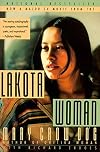
I suppose since this autobiography by Mary Ellen Moore-Richard (Crow Dog / Brave Bird), a Lakota / Sioux Native-American (9/26/1954 – 2/14/2013) and co-author, Richard Erdoes (7/7/1912 – 7/16/2008), a journalist of European extraction, is some 16 or 17 years old (c. 1990), a college text book, and the basis of a Jane Fonda produced 1994 movie, that most folks already know about this autobiography of a Lakota Indian from the Rosebud Reservation of South Dakota, or perhaps know of her show more activities from news reports of the 1970’s. . .but maybe not.
I appreciated the clinical writing style that allowed me to learn on a cerebral, rather than emotional, level about the conditions with which Mary Crow Dog lived at the Rosebud Reservation in the 1960-s and 70’s that led her, at the age of 10, to indulge in alcohol; as a young adult, to leave, giving up the fight to retain her dignity and cultural identity, the Catholic school that she’d been forced to attend (compliments of the 1868 Treaty of Fort Laramie); to subsequently live for a time as an impoverished delinquent; and then, still a teenager, to become a key player in the American Indian Movement (AIM) protestations. She describes in detail the 1973 Wounded Knee Incident, during which she gave birth to her first son—less afraid of the many flying bullets, than a trip to a hospital from which she’d seen too many pregnant Native American women return infertile instead of with new babies.
On a lighter note, of particular interest are the descriptions of the role of the Medicine Man as not only a healer, but also a religious and political leader. show less
I appreciated the clinical writing style that allowed me to learn on a cerebral, rather than emotional, level about the conditions with which Mary Crow Dog lived at the Rosebud Reservation in the 1960-s and 70’s that led her, at the age of 10, to indulge in alcohol; as a young adult, to leave, giving up the fight to retain her dignity and cultural identity, the Catholic school that she’d been forced to attend (compliments of the 1868 Treaty of Fort Laramie); to subsequently live for a time as an impoverished delinquent; and then, still a teenager, to become a key player in the American Indian Movement (AIM) protestations. She describes in detail the 1973 Wounded Knee Incident, during which she gave birth to her first son—less afraid of the many flying bullets, than a trip to a hospital from which she’d seen too many pregnant Native American women return infertile instead of with new babies.
On a lighter note, of particular interest are the descriptions of the role of the Medicine Man as not only a healer, but also a religious and political leader. show less
Lists
Europe (1)
Female Author (1)
Awards


You May Also Like


Associated Authors
Statistics
- Works
- 34
- Also by
- 3
- Members
- 6,537
- Popularity
- #3,757
- Rating
- 4.0
- Reviews
- 58
- ISBNs
- 119
- Languages
- 10