
Veronica Chambers
Author of Celia Cruz: Queen of Salsa
About the Author
Veronica Chambers was born in Panama and raised in Brooklyn. She attended Simon's Rock College at Bard. She is a prolific writter. Mama's Girl is her acclaimed memoir. Some of her other work includes Kickboxing Geishas: How Japanese Women Are Changing Their Nation, and The Joy of Doing Things show more Badly: A Girl's Guide to Love, Life and Foolish Bravery. She has contributed to several anthologies and has also written books for children and teens. Her latest book as a contributor is in Michael Strahan's book, Wake Up Happy: The Dream Big, Win Big Guide to Transforming Your Life. show less
Series
Works by Veronica Chambers
Finish the Fight! The Brave and Revolutionary Women Who Fought for the Right to Vote (2020) 138 copies, 4 reviews
The Meaning of Michelle: 16 Writers on the Iconic First Lady and How Her Journey Inspires Our Own (2017) — Editor — 106 copies, 7 reviews
Resist: 35 Profiles of Ordinary People Who Rose Up Against Tyranny and Injustice (2018) 77 copies, 1 review
Queen Bey: A Celebration of the Power and Creativity of Beyoncé Knowles-Carter (2019) 58 copies, 1 review
Associated Works
The Bitch in the House: 26 Women Tell the Truth About Sex, Solitude, Work, Motherhood, and Marriage (2002) — Contributor — 735 copies, 20 reviews
Well-Read Black Girl: Finding Our Stories, Discovering Ourselves (2018) — Contributor — 469 copies, 33 reviews
Growing Up Ethnic in America: Contemporary Fiction About Learning to Be American (1999) — Contributor — 121 copies
Shaking the Tree: A Collection of Fiction and Memoir by Black Women (2003) — Contributor — 54 copies
Becoming American: Personal Essays By First Generation Immigrant Women (2000) — Contributor — 29 copies
Tagged
Common Knowledge
- Birthdate
- 1970
- Gender
- female
- Education
- Bard College at Simon's Rock
- Occupations
- writer
editor - Organizations
- New York Times Magazine
Newsweek
Glamour - Agent
- Kim Witherspoon (Inkwell Management)
- Relationships
- Clampet, Jason (husband)
- Nationality
- USA
- Birthplace
- Panama
- Places of residence
- Brooklyn, New York, USA
- Associated Place (for map)
- New York, USA
Members
Reviews
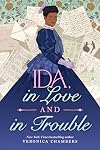
Although this work of historical fiction has been published in the young adult category, it's important to know that Ida isn't a teenager in this novel. She's a grown woman, the story spanning her early twenties to her early thirties. (With some information about her later years toward the end.)
The flashes of irony caught my attention as I observed the social complexities Ida would face throughout the book.
She's a Black woman—a career woman at that—who desires marriage but doesn't see it show more as the ultimate point of womanhood. While she moves among society's Black Elite during America's Gilded Age and even travels and speaks around Europe, she isn't the Victorian ideal many of the Black women of her time look to embody. Ida's activism and journalistic work are too untidy and dangerous for that.
Literally dangerous—especially when her speaking out against the horrific practice of lynching Black Americans draws blatant, direct threats from murderous ruffians looking to lynch her too.
Now, admittedly, as a lover of historical fiction, I didn't have the smoothest reading experience with this book. The narrative tells rather than shows, and much of it reads like an overview, with so many events passing by in only brief portions. And there isn't much character development for the many people Ida meets. So, with the exception of one atrocity involving one of Ida's friends, I couldn't feel along with her emotions about characters I hardly knew.
Because I found the reading to have a disjointed feel as a novel, I eventually switched to thinking of it more like a biography. That helped me to maintain my overall interest as I read, given that I've been reading and hearing nuggets about Ida B. Wells since my childhood.
And one honor regarding her in this book's Coda filled me with bittersweet pride, particularly as a Black woman and a writer myself. More readers with an interest in American history would do well to pick this book up.
Note:
• many reports of violence, particularly against Black Americans
• no explicit sexual content
• language kept to a "PG" level show less
The flashes of irony caught my attention as I observed the social complexities Ida would face throughout the book.
She's a Black woman—a career woman at that—who desires marriage but doesn't see it show more as the ultimate point of womanhood. While she moves among society's Black Elite during America's Gilded Age and even travels and speaks around Europe, she isn't the Victorian ideal many of the Black women of her time look to embody. Ida's activism and journalistic work are too untidy and dangerous for that.
Literally dangerous—especially when her speaking out against the horrific practice of lynching Black Americans draws blatant, direct threats from murderous ruffians looking to lynch her too.
Now, admittedly, as a lover of historical fiction, I didn't have the smoothest reading experience with this book. The narrative tells rather than shows, and much of it reads like an overview, with so many events passing by in only brief portions. And there isn't much character development for the many people Ida meets. So, with the exception of one atrocity involving one of Ida's friends, I couldn't feel along with her emotions about characters I hardly knew.
Because I found the reading to have a disjointed feel as a novel, I eventually switched to thinking of it more like a biography. That helped me to maintain my overall interest as I read, given that I've been reading and hearing nuggets about Ida B. Wells since my childhood.
And one honor regarding her in this book's Coda filled me with bittersweet pride, particularly as a Black woman and a writer myself. More readers with an interest in American history would do well to pick this book up.
Note:
• many reports of violence, particularly against Black Americans
• no explicit sexual content
• language kept to a "PG" level show less
Finish the Fight!: The Brave and Revolutionary Women Who Fought for the Right to Vote by Veronica Chambers
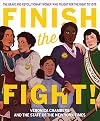
n illustrated introduction to many women of color and queer women responsible for voting rights in America.
Beginning with the Haudenosaunee Confederacy, whose historic territory was the site of the Seneca Falls convention, and ending with Dakota Sioux activist Zitkála-Šá, this friendly primer highlights the lesser-known heroes whose fight for their right to vote did not end with the ratification of the 19th Amendment. Chambers and her co-authors from the New York Times strike an show more authoritative yet colloquial tone: “[T]here are tons of women beyond Susan [B. Anthony] and Elizabeth [Cady Stanton]’s demographic who helped make suffrage a reality for all women,” they write. Well-chosen quotes and engaging biographical information about such activists as Frances Ellen Watkins Harper, Mary McLeod Bethune, Angelina Weld Grimké, Mabel Ping-hua Lee, and Jovita Idár are interspersed with trenchant observations from contemporary women working in service to their ancestors’ ideals, including Louise Herne, Charlotte Brooks, and Vilma Martínez. White and straight women are supporting characters, either as allies or barriers. Ornate, colorful page layouts also include playful doodles, at times somewhat distractingly atop historial images. Stories like that of Susette La Flesche Tibbles, who had to stand up to several White government officials before she could become the first Native woman to teach on her reservation, emphasize the theme that rights require constant advocacy.
Timely, moving, and necessary. (authors’ note, minibiographies, timeline, statistics, acknowledgements, further reading, bibliography, index) (Collective biography. 8-14)
-Kirkus Review show less
Beginning with the Haudenosaunee Confederacy, whose historic territory was the site of the Seneca Falls convention, and ending with Dakota Sioux activist Zitkála-Šá, this friendly primer highlights the lesser-known heroes whose fight for their right to vote did not end with the ratification of the 19th Amendment. Chambers and her co-authors from the New York Times strike an show more authoritative yet colloquial tone: “[T]here are tons of women beyond Susan [B. Anthony] and Elizabeth [Cady Stanton]’s demographic who helped make suffrage a reality for all women,” they write. Well-chosen quotes and engaging biographical information about such activists as Frances Ellen Watkins Harper, Mary McLeod Bethune, Angelina Weld Grimké, Mabel Ping-hua Lee, and Jovita Idár are interspersed with trenchant observations from contemporary women working in service to their ancestors’ ideals, including Louise Herne, Charlotte Brooks, and Vilma Martínez. White and straight women are supporting characters, either as allies or barriers. Ornate, colorful page layouts also include playful doodles, at times somewhat distractingly atop historial images. Stories like that of Susette La Flesche Tibbles, who had to stand up to several White government officials before she could become the first Native woman to teach on her reservation, emphasize the theme that rights require constant advocacy.
Timely, moving, and necessary. (authors’ note, minibiographies, timeline, statistics, acknowledgements, further reading, bibliography, index) (Collective biography. 8-14)
-Kirkus Review show less
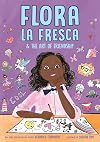
Life is not easy for 10-year-old Flora in Westerly, Rhode Island. She has to attend Saturday Spanish school. She suffers her annoying 14-year-old sister Maylin who is being especially annoying and telenovela-dramatic because her quinceanera is coming and everything must be perfect. And her parents always side with Maylin when she and Flora have a disagreement. To top it off, Flora’s best friend Clara and her family are moving to California after the New Year and every minute together until show more then is precious. What will Flora do without Clara? Will Maylin ever stop acting like a diva? And will Flora find a friend again? Flora is lively and relatable with a cheeky voice. show less
The Meaning of Michelle: 16 Writers on the Iconic First Lady and How Her Journey Inspires Our Own by Veronica Chambers
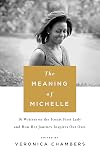
A bittersweet love letter to the outgoing FLOTUS.
(Full disclosure: I received a free electronic ARC for review through NetGalley. Trigger warning for discussions of racism and misogyny.)
Barack and Michelle Obama served this country for two terms as President and First Lady of the United States of America. Imagine that. America shaped in the image of a black man—with a black woman by his side. Even after eight years of watching them daily in the press, the fact that the most powerful man in show more the world is a Black man is still breathtaking to me. The fact that he goes home to a tight-knit, loving family headed by a Black woman is soul-stirring. That woman is Michelle. Michelle! That name now carries a whole world of meaning. And a whole world of memory. And a whole world of a magic.
("Preface," Ava Duvernay)
Thank you, Michelle, for showing a generation of women, including me and my daughter, what it means to dwell in possibility.
(“Acknowledgements,” Veronica Chambers)
For all of my adult life - the entire time I've been paying attention to politics, really - I've vastly preferred our president's wives over their husbands: Hillary Clinton, Laura Bush, and now Michelle Obama. (The same will probably hold true of Melania, but it's an impossibly low bar, okay.) No matter their political allegiances, the FLOTUSes (FLOTI?) tend to be a least a shade more progressive than their men, especially when it comes to "women's issues" like reproductive freedom. Not that they're allowed to voice these views: American prefers its First Ladies be seen, not heard, functioning as little more than their husbands' appendages or cheerleaders. "Stepford Wives-in-Chief," Tiffany Dufu puts it. Remember how viciously then-FLOTUS Hillary was shot down for daring to advance health care reform?
Michelle Obama is in a league of her own, though. Like many Americans, I was captivated with her from Day 1. I loved that she refused to play the role of the bland, devoted wife; a blank canvas onto which Americans/voters could project their versions of ideal femininity. She spoke of Barack like he was a regular guy, rather than an up-and-coming rockstar politician. Yet it was evident that these two crazy kids were deeply in love. She (and her family) was a lightning rod for every bit of racist and sexist excrement the right could throw at her, yet Michelle handled it with grace and finesse. We watched as Lady O. - and her style - evolved from first to second term; she went from high-power lawyer to high-fashion mom, as described by Tanisha C. Ford ("She Slays"). She had fun, was comfortable in her skin, and was perfectly imperfect.
My love for her grew in leaps and bound when she hit the campaign trail for Hillary Clinton. Her emotional speech at the DNC brought tears to my eyes; a few months later, her astute and impassioned commentary on Drumpf's misogyny - including multiple allegations of sexual assault, spanning decades - had me pumping my fist in the air and shouting words of support at the screen. I found myself wishing that Michelle would run for president one day - except that, seeing how horribly Hillary was treated, I wouldn't wish that on my worst enemy, let alone a BAMF like Michelle.
Reading The Meaning of Michelle was a bittersweet experience. The thing is, though, the bitterness is something I projected onto it: Most of these essays were written prior to the election, when a Clinton victory seemed all but assured. While it's sad to see the first black family to ever occupy the White House go, this disappointment might have been tempered by another first: the inauguration of a woman. But nope. Instead we're stuck with a dangerously unqualified and possibly unstable candidate who traded on racism, xeonohobia, misogyny, and white supremacy, all disguised as "populism" - and rode the wave of a backlash against the first black president, to boot. I'm really curious to see if any of these pieces will be updated for the final copy - or whether the tone of Roxane Gay's last-minute addition will be noticeably different in tone from the other essays.
The fifteen essays I read run the gamut; in the intro, editor Veronica Chambers describes the anthology as "less an intellectual analysis of Michelle Obama as First Lady and more a series of musings, reminiscences, and pash notes to Michelle Obama as homegirl, the woman who (alongside Mindy Kaling) we all want to be friends with." Some of the contributors have had the pleasure of meeting (or even cooking or performing for) Michelle Obama, while others have (like most of us) only admired her from afar. Fashion, motherhood, her working-class roots in Chicago, her friendship with Beyoncé, her anti-childhood obesity campaign Let’s Move!, even her iconic arms - all are topics rife for discussion. (It always comes back to the arms!)
Perhaps unsurprisingly, the essays are quite personal, with some saying more about the writer than Michelle herself; sometimes this works quite well, other times not so much.
An example of the former is "The Freedom to Be Yourself," in which Karen Hill Anton addresses Michelle directly, as one American to another: an expatriate who relocated to Japan forty years ago and 'just never left,' and the First Lady who reminded her of the promise - and peril - of her birth land. In Michelle's vegetable garden - "the first garden on those grounds since the Victory Gardens of World War 2" - Hill Anton is reminded of the Japanese approach to eating, and of preparing her children's obento boxes for school. ("My children held me to a strict standard, and youngest daughter Lila would often draw diagrams for the obento layout!") Yet she's also reminded of the price Americans pay for their freedoms, every time the echoes of the latest mass shooting reverberate in her community, some 6,296 miles away. And she sees a kinship between Michelle Obama and Crown Princess Masako, who's also expected to conform to the narrow limits of her role.
On the other end of the spectrum, Cathi Hanauer (aka "Mrs. Modern Love") likens her career trajectory - which includes opting out to take care of the kids and "Becoming the Wife" in the relationship - to that of Michelle's, with so-so results. (The comparison felt like a bit of a stretch for me.)
Thankfully, the duds are mostly few and far between; I enjoyed most of the essays, including those written by folks who maybe don't write professionally for a living. See, e.g., "Cooking with a Narrative." Penned by Marcus Samuelsson - who helped plan and prepare the first state dinner - the essay is an interesting and unexpected look at the importance of food to setting the tone and telling a story. Every item on the menu, from the collard greens and cornbread to the chapati and chickpeas, was chosen with a certain narrative in mind: "There were a lot of things that had never happened before. There’s never been a bread course. I thought: What would be better than for 400 people who really didn’t know each other to be able to pass the bread? Now we’re breaking bread."
Likewise, Tanisha C. Ford's "She Slays: Michelle Obama & the Power of Dressing Like You Mean It" offers myriad insights into the power of fashion to shape public perception and advance certain narratives. As someone whose closet is stuffed mostly with cotton pants, t-shirts, and hoodies, fashion isn't something I spend a whole lot of time thinking about. But Ford challenges us to view Michelle's evolution over the past eight years through the lens of fashion. Her clothing choices, Ford argues, reflect the changing roles Michelle has assumed as FLOTUS, and reflect her comfort in her own (black) skin.
Also worth a mention is Damon Young's "Crushing on Michelle: Or the Unapologetic Power of Blackness," in which he relates how Michelle's love of Barack won him over to the then-Senator's camp: "We weren’t just voting for Barack. We desired to see Barack and Michelle (and Sasha and Malia) in the White House." Elsewhere, Brittney Cooper turns her lens on Michelle and Beyoncé's mutual appreciation, examines why this friendship veers a little toward the unconventional, and explores how both women's images flip to script ("Lady O and King Bey"). And of course the preface by Ava Duvernay is just excellent.
BookRiot named The Meaning of Michelle one of "11 Books to Help Us Make It Through a Drumpf Presidency," a designation that's fitting AF. (Pro tip: The Fire This Time is a must as well!) More than once I found myself diving for the Kleenex and wishing that the U.S. didn't have term limits.
Karen Hill Anton captured it best (in calligraphy, no less): Ichi go ichi e. Treasure this moment, it will never come again.
TABLE OF CONTENTS
Preface AVA DUVERNAY
Introduction: Homegirls VERONICA CHAMBERS
Michelle in High Cotton BENILDE LITTLE
Crushing on Michelle: Or the Unapologetic Power of Blackness DAMON YOUNG
The Composer and the Brain: A Conversation about Music, Marriage, Power, Creativity, Partnership … and the Obamas ALICIA HALL MORAN AND JASON MORAN
Lady O and King Bey BRITTNEY COOPER
We Go Way Back YLONDA GAULT CAVINESS
Two Black First Ladies Walk into a Room CHIRLANE MCCRAY
Becoming the Wife CATHI HANAUER
On Being Flawlessly Imperfect TIFFANY DUFU
She Slays: Michelle Obama & the Power of Dressing Like You Mean It TANISHA FORD
Cooking with a Narrative MARCUS SAMUELSSON
Michelle Obama: Representational Justice SARAH LEWIS
The Freedom to Be Yourself KAREN HILL ANTON
She Loves Herself When She Is Laughing: Michelle Obama, Taking Down a Stereotype and Co-Creating a Presidency REBECCA CARROLL
The Best of Wives and Best of Women PHILLIPA SOO
Essay TK ROXANE GAY
Contributor
Biographies
Acknowledgments
Notes show less
(Full disclosure: I received a free electronic ARC for review through NetGalley. Trigger warning for discussions of racism and misogyny.)
Barack and Michelle Obama served this country for two terms as President and First Lady of the United States of America. Imagine that. America shaped in the image of a black man—with a black woman by his side. Even after eight years of watching them daily in the press, the fact that the most powerful man in show more the world is a Black man is still breathtaking to me. The fact that he goes home to a tight-knit, loving family headed by a Black woman is soul-stirring. That woman is Michelle. Michelle! That name now carries a whole world of meaning. And a whole world of memory. And a whole world of a magic.
("Preface," Ava Duvernay)
Thank you, Michelle, for showing a generation of women, including me and my daughter, what it means to dwell in possibility.
(“Acknowledgements,” Veronica Chambers)
For all of my adult life - the entire time I've been paying attention to politics, really - I've vastly preferred our president's wives over their husbands: Hillary Clinton, Laura Bush, and now Michelle Obama. (The same will probably hold true of Melania, but it's an impossibly low bar, okay.) No matter their political allegiances, the FLOTUSes (FLOTI?) tend to be a least a shade more progressive than their men, especially when it comes to "women's issues" like reproductive freedom. Not that they're allowed to voice these views: American prefers its First Ladies be seen, not heard, functioning as little more than their husbands' appendages or cheerleaders. "Stepford Wives-in-Chief," Tiffany Dufu puts it. Remember how viciously then-FLOTUS Hillary was shot down for daring to advance health care reform?
Michelle Obama is in a league of her own, though. Like many Americans, I was captivated with her from Day 1. I loved that she refused to play the role of the bland, devoted wife; a blank canvas onto which Americans/voters could project their versions of ideal femininity. She spoke of Barack like he was a regular guy, rather than an up-and-coming rockstar politician. Yet it was evident that these two crazy kids were deeply in love. She (and her family) was a lightning rod for every bit of racist and sexist excrement the right could throw at her, yet Michelle handled it with grace and finesse. We watched as Lady O. - and her style - evolved from first to second term; she went from high-power lawyer to high-fashion mom, as described by Tanisha C. Ford ("She Slays"). She had fun, was comfortable in her skin, and was perfectly imperfect.
My love for her grew in leaps and bound when she hit the campaign trail for Hillary Clinton. Her emotional speech at the DNC brought tears to my eyes; a few months later, her astute and impassioned commentary on Drumpf's misogyny - including multiple allegations of sexual assault, spanning decades - had me pumping my fist in the air and shouting words of support at the screen. I found myself wishing that Michelle would run for president one day - except that, seeing how horribly Hillary was treated, I wouldn't wish that on my worst enemy, let alone a BAMF like Michelle.
Reading The Meaning of Michelle was a bittersweet experience. The thing is, though, the bitterness is something I projected onto it: Most of these essays were written prior to the election, when a Clinton victory seemed all but assured. While it's sad to see the first black family to ever occupy the White House go, this disappointment might have been tempered by another first: the inauguration of a woman. But nope. Instead we're stuck with a dangerously unqualified and possibly unstable candidate who traded on racism, xeonohobia, misogyny, and white supremacy, all disguised as "populism" - and rode the wave of a backlash against the first black president, to boot. I'm really curious to see if any of these pieces will be updated for the final copy - or whether the tone of Roxane Gay's last-minute addition will be noticeably different in tone from the other essays.
The fifteen essays I read run the gamut; in the intro, editor Veronica Chambers describes the anthology as "less an intellectual analysis of Michelle Obama as First Lady and more a series of musings, reminiscences, and pash notes to Michelle Obama as homegirl, the woman who (alongside Mindy Kaling) we all want to be friends with." Some of the contributors have had the pleasure of meeting (or even cooking or performing for) Michelle Obama, while others have (like most of us) only admired her from afar. Fashion, motherhood, her working-class roots in Chicago, her friendship with Beyoncé, her anti-childhood obesity campaign Let’s Move!, even her iconic arms - all are topics rife for discussion. (It always comes back to the arms!)
Perhaps unsurprisingly, the essays are quite personal, with some saying more about the writer than Michelle herself; sometimes this works quite well, other times not so much.
An example of the former is "The Freedom to Be Yourself," in which Karen Hill Anton addresses Michelle directly, as one American to another: an expatriate who relocated to Japan forty years ago and 'just never left,' and the First Lady who reminded her of the promise - and peril - of her birth land. In Michelle's vegetable garden - "the first garden on those grounds since the Victory Gardens of World War 2" - Hill Anton is reminded of the Japanese approach to eating, and of preparing her children's obento boxes for school. ("My children held me to a strict standard, and youngest daughter Lila would often draw diagrams for the obento layout!") Yet she's also reminded of the price Americans pay for their freedoms, every time the echoes of the latest mass shooting reverberate in her community, some 6,296 miles away. And she sees a kinship between Michelle Obama and Crown Princess Masako, who's also expected to conform to the narrow limits of her role.
On the other end of the spectrum, Cathi Hanauer (aka "Mrs. Modern Love") likens her career trajectory - which includes opting out to take care of the kids and "Becoming the Wife" in the relationship - to that of Michelle's, with so-so results. (The comparison felt like a bit of a stretch for me.)
Thankfully, the duds are mostly few and far between; I enjoyed most of the essays, including those written by folks who maybe don't write professionally for a living. See, e.g., "Cooking with a Narrative." Penned by Marcus Samuelsson - who helped plan and prepare the first state dinner - the essay is an interesting and unexpected look at the importance of food to setting the tone and telling a story. Every item on the menu, from the collard greens and cornbread to the chapati and chickpeas, was chosen with a certain narrative in mind: "There were a lot of things that had never happened before. There’s never been a bread course. I thought: What would be better than for 400 people who really didn’t know each other to be able to pass the bread? Now we’re breaking bread."
Likewise, Tanisha C. Ford's "She Slays: Michelle Obama & the Power of Dressing Like You Mean It" offers myriad insights into the power of fashion to shape public perception and advance certain narratives. As someone whose closet is stuffed mostly with cotton pants, t-shirts, and hoodies, fashion isn't something I spend a whole lot of time thinking about. But Ford challenges us to view Michelle's evolution over the past eight years through the lens of fashion. Her clothing choices, Ford argues, reflect the changing roles Michelle has assumed as FLOTUS, and reflect her comfort in her own (black) skin.
Also worth a mention is Damon Young's "Crushing on Michelle: Or the Unapologetic Power of Blackness," in which he relates how Michelle's love of Barack won him over to the then-Senator's camp: "We weren’t just voting for Barack. We desired to see Barack and Michelle (and Sasha and Malia) in the White House." Elsewhere, Brittney Cooper turns her lens on Michelle and Beyoncé's mutual appreciation, examines why this friendship veers a little toward the unconventional, and explores how both women's images flip to script ("Lady O and King Bey"). And of course the preface by Ava Duvernay is just excellent.
BookRiot named The Meaning of Michelle one of "11 Books to Help Us Make It Through a Drumpf Presidency," a designation that's fitting AF. (Pro tip: The Fire This Time is a must as well!) More than once I found myself diving for the Kleenex and wishing that the U.S. didn't have term limits.
Karen Hill Anton captured it best (in calligraphy, no less): Ichi go ichi e. Treasure this moment, it will never come again.
TABLE OF CONTENTS
Preface AVA DUVERNAY
Introduction: Homegirls VERONICA CHAMBERS
Michelle in High Cotton BENILDE LITTLE
Crushing on Michelle: Or the Unapologetic Power of Blackness DAMON YOUNG
The Composer and the Brain: A Conversation about Music, Marriage, Power, Creativity, Partnership … and the Obamas ALICIA HALL MORAN AND JASON MORAN
Lady O and King Bey BRITTNEY COOPER
We Go Way Back YLONDA GAULT CAVINESS
Two Black First Ladies Walk into a Room CHIRLANE MCCRAY
Becoming the Wife CATHI HANAUER
On Being Flawlessly Imperfect TIFFANY DUFU
She Slays: Michelle Obama & the Power of Dressing Like You Mean It TANISHA FORD
Cooking with a Narrative MARCUS SAMUELSSON
Michelle Obama: Representational Justice SARAH LEWIS
The Freedom to Be Yourself KAREN HILL ANTON
She Loves Herself When She Is Laughing: Michelle Obama, Taking Down a Stereotype and Co-Creating a Presidency REBECCA CARROLL
The Best of Wives and Best of Women PHILLIPA SOO
Essay TK ROXANE GAY
Contributor
Biographies
Acknowledgments
Notes show less
Lists
Awards


You May Also Like


Associated Authors
Statistics
- Works
- 37
- Also by
- 14
- Members
- 2,159
- Popularity
- #11,909
- Rating
- 3.8
- Reviews
- 74
- ISBNs
- 133
- Languages
- 3