
About the Author
Image credit: Steve Jurvetson
Works by Juan Enriquez
As the Future Catches You: How Genomics & Other Forces Are Changing Your Life, Work, Health & Wealth (2001) 246 copies, 2 reviews
Evolving Ourselves: How Unnatural Selection and Nonrandom Mutation are Changing Life on Earth (2015) 100 copies, 4 reviews
Associated Works
What Is Your Dangerous Idea? Today's Leading Thinkers on the Unthinkable (2007) — Contributor — 668 copies, 8 reviews
Tagged
Common Knowledge
- Other names
- Enriquez-Cabot, Juan
- Birthdate
- 1959
- Gender
- male
- Education
- Harvard University (BA | 1981)
Harvard University (MBA) - Organizations
- Biotechonomy LLC
Harvard Business School Life Sciences Project
Members
Reviews
Evolving Ourselves: How Unnatural Selection and Nonrandom Mutation are Changing Life on Earth by Juan Enriquez
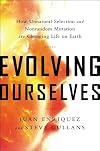
Is humanity now driving the evolutionary bus? Are we bypassing the slow, scenic route and speeding it down the expressway? Do we know where we're going? (Have I just overextended a metaphor?)
Seldom do I find a nonfiction book that I can't put down. This is one. It is a fascinating account of the complex interplay of things beyond genes that affect how species evolve. I highly recommend it.
Not that I don't have a gripe. It's probably petty, but "unnatural selection"? Really? Unnatural? It's show more not that the term is inaccurate...exactly. What the authors are emphasizing is that human actions rather than the unguided hand of natural selection is now directing how evolution proceeds. Got that, but the word "unnatural" has negative connotations, and the thrust of the book is that humanity guiding its own continued evolution isn't necessarily a bad thing. In fact, it may be essential to our survival. Also, the word implies that what humans do, and perhaps even humans themselves, aren't natural. But it is and we are. We evolved through natural selection just like everything else, and human constructions are no less natural than termite mounds or beaver dams. All creatures affect their environment. We're just a bit more...blatant about it. The term Darwin used for selective breeding was "artificial selection", but I'm not crazy about that term either for pretty much the same reasons. How about something like "intentional selection" or even just "human selection"? Either of those, I think, would be a better choice.
Oh, and I caught one typo. It's on page 226. The Cretaceous-Tertiary extinction was not "about 6 million years ago." It was about 65 million years ago. Somehow, the "5" got dropped in the edition I read (ISBN 978-1-61723-020-2).
Despite all that, this is still one of the best books I've read recently. It's informative, thought provoking, and even hopeful (with all due cautionary qualifications, of course). If you're interested in evolution or the future of humanity, this is a "must read". show less
Seldom do I find a nonfiction book that I can't put down. This is one. It is a fascinating account of the complex interplay of things beyond genes that affect how species evolve. I highly recommend it.
Not that I don't have a gripe. It's probably petty, but "unnatural selection"? Really? Unnatural? It's show more not that the term is inaccurate...exactly. What the authors are emphasizing is that human actions rather than the unguided hand of natural selection is now directing how evolution proceeds. Got that, but the word "unnatural" has negative connotations, and the thrust of the book is that humanity guiding its own continued evolution isn't necessarily a bad thing. In fact, it may be essential to our survival. Also, the word implies that what humans do, and perhaps even humans themselves, aren't natural. But it is and we are. We evolved through natural selection just like everything else, and human constructions are no less natural than termite mounds or beaver dams. All creatures affect their environment. We're just a bit more...blatant about it. The term Darwin used for selective breeding was "artificial selection", but I'm not crazy about that term either for pretty much the same reasons. How about something like "intentional selection" or even just "human selection"? Either of those, I think, would be a better choice.
Oh, and I caught one typo. It's on page 226. The Cretaceous-Tertiary extinction was not "about 6 million years ago." It was about 65 million years ago. Somehow, the "5" got dropped in the edition I read (ISBN 978-1-61723-020-2).
Despite all that, this is still one of the best books I've read recently. It's informative, thought provoking, and even hopeful (with all due cautionary qualifications, of course). If you're interested in evolution or the future of humanity, this is a "must read". show less
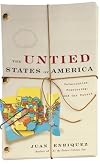
Perhaps the most fascinating part of this book isn't even what's printed on the page - it's HOW its printed on the page. There are no paragraphs. The entire work is an assembly of short declaratory sentences (or less) arranged, spaced, and sized for maximum impact. Charts and graphs abound. It is clear that the author conceived the entire page, not just his words. This probably bothers some people (it certainly did for at least one reviewer on Amazon.com) but I find it not just readable but show more incredibly informative, cluing the reader in to the author's ideas about what's important and how certain concepts mesh together or can be juxtaposed for power and insight.
If you cannot accept this format (as is the case with a few of the other reviewers) the book will drive you crazy. If you can get past it, though, reading it is a very enjoyable experience.
The book opens with and revolves around the very thought provoking question, "How many stars with the U.S. flag have in 50 years?" Most Americans would respond "fifty, of course" without any thought. Mr. Enriquez spends the remainder of the book providing insightful examples of how other countries have 'untied' (his term for the breakup of a nation into smaller, independent parts) and lines along which and reasons for the U.S. to 'untie.'
He covers portions of our neighbors, Canada and Mexico, that could under certain circumstances become 'new stars' for America. He also examines the reasons and trends that my induce portions of the United States to 'untie' - a loss of stars for the United States.
The 'Blue State vs. Red State' divide is examined. The author observes that when populations within a nation become sufficiently self identifying and unintegrated, splits often occur, but not in the way that might seem most likely. Given that The South has already seceded once and makes up a significant part of 'Red America' one would think it most likely for the 'Red States' to secede again. Mr. Enriquez contends that this isn't the case. Most secessions are by the more eoonomically viable portion. When a population or region becomes convinced that the could be richer by themselves, they secede. Knowledge based economies alow smaller nations (cough, cough, South Korea, cough) to easily compete with far larger nations. Shedding regions that don't 'pull their weight' becomes an increasingly attractive option.
Mr. Enriquez does not, however, spend the entire book examining the United States. Italy, Canada, the Balkans, The UK and Russia, among many others, are also used to illustrate concepts.
I highly recommend this book, regardless of your political stripes. It is neither Conservative propoganda nor Progressive talking points. It explores trends that are unfolding all over the world and explains how they will affect us. show less
If you cannot accept this format (as is the case with a few of the other reviewers) the book will drive you crazy. If you can get past it, though, reading it is a very enjoyable experience.
The book opens with and revolves around the very thought provoking question, "How many stars with the U.S. flag have in 50 years?" Most Americans would respond "fifty, of course" without any thought. Mr. Enriquez spends the remainder of the book providing insightful examples of how other countries have 'untied' (his term for the breakup of a nation into smaller, independent parts) and lines along which and reasons for the U.S. to 'untie.'
He covers portions of our neighbors, Canada and Mexico, that could under certain circumstances become 'new stars' for America. He also examines the reasons and trends that my induce portions of the United States to 'untie' - a loss of stars for the United States.
The 'Blue State vs. Red State' divide is examined. The author observes that when populations within a nation become sufficiently self identifying and unintegrated, splits often occur, but not in the way that might seem most likely. Given that The South has already seceded once and makes up a significant part of 'Red America' one would think it most likely for the 'Red States' to secede again. Mr. Enriquez contends that this isn't the case. Most secessions are by the more eoonomically viable portion. When a population or region becomes convinced that the could be richer by themselves, they secede. Knowledge based economies alow smaller nations (cough, cough, South Korea, cough) to easily compete with far larger nations. Shedding regions that don't 'pull their weight' becomes an increasingly attractive option.
Mr. Enriquez does not, however, spend the entire book examining the United States. Italy, Canada, the Balkans, The UK and Russia, among many others, are also used to illustrate concepts.
I highly recommend this book, regardless of your political stripes. It is neither Conservative propoganda nor Progressive talking points. It explores trends that are unfolding all over the world and explains how they will affect us. show less
Evolving Ourselves: How Unnatural Selection and Nonrandom Mutation are Changing Life on Earth by Juan Enriquez
The well-credentialed authors of this highly footnoted, annotated, and indexed but imminently readable book make this remarkable statement: "We can design, build, and transfer whole genomes into humans within months.....transfer whole genomes into bacteria within months.... make new chromosomes within months. Millions of years' worth of evolution is being reformulated by humanity in just a few years."
What we cannot do is agree on the ethics involved. The acceptance of epigenetics as an show more evolutionary force is only slowly being accepted and regulations governing experimentation with humans prevent much research that would allow some of the concepts to become a reality.
I cannot recommend this book too highly! What a great bookclub selection it would make….probably have to carry discussion over to the next meeting.
One caveat: The authors are cofounders of Excel Venture Management, which builds start-ups in synthetic biology, big data, and new genetic technologies, necessitating a certain caution in acceptance of everything they've written, but not invalidating the concepts. show less
What we cannot do is agree on the ethics involved. The acceptance of epigenetics as an show more evolutionary force is only slowly being accepted and regulations governing experimentation with humans prevent much research that would allow some of the concepts to become a reality.
I cannot recommend this book too highly! What a great bookclub selection it would make….probably have to carry discussion over to the next meeting.
One caveat: The authors are cofounders of Excel Venture Management, which builds start-ups in synthetic biology, big data, and new genetic technologies, necessitating a certain caution in acceptance of everything they've written, but not invalidating the concepts. show less
As the Future Catches You: How Genomics and Other Forces Are Changing Your Life, Work, Health & Wealth by Juan Enriquez
This is such a great book and a very fast read. I would recommend it to anyone interested in technology and the future. It brings together a very large number of topics all in one book.
Lists
You May Also Like


Associated Authors
Statistics
- Works
- 9
- Also by
- 1
- Members
- 511
- Popularity
- #48,531
- Rating
- 3.9
- Reviews
- 11
- ISBNs
- 17
- Languages
- 2