
Kenji Kuroda
Author of Phoenix Wright: Ace Attorney 1
Series
Works by Kenji Kuroda
Tagged
Common Knowledge
- Nationality
- Japan
- Associated Place (for map)
- Japan
Members
Reviews

This review assumes you've read the first book, Ao Oni. If you haven't, be aware that I include major spoilers for that book.
Ao Oni: Vengeance takes place only a week after the events of the first book. Shun is the only one who remembers what happened. He has completely stopped going to school, instead choosing to focus on the next version of his game while keeping an eye out for any signs that someone else has been snared by the Jailhouse. He asks Hiroshi to make sure no one else enters show more the house, but it's already too late: two of their classmates have gone inside and met horrible fates. Takuro, with Takeshi and Mika in tow, goes as well. Hiroshi finds the building's European architecture too interesting to resist (yes, really) and ends up trapped inside the building with all the others.
As in the various versions of the game, the overall setup feels familiar, but there are enough differences to keep it from feeling like a rehash of the first book. Shun and Anna are safe at Shun's home, desperately trying to help the group trapped in the Jailhouse using the knowledge Shun gained from his time there. Meanwhile, the situation in the Jailhouse initially plays out similar to the way it did in the first book, but quickly goes a different route.
Parts of this book were almost more gory than I could take. The very beginning was particularly awful, and I wasn't sure my stomach was going to be up to the task if the whole book turned out to be like that. It seemed like the Oni was more inclined to savor its kills this time around, although thankfully the gory bits weren't all as lovingly detailed as the book's first scene.
It may sound like I hated this, but I actually thought it was better than the first book, even if I wasn't fond of the increase in the level of gore. I had worried that this book would basically be the first book with slightly different deaths. Up to a certain point, I suppose it was: Takeshi was still a scared kid hiding in a closet, Mika was still too desperate to be loved and needed to see Takuro for who he really was, and Takuro still sucked. The overall level of tension was better than in the first book, however, and the parts of the house and story that no longer matched up with the first book's Jailhouse had me on the edge of my seat, wondering whether any of the characters would manage to make it out this time around.
I found that I liked Hiroshi a little more this time around. The bits from his POV helped, as did the fact that, this time around, he didn't spend a good chunk of the story staring at a fellow classmate's severed head like it was no big deal. I wasn't as thrilled about Kuroda's attempts to humanize Takuro, however. I don't care what Takuro's father was like, or what Takuro told himself about how he needed to approach life, or how he felt after he realized he'd betrayed maybe the only person in the world who actually cared about him. The fact of the matter was that he bullied a classmate to the point where the kid committed suicide and then, instead of feeling any sort of guilt or horror, proceeded to bully another classmate the same way. Takuro's sudden change of heart and ability to empathize with his victims was unconvincing.
The"time travel + reality manipulation + ghostly vengeance" explanation for the series' events was weird and messy, and I still don't understand why Shun, who knew his game was connected to the horrors at the Jailhouse and possibly even causing it all, created an updated version of his game. Hiroshi would have had a much easier time if Shun hadn't gone and changed things around. Even so, I enjoyed this entry in the series and plan on reading the next book. From the sounds of things, Takeshi might be its focus. Here's hoping at least one of the remaining books features Mika successfully cutting herself free from the emotional hold that Takuro has over her.
Extras:
An afterword written by the author, a character guide, textless color illustrations, one scene from the book included at the very beginning in manga form, and several illustrations throughout.
(Original review posted on A Library Girl's Familiar Diversions.) show less
Ao Oni: Vengeance takes place only a week after the events of the first book. Shun is the only one who remembers what happened. He has completely stopped going to school, instead choosing to focus on the next version of his game while keeping an eye out for any signs that someone else has been snared by the Jailhouse. He asks Hiroshi to make sure no one else enters show more the house, but it's already too late: two of their classmates have gone inside and met horrible fates. Takuro, with Takeshi and Mika in tow, goes as well. Hiroshi finds the building's European architecture too interesting to resist (yes, really) and ends up trapped inside the building with all the others.
As in the various versions of the game, the overall setup feels familiar, but there are enough differences to keep it from feeling like a rehash of the first book. Shun and Anna are safe at Shun's home, desperately trying to help the group trapped in the Jailhouse using the knowledge Shun gained from his time there. Meanwhile, the situation in the Jailhouse initially plays out similar to the way it did in the first book, but quickly goes a different route.
Parts of this book were almost more gory than I could take. The very beginning was particularly awful, and I wasn't sure my stomach was going to be up to the task if the whole book turned out to be like that. It seemed like the Oni was more inclined to savor its kills this time around, although thankfully the gory bits weren't all as lovingly detailed as the book's first scene.
It may sound like I hated this, but I actually thought it was better than the first book, even if I wasn't fond of the increase in the level of gore. I had worried that this book would basically be the first book with slightly different deaths. Up to a certain point, I suppose it was: Takeshi was still a scared kid hiding in a closet, Mika was still too desperate to be loved and needed to see Takuro for who he really was, and Takuro still sucked. The overall level of tension was better than in the first book, however, and the parts of the house and story that no longer matched up with the first book's Jailhouse had me on the edge of my seat, wondering whether any of the characters would manage to make it out this time around.
I found that I liked Hiroshi a little more this time around. The bits from his POV helped, as did the fact that, this time around, he didn't spend a good chunk of the story staring at a fellow classmate's severed head like it was no big deal. I wasn't as thrilled about Kuroda's attempts to humanize Takuro, however. I don't care what Takuro's father was like, or what Takuro told himself about how he needed to approach life, or how he felt after he realized he'd betrayed maybe the only person in the world who actually cared about him. The fact of the matter was that he bullied a classmate to the point where the kid committed suicide and then, instead of feeling any sort of guilt or horror, proceeded to bully another classmate the same way. Takuro's sudden change of heart and ability to empathize with his victims was unconvincing.
The
Extras:
An afterword written by the author, a character guide, textless color illustrations, one scene from the book included at the very beginning in manga form, and several illustrations throughout.
(Original review posted on A Library Girl's Familiar Diversions.) show less

Content warning for the book: suicidal ideation, gory descriptions of severed body parts, on-page bullying.
Shun, Hiroshi, Takuro, Mika, Anna, and Takeshi are all students at the same middle school. Takuro is one of the most popular kids at school. He's also a bully who may have been involved in a past student death and who is currently tormenting Shun. The few bright spots in Shun's life are the computer game he's creating in his spare time, his friend Hiroshi, who's smart and doesn't seem show more to care what anyone thinks of him, and Anna, the class president and one of the few people who's friendly towards him and encourages him. Mika and Takeshi are Takuro's friends (or, more accurately, his lackeys), although they're not usually involved in the worst of the bullying. Takeshi is a coward, and Mika secretly wishes her emotionally distant parents would spend more time with her.
One evening, Takuro, Takeshi, and Mika cart some boxes over to an old mansion that Takuro's father supposedly bought. The mansion, now nicknamed the Jailhouse, was supposedly last inhabited 20 years ago by a young couple and their daughter, who used a wheelchair. Shun, Hiroshi, and Anna all end up going inside with Takuro, Takeshi, and Mika, and the six kids suddenly find themselves trapped in what appears to be a haunted house. If they can't figure out how to escape, they may all end up as food for the giant blue monster that roams the halls.
I haven't played any of the Ao Oni game versions, although I did watch parts of a few "let's play" videos. I didn't really expect all that much from this, but it actually wasn't bad. I'm curious as to the intended audience, though - it read like a Middle Grade book, and yet included gory scenes that would have been a better fit for older readers.
As seems to be the case with pretty much every J-Novel Club title I've tried so far, the writing was occasionally awkward and clunky. One example:
This sentence is structured in a way that makes it seem like Shun found the bags under Anna's eyes to be charming, when in fact it was probably her eyes that he found charming.
The overall story might have been scarier had the writing been better, but there were still parts that I thought worked extremely well and were genuinely creepy. My top two favorite moments were the "this is why you can't hide in a closet forever" scene, which featured a really effective use of illustrations, and one of the last deaths, when the few survivors tried to figure out whether the person was still alive (even though they almost certainly were not, and it was foolish to check).
Takuro was 100% horrible - of all the characters, he was the one I was most hoping would end up dying. Takeshi didn't really make much of an impression on me, Hiroshi struck me as being fairly creepy (although it turned out that there was more going on than I realized), and Anna was annoyingly underutilized. I cared most about Shun, who'd been ground down by Takuro to a depressing degree, and Mika. Yes, Mika had opted to side with a sadistic bully, but she'd done so because she'd convinced herself that he could provide her with the love her family didn't give her. I felt bad for her, even though her willingness to forgive Takuro just about anything made me grit my teeth a few times.
The ending was...weird. Most of the book was slight creepiness, gore, and occasional appearances from a ridiculous "blueberry-colored" monster. Then it all took a sudden "very special message" turn at the end, morphing into a suicide prevention story. This would have been fine, although heavy-handed, but the steps the story took to get there felt like a cop-out. I had been wondering how the series was going to continue, despite everything that had happened, and I wasn't pleased with the answer.
Still, I liked this well enough to want to continue on. I also tried to hunt down some "let's play" videos of Ao Oni version 3.0, the one this book was based on. Unfortunately, I have yet to find one done by someone whose voice/sense of humor I'm able to stand.
Extras:
- Prior to the start of the book, there are a few manga pages depicting a later scene.
- Several black-and-white illustrations.
- An afterword written by the author.
- A brief note written by the illustrator.
- Two pages of the illustrator's initial character designs.
- A couple color illustrations.
(Original review posted on A Library Girl's Familiar Diversions.) show less
Shun, Hiroshi, Takuro, Mika, Anna, and Takeshi are all students at the same middle school. Takuro is one of the most popular kids at school. He's also a bully who may have been involved in a past student death and who is currently tormenting Shun. The few bright spots in Shun's life are the computer game he's creating in his spare time, his friend Hiroshi, who's smart and doesn't seem show more to care what anyone thinks of him, and Anna, the class president and one of the few people who's friendly towards him and encourages him. Mika and Takeshi are Takuro's friends (or, more accurately, his lackeys), although they're not usually involved in the worst of the bullying. Takeshi is a coward, and Mika secretly wishes her emotionally distant parents would spend more time with her.
One evening, Takuro, Takeshi, and Mika cart some boxes over to an old mansion that Takuro's father supposedly bought. The mansion, now nicknamed the Jailhouse, was supposedly last inhabited 20 years ago by a young couple and their daughter, who used a wheelchair. Shun, Hiroshi, and Anna all end up going inside with Takuro, Takeshi, and Mika, and the six kids suddenly find themselves trapped in what appears to be a haunted house. If they can't figure out how to escape, they may all end up as food for the giant blue monster that roams the halls.
I haven't played any of the Ao Oni game versions, although I did watch parts of a few "let's play" videos. I didn't really expect all that much from this, but it actually wasn't bad. I'm curious as to the intended audience, though - it read like a Middle Grade book, and yet included gory scenes that would have been a better fit for older readers.
As seems to be the case with pretty much every J-Novel Club title I've tried so far, the writing was occasionally awkward and clunky. One example:
"Shun noticed that the bags under her eyes - something he ordinarily found charming about her - were darker than normal." (34)
This sentence is structured in a way that makes it seem like Shun found the bags under Anna's eyes to be charming, when in fact it was probably her eyes that he found charming.
The overall story might have been scarier had the writing been better, but there were still parts that I thought worked extremely well and were genuinely creepy. My top two favorite moments were the "this is why you can't hide in a closet forever" scene, which featured a really effective use of illustrations, and one of the last deaths, when the few survivors tried to figure out whether the person was still alive (even though they almost certainly were not, and it was foolish to check).
Takuro was 100% horrible - of all the characters, he was the one I was most hoping would end up dying. Takeshi didn't really make much of an impression on me, Hiroshi struck me as being fairly creepy (although it turned out that there was more going on than I realized), and Anna was annoyingly underutilized. I cared most about Shun, who'd been ground down by Takuro to a depressing degree, and Mika. Yes, Mika had opted to side with a sadistic bully, but she'd done so because she'd convinced herself that he could provide her with the love her family didn't give her. I felt bad for her, even though her willingness to forgive Takuro just about anything made me grit my teeth a few times.
The ending was...weird. Most of the book was slight creepiness, gore, and occasional appearances from a ridiculous "blueberry-colored" monster. Then it all took a sudden "very special message" turn at the end, morphing into a suicide prevention story. This would have been fine, although heavy-handed, but the steps the story took to get there felt like a cop-out. I had been wondering how the series was going to continue, despite everything that had happened, and I wasn't pleased with the answer.
Still, I liked this well enough to want to continue on. I also tried to hunt down some "let's play" videos of Ao Oni version 3.0, the one this book was based on. Unfortunately, I have yet to find one done by someone whose voice/sense of humor I'm able to stand.
Extras:
- Prior to the start of the book, there are a few manga pages depicting a later scene.
- Several black-and-white illustrations.
- An afterword written by the author.
- A brief note written by the illustrator.
- Two pages of the illustrator's initial character designs.
- A couple color illustrations.
(Original review posted on A Library Girl's Familiar Diversions.) show less
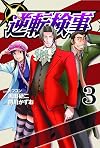
The last story in this volume is the best story in any of the AA manga volumes so far (enough that I'm actually compelled to leave a review!). I like reading these because I like the PWAA cast, but all of the cases (including in Phoenix's volumes) have been extremely formulaic and shallow. They are entertaining enough if you don't have high standards, though. The last case in this volume, however, actually tried something interesting! Nowhere close to the intensity of the actual games, but I show more was still excited as I read, and it was cool to see Edgeworth more on Edge (lol) finally. However, the English print has a lot of strange typographical errors that I didn't notice in previous volumes. show less
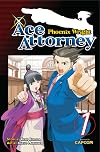
I read this in about a day and it was just as hilarious and adorable as the movie. There are definitely differences between the two (no surprise) and then halfway through the manga, I downloaded the game and there are even MORE differences, but it doesn't matter. It's inspired by the game and that's good enough for me. The drawings are good, the translations seems to make sense (I don't speak Japanese, but sometimes you can tell when they're bad) and I liked that the translators included show more notes explaining things about Japanese (aka about honorifics) and then about some of their wording choices. I'm eagerly awaiting volume two (unless I end up buying them all of myself). show less
You May Also Like


Statistics
- Works
- 13
- Members
- 372
- Popularity
- #64,809
- Rating
- 3.4
- Reviews
- 9
- ISBNs
- 25
- Languages
- 1