
Susan Ferrier (1782–1854)
Author of Marriage
About the Author
Image credit: R. Thorburn
Works by Susan Ferrier
Scottish Forgotten Authors: Marriage, Gillespie, Ringan Gilhaize (Scottish Lost Treasures) (2014) 7 copies, 3 reviews
Marriage : Volume 1 2 copies
Marriage : Volume II 1 copy
The Inheritance : Volume I 1 copy
The Inheritance : Volume II 1 copy
Associated Works
The Other voice : Scottish women's writing since 1808 : an anthology (1988) — Contributor — 10 copies
Tagged
Common Knowledge
- Canonical name
- Ferrier, Susan
- Legal name
- Ferrier, Susan Edmonstone
- Birthdate
- 1782-09-07
- Date of death
- 1854-11-05
- Gender
- female
- Education
- privately educated
- Occupations
- novelist
- Relationships
- Scott, Sir Walter (friend)
- Short biography
- Susan Edmonstone Ferrier was born in Edinburgh, Scotland, the daughter of James Ferrier, principal clerk of the Court of Session and a colleague of Sir Walter Scott, and his wife Helen. Susan was privately educated. From her early years, she knew many notable Edinburgh intellectuals and writers, including Scott and novelist Henry Mackenzie. In 1797, her father took her to visit Inveraray, home of his client and patron John Campbell, 5th Duke of Argyll. She became a friend of the family, especially of a granddaughter, Charlotte Clavering, with whom she corresponded. After her mother died, Susan kept house for her father. Her first novel, Marriage, was written in 1810 and published anonymously in 1818 to great success. Her publisher paid £1000 for her second novel, The Inheritance (1824). Her third novel, Destiny or The Chief's Daughter, appeared in 1831. All three combined sarcastic humor, wit, and vivid accounts of Scottish social life of the period, as well as the author's sharp views on marriage and female education. She dedicated her last novel to Sir Walter Scott, who was her lifelong friend and admirer. She visited him at Ashiestiel Farm and House on the River Tweed in 1811 and at his new house Abbotsford in 1829 and 1831. Her account of the visits was published posthumously in the magazine Temple Bar (1874).
- Nationality
- UK
- Birthplace
- Edinburgh, Scotland, UK
- Places of residence
- Edinburgh, Scotland, UK
- Place of death
- Edinburgh, Scotland, UK
- Burial location
- St. Cuthbert's Cemetery, Edinburgh, Scotland
- Associated Place (for map)
- Edinburgh, Scotland, UK
Members
Discussions
Group read: Marriage by Susan Ferrier in Virago Modern Classics (February 2016)
Reviews
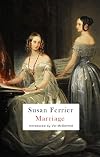
Ignore the comparisons to Jane Austen—Susan Ferrier and her Marriage resemble Austen and her works only inasmuch as they were both alive in the U.K. in the 1810s and their novels both talk about marriage. Otherwise reading Ferrier with Austen in mind only serves to underscore why the one has largely been forgotten and the other remembered. Ferrier may have sold more books than Austen during her lifetime, but Marriage has none of Austen's precision or subtlety. It heaps on the kind of show more sentimental moralising that Austen herself would have scorned. Austen writes memorable comic characters who reveal themselves and their follies through dialogue and actions; Ferrier contents herself with having a nosy neighbour called Miss McPry, and a small disabled man called Sir Samson.
Ferrier's writing does have some merit—the pacing may be weird, but it's always fast, with almost every short chapter introducing some new melodramatic event or some odd tangents. You've got elopements! deaths! animal menageries! deathbed marriage proposals! continual accusations of secretly being a Methodist! It's possibly the quickest I've gotten through a 600-page book in some time, just out of morbid curiosity as to what new twist Ferrier could possibly inflict on her prig of a heroine. (Think a slightly more self-satisfied, Scottish Fanny Price.) I can't say this is good, or recommend it really to anyone who isn't somewhat of a completist on Regency British literature, but it certainly is A Book. show less
Ferrier's writing does have some merit—the pacing may be weird, but it's always fast, with almost every short chapter introducing some new melodramatic event or some odd tangents. You've got elopements! deaths! animal menageries! deathbed marriage proposals! continual accusations of secretly being a Methodist! It's possibly the quickest I've gotten through a 600-page book in some time, just out of morbid curiosity as to what new twist Ferrier could possibly inflict on her prig of a heroine. (Think a slightly more self-satisfied, Scottish Fanny Price.) I can't say this is good, or recommend it really to anyone who isn't somewhat of a completist on Regency British literature, but it certainly is A Book. show less

At the time Susan Ferrier was writing this book, marriage was still the path to wealth and power. Children who could set you off on that path were domestic capital. The mountain of novels, good and bad, that dealt with the vagaries of courtship and marriage in Regency times is testament to its importance for the monied classes, and to its disastrous consequences if not done properly.
Lady Juliana, the seventeen year old daughter of the Earl of Courtland, could not have read the right novels, show more or else when her father told her she was to marry the Duke of L---, she would have been more compliant. The Earl contended it was
Capriciousness was a defining characteristic of Lady Juliana however, and just before her wedding day, she eloped with "... the blue eyes, curling hair and fine-formed person of a certain captivating Scotsman". Unfortunately, her Henry Douglas was virtually penniless and in a few short months reality set in on both sides. Disowned by her father, they turned to his, and set off for a winter in Scotland.
Here the novel starts to deviate from the standard fare of its day. Its author, Susan Ferrier, was a Scot. The huge cultural differences between the English and the Scots, both real and perceived, were important to Ferrier. Had she been English, she probably wouldn't have sent her characters off to Scotland, and if she had, the story would have been quite different.
In the event, Lady Juliana and her husband were as useless and helpless as babes in the woods, completely unable to cope with life on an agricultural estate, even if it was called a castle. Juliana in particular was unable to discover any common ground with Henry's three aunts and four sisters, nor did she wish to. Ferrier has fun with their mutual incomprehension, aided by use of dialect. She was one of the first to use this tool, and she does it skilfully.
Ferrier had said "The only good purpose of a book is to inculcate morality , and convey some lesson of instruction as well as delight." She does well with the delighting part, but sudden shifts in tone steer her back towards the moral instruction, as if it was suddenly called to mind.
Lady Juliana was delivered of twin girls during her stay in Scotland. Shortly thereafter, she and Henry fled the wilds of Scotland for the dangers of society London, leaving one of the girls behind with Henry's elder brother and his wife. It is the reunion of the girls, now of marriageable age and living together with their mother, that allows Ferrier to explore further the emerging question of marrying for love. The old Earl had said "... it was very well for ploughmen and dairy-maids, and such canaille, to marry for love; but for a young woman of rank to think of such a thing, was plebeian in the extreme!". However, such thoughts had never stopped young girls from entertaining romantic notions of love. Ferrier now introduces the idea of a sort of responsible romantic love; two sensible people of the same rank and background falling in love and marrying, an idea that was creeping into untitled society.
She sets the two sisters up on each side of the marriage question; Adelaide, who has led the London life and learned from her mother's wretched example, and Mary, brought up as a sober and industrious child in Scotland. Here Ferrier goes back to the question of what constitutes a proper education for girls, one first hotly debated by the aunts back in Scotland as they dissect Lady Juliana's shortcomings. The presence of Lady Emily, the girls' cousin, serves to relieve the contrast and provide some real humour, for Lady Emily is an independent young woman who knows her own mind and is not afraid to speak it. The milieux of London and Bath allow Ferrier an opportunity to return to the social satire at which she excels.
[[Walter Scott]] considered Ferrier to be a writer on the level of her contemporaries [[Maria Edgeworth]] and [[Jane Austen]]. He supported he writing, singling her out for praise as one capable of continuing in the Scottish tradition. [Marriage] is a first novel, written in 1810 and published anonymously in 1818. Originally Ferrier had planned a co-authorship with Charlotte Clavering, niece of the all powerful Duke of Argyll. Charlotte's tastes, however, ran heavily to the Gothic, which had too much of sensational and too little of sensibility for Ferrier. The two eventually agreed that Ferrier would continue on her own, after Clavering contributed an early section. The novel was very successful, possibly due to the fact that some of the thinly disguised characters were recognizable to contemporary readers. Ferrier went on to write two more successful novels: [The Inheritance] and Destiny. Of planning [Marriage], she wrote tongue in cheek to Charlotte,
At a little over five hundred pages, it may daunt the wise matron's daughter, but it was good fun indeed. show less
Lady Juliana, the seventeen year old daughter of the Earl of Courtland, could not have read the right novels, show more or else when her father told her she was to marry the Duke of L---, she would have been more compliant. The Earl contended it was
No such mighty sacrifice, when repaid with a ducal coronet, the most splendid jewels, the finest equipages, the most magnificent house, the most princely establishment, and the largest jointure, of any woman in England.Juliana acquiesced, what else could she do, her empty head tempted by notions of becoming a duchess, with all the attendant dresses, balls and jewels.
Capriciousness was a defining characteristic of Lady Juliana however, and just before her wedding day, she eloped with "... the blue eyes, curling hair and fine-formed person of a certain captivating Scotsman". Unfortunately, her Henry Douglas was virtually penniless and in a few short months reality set in on both sides. Disowned by her father, they turned to his, and set off for a winter in Scotland.
Here the novel starts to deviate from the standard fare of its day. Its author, Susan Ferrier, was a Scot. The huge cultural differences between the English and the Scots, both real and perceived, were important to Ferrier. Had she been English, she probably wouldn't have sent her characters off to Scotland, and if she had, the story would have been quite different.
In the event, Lady Juliana and her husband were as useless and helpless as babes in the woods, completely unable to cope with life on an agricultural estate, even if it was called a castle. Juliana in particular was unable to discover any common ground with Henry's three aunts and four sisters, nor did she wish to. Ferrier has fun with their mutual incomprehension, aided by use of dialect. She was one of the first to use this tool, and she does it skilfully.
Ferrier had said "The only good purpose of a book is to inculcate morality , and convey some lesson of instruction as well as delight." She does well with the delighting part, but sudden shifts in tone steer her back towards the moral instruction, as if it was suddenly called to mind.
Lady Juliana was delivered of twin girls during her stay in Scotland. Shortly thereafter, she and Henry fled the wilds of Scotland for the dangers of society London, leaving one of the girls behind with Henry's elder brother and his wife. It is the reunion of the girls, now of marriageable age and living together with their mother, that allows Ferrier to explore further the emerging question of marrying for love. The old Earl had said "... it was very well for ploughmen and dairy-maids, and such canaille, to marry for love; but for a young woman of rank to think of such a thing, was plebeian in the extreme!". However, such thoughts had never stopped young girls from entertaining romantic notions of love. Ferrier now introduces the idea of a sort of responsible romantic love; two sensible people of the same rank and background falling in love and marrying, an idea that was creeping into untitled society.
She sets the two sisters up on each side of the marriage question; Adelaide, who has led the London life and learned from her mother's wretched example, and Mary, brought up as a sober and industrious child in Scotland. Here Ferrier goes back to the question of what constitutes a proper education for girls, one first hotly debated by the aunts back in Scotland as they dissect Lady Juliana's shortcomings. The presence of Lady Emily, the girls' cousin, serves to relieve the contrast and provide some real humour, for Lady Emily is an independent young woman who knows her own mind and is not afraid to speak it. The milieux of London and Bath allow Ferrier an opportunity to return to the social satire at which she excels.
[[Walter Scott]] considered Ferrier to be a writer on the level of her contemporaries [[Maria Edgeworth]] and [[Jane Austen]]. He supported he writing, singling her out for praise as one capable of continuing in the Scottish tradition. [Marriage] is a first novel, written in 1810 and published anonymously in 1818. Originally Ferrier had planned a co-authorship with Charlotte Clavering, niece of the all powerful Duke of Argyll. Charlotte's tastes, however, ran heavily to the Gothic, which had too much of sensational and too little of sensibility for Ferrier. The two eventually agreed that Ferrier would continue on her own, after Clavering contributed an early section. The novel was very successful, possibly due to the fact that some of the thinly disguised characters were recognizable to contemporary readers. Ferrier went on to write two more successful novels: [The Inheritance] and Destiny. Of planning [Marriage], she wrote tongue in cheek to Charlotte,
... the moral to be deduced from that is to warn all young ladies against runaway matches... I expect it will be the first book every wise matron will put into the hand of her daughter, and even the reviewers will relax of their severity in favour of the morality of this little work. Enchanting sight! already do I behold myself arrayed in an old mouldy covering, thumbed and creased, and filled with dog's ears.
At a little over five hundred pages, it may daunt the wise matron's daughter, but it was good fun indeed. show less
Scottish Forgotten Authors: Marriage, Gillespie, Ringan Gilhaize (Scottish Lost Treasures) by Susan Ferrier
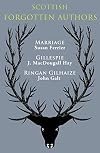
Forgotten Authors, by Susan Ferrier, J MacDougall Hay, John Galt
Forgotten no more, not by me anyway!! It was a joy to read these novels in all their Scottish diversity.
Marriage by Susan Ferrier
I loved the humour in this book along with the home truths, a poor man’s Jane Austen to be sure and too wordy overall. I think the same enjoyment could have been derived from a novel of reduced length but it remains a mystery why this book isn’t ‘up there’. Considering this is an eighteenth show more century novel the writing remains crisp and fresh. The characters jump out of the page at you and you love and hate them in equal measure, they are so clearly defined. There was much to be learnt about Scottish social life and the protocols of the time which I found revealing.
Gillespie by J MacDougall Hay
This was in complete contrast to Marriage a bleak tale of ruthless ambition. If there is any ‘feel good’ in the book I didn’t find it so if it is upliftment you are after avoid this book. And the Scottish dialect was often elusive to construe. I found it helped to read the book with a Scottish accent if that makes sense!!! But for all that it is a book that grips you and won’t release until you have read to the end. You carry on in the hope that there will be some salvation somewhere. But there isn’t. But I guess it is also a book of survival and prospering with your wits no matter whom you destroy in the process. In that sense it may even be seen as prophetic and contemporary! It’s a meaty book, well written and offers a grim picture of Calvinist Scotland that in some ways sends a shiver down your spine.
Ringan Gilhaize by John Galt
The final novel was my least favourite, maybe because I’m all ‘scottished’ out? I found it less accessible, more political, which seldom resonates positively with me. I think it is well written. I thought initially it was repetitive but as I progressed I realized it was a conscious device, kind of leitmotiv to emphasis the point. And I suppose the point is how belief and ideals can lead to fanaticism and even change a person’s behavior, which is food for thought for again it does pose a contemporary comparison with today’s fanaticisms.
As a suite of novels they are very diverse and are probably the tip of the iceberg when it comes to a wealth of Scottish classic fiction. Not to everyone’s taste I imagine. They were challenging reads with all the Scots dialect and idioms. The dictionary on my e reader couldn’t cope with many of the definitions but there were some lovely phrases ‘corpulent pandarus’ and I am still wondering what ‘clishmaclavers’ might be!!
I am grateful to Real Readers for giving me the chance to read these novels as I can honestly say that I would never have selected them to read in a million years! But my literary education has been enhanced by the experience. show less
Forgotten no more, not by me anyway!! It was a joy to read these novels in all their Scottish diversity.
Marriage by Susan Ferrier
I loved the humour in this book along with the home truths, a poor man’s Jane Austen to be sure and too wordy overall. I think the same enjoyment could have been derived from a novel of reduced length but it remains a mystery why this book isn’t ‘up there’. Considering this is an eighteenth show more century novel the writing remains crisp and fresh. The characters jump out of the page at you and you love and hate them in equal measure, they are so clearly defined. There was much to be learnt about Scottish social life and the protocols of the time which I found revealing.
Gillespie by J MacDougall Hay
This was in complete contrast to Marriage a bleak tale of ruthless ambition. If there is any ‘feel good’ in the book I didn’t find it so if it is upliftment you are after avoid this book. And the Scottish dialect was often elusive to construe. I found it helped to read the book with a Scottish accent if that makes sense!!! But for all that it is a book that grips you and won’t release until you have read to the end. You carry on in the hope that there will be some salvation somewhere. But there isn’t. But I guess it is also a book of survival and prospering with your wits no matter whom you destroy in the process. In that sense it may even be seen as prophetic and contemporary! It’s a meaty book, well written and offers a grim picture of Calvinist Scotland that in some ways sends a shiver down your spine.
Ringan Gilhaize by John Galt
The final novel was my least favourite, maybe because I’m all ‘scottished’ out? I found it less accessible, more political, which seldom resonates positively with me. I think it is well written. I thought initially it was repetitive but as I progressed I realized it was a conscious device, kind of leitmotiv to emphasis the point. And I suppose the point is how belief and ideals can lead to fanaticism and even change a person’s behavior, which is food for thought for again it does pose a contemporary comparison with today’s fanaticisms.
As a suite of novels they are very diverse and are probably the tip of the iceberg when it comes to a wealth of Scottish classic fiction. Not to everyone’s taste I imagine. They were challenging reads with all the Scots dialect and idioms. The dictionary on my e reader couldn’t cope with many of the definitions but there were some lovely phrases ‘corpulent pandarus’ and I am still wondering what ‘clishmaclavers’ might be!!
I am grateful to Real Readers for giving me the chance to read these novels as I can honestly say that I would never have selected them to read in a million years! But my literary education has been enhanced by the experience. show less
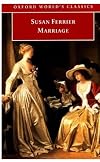
Susan Ferrier was a Scottish author, somewhat contemporary to Jane Austen (although she lived longer and published her novels a bit later). She is sometimes called "Scotland's Jane Austen," so of course I was curious to check out Marriage, her most well-known work, as my first choice of book during Georgianuary.
I can see why she is compared to Austen, although it does her a disservice, because no one can truly match Austen for wit and economy of language. Still, Ferrier paints amusing enough show more portraits. I suspect that a 19th-century reader would have found much more to laugh at than I did. My chuckling moments were rather far between.
This is a tale of two generations. Lady Juliana marries for love and regrets it (because she expects to always be wealthy, pampered and amused). Her husband takes her from England to his native Scotland, and she HATES it. One of the funniest scenes in the book is her introduction to the bagpipe, and her husband's family's total confusion at why she would be frightened of such an innocuous thing. As soon as she can leave, she does, but not before bearing twin daughters. She mildly approves of one baby and is actively disgusted by the cries and ill-health of the other. Her sister-in-law, a kindly, rational, loving woman, begs to be allowed to raise the second daughter as her own, and thus the households are split.
Fast-forward about 18 years. Mary (the second daughter) has grown up into a well-adjusted, sensible, pretty girl with a sense of humor. When she goes to England to meet her long-estranged mother and sister, she's in for some rude shocks. They are cold and selfish. Mary's only ally is her cousin Emily, an honest though sometimes short-tempered girl who speaks her mind and comes to admire Mary, even though she doesn't always agree with her.
The novel examines the effect various behaviors and choices in marriage have on a person's happiness. Some love-marriages are unsuccessful, but some mercenary marriages are equally so. Mary watches and measures these different situations against the upbringing she had in Scotland, before finally engaging herself to a man that offers her every chance at a loving and rational happiness.
I liked Mary very much, I liked that she wasn't a stupid heroine, and that she was often said to laugh. She is very religious, but not judgmental of other people, and she isn't gullible or overly sentimental most of the time.
What kept me from liking this book more was that key moments of drama were glossed over. For instance, the moment when she and her suitor become engaged takes up... a couple of sentences. In fact, from that moment on there's not one line of dialogue between them. Not very satisfying. I recognize, of course, that the purpose of fiction has changed somewhat over time. Where we now expect to be entertained and to feel every feeling of our heroine, in the past the narrative's larger purpose was to illustrate lessons or broad commentary on life.
There were also whole chapters that introduced characters that were non-essential to the plot and never appeared again. Clearly, they fit into the theme of the novel, but a modern reader grows impatient with them.
I liked that the chapters were quite short (although the book itself was long), and Susan Ferrier is much more readable than Jane West (another female Georgian author from a couple of decades prior, whom I read last month). There was less moralizing and more story. But most of the time she doesn't approach the sharp prose of her neighbor to the south, Jane Austen. show less
I can see why she is compared to Austen, although it does her a disservice, because no one can truly match Austen for wit and economy of language. Still, Ferrier paints amusing enough show more portraits. I suspect that a 19th-century reader would have found much more to laugh at than I did. My chuckling moments were rather far between.
This is a tale of two generations. Lady Juliana marries for love and regrets it (because she expects to always be wealthy, pampered and amused). Her husband takes her from England to his native Scotland, and she HATES it. One of the funniest scenes in the book is her introduction to the bagpipe, and her husband's family's total confusion at why she would be frightened of such an innocuous thing. As soon as she can leave, she does, but not before bearing twin daughters. She mildly approves of one baby and is actively disgusted by the cries and ill-health of the other. Her sister-in-law, a kindly, rational, loving woman, begs to be allowed to raise the second daughter as her own, and thus the households are split.
Fast-forward about 18 years. Mary (the second daughter) has grown up into a well-adjusted, sensible, pretty girl with a sense of humor. When she goes to England to meet her long-estranged mother and sister, she's in for some rude shocks. They are cold and selfish. Mary's only ally is her cousin Emily, an honest though sometimes short-tempered girl who speaks her mind and comes to admire Mary, even though she doesn't always agree with her.
The novel examines the effect various behaviors and choices in marriage have on a person's happiness. Some love-marriages are unsuccessful, but some mercenary marriages are equally so. Mary watches and measures these different situations against the upbringing she had in Scotland, before finally engaging herself to a man that offers her every chance at a loving and rational happiness.
I liked Mary very much, I liked that she wasn't a stupid heroine, and that she was often said to laugh. She is very religious, but not judgmental of other people, and she isn't gullible or overly sentimental most of the time.
What kept me from liking this book more was that key moments of drama were glossed over. For instance, the moment when she and her suitor become engaged takes up... a couple of sentences. In fact, from that moment on there's not one line of dialogue between them. Not very satisfying. I recognize, of course, that the purpose of fiction has changed somewhat over time. Where we now expect to be entertained and to feel every feeling of our heroine, in the past the narrative's larger purpose was to illustrate lessons or broad commentary on life.
There were also whole chapters that introduced characters that were non-essential to the plot and never appeared again. Clearly, they fit into the theme of the novel, but a modern reader grows impatient with them.
I liked that the chapters were quite short (although the book itself was long), and Susan Ferrier is much more readable than Jane West (another female Georgian author from a couple of decades prior, whom I read last month). There was less moralizing and more story. But most of the time she doesn't approach the sharp prose of her neighbor to the south, Jane Austen. show less
Lists
Awards


You May Also Like


Associated Authors
Statistics
- Works
- 16
- Also by
- 1
- Members
- 405
- Popularity
- #60,013
- Rating
- 3.5
- Reviews
- 10
- ISBNs
- 49
- Languages
- 1
- Favorited
- 2