
Emily Eden (1797–1869)
Author of The Semi-Attached Couple, and The Semi-Detached House
About the Author
Works by Emily Eden
SST 50 - Una coppia perfetta 1 copy
Tagged
Common Knowledge
- Canonical name
- Eden, Emily
- Birthdate
- 1797-03-03
- Date of death
- 1869-08-05
- Gender
- female
- Occupations
- poet
novelist
Diarist
travel writer - Relationships
- Eden, Anthony (great-great-grandnephew)
Eden, William (father)
Eden, Fanny (sister) - Short biography
- Emily Eden was born in London, England, a daughter of Eleanor Elliot and William Eden, 1st Baron Auckland. She was one of 14 siblings, including Frances "Fanny" Eden and George Eden, 1st Earl of Auckland. She never married, and along with her sister accompanied their brother to India during his term as Governor-General in 1835–1842. She wrote popular works about India, and her celebrated travel accounts, diary, and published letters give colorful insights into the daily life of the British Raj in India prior to the Mutiny of 1857. She was also a successful novelist as the author of two witty and satirical works, The Semi-Attached House (1859) and The Semi-Attached Couple (1860). She moved in the highest circles of British society and entertained the celebrities of the day, including her close friend Lord Melbourne. The 2003 novel One Last Look by Susanna Moore was inspired in part by the journals and private papers of Emily Eden and Fanny Eden.
- Nationality
- UK
- Birthplace
- Westminster, London, England, UK
- Places of residence
- India (1836-1869)
England, UK - Associated Place (for map)
- England, UK
Members
Discussions
Group read: The Semi-Detached House by Emily Eden in Virago Modern Classics (February 2018)
Group read: The Semi-Attached Couple in Virago Modern Classics (January 2018)
Reviews
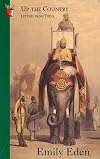
Emily Eden’s name has been floating around in my literary consciousness for a while—many years ago I read a novel called One Last Look, which apparently is based on Emily Eden’s travels in India; and then a couple of years ago I read Women of the Raj, a historical overview of British women in India in the 18th, 19th, and early 20th centuries. So when I found out that her letters home to her sister were available, this became a must-read for me.
The book is a collection of letters that show more Emily wrote between 1837 and 1941, when Emily’s brother George, who was Governor-General, set out to tour the Upper Provinces of India; Emily and her other sister, Fanny, came with him. Historically, Emily’s travels were important because she was able to witness the beginnings of the First Afghan War, although she wasn’t aware of its importance at the time and is a bit flippant about the political goings-on.
Nonetheless, Emily’s account of British life in India at the start of Victoria’s reign is wonderful. She has a wonderful, biting sense of humor, especially when talking about the other people they traveled with (on “Mrs T”: [she wears long thick thread mittens, with black velvet bracelets over them. She may have great genius, and many good qualities, but you know, it is impossible to look for them under those mittens”). Apparently, the caravan they traveled with had about 20,000 people in it, and the atmosphere at times seems like British society on a smaller scale—complete with romantic intrigues (not for Emily; it seems that she was quite the matchmaker and confidant). I do love that Emily was well-read; Dickens seems to be her favorite author and she is continually waiting with bated breath for the next installment in The Pickwick Papers… in addition to her sister’s letters from England, which are always two or three months late.
At the time Emily Eden traveled with her brother and sister to the Upper Provinces, she was in her forties, definitely a spinster by Victorian standards; and yet she seems completely unfazed by the life she leads (quite unlike the main character in Alas, Poor Lady). Part of Emily’s independent lifestyle stems from the fact that her family was wealthy and she had opportunities available to her that others didn’t; but it also has a lot to do with Emily’s dynamic personality; she was the type of person who made things happen rather than have them happen to her. That’s part of the charm of Emily’s personality, and why her letters make such entertaining reading. show less
The book is a collection of letters that show more Emily wrote between 1837 and 1941, when Emily’s brother George, who was Governor-General, set out to tour the Upper Provinces of India; Emily and her other sister, Fanny, came with him. Historically, Emily’s travels were important because she was able to witness the beginnings of the First Afghan War, although she wasn’t aware of its importance at the time and is a bit flippant about the political goings-on.
Nonetheless, Emily’s account of British life in India at the start of Victoria’s reign is wonderful. She has a wonderful, biting sense of humor, especially when talking about the other people they traveled with (on “Mrs T”: [she wears long thick thread mittens, with black velvet bracelets over them. She may have great genius, and many good qualities, but you know, it is impossible to look for them under those mittens”). Apparently, the caravan they traveled with had about 20,000 people in it, and the atmosphere at times seems like British society on a smaller scale—complete with romantic intrigues (not for Emily; it seems that she was quite the matchmaker and confidant). I do love that Emily was well-read; Dickens seems to be her favorite author and she is continually waiting with bated breath for the next installment in The Pickwick Papers… in addition to her sister’s letters from England, which are always two or three months late.
At the time Emily Eden traveled with her brother and sister to the Upper Provinces, she was in her forties, definitely a spinster by Victorian standards; and yet she seems completely unfazed by the life she leads (quite unlike the main character in Alas, Poor Lady). Part of Emily’s independent lifestyle stems from the fact that her family was wealthy and she had opportunities available to her that others didn’t; but it also has a lot to do with Emily’s dynamic personality; she was the type of person who made things happen rather than have them happen to her. That’s part of the charm of Emily’s personality, and why her letters make such entertaining reading. show less

George Eden, Lord Auckland, was appointed as British Governor-General of India in 1836. Being unmarried, he took his younger sister Emily with him to run his household, act as hostess for official functions, and generally fill the place of "first lady". She also happened to be a very competent writer, who later published a couple of moderately successful novels, and her letters and journals describing her time in India have become one of the classic first-hand sources on colonial India in show more the early Victorian period.
Up the country is a selection of letters (most of it a journal written as a serial letter to one of her sisters) dealing with a series of journeys around northern India she made with her brother between October 1837 and March 1840. Her voyage to India and the rest of her stay there between 1836 and 1842 (mostly in Calcutta) is described in another book, Miss Eden's Letters (1872).
Going camping with Miss Eden is a bit different from any other travel book you've ever read. The first time she mentioned that they were a party of 12,000, I assumed that the printer had stuck in a couple of zeroes too many. But they really were that many: The Governor-General went on tour not so much to see the country as to be seen: he had to "show the flag" and exchange courtesies with local rulers, and that meant travelling with a sizeable military escort (two infantry regiments plus cavalry and artillery). Communications were slow, railways and telegraphs had yet to be brought to India and even the famous Grand Trunk Road seems to have been in such poor condition that Miss Eden didn't even notice she was travelling along it. Auckland couldn't rely on sending instructions back to Calcutta, he had to take his complete administration with him. By the time you bring in all the family members of the staff, the domestic servants (one European in the party complained at being forced to limit himself to the 150 most essential servants; Miss Eden employed at least three people just to look after her pet dog), and all the pack animals and porters needed to transport the luggage and provisions, you do indeed end up with a group the size of a small town. And it's not altogether surprising that it takes them all five months to get from Calcutta to Simla. A far cry from Lady Betjeman with her two mules and one muleteer!
It's a dreadful cliché to compare every woman writer from the Georgian or early Victorian period with Jane Austen, but in Miss Eden's case it does have some justification. At least seen from this distance, there is quite some similarity in their styles (informality, intelligence, barbed wit, ...)and their range of subject-matter. Obviously, there are rather more elephants here than in Emma, and we are two or three notches further up the social hierarchy, but what Miss E seems determined to do is show us the domestic side of living in India as a privileged European woman. There is a lot about balls and charity events (fancy fairs, amateur dramatics); about formal visits and sketching excursions; about lovelorn aides-de-camp and daughters who can't marry before their elder sisters. There is also a lot about sickness, bad weather, the discomforts of travel. Her letters to her sister seem to have given her a place where she didn't need to set a good example to her underlings and could have the occasional good solid moan about how awful it all was and how she missed home.
There's a lot of politics going on in the background, but Miss E is too discrete to say much about it. We meet Ranjit Singh and his family in the Punjab, the name Dost Mohammed is dropped from time-to-time, and there are passing mentions of Kabul and Kandahar, but no-one who didn't know would realise that brother George has started what would turn out to be a spectacularly unsuccessful war in Afghanistan. Perhaps this reflects security concerns at the time: it might have been ill-advised to discuss politics in personal letters that had to travel across India carried by relays of runners. Or perhaps it is later editing to avoid people associating her brother's name with the loss of the British army in Kabul. We get quite detailed and very entertaining descriptions of the many durbars and formal meetings with rajahs and ranees, but there is never anything substantive about the nature of the discussions. What seems to occupy her a lot more is the business of formal exchange of gifts that goes with these state visits. She and George receive piles of jewellery and shawls, but they all become the property of the East India Company and are whisked away by clerks before she gets a proper look at them.
(Incidentally, fans of the Flashman stories will recall that GMF has Flashman meet Miss Eden in Calcutta in 1841. She is largely responsible for getting him posted to Kabul. He calls her an "old trout" — she must have been in her early forties at the time. But probably not as good-looking after five years in India as in the portrait from 1835. Another important Flashman character, Mrs Eliza James, later to be famous as "Lola Montez", also makes a cameo appearance in Up the country — Miss E's comment that she is likely to come to a bad end looks suspiciously like an afterthought, though.)
An irritating feature of Miss Eden's style is her habit of referring to Europeans only by initials. At first I thought this was more discretion, but it seems to be simply shorthand. The text would hardly make sense if we didn't know that G was her brother George and F and W the other Eden siblings in the party, for instance. The others are also easy to spot when you happen to know them. Where she says something really offensive about someone (which she does quite often, mostly about women), she doesn't use initials, but replaces the name by a dash. If you want to read these journals as more than a matter of passing interest, you probably need to get a decent modern edition with footnotes. (I read a facsimile of the 1867 edition from archive.org)
Miss Eden's sketches, many of which were later worked up into lithographs and published, are also very charming and attractive. There weren't any in the edition I read, but it's easy to find them on the internet. show less
Up the country is a selection of letters (most of it a journal written as a serial letter to one of her sisters) dealing with a series of journeys around northern India she made with her brother between October 1837 and March 1840. Her voyage to India and the rest of her stay there between 1836 and 1842 (mostly in Calcutta) is described in another book, Miss Eden's Letters (1872).
Going camping with Miss Eden is a bit different from any other travel book you've ever read. The first time she mentioned that they were a party of 12,000, I assumed that the printer had stuck in a couple of zeroes too many. But they really were that many: The Governor-General went on tour not so much to see the country as to be seen: he had to "show the flag" and exchange courtesies with local rulers, and that meant travelling with a sizeable military escort (two infantry regiments plus cavalry and artillery). Communications were slow, railways and telegraphs had yet to be brought to India and even the famous Grand Trunk Road seems to have been in such poor condition that Miss Eden didn't even notice she was travelling along it. Auckland couldn't rely on sending instructions back to Calcutta, he had to take his complete administration with him. By the time you bring in all the family members of the staff, the domestic servants (one European in the party complained at being forced to limit himself to the 150 most essential servants; Miss Eden employed at least three people just to look after her pet dog), and all the pack animals and porters needed to transport the luggage and provisions, you do indeed end up with a group the size of a small town. And it's not altogether surprising that it takes them all five months to get from Calcutta to Simla. A far cry from Lady Betjeman with her two mules and one muleteer!
It's a dreadful cliché to compare every woman writer from the Georgian or early Victorian period with Jane Austen, but in Miss Eden's case it does have some justification. At least seen from this distance, there is quite some similarity in their styles (informality, intelligence, barbed wit, ...)and their range of subject-matter. Obviously, there are rather more elephants here than in Emma, and we are two or three notches further up the social hierarchy, but what Miss E seems determined to do is show us the domestic side of living in India as a privileged European woman. There is a lot about balls and charity events (fancy fairs, amateur dramatics); about formal visits and sketching excursions; about lovelorn aides-de-camp and daughters who can't marry before their elder sisters. There is also a lot about sickness, bad weather, the discomforts of travel. Her letters to her sister seem to have given her a place where she didn't need to set a good example to her underlings and could have the occasional good solid moan about how awful it all was and how she missed home.
There's a lot of politics going on in the background, but Miss E is too discrete to say much about it. We meet Ranjit Singh and his family in the Punjab, the name Dost Mohammed is dropped from time-to-time, and there are passing mentions of Kabul and Kandahar, but no-one who didn't know would realise that brother George has started what would turn out to be a spectacularly unsuccessful war in Afghanistan. Perhaps this reflects security concerns at the time: it might have been ill-advised to discuss politics in personal letters that had to travel across India carried by relays of runners. Or perhaps it is later editing to avoid people associating her brother's name with the loss of the British army in Kabul. We get quite detailed and very entertaining descriptions of the many durbars and formal meetings with rajahs and ranees, but there is never anything substantive about the nature of the discussions. What seems to occupy her a lot more is the business of formal exchange of gifts that goes with these state visits. She and George receive piles of jewellery and shawls, but they all become the property of the East India Company and are whisked away by clerks before she gets a proper look at them.
(Incidentally, fans of the Flashman stories will recall that GMF has Flashman meet Miss Eden in Calcutta in 1841. She is largely responsible for getting him posted to Kabul. He calls her an "old trout" — she must have been in her early forties at the time. But probably not as good-looking after five years in India as in the portrait from 1835. Another important Flashman character, Mrs Eliza James, later to be famous as "Lola Montez", also makes a cameo appearance in Up the country — Miss E's comment that she is likely to come to a bad end looks suspiciously like an afterthought, though.)
An irritating feature of Miss Eden's style is her habit of referring to Europeans only by initials. At first I thought this was more discretion, but it seems to be simply shorthand. The text would hardly make sense if we didn't know that G was her brother George and F and W the other Eden siblings in the party, for instance. The others are also easy to spot when you happen to know them. Where she says something really offensive about someone (which she does quite often, mostly about women), she doesn't use initials, but replaces the name by a dash. If you want to read these journals as more than a matter of passing interest, you probably need to get a decent modern edition with footnotes. (I read a facsimile of the 1867 edition from archive.org)
Miss Eden's sketches, many of which were later worked up into lithographs and published, are also very charming and attractive. There weren't any in the edition I read, but it's easy to find them on the internet. show less

Not the best collection of Miss Eden's letters to start with: this selection omits the letters already published in Up the Country, leaving a three-year gap, and it is rather crudely edited by "Her Niece", with most of the recipients' names and many of the other names in the letters redacted out. As a result it's often not easy to follow what's going on. On the other hand, Miss Eden is a lively and interesting commentator on colonial India in the 1830s. Her account , from the privileged show more viewpoint of the governor-general's sister, makes fascinating reading. show less

Though not quite to the standard of Austen, Emily Eden, writing thirty years later, captures that same wry humour and scathing social eye in her two novels. I enjoyed The Semi-Attached Couple far more, but both stories are filled with familiar characters and romantic devices.
The honest portrayal of marriage between the Teviots in the first half book descends into a Victorian melodrama, putting me in mind of Baroness Orczy, but the bluff Mrs Douglas and Eltonesque Lady Portmore livened up show more the scenes of domestic misery. (I love Mrs Douglas' honest appraisal of one woman's 'mistaken bonnet' and her droll comment that 'the Beauforts all laugh as if they thought they had good teeth'!)
The slightly patronising air of the characters in The Semi-Detached House, particularly the 'angelic' Blanche, and the farcical plot that reads like a Trollope novel written by Wodehouse, didn't hold my attention or amuse me at all, unfortunately. I actually struggled to finish, but I have yet to tackle Persuasion by the incomparable Austen, too! show less
The honest portrayal of marriage between the Teviots in the first half book descends into a Victorian melodrama, putting me in mind of Baroness Orczy, but the bluff Mrs Douglas and Eltonesque Lady Portmore livened up show more the scenes of domestic misery. (I love Mrs Douglas' honest appraisal of one woman's 'mistaken bonnet' and her droll comment that 'the Beauforts all laugh as if they thought they had good teeth'!)
The slightly patronising air of the characters in The Semi-Detached House, particularly the 'angelic' Blanche, and the farcical plot that reads like a Trollope novel written by Wodehouse, didn't hold my attention or amuse me at all, unfortunately. I actually struggled to finish, but I have yet to tackle Persuasion by the incomparable Austen, too! show less
Lists
Awards

You May Also Like


Associated Authors
Statistics
- Works
- 9
- Members
- 758
- Popularity
- #33,555
- Rating
- 3.7
- Reviews
- 22
- ISBNs
- 57
- Languages
- 2
