
Ada Leverson (1862–1933)
Author of The Little Ottleys
About the Author
Series
Works by Ada Leverson
Associated Works
Daughters of Decadence: Women Writers of the Fin-de-Siècle (1993) — Contributor — 205 copies, 2 reviews
Femmes de Siècle: Stories from the 90s - Women Writing at the End of Two Centuries (1992) — Contributor — 18 copies
Tagged
Common Knowledge
- Other names
- Beddington, Ada (birth name)
The Sphinx - Birthdate
- 1862-10-10
- Date of death
- 1933-08-30
- Gender
- female
- Occupations
- novelist
- Relationships
- Hudson, Stephen (brother-in-law)
Wyndham, Francis (grandson)
Wyndham, Violet (daughter) - Short biography
- Ada Leverson, born Ada Esther Beddington, was the eldest of nine children. .Her mother was a pianist and friend of well-known musicians such as Paderewski and Puccini. In 1881, Ada married Ernest Leverson, a wealthy diamond merchant 12 years her senior, and the couple had two children. However, the marriage was unhappy and ended in separation; it also provided material for many of her novels. Ada began her literary career by contributing witty sketches, parodies, and stories to newspapers and magazines. After her husband's death in 1922, she sold her London house and spent part of each year in Florence.
Her wide circle of friends included the three Sitwell siblings, composer William Walton, Harold Acton, and other members of the British colony in Florence, as well as Somerset Maugham and T. S. Eliot. She remained a devoted friend of Oscar Wilde through his criminal trials, imprisonment, and exile; Wilde’s fond nickname for her was "The Sphinx." Ada would come to be considered the muse of the aesthetic movement of the 1890s, and her own works provide valuable insights into the English society of her day. - Nationality
- UK
- Birthplace
- London, England, UK
- Places of residence
- London, England, UK
Florence, Italy - Place of death
- Florence, Italy
- Associated Place (for map)
- London, England, UK
Members
Reviews
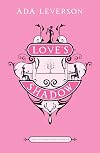
If it weren't for Bruce Ottley, I would have given it 5 stars. It's light and very funny; in the vein of An Ideal Husband, even sharing the description of a certain piece of jewelry - I don't wonder that they (Leverson and Wilde) shared it on purpose. Bruce Ottley must be the most exasperating character ever drawn. If such a man exists I hope I never meet him. I'm liable to smother him to death in his sleep or poison his food without the least compunction. I was looking forward to reading show more the two sequels, but I'm not sure how much more of Mr. Ottley I can take. I will read them, however, and continue to hope that Bruce comes to a violent end. show less

Ada Leverson was an author known for her wit and friendship with Oscar Wilde. He stayed with the Leversons when he went on trial for his homosexuality, as no hotel would accept him, and Ada was there to greet him when he was released from prison. Love's Shadow is her first novel, and the first in a trilogy known collectively as The Little Ottleys.
Edith Ottley is married to the pompous and boring Bruce. His self-absorption and self-importance make for some very funny scenes, with more than a show more touch of social parody. Edith's friend, Hyacinth, is in love with the handsome Cecil, who is infatuated with the older, widowed Eugenia. Hyacinth's guardian has more than a passing affection for his ward, as does her ladies companion, Anne. Filled with witty dialogue and tongue-in-cheek humor, this was a light, but not frivolous, romp. My favorite character was Anne, with her unrequited, unseen love for Hyacinth and her no nonsense manner. show less
Edith Ottley is married to the pompous and boring Bruce. His self-absorption and self-importance make for some very funny scenes, with more than a show more touch of social parody. Edith's friend, Hyacinth, is in love with the handsome Cecil, who is infatuated with the older, widowed Eugenia. Hyacinth's guardian has more than a passing affection for his ward, as does her ladies companion, Anne. Filled with witty dialogue and tongue-in-cheek humor, this was a light, but not frivolous, romp. My favorite character was Anne, with her unrequited, unseen love for Hyacinth and her no nonsense manner. show less
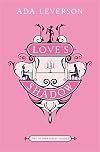
All three novels contained in The Ottleys are portraits of marriage or deep friendships. The three novels, published four years apart follow the relationship of Edith and Bruce Ottley. In Love's Shadow Edith acts as a punching bag for her husband's criticism. She takes the blame for things she did not do. She is often ridiculed for not being smart. Occasionally, Edith with participate in verbal sparing with her husband - only her jabs fall short of making any lasting impact of Bruce. show more Confessional: I found Bruce Ottley to be a detestable creature. He is even worse when his hypochondria acts up. There are other romances in Love's Shadow that are just as ridiculous as Edith and Bruce. Edith's friend Hyacinth has eyes for Cecil, who in turn desires the older, widowed Eugenia.
Levenson is a master at delivering sly humor. The subject of aging, "all men are good for, at a certain age, is giving advice" (p 89). Levenson's insults are pretty clever, too. "You're full of faults, and delightfully ignorant and commonplace" (p 147). show less
Levenson is a master at delivering sly humor. The subject of aging, "all men are good for, at a certain age, is giving advice" (p 89). Levenson's insults are pretty clever, too. "You're full of faults, and delightfully ignorant and commonplace" (p 147). show less
I went through several changes of opinion as I read, beginning & ending by being charmed. (The initial charm was borrowed: seeing that it's in a series with Rachel Feguson's "The Brontes Went to Woolworths" was a minor thrill.) Leverson's breezy, comic irony begins as a delight. Soon, though, for me, the repartee becomes tiresome: the characters talk as if they had been left out of bad, early drafts of Oscar Wilde plays. If I hadn't rec'd the book as an Early Reviewer, I would have stopped show more 40 or so pages in.
I'm glad I persevered. Either the bad Wilde talk stops or I stopped noticing it, but the atmosphere of Wilde remains (the back cover quotes him in praise of Leverson). The gender play is right out of "The Importance of Being Earnest." Confirmed bachelors and single women in mackintoshes have their troubles but remain independent. Heterosexually married characters, on the other hand, live in several kinds of suffocating nightmare. I smiled even as I read about the most nigtmarish pairing, the Ottleys (titular characters in a later Leverson book). I'm torn between my furor on behalf of Mrs. Ottley & delight with Leverson for creating her & Mr. Ottley.
All is done with a gentle humor. A partner in a marriage of convenience (they seem to be acting as each other's beards) describes her husband as having "the disposition of an angel and the voice of a gazelle." She amends this, realizing gazelles aren't known for their song. But the word "gazelle" is lovely & the sentiment sounds as if it should be meaningful. This space between appearance & actuality is representative of much of the book. All is done decorously, all seems correct, even if characters are discussing financial distress, or in love with those they can never marry.
Stylistically the book itself is a sort of singing gazelle, covering issues of real pain and readerly discomfort with its veneer of light wit: Mrs. Ottley is treated horribly by her husband; Anne, in love with a woman, is exiled from England; Hyacinth, the book's main character, is utterly trivial. All of this detracted from my pleasure. But then I put on my English professor hat: Someone could have quite a bit of fun writing an essay on this book's parodic repetition (in Judith Butler's sense) of hetero norms. Considering it alongside Woolf's "Mrs. Dalloway" could be interesting, too. I'd love to hear about how this book is read in an upper level or graduate class. And so, tho I end as I began, charmed, it's more with the book as a literary artifact than as a great read.. show less
I'm glad I persevered. Either the bad Wilde talk stops or I stopped noticing it, but the atmosphere of Wilde remains (the back cover quotes him in praise of Leverson). The gender play is right out of "The Importance of Being Earnest." Confirmed bachelors and single women in mackintoshes have their troubles but remain independent. Heterosexually married characters, on the other hand, live in several kinds of suffocating nightmare. I smiled even as I read about the most nigtmarish pairing, the Ottleys (titular characters in a later Leverson book). I'm torn between my furor on behalf of Mrs. Ottley & delight with Leverson for creating her & Mr. Ottley.
All is done with a gentle humor. A partner in a marriage of convenience (they seem to be acting as each other's beards) describes her husband as having "the disposition of an angel and the voice of a gazelle." She amends this, realizing gazelles aren't known for their song. But the word "gazelle" is lovely & the sentiment sounds as if it should be meaningful. This space between appearance & actuality is representative of much of the book. All is done decorously, all seems correct, even if characters are discussing financial distress, or in love with those they can never marry.
Stylistically the book itself is a sort of singing gazelle, covering issues of real pain and readerly discomfort with its veneer of light wit: Mrs. Ottley is treated horribly by her husband; Anne, in love with a woman, is exiled from England; Hyacinth, the book's main character, is utterly trivial. All of this detracted from my pleasure. But then I put on my English professor hat: Someone could have quite a bit of fun writing an essay on this book's parodic repetition (in Judith Butler's sense) of hetero norms. Considering it alongside Woolf's "Mrs. Dalloway" could be interesting, too. I'd love to hear about how this book is read in an upper level or graduate class. And so, tho I end as I began, charmed, it's more with the book as a literary artifact than as a great read.. show less
 This review was written for LibraryThing Early Reviewers.
Lists
You May Also Like


Associated Authors
Statistics
- Works
- 9
- Also by
- 5
- Members
- 543
- Popularity
- #45,915
- Rating
- 3.6
- Reviews
- 34
- ISBNs
- 106
- Languages
- 1
- Favorited
- 1

