
Robert Gibbings (1889–1958)
Author of Lovely Is the Lee
About the Author
Works by Robert Gibbings
Blue Angels and Whales: A Record of Personal Experiences Below and Above Water. (2013) 23 copies, 1 review
John Graham Convict 1824 an Historical Narrative By Robert Gibbings with 40 Engravings By the Author (1975) 15 copies, 1 review
Associated Works
Crotty Shinkwin. A tale ... The Beauty Spot. A tale ... Engravings by Robert Gibbings (1932) — Illustrator, some editions — 3 copies
A book of uncommon prayer — Illustrator, some editions — 1 copy
Tagged
Common Knowledge
- Birthdate
- 1889-03-23
- Date of death
- 1958-01-19
- Gender
- male
- Education
- University College, Cork
Slade School of Art
Central School of Arts and Crafts - Occupations
- writer
sculptor
wood engraver - Organizations
- Golden Cockerel Press
- Nationality
- Ireland
- Birthplace
- Cork, Ireland
- Places of residence
- Kinsale, County Cork, Ireland
- Place of death
- Oxford, England, UK
- Burial location
- St Mary the Virgin Churchyard, Long Wittenham, Oxfordshire, England, UK
- Associated Place (for map)
- Ireland
Members
Reviews
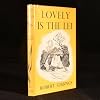
I had decidedly mixed opinions on this book. The illustrations by the author are top-notch and quite beautiful. When the author sticks to history and natural history, the book is fine. But there's large chunks of the book that read as if it's populated by that dreaded figure, The Stage Irishman, and it can be off-putting at times. If you can't abide that sort of Twee Celticism, do NOT get this book.

”If ever there was a saint on earth before me it was my father.” You do have to be careful reading this delightful yarner, although generally he holds to the truth with his history and research. Gibbings was, at the time of writing this book, already appearing on early television and with a war and several careers behind him, was now a senior lecturer at Reading University. He had travelled extensively …”over 50,000 miles on salt water” … when he decided to build a small punt and show more float down the upper Thames, from source to … well, back to his old home again as he fished out at Chelsea.
As he drifts, he muses and writes and produces those startlingly good woodcuts of his, and he looks and listens. From his gentle floating then we get this quiet charming book that wanders with his Celtic wit from bees to Greek fables. He actually packs a microscope aboard to inspect the smallest life he can find in the river’s mud.
Reading Gibbings on nature and the plants, insects and wildlife he discovers is like listening to one of the Bartrams, the great American father and son botanists, perhaps Puc-puggee himself but with his 18th century English updated into a more modern tongue. On hunting and big game fishing – both pursuits of which he was guilty of following when younger … ”By all means, Gibbings says, let us kill for food. I am even in favour of a mild form of cannibalism when necessary”!
There are several other touches of his “Oirish” wit among the clear facts of river wildlife, history of the villages and characters and several cheerfully suspicious yarns that must also be true, for, as he says “did I not just invent it myself?” show less
As he drifts, he muses and writes and produces those startlingly good woodcuts of his, and he looks and listens. From his gentle floating then we get this quiet charming book that wanders with his Celtic wit from bees to Greek fables. He actually packs a microscope aboard to inspect the smallest life he can find in the river’s mud.
Reading Gibbings on nature and the plants, insects and wildlife he discovers is like listening to one of the Bartrams, the great American father and son botanists, perhaps Puc-puggee himself but with his 18th century English updated into a more modern tongue. On hunting and big game fishing – both pursuits of which he was guilty of following when younger … ”By all means, Gibbings says, let us kill for food. I am even in favour of a mild form of cannibalism when necessary”!
There are several other touches of his “Oirish” wit among the clear facts of river wildlife, history of the villages and characters and several cheerfully suspicious yarns that must also be true, for, as he says “did I not just invent it myself?” show less

Firstly – not the author or even his amazing woodcuts, nor the glory of the, river but the edition. Lost and Found Series – part of the Interlink publishing house – are nicely produced books of Classic Travel Writing, “old and new” they state but it seems the older classic offer the best potential. Next – the book. Well bound and printed with decent font size so easy to read … but then the illustrations! Gorgeous woodcut blocks that totally support the text and seamlessly blend show more with the masterly style of this writer, an artist indeed.
Gibbings studied at the Slade and went on to become a Master Printer, engraver, publisher and artist and only came to authorship relatively late in his career. Eventually he produced a series of river-trip works, all illustrated with his own art, in wood-block format. So, having enjoyed this wonderful tale of a trip on the river Seine, this reader is already anticipating a further four of five more similar travels. And they can not arrive soon enough!
I hated to finish this book, the author has a “voice” that beguiles, charms, is full of the Celtic lilt of the Irish, and – very much – amuses. One chapter (18) is of those wonderful yarns of the Come here ‘till I tell ye type. But most are lyric descriptions of landscape or history, nature or just “Toad’-like messing about in boats.
A charming book that will entrap any reader who loves France, travel, boats, river, history or just charming, engaging and well-crafted tales. show less
Gibbings studied at the Slade and went on to become a Master Printer, engraver, publisher and artist and only came to authorship relatively late in his career. Eventually he produced a series of river-trip works, all illustrated with his own art, in wood-block format. So, having enjoyed this wonderful tale of a trip on the river Seine, this reader is already anticipating a further four of five more similar travels. And they can not arrive soon enough!
I hated to finish this book, the author has a “voice” that beguiles, charms, is full of the Celtic lilt of the Irish, and – very much – amuses. One chapter (18) is of those wonderful yarns of the Come here ‘till I tell ye type. But most are lyric descriptions of landscape or history, nature or just “Toad’-like messing about in boats.
A charming book that will entrap any reader who loves France, travel, boats, river, history or just charming, engaging and well-crafted tales. show less

Robert Gibbings was an artist, wood engraver, traveller and proprietor of the Golden Cockerel Press in the period before the Great Depression of the 1930's. He pioneered underwater sketching in the years before Cousteau, using a heavy diving helmet and a xylonite board. He knew a lot of things and a lot of people, and had the skill to write about them in a beguiling style which looks simple but isn't. This book is the story of a journey starting at the source of the River Wye on the slopes show more of the Welsh mountain Plynlimon, enlivened by his recollections of the Welsh people he met on his way. He has a keen ear and a good memory for dialogue, and though sixty years and more have gone by since it was written in the middle of WW II, it still convinces and charms. show less
Awards

You May Also Like


Associated Authors
Statistics
- Works
- 24
- Also by
- 13
- Members
- 648
- Popularity
- #38,951
- Rating
- 3.8
- Reviews
- 11
- ISBNs
- 30
- Favorited
- 1
