
Niall Williams
Author of This Is Happiness
About the Author
Author and playwright Niall Williams was born in Dublin in 1958. He received a Master's degree in Modern American Literature from University College Dublin, where he also studied English and French literature. In 1980, he moved to New York and worked as a copywriter for Avon Books. In 1985, he show more moved back to Ireland to become a full-time writer. His first four books were co-written with his wife and deal with their life together in Kiltumper, Ireland. On his own, he has written three plays and five novels. His first novel, Four Letters of Love, became an international bestseller. (Bowker Author Biography) show less
Image credit: Photo by Liam Burke
Series
Works by Niall Williams
Associated Works
Tagged
Common Knowledge
- Canonical name
- Williams, Niall
- Birthdate
- 1958
- Gender
- male
- Education
- University College Dublin (MA | Modern American Literature)
- Occupations
- author
- Agent
- Caroline Michel (PFD)
- Nationality
- Ireland
- Birthplace
- Dublin, Ireland
- Places of residence
- Dublin, Ireland
New York, New York, USA
Pittsburgh, Pennsylvania, USA
West Clare, Ireland - Associated Place (for map)
- Ireland
Members
Discussions
2014 Booker Prize longlist: History of the Rain in Booker Prize (October 2015)
Reviews
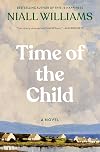
In a Nutshell: A companion novel to "This is Happiness" (TIH). Same setting and era, different key characters. Even more slow-paced and meandering than the earlier novel. The writing is just as stunning, but the narration didn't work as well for me this time around. Still, a good option for prose lovers.
~~~~~~~~~~~~~~~~~~~~~~~
Plot Preview:
This book is not exactly a sequel. While the events of this novel are set four years after the end of TIH, the plot is independent enough to work as a standalone story. There is a little recap provided wherever the reader needs a reference of what happened in the earlier novel. However, for a few characters who make a reappearance in this story, their background is available in detail only in the first book. As such, if you are a stickler for detail, you might like to begin with TIH before venturing into this story.
This time, I was even better prepared for the unstructured narration as I already had first-hand experience of the author’s writing style while reading TIH. But unlike that novel, which was presented in the form of a septuagenarian’s first-person reminiscences about his teen years in Faha, this book is written in a more generic third-person POV, which shifts across multiple characters and even multiple timelines. As such, I found it tougher to forgive the meandering narration this time around. With no firm narrator, there was no justification as to why the story had to take such a serpentine and disjointed journey to the finish line.
Another issue is that, while the book regularly informs us that “a child was found” on a particular night, the actual appearance of the child in the main plot happens only after the one-third mark. So the hundred-or-so pages of build-up can get a bit tedious, all the more as the book keeps reciting disparate incidents from “the day it happened”, but the day seems never-ending!
Those are my only two complaints, but both are relatively major ones.
I liked the three main characters of this book: Dr. Troy, Ronnie, and their teen neighbour Jack. Each of them carries some or the other pain from their pasts, which doesn’t allow them to immerse fully in the happiness of the present. Ronnie was especially amazing, and I love that a male author could create such a compelling and relatable female character and even provide her arc the perfect ending.
Just as in TIH, the characters of this book feel utterly real, like people we might even know in actual life. That grounded approach helps us stay invested in the “plot” even when there’s so little of it. For a character-driven book, such compelling characters are a must. Yet again, Faha the place is as good as a character, with its belief system being the instigator of several events.
The plot is just as wafer-thin as in TIH, but as I said, I was better prepared for it this time around. While the arrival of electricity was the driving force in the first book, the appearance of the child is the key catalyst in this one. The idea of someone stepping in to take care of an abandoned child might lead you to certain assumptions about how the plot will go. But most of these guesses would be inapplicable to this story. I was pleasantly surprised by how the author chose to drive that particular arc ahead.
The writing is just as pleasing and soul-satisfying. The metaphors, the descriptions, the vocabulary, the thought-provoking one-liners – all a literary treat. I think the first book fared a little better in this regard because of its narrator being the source of much wisdom, but this book also has plenty to reflect upon.
All in all, this book is a treat for the prose lover, and a test of the patience for the plot lover. If you are all about the journey and don’t care where you are going as long as you are moving, this novel ought to be a delight.
Recommended but not to all. This book is for literary fiction lovers who like character-driven, prose-rich, plot-less storytelling. If possible, try to read ‘This is Happiness’ prior to this book, though they are both standalones.
3.5 stars, rounding up because the writing and Ronnie deserve it.
My thanks to Bloomsbury Publishing Plc (UK & ANZ) for providing the DRC of “Time of the Child” via NetGalley. This review is voluntary and contains my honest opinion about the book.
~~~~~~~~~~~~~~~~~~~~~~~
Connect with me through:
|| My Blog || The StoryGraph || Instagram || Facebook || show less
~~~~~~~~~~~~~~~~~~~~~~~
Plot Preview:
1962. Faha, four years after the events of "This is Happiness". Doctor Jack Troy is still in Faha, but of his three daughters, only his eldest, Ronnie,show more
still stays with him and helps him with his duties. As Advent begins, a teenaged boy from their neighbourhood turns up at their doorstep with a baby in his arms. With no idea about who abandoned the baby, the Troys have to accept responsibility for the little charge, with Ronnie doing so gladly. But the good doctor knows that there needs to be one immediate change in their life if Ronnie wants to care for the baby. She must get married!
The story comes to us in the third-person perspective of several characters.
This book is not exactly a sequel. While the events of this novel are set four years after the end of TIH, the plot is independent enough to work as a standalone story. There is a little recap provided wherever the reader needs a reference of what happened in the earlier novel. However, for a few characters who make a reappearance in this story, their background is available in detail only in the first book. As such, if you are a stickler for detail, you might like to begin with TIH before venturing into this story.
This time, I was even better prepared for the unstructured narration as I already had first-hand experience of the author’s writing style while reading TIH. But unlike that novel, which was presented in the form of a septuagenarian’s first-person reminiscences about his teen years in Faha, this book is written in a more generic third-person POV, which shifts across multiple characters and even multiple timelines. As such, I found it tougher to forgive the meandering narration this time around. With no firm narrator, there was no justification as to why the story had to take such a serpentine and disjointed journey to the finish line.
Another issue is that, while the book regularly informs us that “a child was found” on a particular night, the actual appearance of the child in the main plot happens only after the one-third mark. So the hundred-or-so pages of build-up can get a bit tedious, all the more as the book keeps reciting disparate incidents from “the day it happened”, but the day seems never-ending!
Those are my only two complaints, but both are relatively major ones.
I liked the three main characters of this book: Dr. Troy, Ronnie, and their teen neighbour Jack. Each of them carries some or the other pain from their pasts, which doesn’t allow them to immerse fully in the happiness of the present. Ronnie was especially amazing, and I love that a male author could create such a compelling and relatable female character and even provide her arc the perfect ending.
Just as in TIH, the characters of this book feel utterly real, like people we might even know in actual life. That grounded approach helps us stay invested in the “plot” even when there’s so little of it. For a character-driven book, such compelling characters are a must. Yet again, Faha the place is as good as a character, with its belief system being the instigator of several events.
The plot is just as wafer-thin as in TIH, but as I said, I was better prepared for it this time around. While the arrival of electricity was the driving force in the first book, the appearance of the child is the key catalyst in this one. The idea of someone stepping in to take care of an abandoned child might lead you to certain assumptions about how the plot will go. But most of these guesses would be inapplicable to this story. I was pleasantly surprised by how the author chose to drive that particular arc ahead.
The writing is just as pleasing and soul-satisfying. The metaphors, the descriptions, the vocabulary, the thought-provoking one-liners – all a literary treat. I think the first book fared a little better in this regard because of its narrator being the source of much wisdom, but this book also has plenty to reflect upon.
All in all, this book is a treat for the prose lover, and a test of the patience for the plot lover. If you are all about the journey and don’t care where you are going as long as you are moving, this novel ought to be a delight.
Recommended but not to all. This book is for literary fiction lovers who like character-driven, prose-rich, plot-less storytelling. If possible, try to read ‘This is Happiness’ prior to this book, though they are both standalones.
3.5 stars, rounding up because the writing and Ronnie deserve it.
My thanks to Bloomsbury Publishing Plc (UK & ANZ) for providing the DRC of “Time of the Child” via NetGalley. This review is voluntary and contains my honest opinion about the book.
~~~~~~~~~~~~~~~~~~~~~~~
Connect with me through:
|| My Blog || The StoryGraph || Instagram || Facebook || show less

On the monthly fair day, a boy waiting to bring his da home from the pub, finds an infant abandoned behind the church. He brings it to Dr. Troy. The baby lives and then the question becomes, what will be done with it? Running parallel to this story is that of the failing priest of the village, Father Tom, who is succumbing to dementia. Perhaps too, running between these book ends of life are Dr. Troy and his daughter Ronnie, one at the end of mid-life and the other on the edge of determining show more her future as an adult. The baby is the catalyst for everyone.
I marvelled over how easily Williams can shift point of view, but then I though, that is because the characters in the village of Faha (Clare, Ireland) are facets of the real character which is Faha itself, a small village, on the cusp of change, but not changed yet. Along with profound moments there is also, as ever with Williams, plenty of humour to soften the blows of reality.
There are novels in which the story is merely an excuse for the prose, and novels where the story is all, supported by workmanlike prose. Williams offers both! *****
Country doctor's all-purpose diagnosis: It'll either get worse, get better, or it will stay the same."
A quote: "Living in a parish that had the character of the bottom of a pocket, with only one way out, meant that everyone knew who was where and doing what without being told . . ."(201) show less
I marvelled over how easily Williams can shift point of view, but then I though, that is because the characters in the village of Faha (Clare, Ireland) are facets of the real character which is Faha itself, a small village, on the cusp of change, but not changed yet. Along with profound moments there is also, as ever with Williams, plenty of humour to soften the blows of reality.
There are novels in which the story is merely an excuse for the prose, and novels where the story is all, supported by workmanlike prose. Williams offers both! *****
Country doctor's all-purpose diagnosis: It'll either get worse, get better, or it will stay the same."
A quote: "Living in a parish that had the character of the bottom of a pocket, with only one way out, meant that everyone knew who was where and doing what without being told . . ."(201) show less

During a mid-century spring marked by unprecedented sunshine, things are changing in the wee village of Faha, County Clare. The electricity is coming in, and the Crowes are on the telephone now. Young Noel Crowe has abandoned Dublin as well as his seminary studies and is struggling to find himself in his grandparents' rural outpost. "Faha was no more nor less than any other place. If you could find it, you'd be on your way somewhere else."
Often accompanied on a rickety bicycle by his show more grandmother's boarder Christy, an agent of the electric company, Noel spends many evenings seeking the music of a wandering fiddle player widely touted as the finest that ever bowed a string. "Once he heard a tune it never left him...In time Junior Crehan carried so much music in him he became a one-man repository...in whose playing was the playing of all those before him on into the mists of the long ago."
Love is in the air, but having trouble finding where to settle. Noel falls, in rapid sequence, for each of the three daughters of the local doctor, simultaneously attempting to mend a decades-old rift between his new friend Christy and the woman he left at the altar.
The novel proceeds at the unhasty pace of a one-horse buggy, and you seriously need to slow down and let it do so. In the hands of an Irish master, the English language sheds all its Anglo-Saxon clunkery, and becomes the music you didn't know you were seeking yourself.
"You live long enough you understand prayers can be answered on a different frequency than the one you were listening for. We all have to find a story to live by and live inside, or we couldn't endure the certainty of suffering. That's how it seems to me."
Give yourself a gift; read this one without giving a thought to when you will finish or what you will read next. show less
Often accompanied on a rickety bicycle by his show more grandmother's boarder Christy, an agent of the electric company, Noel spends many evenings seeking the music of a wandering fiddle player widely touted as the finest that ever bowed a string. "Once he heard a tune it never left him...In time Junior Crehan carried so much music in him he became a one-man repository...in whose playing was the playing of all those before him on into the mists of the long ago."
Love is in the air, but having trouble finding where to settle. Noel falls, in rapid sequence, for each of the three daughters of the local doctor, simultaneously attempting to mend a decades-old rift between his new friend Christy and the woman he left at the altar.
The novel proceeds at the unhasty pace of a one-horse buggy, and you seriously need to slow down and let it do so. In the hands of an Irish master, the English language sheds all its Anglo-Saxon clunkery, and becomes the music you didn't know you were seeking yourself.
"You live long enough you understand prayers can be answered on a different frequency than the one you were listening for. We all have to find a story to live by and live inside, or we couldn't endure the certainty of suffering. That's how it seems to me."
Give yourself a gift; read this one without giving a thought to when you will finish or what you will read next. show less
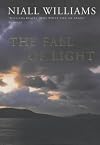
I loved this tale of a family torn apart during the years of the potato famine in Ireland. Francis Foley is so disheartened with his inability to progress in life, working for an absentee landlord, with no acknowledgement for his efforts, he decides it is time to leave the only stable home he and his family have known. Following an altercation with his wife, where she walks away, Francis decides to steal the landlords telescope and set fire to the home, taking his four sons with him. Trying show more to escape capture they endeavour to cross a river, where he becomes separated from his sons. The four sons try to search for their father but to no avail. In the ensuing years the brothers become separated against the background of the potato famine.
The writer evokes the terrible loss of life and suffering of the not only this family but the people of Ireland with the use of beautiful prose.e.g. ' They did not know what lay ahead of them. Swollen puffs of grey and purple hung like resentments above the river. The dawn did not so much rise as ache sourly into the air, its grim clouds growing imperceptibly by the moment. The light was thin and weak and without hope.' I realised during the reading of this book that my own great grandparents would have suffered through these years and it was the impetus for them to emigrate to New Zealand. show less
The writer evokes the terrible loss of life and suffering of the not only this family but the people of Ireland with the use of beautiful prose.e.g. ' They did not know what lay ahead of them. Swollen puffs of grey and purple hung like resentments above the river. The dawn did not so much rise as ache sourly into the air, its grim clouds growing imperceptibly by the moment. The light was thin and weak and without hope.' I realised during the reading of this book that my own great grandparents would have suffered through these years and it was the impetus for them to emigrate to New Zealand. show less
Lists
Awards


You May Also Like


Associated Authors
Statistics
- Works
- 21
- Also by
- 2
- Members
- 4,774
- Popularity
- #5,261
- Rating
- 4.1
- Reviews
- 169
- ISBNs
- 204
- Languages
- 12
- Favorited
- 11