
Stephen Karam
Author of The Humans
About the Author
Disambiguation Notice:
Stephen Karam is a Lebanese-American playwright, screenwriter, and director. A two-time Pulitzer Prize finalist and Tony Award winner for The Humans, his work often balances devastating tragedy with absurdist comedy. He is a graduate of Brown University and a resident at New Dramatists.
Works by Stephen Karam
Emma 2 copies
Tagged
Common Knowledge
- Birthdate
- 1979-09-23
- Gender
- male
- Education
- Brown University
- Short biography
- Openly gay Lebanese-American playwright, screenwriter, and director (he/him). Stephen Karam grew up in Scranton, Pennsylvania, and graduated from Brown University in 2002. He is a prominent member of the Roundabout Theatre Company's associate artist network and a three-time finalist for the Pulitzer Prize for Drama. He achieved massive critical and commercial success with his 2015 full-length masterpiece The Humans, which won the Tony Award for Best Play and was later adapted into a major feature film that he wrote and directed. Highly celebrated across contemporary American drama, his acclaimed theatrical works—including Sons of the Prophet, Speech & Debate, and his adaptations of The Cherry Orchard and The Seagull—are revered for combining razor-sharp, heartbreaking comedy with a sensitive look at modern grief, chronic illness, and family trauma.
- Nationality
- USA
- Birthplace
- Scranton, Pennsylvania, USA
- Places of residence
- New York, New York, USA
- Disambiguation notice
- Stephen Karam is a Lebanese-American playwright, screenwriter, and director. A two-time Pulitzer Prize finalist and Tony Award winner for The Humans, his work often balances devastating tragedy with absurdist comedy. He is a graduate of Brown University and a resident at New Dramatists.
- Associated Place (for map)
- USA
Members
Reviews

Friendless drama queen Diwata bamboozles cynical, gay Howie and earnest journalist-wannabe Solomon into joining the Speech and Debate Club in order to give herself an extracurricular activity for her college applications but, more importantly, to avenge herself on her high school drama teacher who refuses to cast the over-the-top Diwata in leading roles. Usually, such a play descends into a trite, if funny, exploration of how the threesome become fast friends.
However, this is no Disney show more movie. Instead, in this dark comedy, the trio of misfits shed a light on the hypocrisy of adults and the difficulty for young people trying to navigate a road that avoids the mistakes of their elders. Set in Salem, Ore., the play uses (in Diwata's words) "Salem, Massachusetts, circa sixteen-twenty-whenever-those-witches-were-bein'-hunted" to show how today's society isn't much less hypocritical or puritanical than the society Arthur Miller wrote about.
While anyone would enjoy the dramatization of Stephen Karam's Speech and Debate, teenagers will simply adore it. show less
However, this is no Disney show more movie. Instead, in this dark comedy, the trio of misfits shed a light on the hypocrisy of adults and the difficulty for young people trying to navigate a road that avoids the mistakes of their elders. Set in Salem, Ore., the play uses (in Diwata's words) "Salem, Massachusetts, circa sixteen-twenty-whenever-those-witches-were-bein'-hunted" to show how today's society isn't much less hypocritical or puritanical than the society Arthur Miller wrote about.
While anyone would enjoy the dramatization of Stephen Karam's Speech and Debate, teenagers will simply adore it. show less

4.5 Stars – The Written Play, 5 Stars – The Play in a Production
Per New York Times, Stephen Karam’s works are “…often noted about loss - of love, of health, of innocence - and the messy, haphazard, necessary ways we get on with our lives afterward. He isn't big on happy endings, but several of his play offer at least some hope that human connection and resilience will help the characters through. And if that fails, they'll probably find some other way to keep going." ‘The show more Humans’ fall squarely within this feeling.
The Blake family’s younger daughter, Brigid, and her boyfriend, Richard, newly moved into their old but roomy apartment in Chinatown, New York, and are hosting Thanksgiving dinner for the family. Father - Erik, Mother - Deirdre, Grandma - Momo, and older sister - Aimee arrive for the feast. With a two-floor stage of creaky floors, thin walls, and appliances that go bump in the night, it’s the perfect setting for hidden angst (financial worries, lack of career, different values), frustrations (loss of love, pending job loss), ghost of the past (9/11 tragedy), and new mistakes (spoiler, won’t say this one) to surface. The characters are deeply flawed and real. There are so many layers that I can type several pages, but it’s better if you read it and/or see it. I will say, the most powerful was Momo’s dementia. Her mental absence more than her physical presence spoke volumes on the potential journey that we face.
I was extremely pleased with the production at the Seattle Repertoire Theatre that I continued onto reading the play. The produced play is powerful, the physicality of overlapping conversations, the haunting setting, and Momo, wow, Momo’s dementia outburst was shockingly painful. In a rare exception to ‘the book is better’, the written text, though provided nuance, lacked the strength of the produced work. There is less stage directions as I have read in other plays. It’s closer to a script with a focus on the unspoken words included in brackets. It’s not necessarily lacking, but it does leave more to interpret for the reader and/or production manager.
Least favorite character: Brigid – portrait of a grown-up whiny brat
See the show, read the book. Accept how messed up life truly is; go forth and embrace it!
Below is a letter that Momo wrote the girls four years prior, when she knows she will be losing her mental capacity.
“‘Dear Aimee and Brigid, I was clumsy around you both today and felt confused. I couldn’t remember your names and felt bad about that. It’s strange slowly becoming someone I don’t know. But while I am still here, I want to say: Don’t worry about me once I drift off for good. I’m not scared. If anything, I wish I could’ve known that most of the stuff I did spend my life worrying about wasn’t so bad. Maybe it’s because this disease has me forgetting the worst stuff, but right now I’m feeling nothing about this life was worth getting so worked up about. Not even dancing at weddings.’
The Blakes smile. They have inside understanding of this remark.
‘Dancing at weddings always scared the crap out of me, but now it doesn’t seem like such a big deal. This is taking me forever to type. Consider this my fond farewell. Erin go brah. Dance more than I did. Drink less than I did. Go to church. Be good to everyone you love. I love you more than you’ll ever know.’” show less
Per New York Times, Stephen Karam’s works are “…often noted about loss - of love, of health, of innocence - and the messy, haphazard, necessary ways we get on with our lives afterward. He isn't big on happy endings, but several of his play offer at least some hope that human connection and resilience will help the characters through. And if that fails, they'll probably find some other way to keep going." ‘The show more Humans’ fall squarely within this feeling.
The Blake family’s younger daughter, Brigid, and her boyfriend, Richard, newly moved into their old but roomy apartment in Chinatown, New York, and are hosting Thanksgiving dinner for the family. Father - Erik, Mother - Deirdre, Grandma - Momo, and older sister - Aimee arrive for the feast. With a two-floor stage of creaky floors, thin walls, and appliances that go bump in the night, it’s the perfect setting for hidden angst (financial worries, lack of career, different values), frustrations (loss of love, pending job loss), ghost of the past (9/11 tragedy), and new mistakes (spoiler, won’t say this one) to surface. The characters are deeply flawed and real. There are so many layers that I can type several pages, but it’s better if you read it and/or see it. I will say, the most powerful was Momo’s dementia. Her mental absence more than her physical presence spoke volumes on the potential journey that we face.
I was extremely pleased with the production at the Seattle Repertoire Theatre that I continued onto reading the play. The produced play is powerful, the physicality of overlapping conversations, the haunting setting, and Momo, wow, Momo’s dementia outburst was shockingly painful. In a rare exception to ‘the book is better’, the written text, though provided nuance, lacked the strength of the produced work. There is less stage directions as I have read in other plays. It’s closer to a script with a focus on the unspoken words included in brackets. It’s not necessarily lacking, but it does leave more to interpret for the reader and/or production manager.
Least favorite character: Brigid – portrait of a grown-up whiny brat
See the show, read the book. Accept how messed up life truly is; go forth and embrace it!
Below is a letter that Momo wrote the girls four years prior, when she knows she will be losing her mental capacity.
“‘Dear Aimee and Brigid, I was clumsy around you both today and felt confused. I couldn’t remember your names and felt bad about that. It’s strange slowly becoming someone I don’t know. But while I am still here, I want to say: Don’t worry about me once I drift off for good. I’m not scared. If anything, I wish I could’ve known that most of the stuff I did spend my life worrying about wasn’t so bad. Maybe it’s because this disease has me forgetting the worst stuff, but right now I’m feeling nothing about this life was worth getting so worked up about. Not even dancing at weddings.’
The Blakes smile. They have inside understanding of this remark.
‘Dancing at weddings always scared the crap out of me, but now it doesn’t seem like such a big deal. This is taking me forever to type. Consider this my fond farewell. Erin go brah. Dance more than I did. Drink less than I did. Go to church. Be good to everyone you love. I love you more than you’ll ever know.’” show less
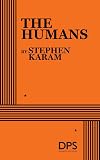
Stephen Karam's disquieting script of a family gathering for Thanksgiving is excellent on several levels - literally. Set in the NYC duplex apartment of one adult daughter and her boyfriend, the plot reveals the underlying problems typical of a family. This is a family that loves one another, so it never gets too ugly. The action takes place on both levels of the apartment, simultaneously at times. I'd love to see a production.

I've read this before, and I'll probably read this again - the changes that were made for the UK production were slight but great. Reading this play just brings me back to working in the lil Black Box theater where it started back in 2007. I was so in love with this play and the characters and how sharp and smart it all was. Working the house staff for this show was my first job in New York, and I sat in that theater probably 30-40 times, never once getting sick of it. It inspired me.
While show more reading this, I remember every line reading and can hear it in my head. This play brings back the best memories for me. show less
While show more reading this, I remember every line reading and can hear it in my head. This play brings back the best memories for me. show less
Lists
Awards


You May Also Like


Associated Authors
Statistics
- Works
- 8
- Members
- 295
- Popularity
- #79,434
- Rating
- 3.9
- Reviews
- 8
- ISBNs
- 22