
Annie Baker
Author of The Flick (TCG Edition)
About the Author
Image credit: The Economist
Works by Annie Baker
Circle Mirror Transformation - Acting Edition (Acting Edition for Theater Productions) (2010) 104 copies, 2 reviews
Janet Planet 2 copies
Nocturama 1 copy
Associated Works
Tagged
Common Knowledge
- Birthdate
- 1981
- Gender
- female
- Education
- Brooklyn College (MFA|2009)
New York University (BFA|2003) - Awards and honors
- Pulitzer Prize for Drama (2014)
MacArthur Fellow (2017)
Fellow, United States Artists (2011) - Relationships
- Baumbach, Nico (husband)
Nugent, Benjamin (brother) - Nationality
- USA
- Birthplace
- Cambridge, Massachusetts, USA
- Associated Place (for map)
- Massachusetts, USA
Members
Reviews

between 2.5 and 3 stars. i don't tend to like pulitzer winners all that much, but i'm trying to see this one for more than it presents as. it seems like a very simple little story about everyday people living their everyday lives. and it is that, but i think it's also more, and that there's a lot more here. this is not a play with bells and whistles and grand set designs. the biggest thing to happen in that realm is a change in lighting and that at the end the 2 characters change their shirt show more colors. it's a thinking play, not an action play. (so i am predisposed to liking it.)
it's about anxiety/depression and racism. but most importantly it's about reality vs performance/pretending. the conversations they have show this, but there's also the discussion of digital movies vs film movies, and how the film shows the real light and the real reality, whereas digital is kind of faking, like a person who says what they think they should say in a certain situation. everything comes back and comes down to this. who are we? who are you? are you performing or are you really that way? what do you really think or believe if what you're saying you think or believe is just what you think you should be saying you think or believe? how can you ever relate to or know someone if they are performing? if you are performing? what is real?
i liked this, but i think someone who is into movies would appreciate it more. i can only assume the movies and actors she mentions aren't random but have deeper meaning to them. still, i think there's a good bit for me to think about here, and i suspect i'll like it more and more the more i think about it. show less
it's about anxiety/depression and racism. but most importantly it's about reality vs performance/pretending. the conversations they have show this, but there's also the discussion of digital movies vs film movies, and how the film shows the real light and the real reality, whereas digital is kind of faking, like a person who says what they think they should say in a certain situation. everything comes back and comes down to this. who are we? who are you? are you performing or are you really that way? what do you really think or believe if what you're saying you think or believe is just what you think you should be saying you think or believe? how can you ever relate to or know someone if they are performing? if you are performing? what is real?
i liked this, but i think someone who is into movies would appreciate it more. i can only assume the movies and actors she mentions aren't random but have deeper meaning to them. still, i think there's a good bit for me to think about here, and i suspect i'll like it more and more the more i think about it. show less

I probably should have gone to see it--it was extended. But I didn't. It's perfect in that way that looks constructed when you read something but work beautifully when you see it performed, and now I've missed out. But there may still be time for you.
The inventive way in which the stage is laid out like the movie theater but facing towards the projection booth, the dialogues and relationships unfolding over time so that you feel them, . . . It's hard to say (for me, that is) what makes it so show more affective. Or is it "effective?" Both, maybe. I'd have liked to have seen Rose do her dance. It's supposed to be different every performance.
The way Avery and Sam, whose real world relationship is now over, persists in their playing the 6 degrees game, shows how the constraints of culture don't really match how people feel about each other.
And there are many lines that made me LOL (if I may use that expression.) show less
The inventive way in which the stage is laid out like the movie theater but facing towards the projection booth, the dialogues and relationships unfolding over time so that you feel them, . . . It's hard to say (for me, that is) what makes it so show more affective. Or is it "effective?" Both, maybe. I'd have liked to have seen Rose do her dance. It's supposed to be different every performance.
The way Avery and Sam, whose real world relationship is now over, persists in their playing the 6 degrees game, shows how the constraints of culture don't really match how people feel about each other.
And there are many lines that made me LOL (if I may use that expression.) show less
Reading The Flick is like coming back to a place you used to live and finding the table set, wine poured, and a jazz record playing. It's comforting, surprising, and meaningful in a way that is so full of life it's too strange to be real and yet it is. ( I could see how this metaphor would be creepy, The Flick isn't.)
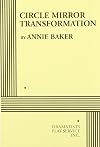
I read this play, "Circle Mirror Transformation" by Annie Baker today, and I loved it!
The action of the play takes place during a six week acting class held at a community center. The characters consist of a teacher and her four students: a teenage girl, a former actress brushing up on her craft, the teacher's husband, and a recently divorced carpenter. Aside from the actress, Theresa, none of the students are actors.
The action starts with an acting exercise, the purpose of which the show more audience or reader may not readily understand, but take my advice and roll with it. The play finds its stride when the "actors" start to make connections with one another and to reveal themselves, becoming emotionally vulnerable in the process. It's a cliche to say so, but you WILL laugh. You WILL cry. And at certain points you'll grin like an idiot.
I once was in a production of "Hamlet" where my wife directed, and a good friend of mine, who was at that time not experienced in theater, acted as stage manager. My wife was agonizing over how all the characters in the scene would make their entrances. Finally she said, "let's discover everyone", a theater term meaning that when the scene opens, everyone is already onstage. My friend the stage manager knew just enough of wacky actor antics to interpret "Let's discover everyone" as a cue to engage in some of those touchy feely acting exercises that acting classes are renowned for. He actually raised one foot like Snagglepuss preparing to "exit, stage right" at a rapid clip, not wanting to be a part of any "sharing".
Let me just say that this play involves everything that my friend feared. But let the reader or the theatergoer have no fear. All the discovery is done by the characters in the play. Not by the reader or viewer. Yours is only to experience vicariously the pleasure, laughter, heartbreak, and wonder that these characters go through on their journey to discover themselves and each other. show less
The action of the play takes place during a six week acting class held at a community center. The characters consist of a teacher and her four students: a teenage girl, a former actress brushing up on her craft, the teacher's husband, and a recently divorced carpenter. Aside from the actress, Theresa, none of the students are actors.
The action starts with an acting exercise, the purpose of which the show more audience or reader may not readily understand, but take my advice and roll with it. The play finds its stride when the "actors" start to make connections with one another and to reveal themselves, becoming emotionally vulnerable in the process. It's a cliche to say so, but you WILL laugh. You WILL cry. And at certain points you'll grin like an idiot.
I once was in a production of "Hamlet" where my wife directed, and a good friend of mine, who was at that time not experienced in theater, acted as stage manager. My wife was agonizing over how all the characters in the scene would make their entrances. Finally she said, "let's discover everyone", a theater term meaning that when the scene opens, everyone is already onstage. My friend the stage manager knew just enough of wacky actor antics to interpret "Let's discover everyone" as a cue to engage in some of those touchy feely acting exercises that acting classes are renowned for. He actually raised one foot like Snagglepuss preparing to "exit, stage right" at a rapid clip, not wanting to be a part of any "sharing".
Let me just say that this play involves everything that my friend feared. But let the reader or the theatergoer have no fear. All the discovery is done by the characters in the play. Not by the reader or viewer. Yours is only to experience vicariously the pleasure, laughter, heartbreak, and wonder that these characters go through on their journey to discover themselves and each other. show less
Lists
Awards


You May Also Like


Associated Authors
Statistics
- Works
- 16
- Also by
- 1
- Members
- 777
- Popularity
- #32,751
- Rating
- 4.0
- Reviews
- 18
- ISBNs
- 30
- Languages
- 1