
Michel Bussi
Author of After the Crash
About the Author
Image credit: Michel Bussi au festival Quais du polar à Lyon le 13 avril 2019
Works by Michel Bussi
Mon coeur a déménagé : la vengeance est au coeur de ce roman policier. Par le maître du thriller français (2024) 24 copies
Les Ombres du monde : Rentrée littéraire 2025, Sélection Renaudot 2025 (French Edition) (2025) 14 copies
Que la mort nous frôle : le nouveau polar de Michel Bussi, nouveauté thriller 2026 (French Edition) 5 copies
Mourir sur Seine - Code Lupin: Deux best-sellers réunis en un volume inédit ! (French Edition) (2018) 1 copy
Le petit pirate des étoiles - Album jeunesse illustré - Extrait du roman Maman a tort de Michel Bussi - Dès 3 ans (2019) 1 copy
MOURIR SUR SEINE T2 1 copy
Le ombre del mondo 1 copy
Associated Works
Tagged
Common Knowledge
- Other names
- Rolland, Toby (Pseudonyme)
- Birthdate
- 1965-04-29
- Gender
- male
- Education
- Université de Rouen (Doctorat, Géographie, Thèse 'Effet spatial et comportement électoral la France de l'Ouest sous la Cinquième République', 19 91)
- Occupations
- Professeur (Géographie)
Géographe
Romancier - Organizations
- Université de Rouen (Professeur, Géographie (Professeur ∙ Géographie, 19 91 | 20 16)
Société des auteurs de Normandie (Membre) - Relationships
- Guermond, Yves (Directeur de thèse)
- Nationality
- France
- Birthplace
- Louviers, Eure, Haute-Normandie, France
- Map Location
- France
- Associated Place (for map)
- Haute-Normandie, France
Members
Reviews
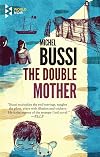
I had never heard of Michel Bussi when I checked this book out of the library, but he is apparently a well-regarded French crime novelist, and I am extremely pleased to have come across him. I will be reading more of him.
4 year old Malone attends nursery school in a small Normandy village. He seems happy and well-adjusted, except he keeps saying that his mother is not his real mother. This becomes enough of an issue that the school psychologist is called in. Malone meets with the show more psychologist and draws vivid pictures of his prior life: a castle with four turrets, a pirate ship, rockets, and a forest full of ogres. Malone also has a stuffed animal that he says talks to him at night and tells him stories. All fanciful, of course, but somehow the psychologist believes that Malone is telling some version of the truth. He informally reports the matter to the police, and before we know it we are off on a fast-paced thriller.
This was one of the most original crime novels I've read in eons. Malone was a delight, and I loved how the author was able to tie the castle, the pirate ship, the rockets, the ogre and all the fairy tales into a real life solution.
3 1/2 stars. show less
4 year old Malone attends nursery school in a small Normandy village. He seems happy and well-adjusted, except he keeps saying that his mother is not his real mother. This becomes enough of an issue that the school psychologist is called in. Malone meets with the show more psychologist and draws vivid pictures of his prior life: a castle with four turrets, a pirate ship, rockets, and a forest full of ogres. Malone also has a stuffed animal that he says talks to him at night and tells him stories. All fanciful, of course, but somehow the psychologist believes that Malone is telling some version of the truth. He informally reports the matter to the police, and before we know it we are off on a fast-paced thriller.
This was one of the most original crime novels I've read in eons. Malone was a delight, and I loved how the author was able to tie the castle, the pirate ship, the rockets, the ogre and all the fairy tales into a real life solution.
3 1/2 stars. show less

You always know with a Michel Bussi novel, that nothing is going to be simple.
From the beginning there are apparently two separate stories: on July 12th 2014 a section of cliff near Yport collapsed, and scattered over 40 metres of the beach among the debris are three human skeletons. Five months earlier a macabre event occurred with no apparent connection to the three skeletons. Out for his morning jog, Jamal witnesses a girl leap off the cliff to the beach below. By the time he gets down show more to the beach, she is dead, and there are two people standing there looking st the corpse.
There are inconsistencies that Jamal does not understand, and as days progress, he feels uncomfortably that the police are trying to imply that he has had something to do with the death.
Jamal discovers that the event is horribly similar to one that took place almost exactly 10 years earlier on a nearby coastline. The police thought that one was a rape/murder, and it was followed quickly by another. The murderer was never identified.
The thing I find about Michel Bussi plots is that they play with your mind.You begin to wonder whether the narrator is reliable, or whether the whole thing is just a nightmare that you somehow slipped into. But good things come to those who persist. show less
From the beginning there are apparently two separate stories: on July 12th 2014 a section of cliff near Yport collapsed, and scattered over 40 metres of the beach among the debris are three human skeletons. Five months earlier a macabre event occurred with no apparent connection to the three skeletons. Out for his morning jog, Jamal witnesses a girl leap off the cliff to the beach below. By the time he gets down show more to the beach, she is dead, and there are two people standing there looking st the corpse.
There are inconsistencies that Jamal does not understand, and as days progress, he feels uncomfortably that the police are trying to imply that he has had something to do with the death.
Jamal discovers that the event is horribly similar to one that took place almost exactly 10 years earlier on a nearby coastline. The police thought that one was a rape/murder, and it was followed quickly by another. The murderer was never identified.
The thing I find about Michel Bussi plots is that they play with your mind.You begin to wonder whether the narrator is reliable, or whether the whole thing is just a nightmare that you somehow slipped into. But good things come to those who persist. show less

I picked up Don't Let Go because the premise sounded intriguing and because I'd never read anything set on Réunion Island which is east of Madagascar. I got a good feel for the location in terms of landscape, weather, and its rather complicated social history, and that's always a plus for this armchair traveler. Another plus is that the book satisfies more than that one reading necessity.
The point of view switches back and forth from the local police captain to her second-in-command to the show more prime suspect to his daughter and to perhaps my favorite character, Imelda, the mistress of Christos (the second-in-command) whom he calls the black Miss Marple. This changing point of view keeps up the fast pace, and it certainly keeps readers guessing. I was very pleased to discover that the characters were more fleshed out than in a typical thriller and that they didn't always behave the way I thought they would.
The plot is the sort that you really can't say much about without giving things away, but I will say that I did enjoy myself working out exactly what was going on as Bussi divvied out a morsel of information at a time. In fact, I enjoyed myself so much that I'm going to be on the lookout for more books by this author... even if he does wax a bit too poetic when writing death scenes. show less
The point of view switches back and forth from the local police captain to her second-in-command to the show more prime suspect to his daughter and to perhaps my favorite character, Imelda, the mistress of Christos (the second-in-command) whom he calls the black Miss Marple. This changing point of view keeps up the fast pace, and it certainly keeps readers guessing. I was very pleased to discover that the characters were more fleshed out than in a typical thriller and that they didn't always behave the way I thought they would.
The plot is the sort that you really can't say much about without giving things away, but I will say that I did enjoy myself working out exactly what was going on as Bussi divvied out a morsel of information at a time. In fact, I enjoyed myself so much that I'm going to be on the lookout for more books by this author... even if he does wax a bit too poetic when writing death scenes. show less
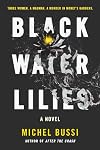
I was absolutely gobsmacked by the ending of this book. Nothing had prepared me for the way the author had played with various time frames, and with my mind. Initially I was left feeling that perhaps I hadn't read it carefully enough. But then as I looked back over the pages I could see how he had done it.
We see most of the book's action through the eyes of an elderly woman, a recluse who lives in the water mill next to stream that runs through Monet's Garden. She lives on the 4th floor, a show more vantage point that allows her to observe most of what goes on in the small village. Nothing escapes her attention it seems.
We are so taken up with the investigation into the death of Jerome Morval and the possibility of a lost Monet painting that we don't recognise the signs that our path meanders. I wonder if the author has played fair with the reader? What strikes at the end though is that the novel is itself a tribute to impressionism. show less
We see most of the book's action through the eyes of an elderly woman, a recluse who lives in the water mill next to stream that runs through Monet's Garden. She lives on the 4th floor, a show more vantage point that allows her to observe most of what goes on in the small village. Nothing escapes her attention it seems.
We are so taken up with the investigation into the death of Jerome Morval and the possibility of a lost Monet painting that we don't recognise the signs that our path meanders. I wonder if the author has played fair with the reader? What strikes at the end though is that the novel is itself a tribute to impressionism. show less
Awards


You May Also Like


Associated Authors
Statistics
- Works
- 42
- Also by
- 2
- Members
- 2,631
- Popularity
- #9,757
- Rating
- 3.6
- Reviews
- 89
- ISBNs
- 288
- Languages
- 12
- Favorited
- 2


