
Saint Benedict (0480–0547)
Author of The Rule of St. Benedict
About the Author
Image credit: St. Benedict delivering his Rule to St. Maurus and other monks of his order (France, Monastery of St. Gilles, Nimes, 1129)
Works by Saint Benedict
St. Benedicts Rule for Monks: Selected Passages from the Rule of St. Benedict (Cistercian Studies Series, 99) (1987) 14 copies, 1 review
Three Middle-English versions of the Rule of St. Benet and two contemporary rituals for the ordination of nuns (1972) 2 copies, 1 review
Regula. 1 copy
La Regola 1 copy
Vita e regola di San Benedetto: in antichi volgarizzamenti — Author — 1 copy
Prier avec Saint Benoît. 1 copy
Associated Works
The Divine Office, Volume 1: Daily Prayer for Advent, Christmastide and Weeks 1-9 (1974) — Contributor — 197 copies, 1 review
The Liturgy of the Hours According to the Roman Rite (Volume II Lenten Season and Easter Season) (1974) — Contributor — 193 copies
The Liturgy of the Hours According to the Roman Rite (Volume III: The Weeks of the Year 6 - 34) (1974) — Contributor — 73 copies
Lapham's Quarterly - Lines of Work: Volume IV, Number 2, Spring 2011 (2011) — Contributor — 32 copies, 2 reviews
Witness of the Saints: Patristic Readings in the Liturgy of the Hours (2012) — Contributor — 29 copies, 1 review
Tagged
Common Knowledge
- Canonical name
- Saint Benedict
- Legal name
- Benedetto di Norcia
- Other names
- Saint Benedict of Nursia
- Birthdate
- 0480
- Date of death
- 0547-03-21
- Gender
- male
- Occupations
- monk
- Organizations
- Roman Catholic Church
- Short biography
- Benedict of Nursia (Italian: San Benedetto da Norcia) (c. 480 – 21 March 543 or 547) is a Christian saint, honored by the Catholic Church as the patron saint of Europe and students.
- Nationality
- Italy
- Birthplace
- Norcia, Umbria, Italy
- Places of residence
- Subiaco, Italy
- Place of death
- Montecassino, Benevento, Italy
- Associated Place (for map)
- Italy
Members
Discussions
Group Read: The Rule of St. Benedict in Catholic Tradition (October 2012)
Reviews
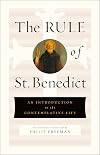
St. Benedict's "Rule" has been on my TBR list for some time, since picking up a copy of Rod Dreher's "The Benedict Option" sometime last year (true confession, also ... still, haha ... on my TBR list). His name has come up several times in that time frame--Baader-Meinhof phenomenon, anyone?--so I was entirely excited to see this new translation come up on NetGalley.
Freeman does a fantastic job at setting the stage for the Rule, providing historical context for both its writing and events show more leading up to it in Benedict's own life, and world history overall. Freeman also makes it relevant to both Christians and non-Christians alike, and notes how the Rule can a bridge for discussions with Buddhist monks (as just one example). Even the business and psychology realms can benefit from studying this book!
The included bibliography is also helpful for further study, and Freeman is quick to recommend additional resources in the foreword and note on translation as well. Not having read other translations of the Rule, I can't speak to whether this one is better or worse, but I found it entirely readable and approachable, convicting and practical. I loved how Scripture is front and center in every section, and also appreciated Freeman's commentary within each section, much like notes in a study Bible.
Being an introvert and very much a creature of habit/routine :) (shocker!), I reeeeally liked the vigils and services laid out; this section is like its own Book of Common Prayer. The "Reading at Meals" section (not pleasure reading, lol, but a devotion of sorts) reminded me very much of my grandparents, who faithfully practiced similarly for many years! And "Silence at Night" was perhaps my favorite, with gems like "Monks should cultivate silence at all times--but most of all in the hours of the night" (chapter 42). #introvertlife
I received an eARC of the book from the publisher via NetGalley. All opinions are my own. show less
Freeman does a fantastic job at setting the stage for the Rule, providing historical context for both its writing and events show more leading up to it in Benedict's own life, and world history overall. Freeman also makes it relevant to both Christians and non-Christians alike, and notes how the Rule can a bridge for discussions with Buddhist monks (as just one example). Even the business and psychology realms can benefit from studying this book!
The included bibliography is also helpful for further study, and Freeman is quick to recommend additional resources in the foreword and note on translation as well. Not having read other translations of the Rule, I can't speak to whether this one is better or worse, but I found it entirely readable and approachable, convicting and practical. I loved how Scripture is front and center in every section, and also appreciated Freeman's commentary within each section, much like notes in a study Bible.
Being an introvert and very much a creature of habit/routine :) (shocker!), I reeeeally liked the vigils and services laid out; this section is like its own Book of Common Prayer. The "Reading at Meals" section (not pleasure reading, lol, but a devotion of sorts) reminded me very much of my grandparents, who faithfully practiced similarly for many years! And "Silence at Night" was perhaps my favorite, with gems like "Monks should cultivate silence at all times--but most of all in the hours of the night" (chapter 42). #introvertlife
I received an eARC of the book from the publisher via NetGalley. All opinions are my own. show less
I'm not sure if this is an academic book or one I just purchased to read because I was interested at the time. When I pulled it off the shelf to dust, I noticed it was shorter and looked fairly easy to read, so here it is! St. Benedict founded his monastery in Monte Cassino in southern Italy. He drew on Egyptian and Syrian traditions for his guidelines for his religious community. In theory, the monastery was a self-sustaining entity where all members prayed and worked. They valued: show more obedience, silence, and humility. I found the piece and defense of silence to be very interesting. It was taken from Psalm 39:1-2: "I will guard my ways, that I may not sin with my tongue; I will guard my mouth with a muzzle, so long as the wicked are in my presence. I was dumb with silence, I held my peace, even from good..." I believe that is taken out of context, but what do I know?! Other advice: "..idle words, or such as move to laughter, we utterly condemn and ban them in all places. We do not allow any disciple to give mouth to them." How somber and sad--no laughter! 112 pages show less
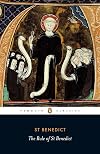
I'm glad I read this as an influential historical document, but wow! Despite my strict religious upbringing and lifelong fascination with Christian monasticism, I was somehow not prepared for just how authoritarian Benedict's Rule would be.

This is a tight, sharp, clean little work. Benedict is clear and precise, with limited words. His rules seem a bit strict to my modern mind (not a fan of the idea of beating children) but I understand that during the time, this was acceptable and even laudable. My inherent mistrust of humans causes me to ask whether Benedict's rule would work - there is much room for the miss-use of power. The answer, of course, is that each monk should be so devoted to Christ that he exudes the humility and show more kindness of the Lord. But humans are notoriously prone to self-interest and to the use of religious belief and the name of God to further their own agenda.
That aside, this was a worthwhile read. To understand how the Benedictine monks lived, and to perhaps find wisdom for living ones own life. One doesn't need to be a monk to require advice on how to deal with other humans in a manner pleasing to God. This book offers excellent assistance in that area: worth reading and worth buying. show less
That aside, this was a worthwhile read. To understand how the Benedictine monks lived, and to perhaps find wisdom for living ones own life. One doesn't need to be a monk to require advice on how to deal with other humans in a manner pleasing to God. This book offers excellent assistance in that area: worth reading and worth buying. show less
Lists
Awards


You May Also Like


Associated Authors
Statistics
- Works
- 40
- Also by
- 6
- Members
- 4,605
- Popularity
- #5,463
- Rating
- 3.9
- Reviews
- 52
- ISBNs
- 151
- Languages
- 10
- Favorited
- 2