
Marshall Brain (1961–2024)
Author of How Stuff Works
About the Author
Marshall Brain (yes, that is his real name!) is the founder and CEO of HowStuffWorks, Inc. A published author with more than a dozen books to his name, Marshall lives just outside Raleigh, N.C., with his wife Leigh, son David, and daughter Irena
Series
Works by Marshall Brain
The engineering book : from the catapult to the Curiosity Rover : 250 milestones in the history of engineering (2015) 112 copies, 2 reviews
The Second Intelligent Species: How Humans Will Become as Irrelevant as Cockroaches (2015) 10 copies, 1 review
Tagged
Common Knowledge
- Birthdate
- 1961-05-17
- Date of death
- 2024-11-20
- Gender
- male
- Education
- Rensselaer Polytechnic Institute (BS|Electrical and computer engineering)
North Carolina State University (MS|Computer science) - Occupations
- engineer
professor
entrepreneur - Organizations
- North Carolina State University
HowStuffWorks
Alpha Chi Rho - Cause of death
- suicide
- Places of residence
- Zebulon, North Carolina, USA
- Place of death
- Raleigh, North Carolina, USA
- Map Location
- USA
Members
Reviews

I really wanted to like this book, but I simply could not get past the first few pages, despite my full-hearted agreement with the themes and purposes of this book. I agree on the critique of society that this book tries to make, and I agree on the need for a Basic Income (though not necessarily for the same reasons or from the same economic reasoning that the author seems to use). But, I found the writing just too stilted and difficult to get past, so I was never able to suspend disbelief show more long enough to get into the book. Sorry. show less
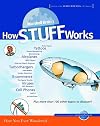
This is pretty much exactly what the title leads you to expect: a book full of short (1-4 page) explanations of how things work. Mostly it concentrates on various kinds of technology, from roller coasters to cell phones, but it also includes some examples from the natural world, including atoms and viruses. The explanations are generally pretty basic, although sometimes they include odd technical details, and are presented in very clear, plain language, accompanied by colorful illustrations. show more Clear, plain, and basic doesn't necessarily mean "dumbed down," though; the writers are even willing to throw in some simple equations or chemical formulae if the topic seems to call for it.
Some of the entries are definitely more interesting and accessible than others; I'll admit that my eyes glazed over a bit during the discussions of automotive systems, although that's probably more the fault of my own immense mechanical ineptitude than anything else. But the best of them provoke a pleasant "Hey, neat, I never thought about how that works before!" reaction and/or provide a nice little basic science lesson. Overall, it leaves me feeling slightly in awe of just how much technology we take for granted every day, and how much incredible cleverness has gone into it all.
The book was published in 2001, so it is somewhat dated now, especially the computer sections. It's at least a little less so than I'd expected, though, as it does make a point of talking about what were then the current up-and-coming technologies. Still, if it were published today, I kind of doubt they'd bother explaining serial ports and dial-up modems.
Also, while I more or less read the entire thing through, I don't really recommend that approach. It's one of those books that's probably a lot more fun to pick up, browse through, and just read about whatever topic catches your interest. show less
Some of the entries are definitely more interesting and accessible than others; I'll admit that my eyes glazed over a bit during the discussions of automotive systems, although that's probably more the fault of my own immense mechanical ineptitude than anything else. But the best of them provoke a pleasant "Hey, neat, I never thought about how that works before!" reaction and/or provide a nice little basic science lesson. Overall, it leaves me feeling slightly in awe of just how much technology we take for granted every day, and how much incredible cleverness has gone into it all.
The book was published in 2001, so it is somewhat dated now, especially the computer sections. It's at least a little less so than I'd expected, though, as it does make a point of talking about what were then the current up-and-coming technologies. Still, if it were published today, I kind of doubt they'd bother explaining serial ports and dial-up modems.
Also, while I more or less read the entire thing through, I don't really recommend that approach. It's one of those books that's probably a lot more fun to pick up, browse through, and just read about whatever topic catches your interest. show less
The Engineering Book: From the Catapult to the Curiosity Rover, 250 Milestones in the History of Engineering (Sterling Milestones) by Marshall Brain
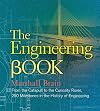
So this book, like the Biology book, has a simple structure; one side is printed with words and the other side has an image relating to the engineering marvel we are talking about. Now, engineers might not have invented a lot of the things in this book, but they make the idea more practical and cost effective. Take the Wright Flyer of 1903. It was made of wood and cloth and went at a speed that was not all that impressive. Over the years, planes have come to their own in being made of show more stronger materials and having better propulsion systems. This was all done by teams of engineers working to improve stuff.
Not that there aren't mistakes or missteps out there. The book also lists the Hindenburg disaster, the Chernobyl disaster, the Fukushima Plant disaster and others.
All throughout the book, you can feel the reverence that Marshall Brain feels for these men and women that have made life easier for the billions of us that live on this planet. It goes slightly into the Science Fiction genre at the end, but not entirely. The final few entries are for things that have yet to be invented and can only have an estimated date. They are Vactrains, Brain Replication, Mars Colony and Things We Have Yet To Engineer. All of these things are unfeasible with our current technology, and Mr. Brain explains why, so I suppose they make sense in being in there.
Things we have Yet to Engineer could cover a whole book on itself I am sure. A lot of them are silly ideas, or taken from movies and thus have no basis in current science. For instance, it mentions the Flying Car as something that would present a host of problems due to cost, stability and weight concerns. However, the author does have hopes for the future. After all, the communicator in Star Trek was a lot like the cell phones of today, and that only took them about thirty years. I certainly look forward to what people are capable of. show less
Not that there aren't mistakes or missteps out there. The book also lists the Hindenburg disaster, the Chernobyl disaster, the Fukushima Plant disaster and others.
All throughout the book, you can feel the reverence that Marshall Brain feels for these men and women that have made life easier for the billions of us that live on this planet. It goes slightly into the Science Fiction genre at the end, but not entirely. The final few entries are for things that have yet to be invented and can only have an estimated date. They are Vactrains, Brain Replication, Mars Colony and Things We Have Yet To Engineer. All of these things are unfeasible with our current technology, and Mr. Brain explains why, so I suppose they make sense in being in there.
Things we have Yet to Engineer could cover a whole book on itself I am sure. A lot of them are silly ideas, or taken from movies and thus have no basis in current science. For instance, it mentions the Flying Car as something that would present a host of problems due to cost, stability and weight concerns. However, the author does have hopes for the future. After all, the communicator in Star Trek was a lot like the cell phones of today, and that only took them about thirty years. I certainly look forward to what people are capable of. show less
The Second Intelligent Species: How Humans Will Become as Irrelevant as Cockroaches by Marshall Brain

It started very well describing the potential impact of robots in the workplace and the displacement of low-level jobs. Unfortunately then the author took a turn for the worse by outlining utopic ideas, socialism actually, that although well meaning do not match reality when it comes to the ability of people for greed, violence and exploitation of one another.
You May Also Like


Associated Authors
Statistics
- Works
- 21
- Members
- 793
- Popularity
- #32,131
- Rating
- 3.5
- Reviews
- 13
- ISBNs
- 36
- Languages
- 3