
About the Author
Works by Richard Zacks
An Underground Education: The Unauthorized and Outrageous Supplement to Everything You Thought You Knew About Art, Sex, Business, Crime, Science, Medicine, and Other Fields of… (1997) 1,045 copies, 9 reviews
Island of Vice: Theodore Roosevelt's Doomed Quest to Clean Up Sin-Loving New York (2012) 411 copies, 19 reviews
History Laid Bare: Love, Sex, and Perversity from the Ancient Etruscans to Warren G. Harding (1994) 253 copies, 2 reviews
Chasing the Last Laugh: Mark Twain's Raucous and Redemptive Round-the-World Comedy Tour (2016) 131 copies, 4 reviews
Jerualem 1 copy
Tagged
Common Knowledge
- Canonical name
- Zacks, Richard
- Birthdate
- 1955
- Gender
- male
- Education
- University of Michigan
Columbia University (School of Journalism) - Occupations
- journalist
non-fiction author - Organizations
- New York Daily News
- Nationality
- USA
- Places of residence
- Savannah, Georgia, USA
New York, New York, USA - Associated Place (for map)
- USA
Members
Reviews
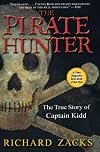
I feel like everyone knows about Captain Kidd at this point, by name or maybe even by reputation. I certainly thought I did, but this biography has even more to offer. Richard Zacks spares no detail in any aspect of Kidd's life in "The Pirate Hunter." What I learned from this was that Kidd was not the notorious pirate that history has made him out to be. In fact, compared to many he hardly fit the definition of one. Based out of New York City, Kidd was a married man, one of its wealthiest show more citizens, and unlike most, commanded a galley ship rather than a strictly sailing one. As a privateer, he was in possession of a proper Letter of Marque, but that is not to say he didn't encounter and work alongside a few pirates. Gossip and rumor dogged him for most of his career, despite his best attempts to stick to his assigned mission of hunting pirates. He may or may not have been aware of the hidden agenda of his sponsors back in London. But it was ultimately his swagger and arrogance that would be his undoing.
The only reason that this one didn't get 5 ⭐, is because as informative as it is, it gets pretty long-winded at times. It doesn't pertain to Kidd directly, but one more thing bothered me. When Zacks addresses Robert Culliford, who served with Kidd aboard a French privateer, he's adamant that the man was heterosexual. Most historians agree the man was gay or bisexual. But Zacks weakly attempts to describe Robert and his "great consort" Jon Swann as "best of friends." What I did appreciate was the inclusion of testimonies often overlooked that prove, if only a little, that Kidd did not deserve to be labeled a pirate for his actions. The East India Company, and rich Englishmen pulling the strings certainly had it out for him. Not exactly a "riotous bio" but this book definitely allowed me to re-evaluate my opinion of Kidd. I recommend it! show less
The only reason that this one didn't get 5 ⭐, is because as informative as it is, it gets pretty long-winded at times. It doesn't pertain to Kidd directly, but one more thing bothered me. When Zacks addresses Robert Culliford, who served with Kidd aboard a French privateer, he's adamant that the man was heterosexual. Most historians agree the man was gay or bisexual. But Zacks weakly attempts to describe Robert and his "great consort" Jon Swann as "best of friends." What I did appreciate was the inclusion of testimonies often overlooked that prove, if only a little, that Kidd did not deserve to be labeled a pirate for his actions. The East India Company, and rich Englishmen pulling the strings certainly had it out for him. Not exactly a "riotous bio" but this book definitely allowed me to re-evaluate my opinion of Kidd. I recommend it! show less
The Pirate Coast: Thomas Jefferson, the First Marines, and the Secret Mission of 1805 by Richard Zacks

Since 1705, sailors had been falling prey to Basha Yussef and the Barbary pirates. Since the Revolution, the best that America could do was vaguely threaten, ransom or bribe. But in 1803, after the USS Philadelphia runs aground and its men are captured, enough was enough. Taking advantage of political instability, a plan emerges to put Yussef's younger brother, Hamet, on the throne. Failed diplomat William Eaton seeks to redeem himself and offers to lead an expedition. He finds Hamet in show more Egypt. This results in a plan for a 600 mile trek - with a combined force of 8 American marines, foreign mercenaries, and Bedouin tribesmen - to take Derne, conquer Bengazi, and finally march into Tripoli. At the same time, the U.S. navy moves with their own orders just as the foreign minister of Tripoli offers peace. So how would it end? Military might, a coup d'état, diplomacy or rebellion from within?
While I found this one compelling in a lot of ways -in the end I didn't care for it as much as Zacks' "The Pirate Hunter." It suffered from the same problems as the biography of John Paul Jones, particularly the "Only One" trope. "Slovenly" Jefferson, timid Madison, and placating Tobias Lear cannot hope to succeed without bull-headed, patriotic Eaton. The only man with the brass and the brains to save the day. Except this cliched image falls apart once the reader realizes how insufferable and mistrustful Eaton is, succeeding (sort of?) with sheer luck. Eaton is fearless and audacious, no doubt, but far from tactful. I enjoyed Zacks' enthusiasm, but I disliked how every figure appears incompetent to hype up Eaton. Still, it's the seemingly-impossible beginning of U.S. espionage, a strange episode worth knowing about. The march across the desert and the battle in Derne reminded me of Lawrence of Arabia! show less
While I found this one compelling in a lot of ways -in the end I didn't care for it as much as Zacks' "The Pirate Hunter." It suffered from the same problems as the biography of John Paul Jones, particularly the "Only One" trope. "Slovenly" Jefferson, timid Madison, and placating Tobias Lear cannot hope to succeed without bull-headed, patriotic Eaton. The only man with the brass and the brains to save the day. Except this cliched image falls apart once the reader realizes how insufferable and mistrustful Eaton is, succeeding (sort of?) with sheer luck. Eaton is fearless and audacious, no doubt, but far from tactful. I enjoyed Zacks' enthusiasm, but I disliked how every figure appears incompetent to hype up Eaton. Still, it's the seemingly-impossible beginning of U.S. espionage, a strange episode worth knowing about. The march across the desert and the battle in Derne reminded me of Lawrence of Arabia! show less
The Pirate Coast: Thomas Jefferson, the First Marines, and the Secret Mission of 1805 by Richard Zacks
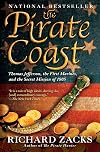
The only thing you hear in school is how the young United States faced down the Barbary Pirates. That's not what happened! Zacks details the double-dealing, loathesome tactics that passed for high diplomacy surrounding the attempted rescue/ransom of American sailors held as slaves by the Bashaw of Tripoli following the folly of their incompetent captain which caused them to be shipwrecked. Small wonder relationships with that part of the world are still difficult after 200 plus years.
Island of Vice: Theodore Roosevelt's Doomed Quest to Clean up Sin-Loving New York [Audio CD] by Richard Zacks
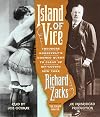
Imagine hastily picking out an audiobook at the library to listen to on a long car ride, aware that lately nothing pleases, but that, unless it is too bloody, history and biography of interesting people usually satisfies well enough...... so I grab [Island of Vice: Theodore Roosevelt's Quest to Clean Up Sin-Loving New York] by [[Richard Zacks]] thinking, OK, my Dad’s side of the family when they all left their family farms in upstate NY and Vermont became hard core Manhattanites for three show more generations. The first few chapters are how bad vice was in the early 1890's when the police force, palms greased - and I mean to the tune of thousands of dollars - were blind to everything from brothels a block from their precinct houses to food carts and street vendors dangerously cluttering narrow streets. Enter Teddy Roosevelt, at loose ends, chosen by the new anti-Tammany republican reform mayor to head up the then 4 man Police Commission. At this my ears pricked up a bit. I'm thinking, now wait a minute, wasn't my great-grandfather something like a police commissioner in NYC briefly in the late 1890's? About two seconds letter, the historian names the other commissioners, and lo! there is Himself the Ancestral Dude. Avery D. Andrews was then 31, a West Pointer, (his parents owned a hardware store in Massena, NY) and had just been appointed in a somewhat 'unworldly' way to this post also by the mayor after he wrote him a letter detailing some reform ideas...... he was a 'non-political Democrat' whatever that is.... anyhow...... Enter TR - and the two other commissioners, Parker and Grant (as in a son of Ulysses) and you have the four commissioners in what was supposed to be a bi-partisan board. At first everything was marvelous. But the personalities of Parker and Roosevelt gradually begin to clash - the one utterly impulsive, enthusiastic, energetic, extroverted and the other secretive, cautious and introverted. The sad thing is that both - really - all four members of the board were totally committed to reform and reform was sorely needed, but within six-eight months got utterly bollixed up with in-fighting. So how does Avery D. come off? Well, it is a bit much to hear your ggpa referred to as resembling a ‘soggy bandaid attached to Roosevelt‘ - but he was I think starstruck by the man, and deferred to him in all things. Honestly, had Roosevelt been less intense, more reform might have been possible, but he certainly shook the place down and introduced his unshakeable belief that the police, hired by the people, paid for by the people, should work for the people, and in particular, the average law-abiding joe and jane - NY's finest at that moment was anything but fine, so this was revolutionary. TR was too much trouble and in the end the party machine bumped him up to Under Secretary of the Navy after McKinley’s election, and only three years later when McK ran again, T.R. having quit his post at the Navy to shine at San Juan Hill, now a national hero, became Governor of New York - driving the ‘machine‘ half-mad AGAIN in no time, so they bumped him out and up to V.P. - and from there......
As for Andrews, he gracefully resigned soon after TR’s departure, but not before he instituted three reforms that show he wasn't all sticking plaster.. 1) He was a bicycling maniac and started a bicycle squad to chase runaway horses and carriages with great success. 2) Then, after an incident where two policemen failed to shoot a rabid dog, but did shoot a passerby, the West Pointer in him couldn’t stand it and he arranged at an Armory for target practice and lessons in how to care for your gun - at this point the police did not issue weapons, you came with your own ‘piece’ - and an astonishing number of police had guns with no clue to how to use or care for them. The whole force cycled through the lessons, and they became so popular and it was so obviously a good idea that it became standard practice. Lastly he became enthused about a French method, ‘Bertillon’ (hope the spelling is right) of identification by measurement of body parts - cranium, arm length etc. (this is before fingerprinting) and while he was at it also suggested that it would be much better if the police took their own mugshots (before this they would walk criminals to a nearby photographer's studio) all of which led to keeping more organized records to spot repeat offenders, also now standard practice. I know he lived to be 96 and that he was a bit of a bore and a stickler, but nonetheless I was tickled to death to come across him in this surprising way. Less helpfully, his own enthusiasm for TR’s methods of going out and tramping the streets for violations committed by policemen, may have sped up the disastrous attempt to close pubs on Sundays which led to all kinds of terrible mischief and the end of public support for reform. I knew nothing about any of it, except vaguely that he'd been a commissioner and had a bicycle mania. Best of all none of my siblings know of this book, so my Christmas buying has been simplified and author Zack will be thrilled by a sudden bump in sales, that is, provided I can keep my own big mouth shut for almost three more months. ****
I cannot possibly say whether anyone else would get out of the book what I did, obviously. Certainly any TR fan or any Manhattan, turn-of-the-century fan would get plenty, but it’s not exactly earth-shaking stuff. I do wonder how it ended up in our tiny little library. But I’m glad it did. What a find. show less
As for Andrews, he gracefully resigned soon after TR’s departure, but not before he instituted three reforms that show he wasn't all sticking plaster.. 1) He was a bicycling maniac and started a bicycle squad to chase runaway horses and carriages with great success. 2) Then, after an incident where two policemen failed to shoot a rabid dog, but did shoot a passerby, the West Pointer in him couldn’t stand it and he arranged at an Armory for target practice and lessons in how to care for your gun - at this point the police did not issue weapons, you came with your own ‘piece’ - and an astonishing number of police had guns with no clue to how to use or care for them. The whole force cycled through the lessons, and they became so popular and it was so obviously a good idea that it became standard practice. Lastly he became enthused about a French method, ‘Bertillon’ (hope the spelling is right) of identification by measurement of body parts - cranium, arm length etc. (this is before fingerprinting) and while he was at it also suggested that it would be much better if the police took their own mugshots (before this they would walk criminals to a nearby photographer's studio) all of which led to keeping more organized records to spot repeat offenders, also now standard practice. I know he lived to be 96 and that he was a bit of a bore and a stickler, but nonetheless I was tickled to death to come across him in this surprising way. Less helpfully, his own enthusiasm for TR’s methods of going out and tramping the streets for violations committed by policemen, may have sped up the disastrous attempt to close pubs on Sundays which led to all kinds of terrible mischief and the end of public support for reform. I knew nothing about any of it, except vaguely that he'd been a commissioner and had a bicycle mania. Best of all none of my siblings know of this book, so my Christmas buying has been simplified and author Zack will be thrilled by a sudden bump in sales, that is, provided I can keep my own big mouth shut for almost three more months. ****
I cannot possibly say whether anyone else would get out of the book what I did, obviously. Certainly any TR fan or any Manhattan, turn-of-the-century fan would get plenty, but it’s not exactly earth-shaking stuff. I do wonder how it ended up in our tiny little library. But I’m glad it did. What a find. show less
Awards


You May Also Like


Associated Authors
Statistics
- Works
- 7
- Members
- 3,564
- Popularity
- #7,115
- Rating
- 3.8
- Reviews
- 64
- ISBNs
- 60
- Languages
- 3
- Favorited
- 2