
Stephen Cope
Author of Yoga and the Quest for the True Self
About the Author
Stephen Cope is a psychotherapist and senior yoga teacher at the Kripalu Center for Yoga and Health in Lenox, Massachusetts, the largest residential yoga center in the United States. An Amherst College graduate with further studies at Episcopal Divinity School and Boston College, he is Kripalu's show more Scholar-in-Residence and is featured on the bestselling Kripalu "Dynamic Yoga" video. (Bowker Author Biography) show less
Image credit: via Penguin Random House
Works by Stephen Cope
The Great Work of Your Life: A Guide for the Journey to Your True Calling (2012) 172 copies, 5 reviews
Will Yoga & Meditation Really Change My Life: Personal Stories from 25 of North America's Leading Teachers (2003) 56 copies, 2 reviews
The Dharma in Difficult Times: Finding Your Calling in Times of Loss, Change, Struggle, and Doubt (2022) 9 copies, 1 review
Associated Works
Yoga for Depression: A Compassionate Guide to Relieve Suffering Through Yoga (2004) — Foreword, some editions — 167 copies, 4 reviews
Tagged
Common Knowledge
- Birthdate
- 1949
- Gender
- male
- Education
- Amherst College
Boston University - Occupations
- psychotherapist
yoga teacher
author
professional dancer
pianist - Organizations
- Kripalu Center for Yoga and Health
Kripalu Institute for Extraordinary Living
Boston Conservatory of Music - Nationality
- USA
- Places of residence
- Lenox, Massachusetts, USA
Wooster, Ohio, USA
Albany, New York, USA
Jamaica Plain, Massachusetts, USA
Lenox, Massachusetts, USA - Associated Place (for map)
- Massachusetts, USA
Members
Reviews
Will Yoga & Meditation Really Change My Life: Personal Stories from 25 of North America's Leading Teachers by Stephen Cope
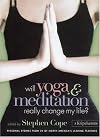
This book was great fun. The question, whether and how practice is really transformative, is perfect. There is a nice consistency among the people interviewed - they're all like my big brothers and sisters, people in their fifties or sixties, Americans who started practicing in the 1970s or thereabouts. They're also folks who mostly straddle the line between Buddhism and Yoga. I think I have met five of these people over the years.
I am fascinated by the question of the effectiveness of show more transformative practice, and particularly the methodological challenge. Real transformation takes decades of dedicated practice. The people interviewed here are all teachers. That must create a selection bias. Surely it is common enough for someone who has practiced for thirty years also to be teaching, sharing what they have learned. But wouldn't some folks be working more quietly, just engaged in whatever sort of work and teaching more by example and just helping people less programatically?
There are some fascinating currents and contrasts in the book, though these are hardly brought out for explicit discussion. Each interview here stands on its own and it is up to the reader to compare and draw conclusions or at least extract issues.
One issue: does practice free one from the problems and troubles of life, or does it more change the way one relates to those? Of course this distinction is itself tricky. But we sure do meet a couple folks here who seem engage life from a blissful angle. I seem to recall a dissenting voice too, a voice that wonders if all that bliss isn't more like a candy coating that leaves underlying problems unresolved. Anyway, this issue provides a nice axis along which these various interviews can be contrasted.
Another issue is that of formal versus informal practice. It's a curious puzzle how someone who teaches can themselves let go of formal practice. Of course one solution is that formal practice is more for beginners and then at a more advanced level informal practice is more appropriate. To some extent an informal practice can simply be a widely diverse and spontaneous practice, i.e. a smorgasboard of formal practices. Some teachers do seem to teach in diverse settings, so each mode of teaching has a distinct form but then when adding up their totality the boundaries cross and blur enough that the overall form is difficult to discern.
These interviews are nicely short, so quite easy to digest in one sitting. Each interview seems to touch some core concern - we seem to be getting below the surface.
If you want a picture of what is happening in America where Yoga and Buddhism meeting, this book gives a clear and balanced picture. show less
I am fascinated by the question of the effectiveness of show more transformative practice, and particularly the methodological challenge. Real transformation takes decades of dedicated practice. The people interviewed here are all teachers. That must create a selection bias. Surely it is common enough for someone who has practiced for thirty years also to be teaching, sharing what they have learned. But wouldn't some folks be working more quietly, just engaged in whatever sort of work and teaching more by example and just helping people less programatically?
There are some fascinating currents and contrasts in the book, though these are hardly brought out for explicit discussion. Each interview here stands on its own and it is up to the reader to compare and draw conclusions or at least extract issues.
One issue: does practice free one from the problems and troubles of life, or does it more change the way one relates to those? Of course this distinction is itself tricky. But we sure do meet a couple folks here who seem engage life from a blissful angle. I seem to recall a dissenting voice too, a voice that wonders if all that bliss isn't more like a candy coating that leaves underlying problems unresolved. Anyway, this issue provides a nice axis along which these various interviews can be contrasted.
Another issue is that of formal versus informal practice. It's a curious puzzle how someone who teaches can themselves let go of formal practice. Of course one solution is that formal practice is more for beginners and then at a more advanced level informal practice is more appropriate. To some extent an informal practice can simply be a widely diverse and spontaneous practice, i.e. a smorgasboard of formal practices. Some teachers do seem to teach in diverse settings, so each mode of teaching has a distinct form but then when adding up their totality the boundaries cross and blur enough that the overall form is difficult to discern.
These interviews are nicely short, so quite easy to digest in one sitting. Each interview seems to touch some core concern - we seem to be getting below the surface.
If you want a picture of what is happening in America where Yoga and Buddhism meeting, this book gives a clear and balanced picture. show less
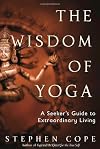
The Wisdom of Yoga is a unique book that examines yogic philosophy through the lens of Western psychology. The premise is a writer working on a book about yogic philosophy who grows closer to the students in his yoga classes. They all have problems, to which they apply yogic principles. This results in interesting, real-life scenarios in which the abstract ideas of yoga (nonattachment, nonreactivity, restraint, etc.) are applied in a concrete way. The reason I am not giving it five stars is show more the somewhat contrived feeling at times, but this book is going to stay on my bedside table for a while. show less
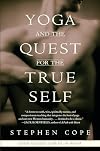
'What a delight to find a book on spiritual practice that's as compelling to read as a good novel. This honest, intelligent, and beautifully written book is required reading for anyone intersted in spiritual practice today.'-Lilias Folan, host of the PVBS series Lilias!
Millions of Americans know yoga as a superb form of exercise and as a potent source of calm in our stress-filled lives. Far fewer are aware of the full promise of yoga as a 4,000-year-old practical path of liberation-a path show more that fits the needs of modern Western seekers wtih startling precison.
Now Stephen Cope, a Western-trained psychotherapist who has lived and taught for more than ten years at the largest yoga center in America, offers this marvelously lively and irreverent 'pilgrim's progress' for today's world. He demystifies the philosophy, psychology, and practice of yoga, and shows how it applies to our most human dilemmas: from loss, disappointment, and addiction, to the eternal conflicts around sex and relationship. And he shows us that in yoga, 'liberation' does not require us to leave our everyday lives for some transcendent spiritual plane-life itself is the path.
Above all, Cope shows how yoga can heal the suffering of self-estrangement that pervades our society, leading us to a new sense of purpose and to a deeper, more satisying life in the world.
'A tour de force...a book grounded in yoga psychology that will be meaningful and useful to spiritual practitioners in many traditions.'-Sylvia Boorsein, author of It's Easier Tnan You Think and That's Funny, You Don't Look Buddhist
Contents
Introduction
A note to readers
Prologue: Viveka's Tale
Part One: The discovery of the royal secret
1 Waking up is hard to do
2 To the mountaintop
3 Brahman: Ecstatic union with the one
4 Shakti: The play of the divine mother
Part Two: The self in exile
5 Yo are not who you appear to be
6 A house on fire: The identity project
7 The suffering of the false self
Part Three: Encounters with the mother and the seer
9 The win pillars of the reality project
10 Equanimity: On holding and being held
11 Awareness: On seeing and being seen
12 Awakening the witness
Part Four: The spontaneous wisdom of he body
13 Riding the wave of greath
14 Listening to the voice of the body
15 Meditation in motion
Part Five: The royal road home
16 The rose in the fire
17 The triumph of the real
Appendix: Yoga metaphysics with a light touch
Notes
Acknwledgments
Permissions
Index show less
Millions of Americans know yoga as a superb form of exercise and as a potent source of calm in our stress-filled lives. Far fewer are aware of the full promise of yoga as a 4,000-year-old practical path of liberation-a path show more that fits the needs of modern Western seekers wtih startling precison.
Now Stephen Cope, a Western-trained psychotherapist who has lived and taught for more than ten years at the largest yoga center in America, offers this marvelously lively and irreverent 'pilgrim's progress' for today's world. He demystifies the philosophy, psychology, and practice of yoga, and shows how it applies to our most human dilemmas: from loss, disappointment, and addiction, to the eternal conflicts around sex and relationship. And he shows us that in yoga, 'liberation' does not require us to leave our everyday lives for some transcendent spiritual plane-life itself is the path.
Above all, Cope shows how yoga can heal the suffering of self-estrangement that pervades our society, leading us to a new sense of purpose and to a deeper, more satisying life in the world.
'A tour de force...a book grounded in yoga psychology that will be meaningful and useful to spiritual practitioners in many traditions.'-Sylvia Boorsein, author of It's Easier Tnan You Think and That's Funny, You Don't Look Buddhist
Contents
Introduction
A note to readers
Prologue: Viveka's Tale
Part One: The discovery of the royal secret
1 Waking up is hard to do
2 To the mountaintop
3 Brahman: Ecstatic union with the one
4 Shakti: The play of the divine mother
Part Two: The self in exile
5 Yo are not who you appear to be
6 A house on fire: The identity project
7 The suffering of the false self
Part Three: Encounters with the mother and the seer
9 The win pillars of the reality project
10 Equanimity: On holding and being held
11 Awareness: On seeing and being seen
12 Awakening the witness
Part Four: The spontaneous wisdom of he body
13 Riding the wave of greath
14 Listening to the voice of the body
15 Meditation in motion
Part Five: The royal road home
16 The rose in the fire
17 The triumph of the real
Appendix: Yoga metaphysics with a light touch
Notes
Acknwledgments
Permissions
Index show less
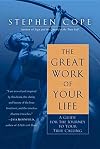
I've read Stephen's other books prior to this and greatly anticipated this new work. The wait was worth it. This book, done in his accessible and conversational style is perhaps his best work. He has "translated" the Bhagavad Gita into language that is really understandable and most importantly to me, practical and applicable to my life. Books don't give you answers, but this book will certainly help you to start paying attention to what is important to you and hopefully help you realize you show more already have the answers. Thought provoking and well written. show less
Lists
Awards

You May Also Like


Statistics
- Works
- 9
- Also by
- 3
- Members
- 820
- Popularity
- #31,113
- Rating
- 4.1
- Reviews
- 18
- ISBNs
- 31
- Languages
- 2